
Summary 
Domaine de Gerbaud, an organic olive oil producer in Provence, won a Silver Award at the 2026 NYIOOC World Olive Oil Competition for their high-quality olive oils made from native cultivars like Aglandau and Grossane. The estate focuses on blending different varieties to highlight the unique character of Provençal olive oil, with a team of experts advising on all aspects of production, but struggles with the economic challenges of organic farming, labor costs, and climate change.
A Silver Award was secured at the 2026 NYIOOC World Olive Oil Competition by an organic producer in Provence focused on highlighting the distinctive character of the region’s native olive cultivars.
We have managed to produce ever healthier olives each year, and this is a great source of pride to everyone.- Louisa Sherman, Domaine de Gerbaud
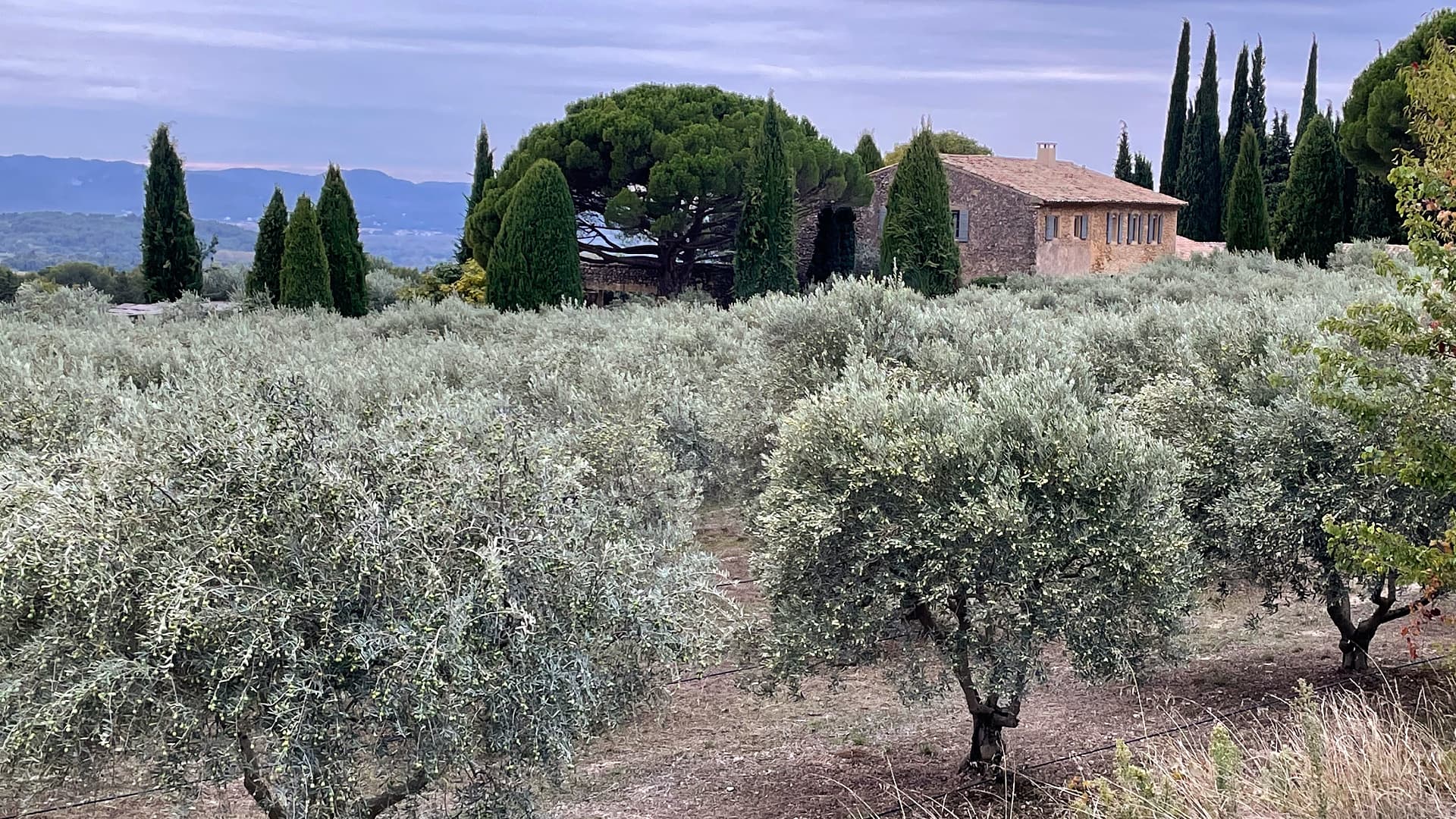
Aglandau, Salonenque, Grossane and Bouteillan are the only olives cultivated by Domaine de Gerbaud, an estate at the foothills of the Grand Luberon mountain range. There, a hilly, well-drained landscape of slopes, ventilation and calcareous soils helps shape some of France’s highest-quality olive oils.
“We participate in a few competitions every year, but the NYIOOC holds a special place as this is where we were awarded our first Gold Medal some years ago,” Louisa Sherman, owner of the estate, told Olive Oil Times. “The NYIOOC is a top-rated competition and winning a medal is a prestigious achievement.”
The producer does not currently have a stable presence in the U.S. market. “We have no outlets in America and the few American online clients stopped buying after the introduction of tariffs,” Sherman said. Still, she described recognition in New York as an important benchmark.
“Winning a medal is an excellent indicator for us as to where our olive oil is positioned,” she said. “We appreciate the wide range of contestants from across the world and being judged in their fine company.”
In France, however, the impact is more direct. Sherman said awards help reinforce credibility and support domestic sales.
 Domaine de Gerbaud
At the center of Domaine de Gerbaud’s approach is blending. “I see blending as pure alchemy,” she said. “It is a balance between the scientific standards of extra virgin olive oil, years of knowledge and insight into the tastes of each individual variety and, crucially, the way different batches interact once blended in specific proportions.”
The goal, she said, is to highlight the nuances of Provençal olive oil and introduce it to a wider audience. “The pungency of Aglandau in contrast to the sweeter Salonenque and the deceptive softness of Grossane,” Sherman said. “Yet, in different proportions, they conjure blends of remarkable uniqueness.”
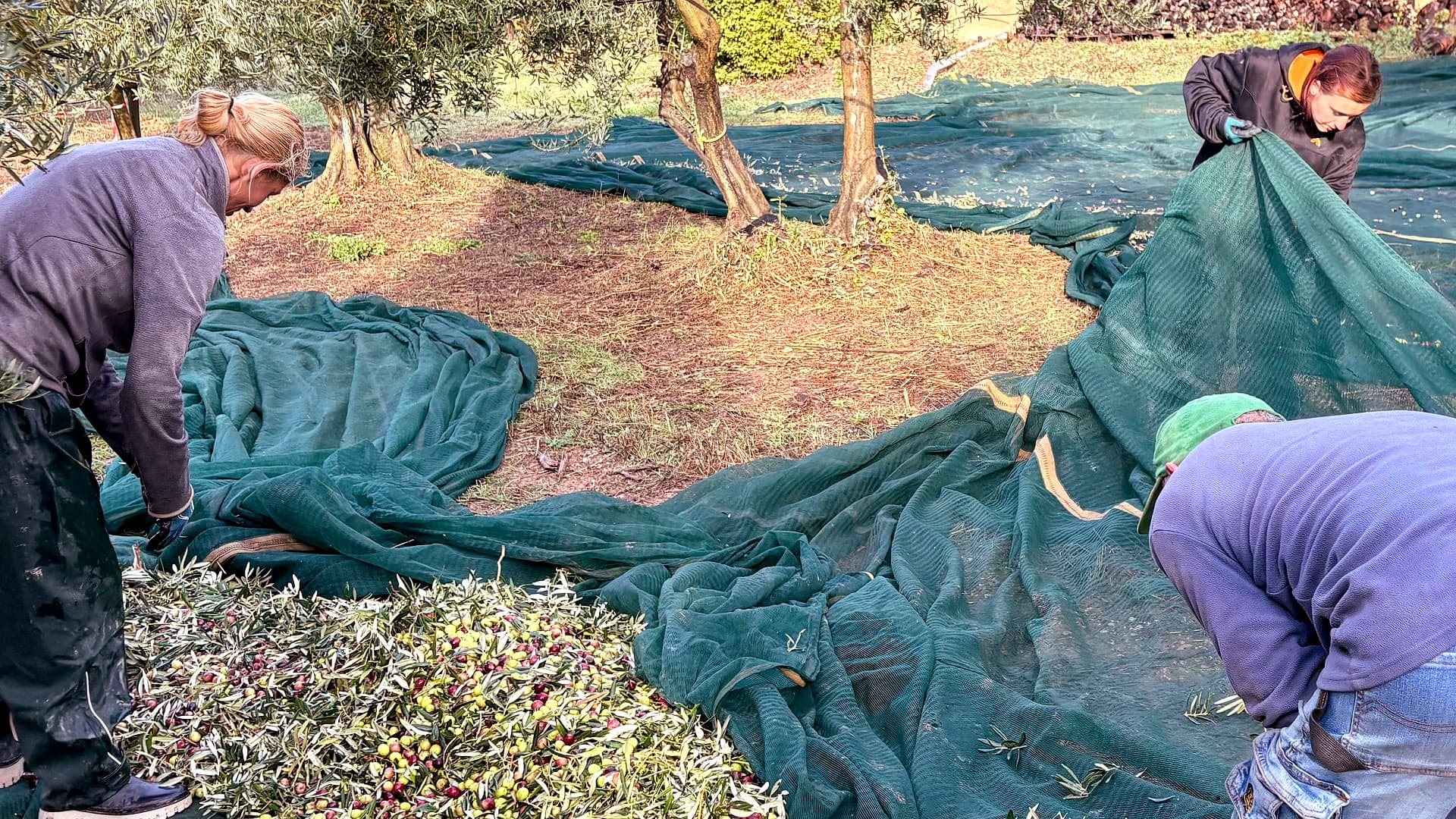
According to Sherman, blending begins in the grove. The estate harvests by variety and by parcel, often at different points in the season, following the natural timing of each cultivar to build a broader palette of oils for blending.
“This gives us a greater selection of olive oil batches from which to blend a nuanced olive oil,” she said.
A significant part of Domaine de Gerbaud’s identity is rooted in the long history of olive growing in Provence. “The landscape is an ancient one, with human settlement in this area dating back to Neolithic times,” Sherman said. “Our fortified farmhouse is about 500 years old. We understand that our presence is fleeting and we are mindful curators of the terroir, the water resources and plants we grow.”
Despite those deep historical roots, the estate’s current chapter is relatively recent. Sherman and her family moved to Provence from South Africa with a long agricultural background, initially envisioning a smaller project.
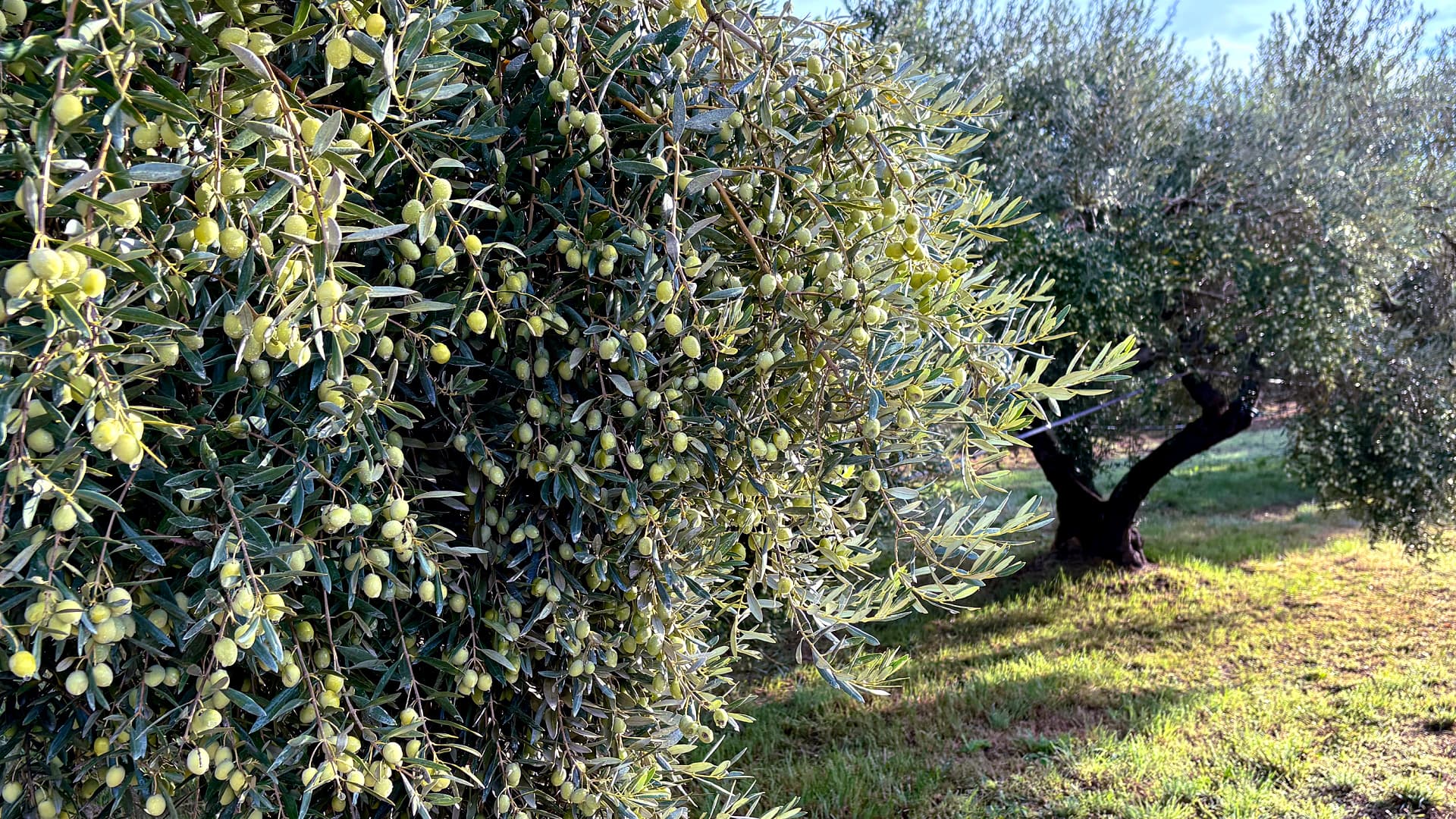 The green olives of Domaine de Gerbaud
What began modestly soon expanded into a more complex agricultural undertaking. Part of that complexity came from following organic olive oil production protocols, a growing trend among French producers, with roughly one-third to nearly half of the country’s olive area under organic management.
“After attending the Olive Oil Times Sommelier Program, we decided that our only recourse to make sense of olive oil production with a small number of trees, 1,200, which has since grown to 1,400, would be to aim for premium quality olive oil production,” Sherman said.
“We soon realized that if we were to produce outstanding olive oil, we’d need input from professionals,” she added. “We have gathered an excellent team to advise us on tree nutrition, pest protection, pruning, harvesting and blending.”
“Our team combines Spanish and French expertise, as well as the latest scientific evidence,” Sherman said. “Our experts have by now built up a memory of knowledge of our terrain and trees. They are nimble in adjusting to changing growing conditions and pest threats.”
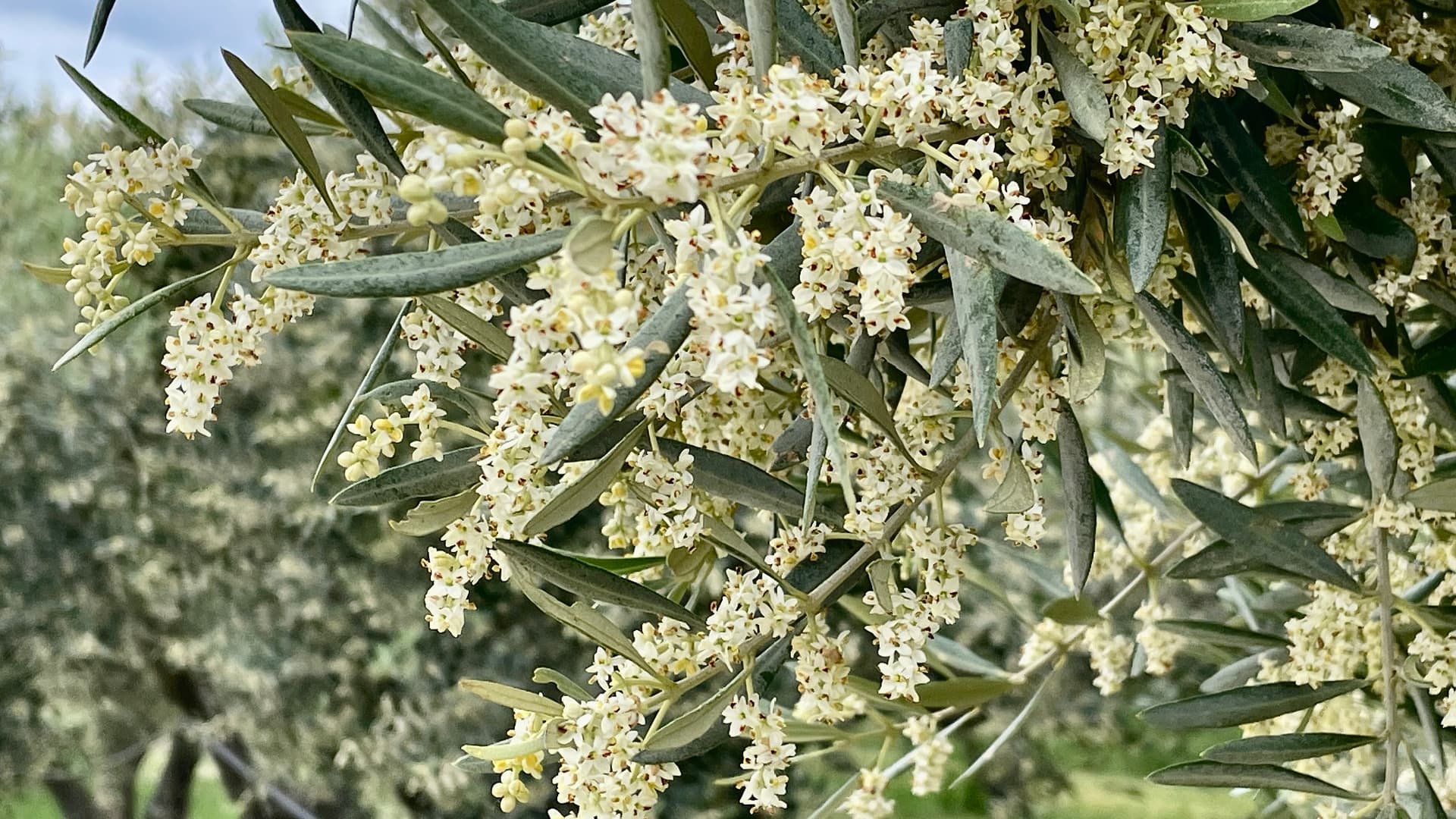 The blossoming trees at Domaine de Gerbaud
Today, the estate cultivates the varieties at the core of the AOP Provence designation. In addition to the Aglandau, Salonenque and Grossane trees already growing on the estate, the producer added Bouteillan trees.
“We also increased the number of Aglandau trees as this variety is considered the king of olives in Provence,” Sherman said. According to the producer, Aglandau plays a particularly important role by contributing to the phenolic content, stability, and the intense finish of the estate’s oils.
Terroir also plays a central role. “The location of our olive groves is all on steep terrain that ensures good drainage and excellent ventilation that allow olive trees to thrive,” Sherman said.
“One aspect of innovation that we have introduced is scientific testing of the soil, the leaves and the ripeness of olives before harvesting,” she added. “Testing the soil and leaves for correct nutrition during the growing season and making the necessary adjustments, and testing the olives for optimum ripeness before the harvest plan is devised.”
This integration of scientific monitoring with traditional knowledge reflects a broader effort to align precision agriculture with the constraints of organic certification. “There are severe limitations on the protections one can use to safeguard the olives from diseases,” Sherman said. “Organic farming requires intensive labor, and in France agricultural labor is expensive and in short supply.”
The economic implications are significant. Seasonal workers, particularly for pruning and harvesting, represent a substantial cost and often limit profitability. “Foreign labor partially solves the demand, but the costs of peripatetic pruners and harvesters limit profitability,” Sherman said. “So, this is a true labor of love.”
Climate change has added further complexity. “We increasingly suffer drought and for the previous five years recurrent heatwaves during spring and summer scorched the earth and trees,” Sherman said.
Adaptation has required investment in irrigation infrastructure. “The connection to the Canal de Provence water system three years ago has enabled us to keep the olive trees well-watered at crucial periods of the growing season,” she said.
Still, the growing season remains uncertain, particularly during its earliest stages. “We are heading towards spring now, and the first delicate and vulnerable stage of olive production for the year — blossoming and the all-important fruit-forming thereafter,” Sherman said. “This is the most nerve-racking phase of the production year. Rains and frost are serious threats.”
“We have managed to produce ever healthier olives each year, and this is a great source of pride to everyone,” she added. “I cannot wait to harvest the first batch of Bouteillan olives as this will offer a chance to experiment with an olive oil lot that has a potent volatility.”
Dining and Cooking