
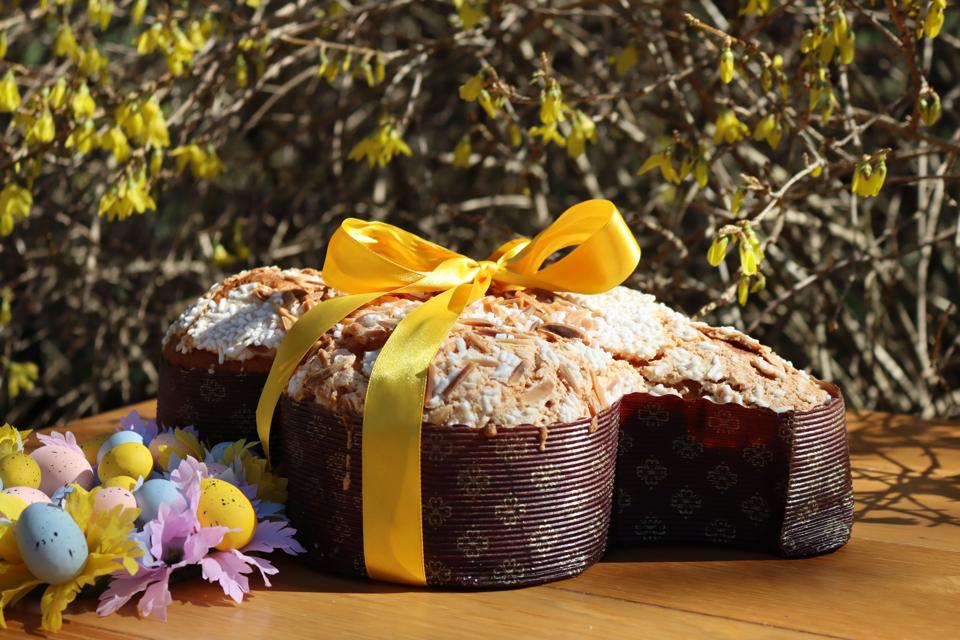
When the fragrant scent of colomba (pane di pasqua) wafts from bakeries all over Italy, it is a sure sign that Easter is on the way.
In the days leading up to the holiday, many Italians traditionally head to local bakeries to buy colomba for their Sunday dinner dessert or as gifts for family and friends. Like many Italian culinary traditions, this one has emigrated to destinations all over the world.
An Edible Symbol Of Celebration And Transition
The family of pastry chef Nicola Olivieri, co-owner of Olivieri 1882, has been making award-winning holiday cakes in Arzignano (Veneto), Italy for six generations. “Colomba is deeply connected to the idea of celebration and family,” Olivieri told me in an email interview.
“For me,” he said, “it represents the moment when months of work in the bakery finally meet the table in a shared ritual. It is not just a dessert; it is a symbol of transition—from winter to spring, from production to celebration, and from craftsmanship to emotion.”
Is Colomba A Bread Or A Cake?
Colomba is the kissing cousin of the better-known panettone, which is popular at Christmas, and it’s easy to confuse the two. Both are made with a similar dough of flour, eggs, sugar, butter and natural yeast. But there are also differences: a colomba isn’t as tall and is shaped like a dove, symbolizing peace and hope.
Even bakers debate whether colomba is a sweet bread or a traditional cake. It probably sits somewhere in between. “It’s made with a sourdough starter and undergoes a long fermentation process, like bread. However, its richness—from the eggs, butter, and sugar—gives it the softness and indulgence of a cake,” says Olivieri.
How to Shop For A Colomba
Because some colombas are artisanal and others mass-produced (in commercial bakeries), their quality and cost vary widely.
Italian-born pastry chef Nino Settepani and his wife, Leah Abraham, initially imported the leavened bakery products they sold at Settepani Restaurant and Bakery in Williamsburg, Brooklyn, New York.
But now, with the help of their talented daughter, head baker Bilena, the family-led business produces them in New York, using only the finest ingredients, many of them sourced directly from Italy.
Artisanal Or Commercial—What’s The Difference?
Olivieri says the difference between the two is profound and immediately noticeable.
“An artisanal product is made with natural sourdough and requires long fermentation time—in our case, four days,” he says. “There is a significant amount of manual work entailed in creating a product that is complex, fragrant, and delicate. Commercial versions are designed for scale and shelf life. They typically use industrial yeast, shorter production times and additives to ensure consistency and longevity.”
“It all comes down to the ingredients and process,” Settepani told me in an email interview.
Can a consumer taste the difference? “You can tell a good colomba by its soft, fluffy interior, its slightly sweeter taste compared to panettone, and the crisp, crunchy almond-and-sugar topping on the outside,” he says.
“The aroma should be rich and layered with notes of butter and natural fermentation. The color should be naturally golden from the eggs, and the glaze should be crisp, balanced and not overly sweet,” adds Olivieri. “Perhaps most importantly, the product should feel light despite its richness.”
Variations On The Colomba Theme
After studying at the Institute of Culinary Education, Bilena became the lead pastry chef at Settepani and is often dubbed the “Panettone Princess.” She’s not afraid to experiment while staying true to her roots.
“The classic colomba is sweeter than panettone, which is part of why it’s especially popular with younger customers,” says Bilena. “Since they’ve grown in popularity, pastry chefs have been playing with tradition to keep it fresh and relevant to modern tastes.”
For example, Settepani offers a chocolate colomba made with dark and milk chocolate in the dough and finished with a dark chocolate coating and drizzle. The pistachio colomba, filled with pistachio cream, is coated in white chocolate and pistachios and topped with crunchy pistachio pieces. Following the success of the Nutella panettone, the bakery has introduced a Nutella colomba filled with the creamy spread.
Colomba is a highly adaptable “living product,” according to Olivieri, much like an artist’s palette, given the wide variety available. “The base dough is always similar, but we can reinterpret it through different inclusions (candied fruits, chocolate, creams), glazes and toppings, regional ingredients, and seasonal or luxury variations,” he says.
Colomba As A Memory-Maker
“I grew up in Italy, before the economic boom,” says Nino Settapani. “My mother and grandmother used to make colombelle, small dove-shaped cookies filled with sweet almond and orange jam. I had only ever seen colomba on television, so you can imagine my joy the first time I tasted a real, leavened one.
“It felt like a cloud of sweetness filling my palate, and my senses were overwhelmed with pleasure and surprise. I still remember that moment clearly: we were visiting family friends in Palermo, and they offered it at the end of the meal. It was the perfect ending.”
Ready To Try A Colomba?
You can order a wide variety of authentic Olivieri 1882 colomba on its website, with delivery from Italy, usually within 48 hours.
Settepani has expanded the bakery and now has outlets at several locations in NYC. In addition, its products are shipped nationally via Goldbelly.
Tips For Enjoyment
The best way to keep a colomba fresh is to store it at room temperature in its original plastic bag after removing the air.
Gently warming the colomba can help restore its aroma and softness.
Colomba is best sliced from the center with a serrated knife to preserve its structure.
Dining and Cooking