
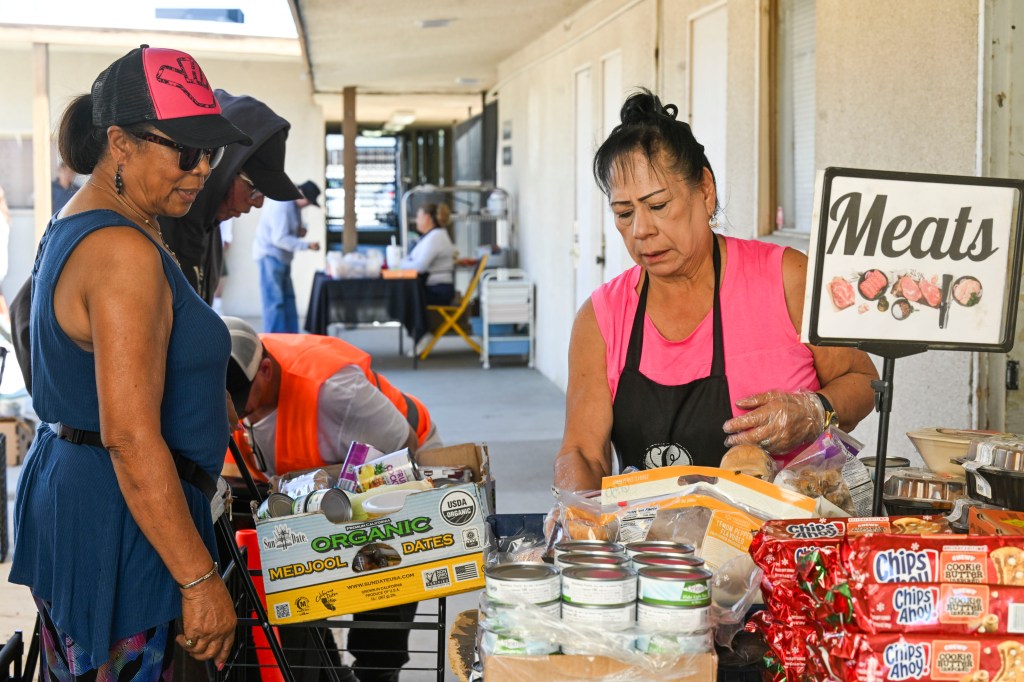
As the price of groceries continues to soar across California, more residents are relying on food pantries for some of their next meals.
And in the Inland Empire, where food insecurity remains high, the money behind some of these food programs could disappear in summer if a state program that supports pantries loses its funding.
Officials from the California Association of Food Banks said hundreds of Inland food pantries could face a huge loss in supplies if CalFood — the state program that allocates public dollars to food banks to buy, store and distribute locally grown food — loses its legs.
“It’s a lifeline for farmers, food banks and families,” Feeding America Riverside | San Bernardino’s Interim CEO Joanna Solor said during a recent food distribution event at a Riverside church. “We’re able to pick up these items to serve the community and get these items back into the hands of the families.”
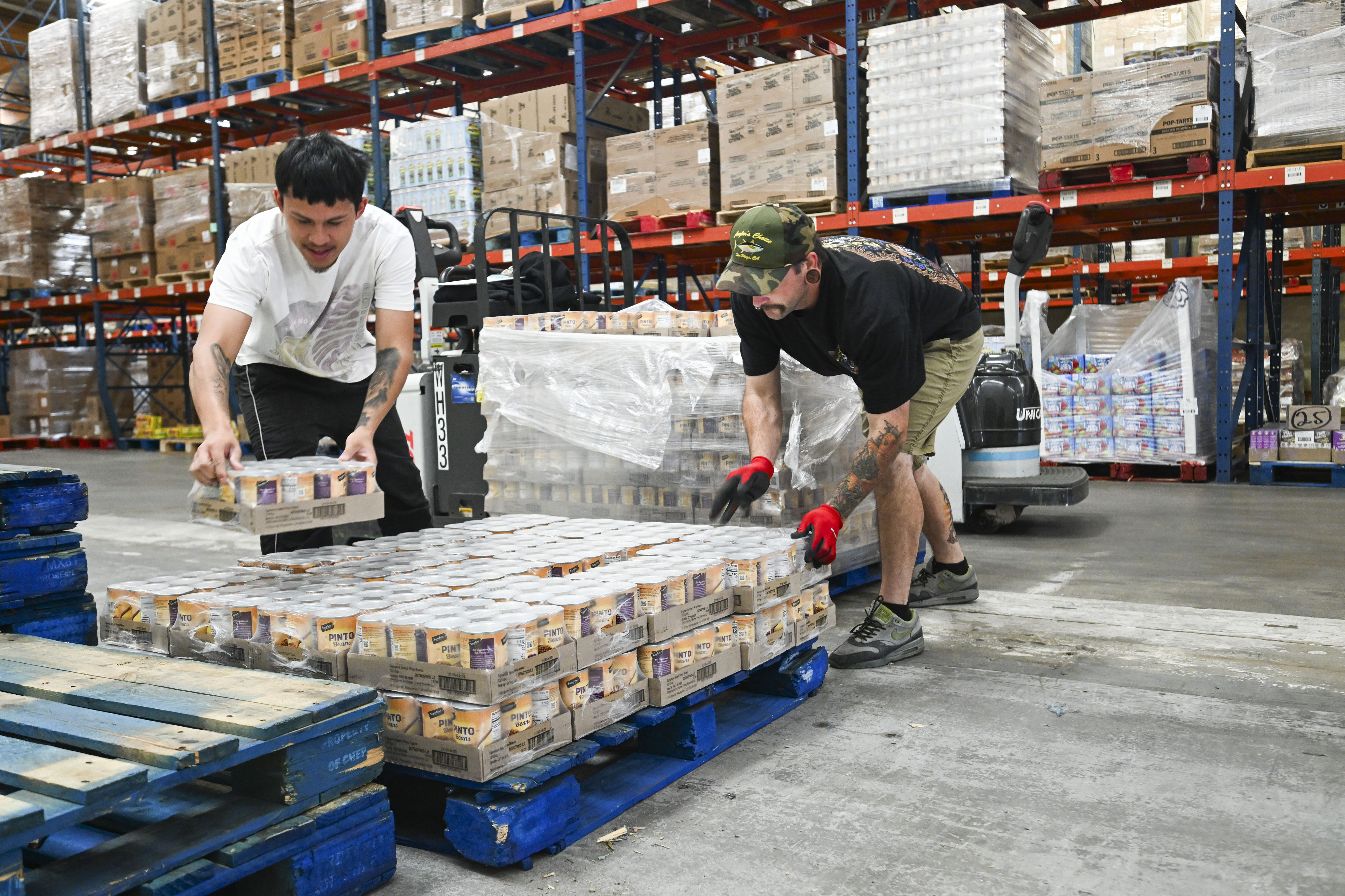
Pallets of food are organized by Francisco Ramos, left, and Brandon Curtis at the Feeding America Riverside | San Bernardino warehouse in Riverside on Wednesday, March 18, 2026. (Photo by Anjali Sharif-Paul, The Sun/SCNG)

Feeding America Riverside | San Bernardino Interim CEO Joanna Solor is seen Wednesday, March 18, 2026, at the organization’s warehouse in Riverside. (Photo by Anjali Sharif-Paul, The Sun/SCNG)
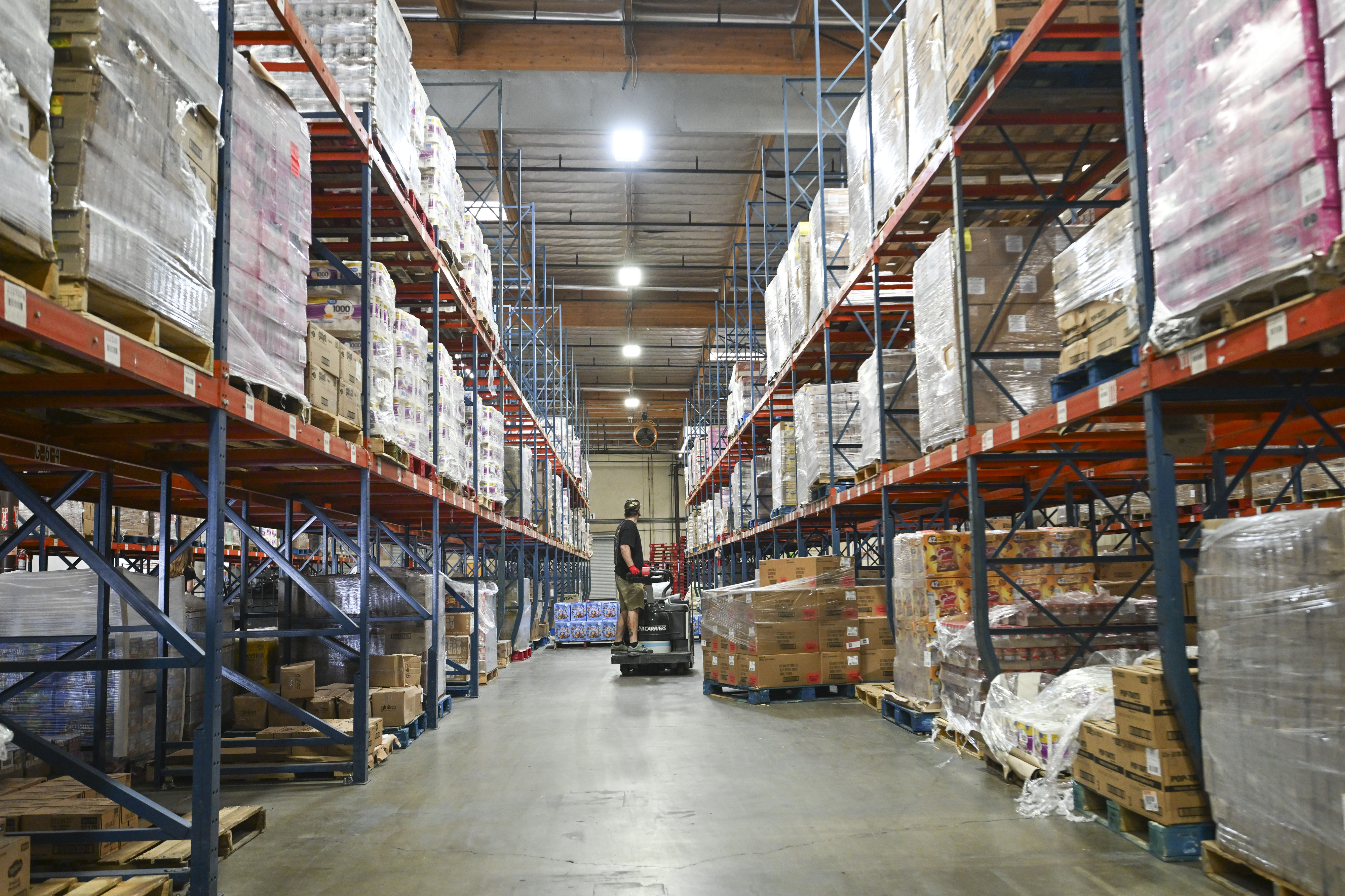
Pallets of dry goods are organized for distribution at the Feeding America Riverside | San Bernardino warehouse in Riverside on Wednesday, March 18, 2026. (Photo by Anjali Sharif-Paul, The Sun/SCNG)
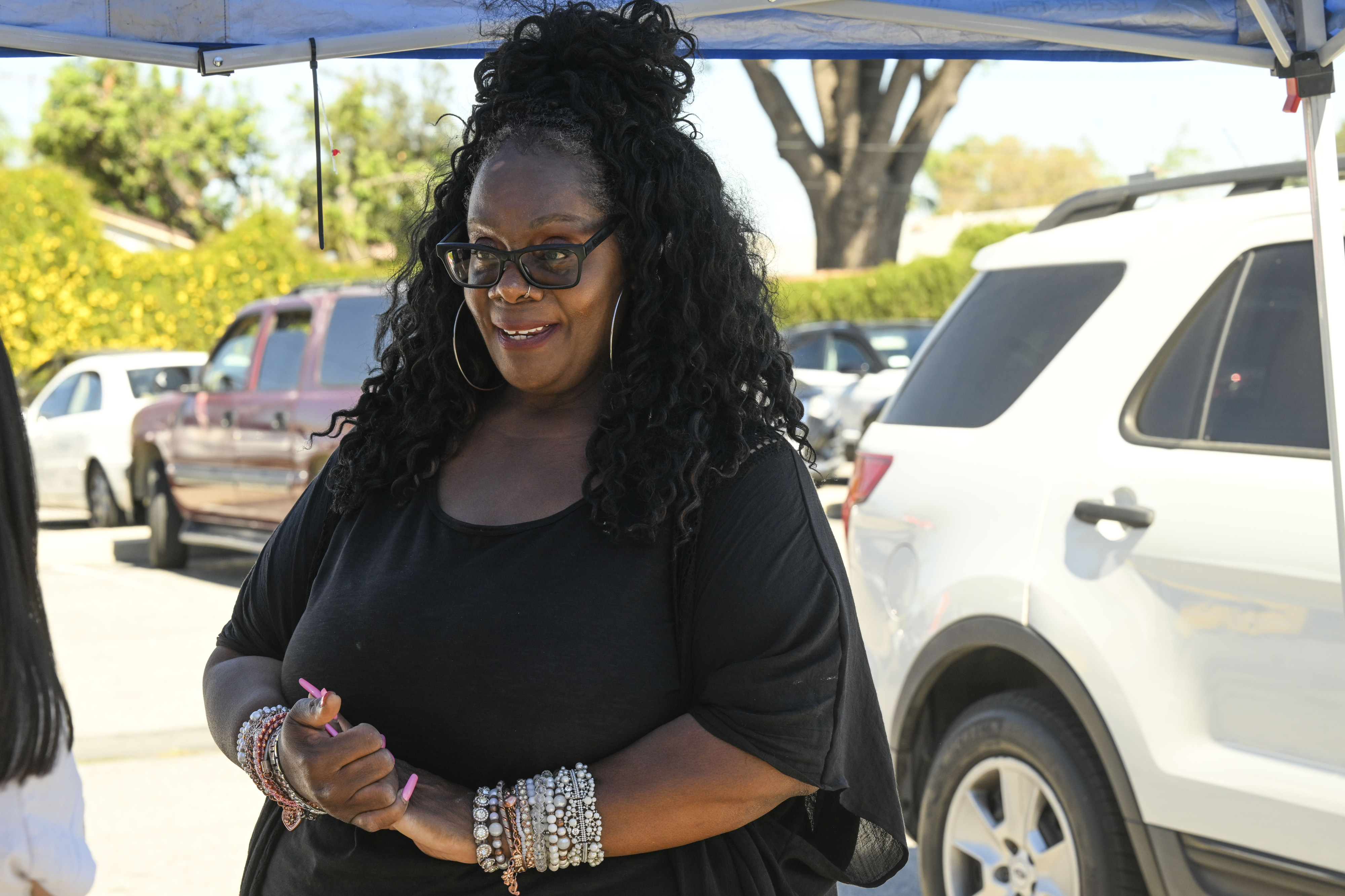
Donna Sautia, founder of Lighthouse of Hope in Riverside, speaks Wednesday, March 18, 2026, on the relationship between the food pantry and food bank in serving people in need. (Photo by Anjali Sharif-Paul, The Sun/SCNG)
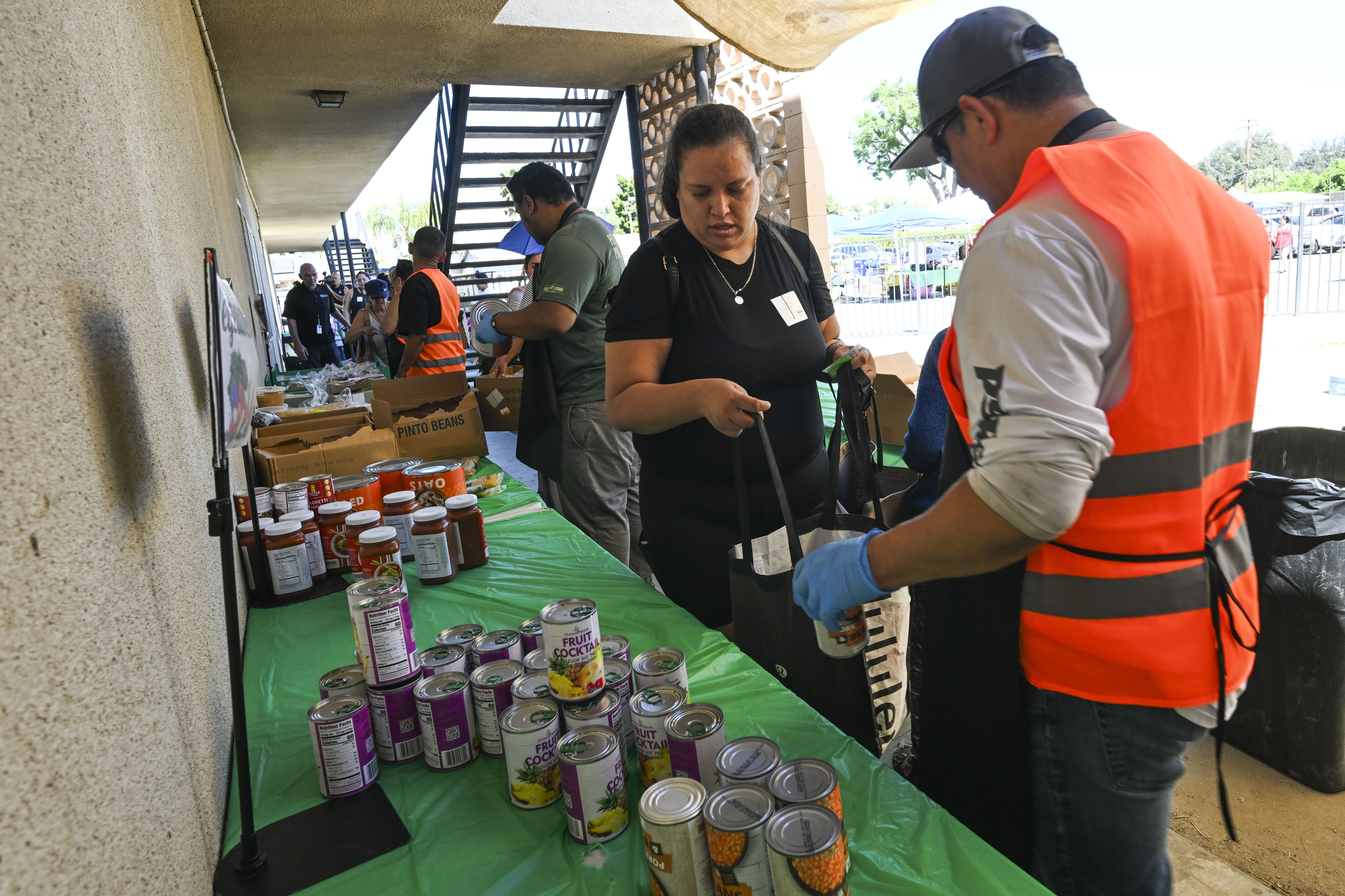
Elizabeth Cruz receives food from the Lighthouse of Hope food pantry on Wednesday, March 18, 2026. (Photo by Anjali Sharif-Paul, The Sun/SCNG)
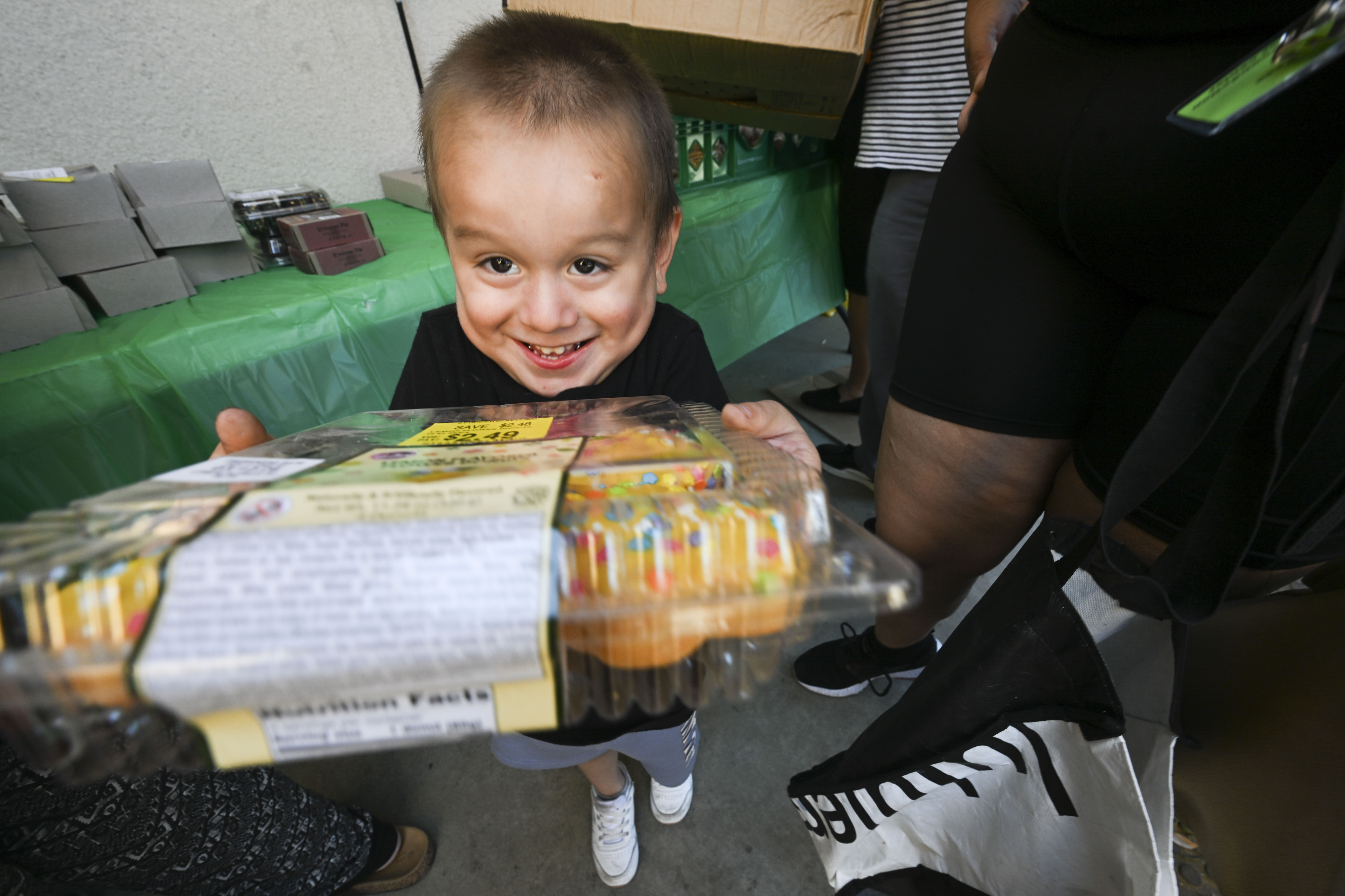
Jesus Cruz holds a box of muffins he and his mother Elizabeth Cruz received at the Lighthouse of Hope food pantry on Wednesday, March 18, 2026, in Riverside. (Photo by Anjali Sharif-Paul, The Sun/SCNG)
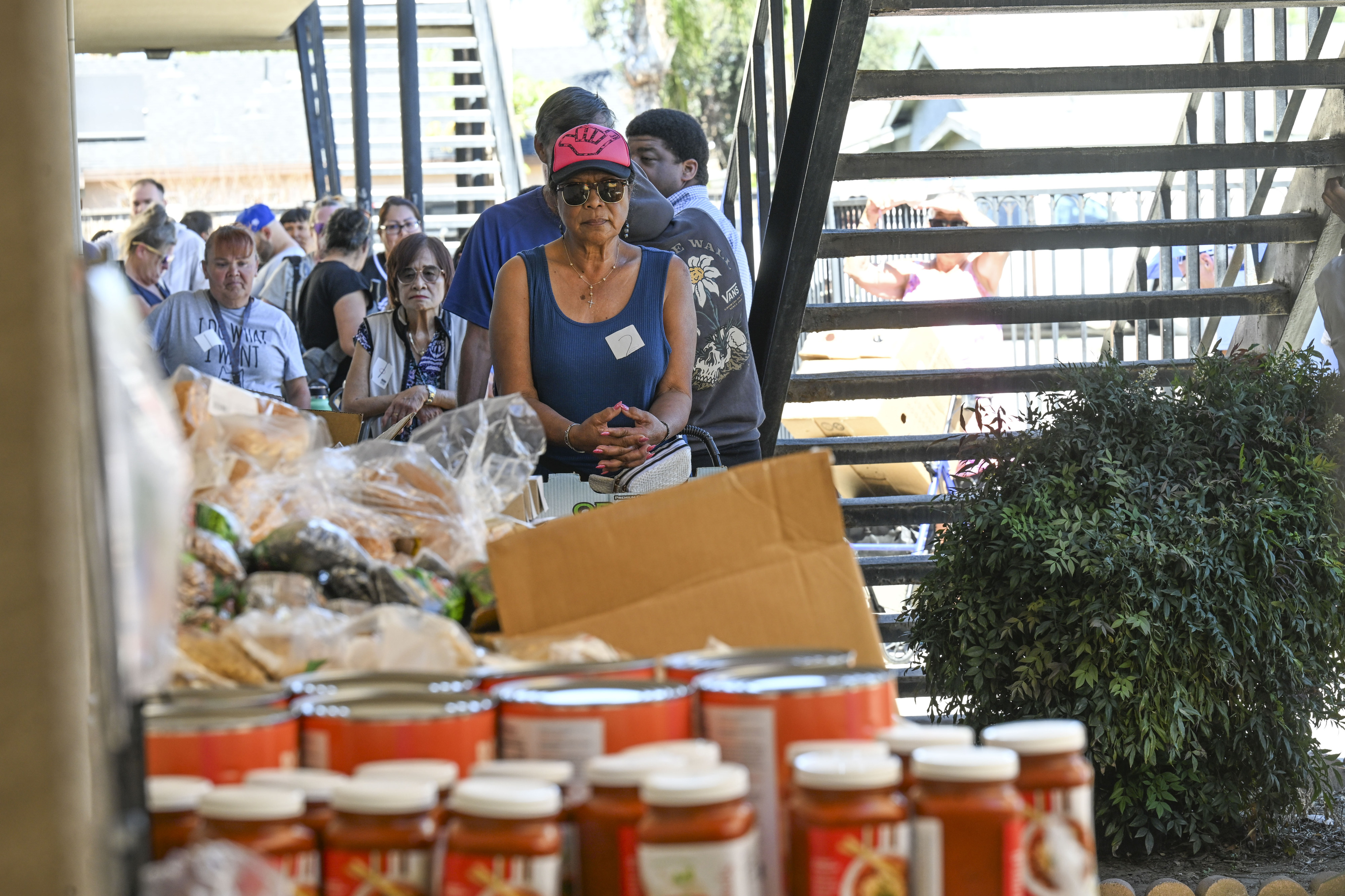
Riverside residents wait in line at the Lighthouse of Hope food pantry on Wednesday, March 18, 2026. (Photo by Anjali Sharif-Paul, The Sun/SCNG)
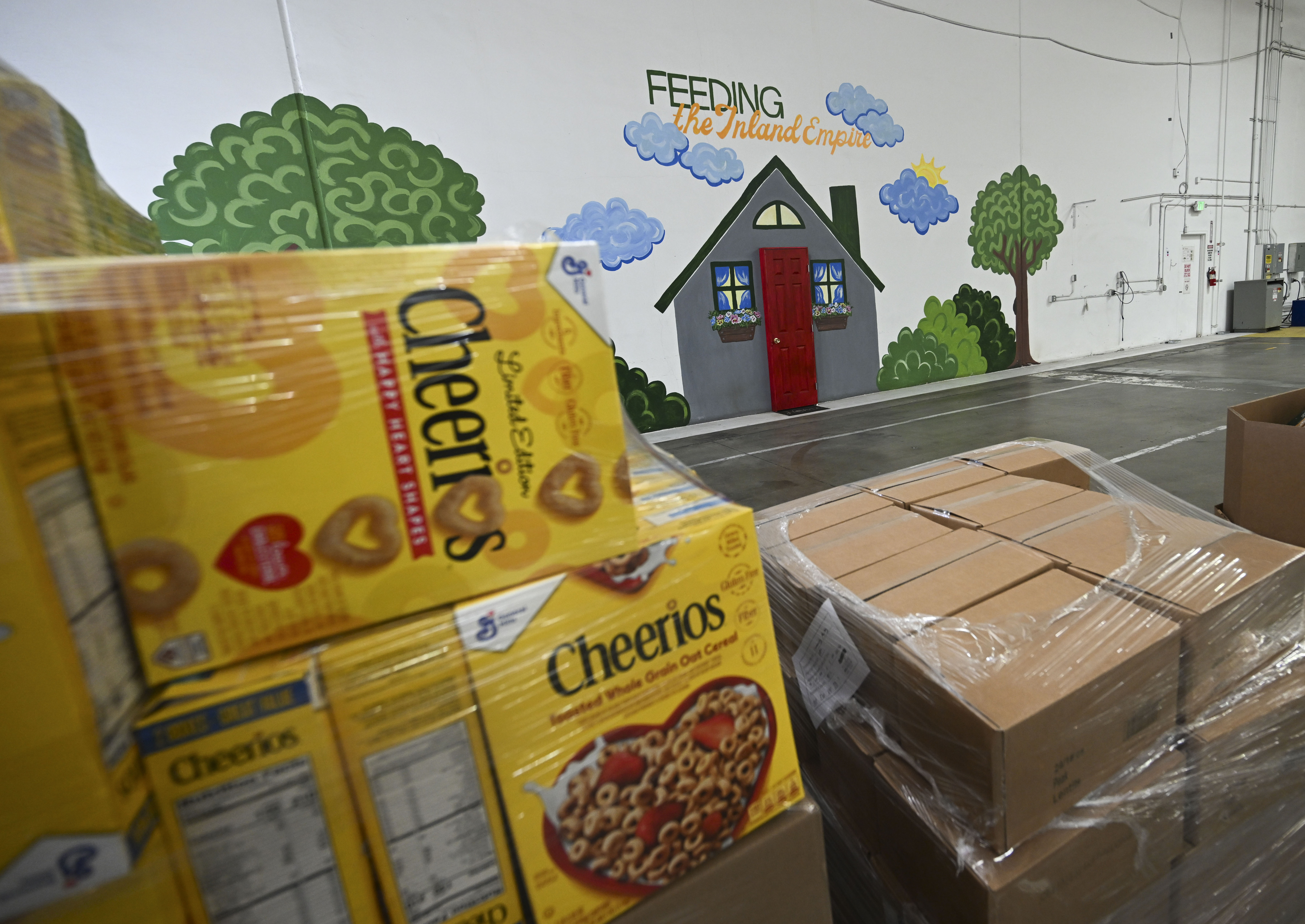
Pallets of dry goods are stacked for distribution Wednesday, March 18, 2026, at the Feeding America Riverside | San Bernardino warehouse in Riverside. (Photo by Anjali Sharif-Paul, The Sun/SCNG)
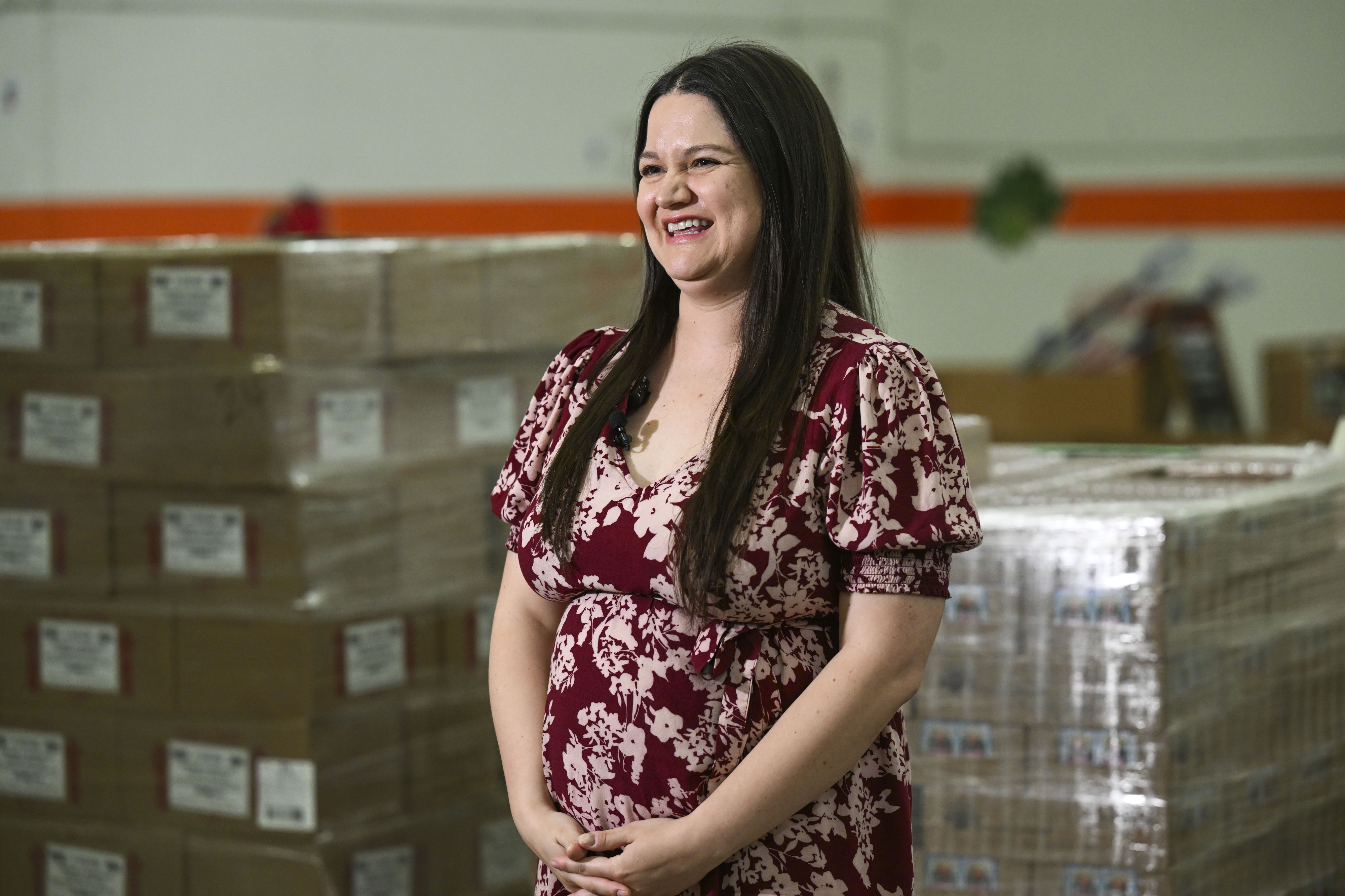
Feeding America Riverside | San Bernardino Interim CEO Joanna Solor is seen Wednesday, March 18, 2026, at the organization’s warehouse in Riverside. (Photo by Anjali Sharif-Paul, The Sun/SCNG)
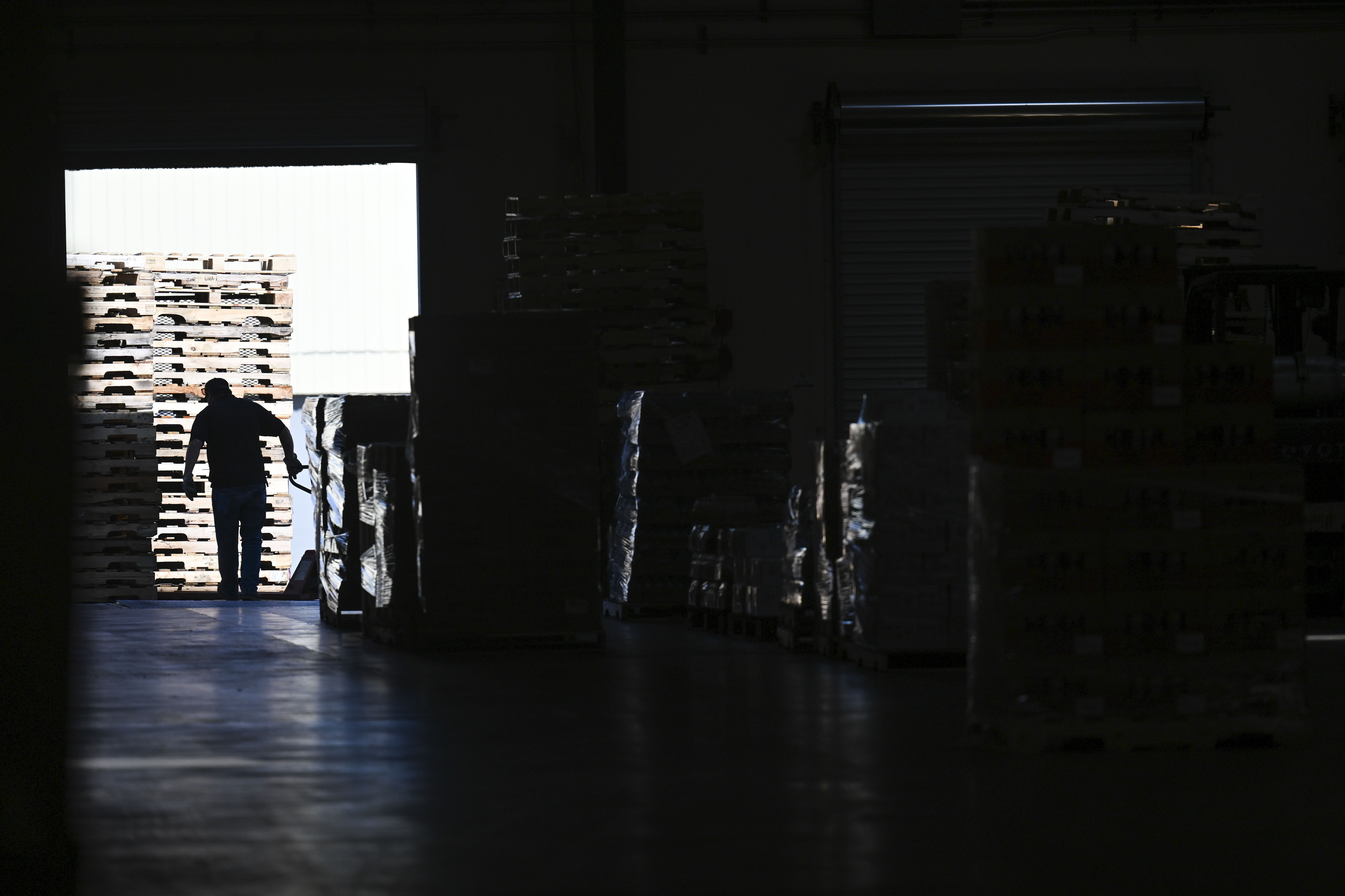
Pallets for food are organized Wednesday, March 18, 2026, at the Feeding America Riverside | San Bernardino warehouse in Riverside. (Photo by Anjali Sharif-Paul, The Sun/SCNG)
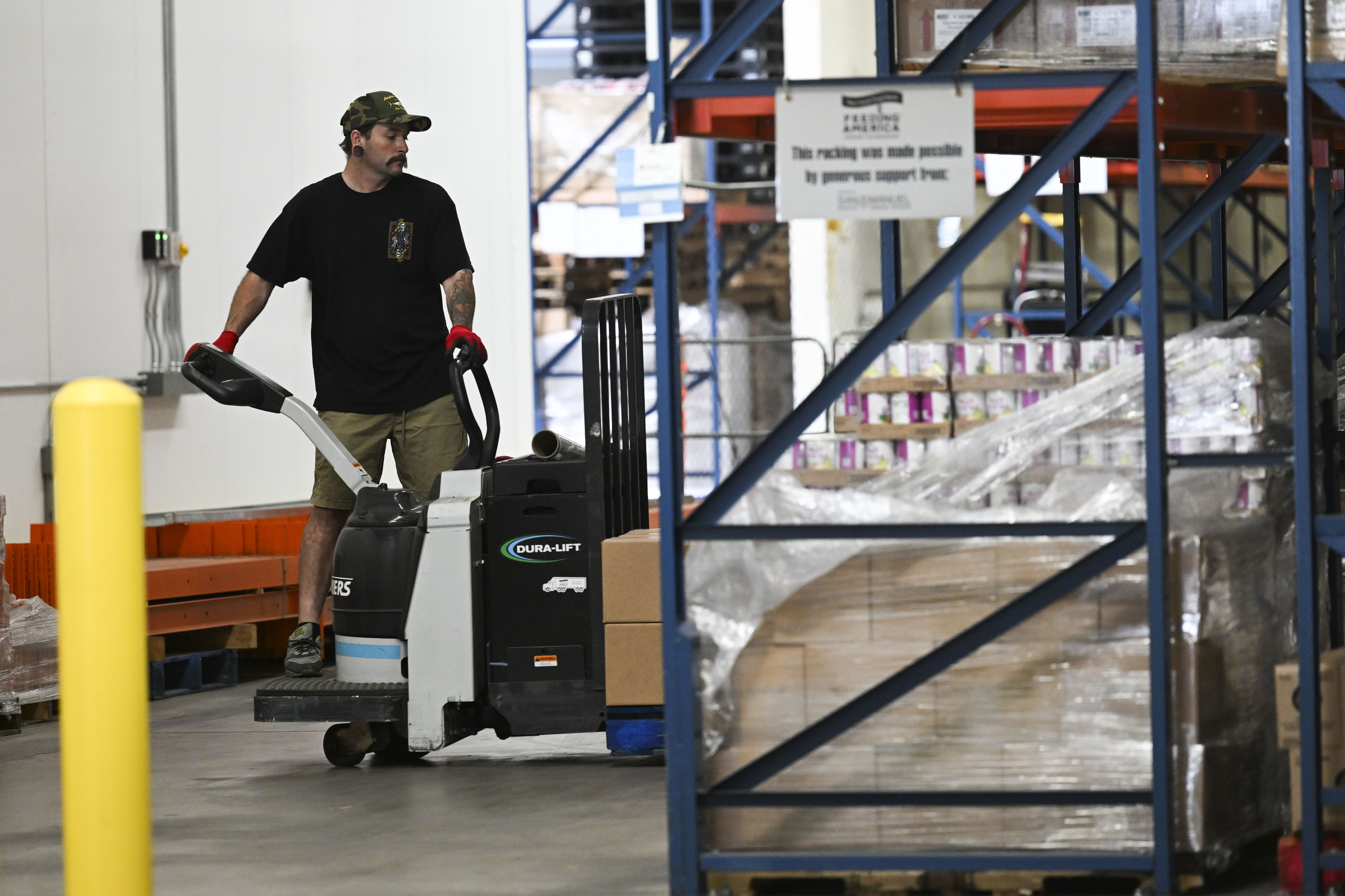
Pallets of food are organized by Brandon Curtis on Wednesday, March 18, 2026, at the Feeding America Riverside | San Bernardino warehouse in Riverside. (Photo by Anjali Sharif-Paul, The Sun/SCNG)
Show Caption
1 of 11
Pallets of food are organized by Francisco Ramos, left, and Brandon Curtis at the Feeding America Riverside | San Bernardino warehouse in Riverside on Wednesday, March 18, 2026. (Photo by Anjali Sharif-Paul, The Sun/SCNG)
Expand
The program faces significant state budget cuts in the coming fiscal year, by at least 90% — dropping to its $8 million baseline — in the May budget revise, food bank officials said.
Advocates are asking for more — over $100 million total — in state aid in the 2026-27 state budget revision, calling it “critical” for food banks to operate the “mounting hunger cliff.”
In an emailed response, H.D. Palmer, a California Department of Finance spokesperson, said that historically, the annual baseline funding for CalFood has been $8 million. There was also a one-time augmentation of $72 million to the program’s general budget this year, in part because of the withholding of SNAP funds through Trump’s “Big Beautiful Bill.”
Though that bump isn’t being renewed, Palmer noted that nearly two-thirds “of this one-time addition — nearly $46 million — hasn’t been spent yet,” and that “as of January of this year, $74.5 million is still available for use by food banks.”
Food banks also receive money from sources beyond the state, such as federal and philanthropic funding, Palmer said.
CalFood helps local and large-scale food banks such as Feeding America Riverside | San Bernardino, which through regular distributions and events has served over 4.3 million people and distributed over 35 million pounds of food. Pantries use the money to buy nutritious items that aren’t normally donated, such as fruits and vegetables, dairy, low-sodium items or meat.
Feeding America Riverside | San Bernardino, the Inland region’s biggest food bank, which is headquartered in Riverside, stands to lose nearly 90% of its $2.3 million CalFood allocation — dropping to $262,000 a year. That money accounts for up to 25% of the food bank’s inventory, Solor said, and helps supply hard-to-donate essentials such as fresh produce and proteins.
Solor estimated the state’s proposed budget cuts will affect about 950,000 Inland Empire families. Every dollar from CalFood, officials said, allows food banks to provide about five meals.
“Anytime there are changes at the federal level, more families turn to food banks for assistance when their benefits are on pause or just completely shut down,” Solor added. “Families are going to see less healthy nutrition options when they visit a food pantry, and we might see a very low supply on our shelves and demands will increase.”
The situation follows last summer’s federal cuts to Supplemental Nutrition Assistance Program benefits — called SNAP — through the “One Big Beautiful Bill” signed in July by President Donald Trump. Though general funding to SNAP benefits and food stamps — called CalFresh in California — was temporarily restored through Sept. 30, hundreds of Californians already face reduced benefits or could lose eligibility entirely as the bill continues to roll out, and as eligibility/benefits are changed by the government, food bank officials said.
In April, through the spending bill, more than 70,000 “humanitarian migrants” in California will begin to lose eligibility for CalFresh, including refugees, asylees and trafficking survivors, state officials said.
And federal laws will sunset the SNAP-Ed nutrition education program — CalFresh Healthy Living — by June 30, officials from San Bernardino and Riverside counties’ public health departments and the U.S. Department of Agriculture said.
Though food banks don’t directly receive funding for SNAP, they are already seeing impacts of the cuts. As a result, they’re asking for $110 million total including a permanent increase to the program’s $8 million baseline — in the state’s upcoming budget “to ensure $60 million ongoing funding sustains our food system,” Feeding America Riverside | San Bernardino spokesperson Rachel Bonilla said. They also seek $50 million “as a one-time ask to mitigate the effects of the SNAP cuts on Californians.”
“We know that food banks will be the source of food for those families no longer receiving those benefits. At this time, when funding has been cut in other areas, food banks are already getting less than before, and wouldn’t be able to fill the gap in need for our neighbors,” Bonilla said.
Still, many food banks don’t think it’s enough.
Stacia Hill Levenfeld, CEO of the California Association of Food Banks, said in a statement that the budget changes and passing of the spending bill “exacerbate food insecurity in California.”
Around one in five, or 22%, of households in California experience food insecurity, including 43% of Black households and 31% of Latino households, and one in four homes with children, according to 2024 data from the U.S. Census Household Pulse Survey. In that same time frame, food insecurity affected 30% of homes with children in the Riverside, San Bernardino and Ontario metro areas.
Nearly 2.3 million people in San Bernardino, Riverside and Los Angeles counties were receiving CalFresh benefits, according to 2024 state estimates. That includes more than 440,000 low-income residents in San Bernardino County and more than 347,000 in Riverside County, according to both counties’ estimates.
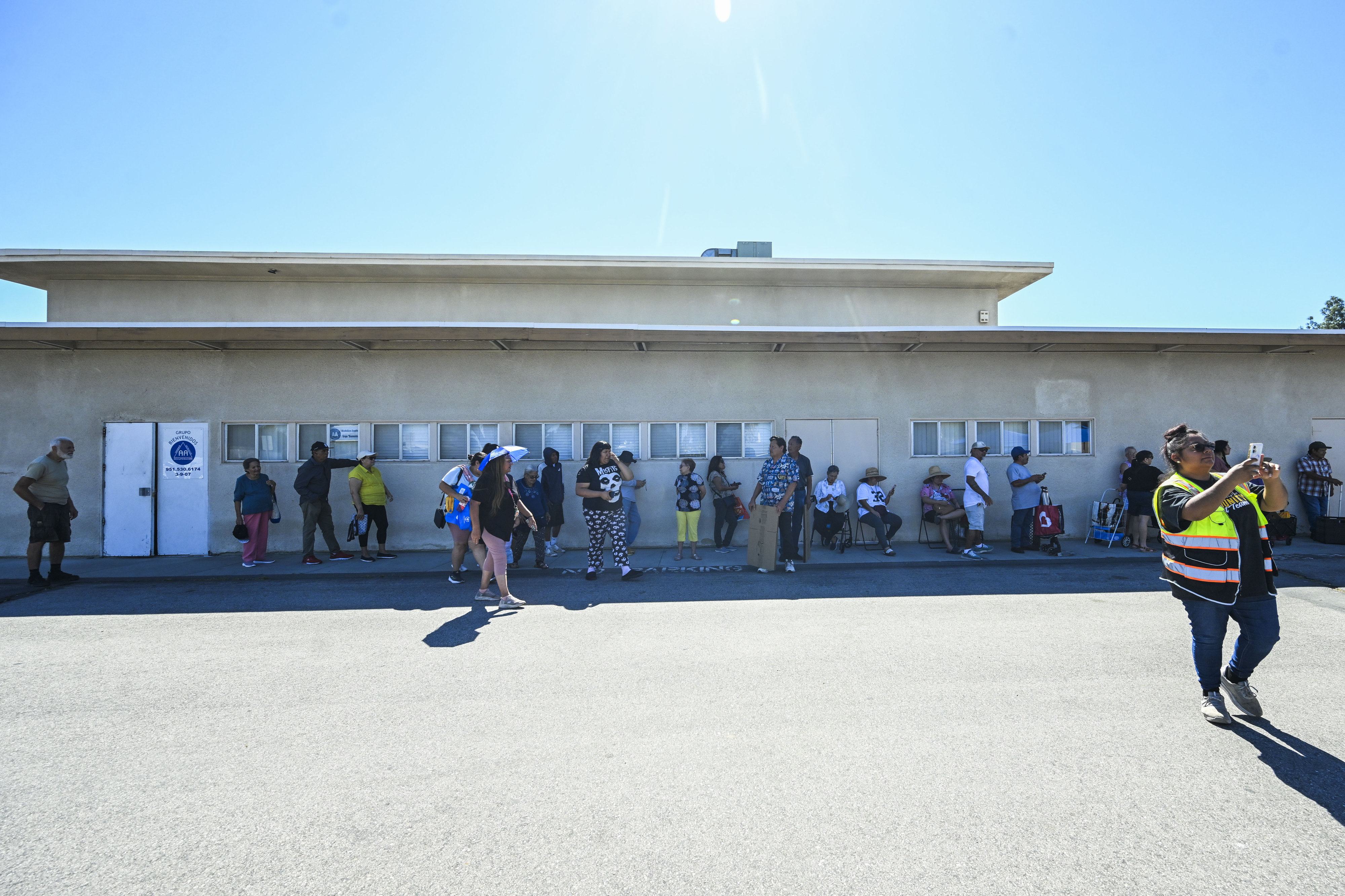
Riverside residents wait in line at the Lighthouse of Hope food pantry in Riverside on Wednesday, March 18, 2026. (Photo by Anjali Sharif-Paul, The Sun/SCNG)
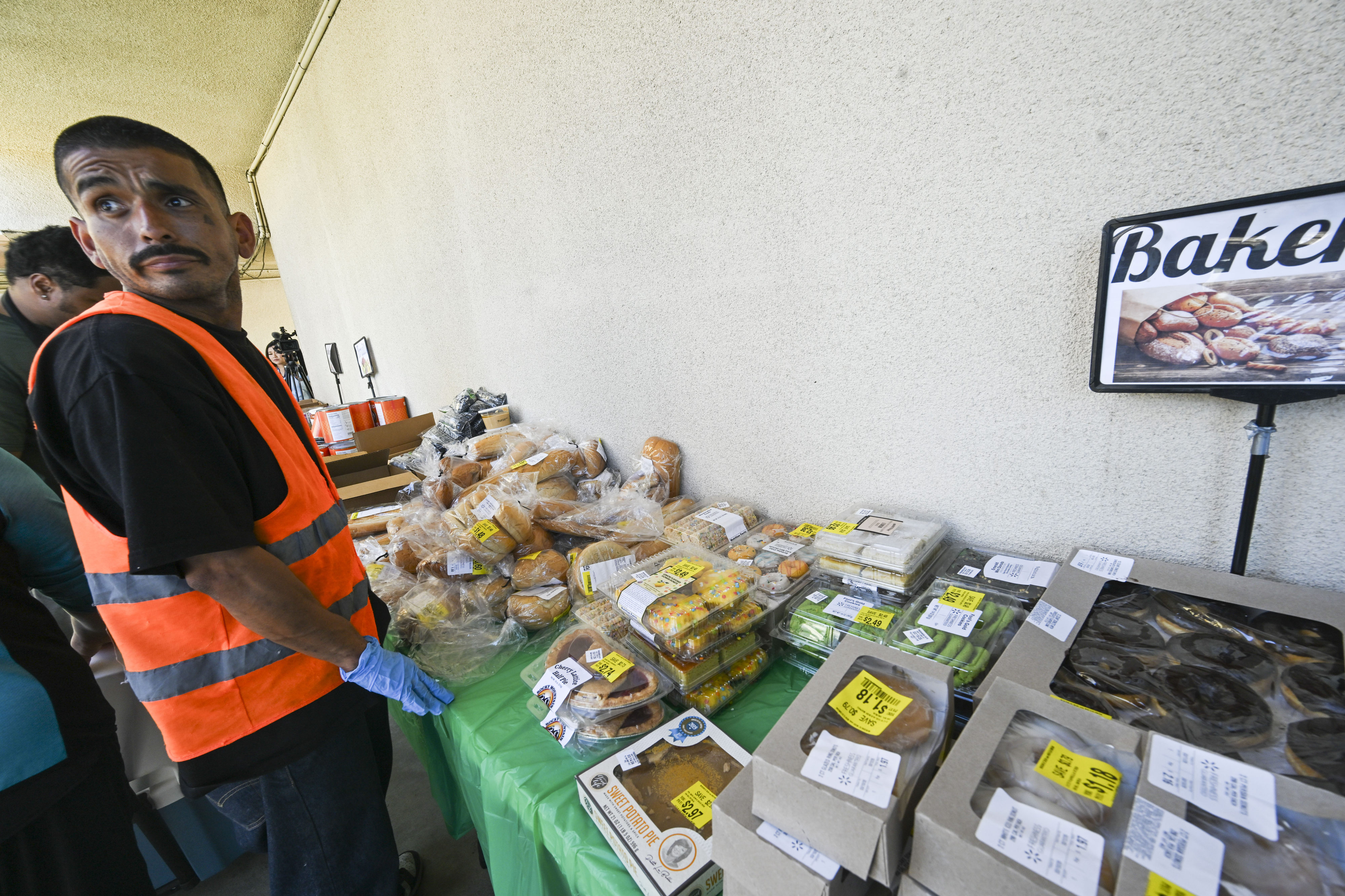
Riverside residents receive food Wednesday, March 18, 2026, at the Lighthouse of Hope food pantry in Riverside as volunteers help distribute the goods. (Photo by Anjali Sharif-Paul, The Sun/SCNG)
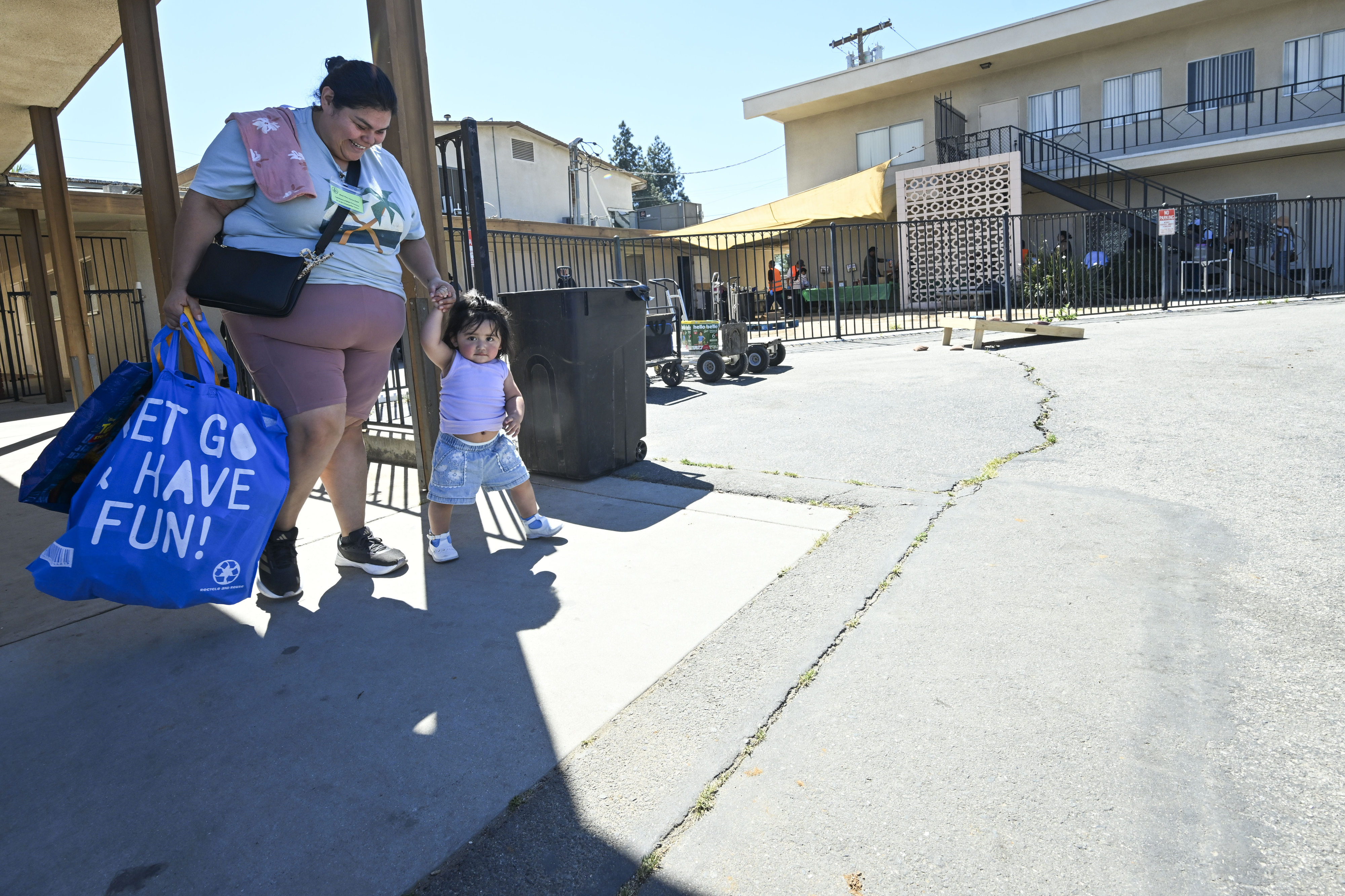
Veronica Garcia and daughter Teresa Delgado Garcia leave the Lighthouse of Hope food pantry in Riverside with a full bag of fresh food on Wednesday, March 18, 2026. (Photo by Anjali Sharif-Paul, The Sun/SCNG)
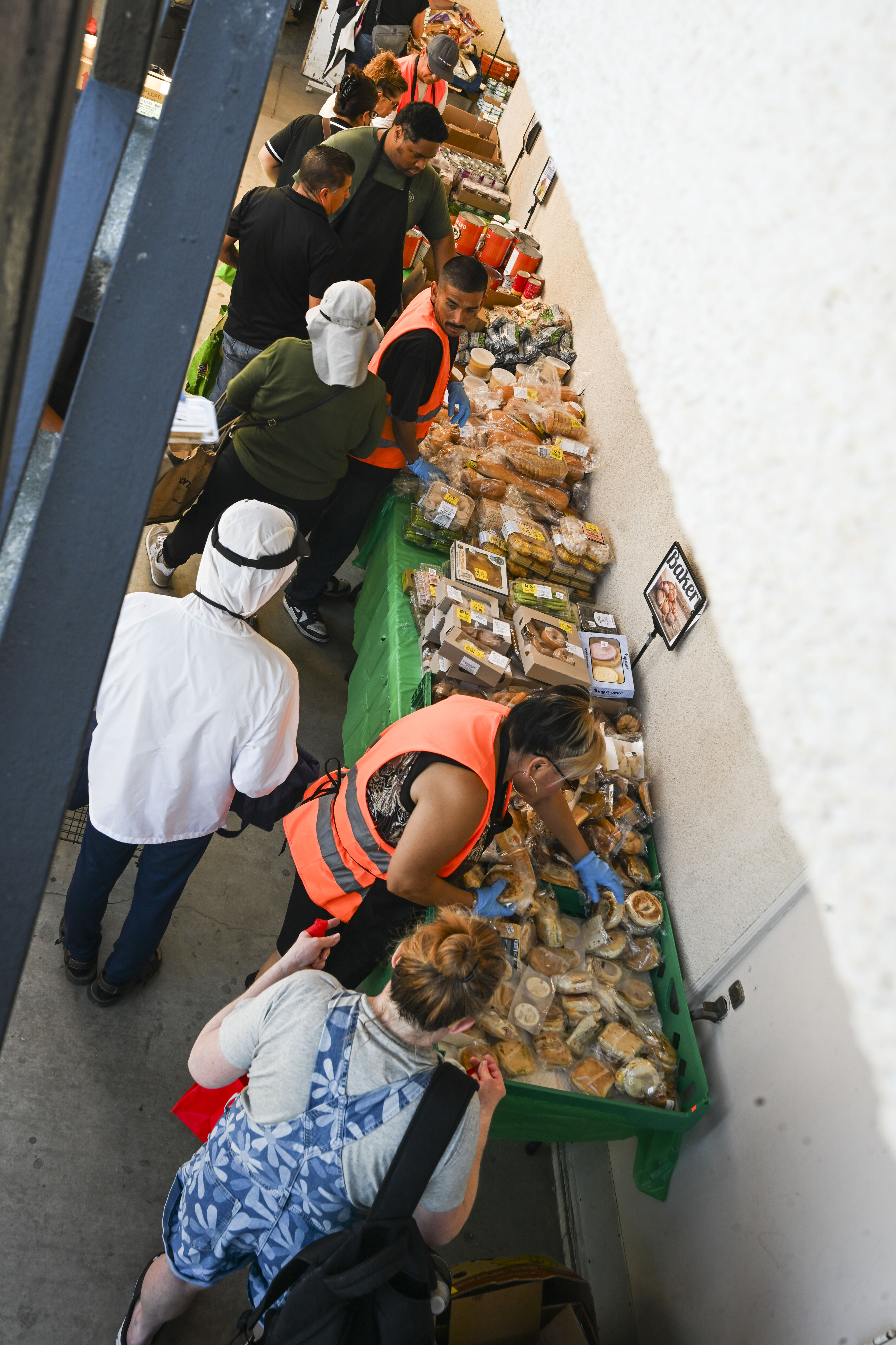
Riverside residents receive fresh food Wednesday, March 18, 2026, at the Lighthouse of Hope food pantry in Riverside. (Photo by Anjali Sharif-Paul, The Sun/SCNG)
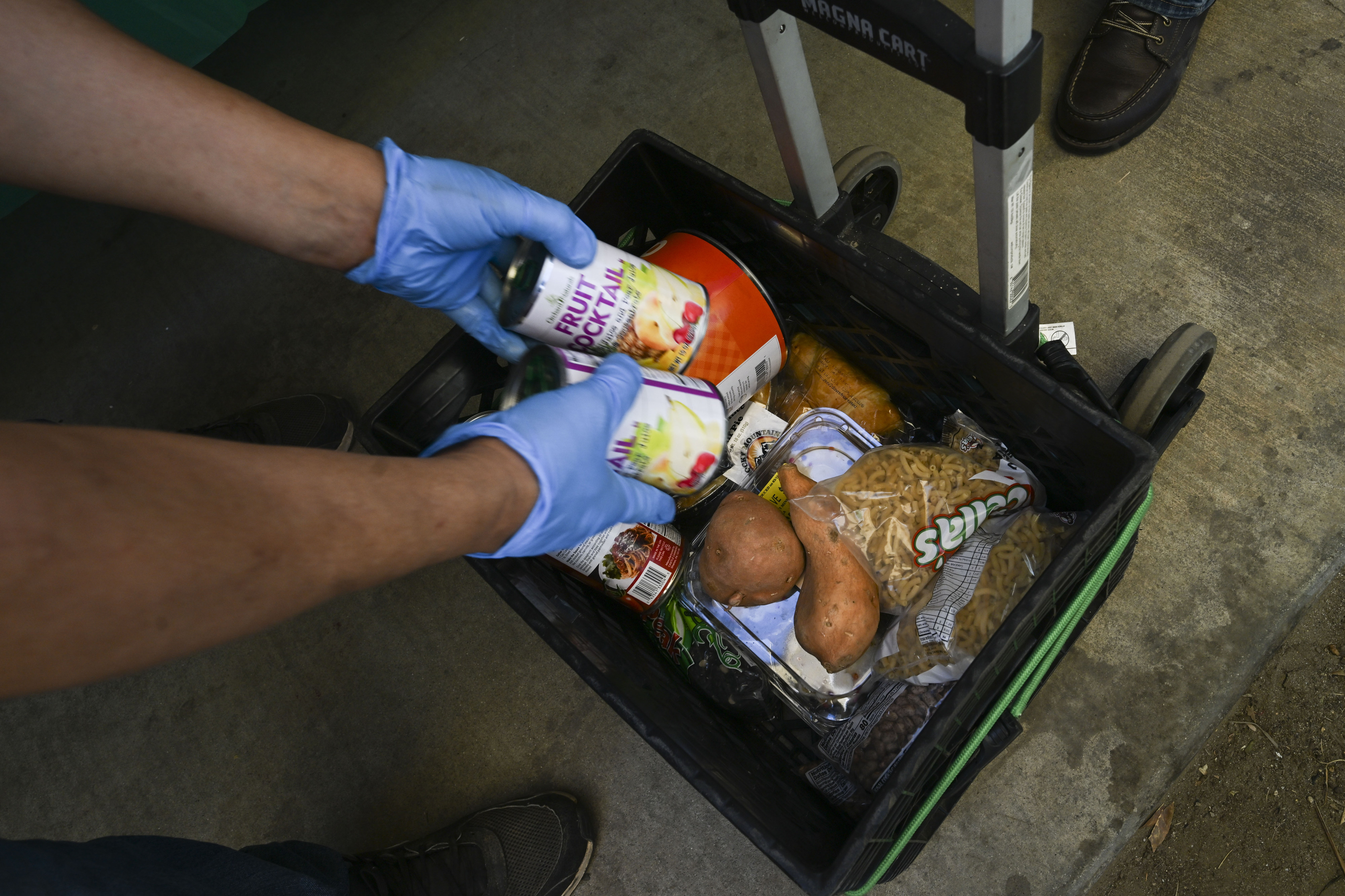
Riverside residents receive food Wednesday, March 18, 2026, at the Lighthouse of Hope food pantry in Riverside. (Photo by Anjali Sharif-Paul, The Sun/SCNG)
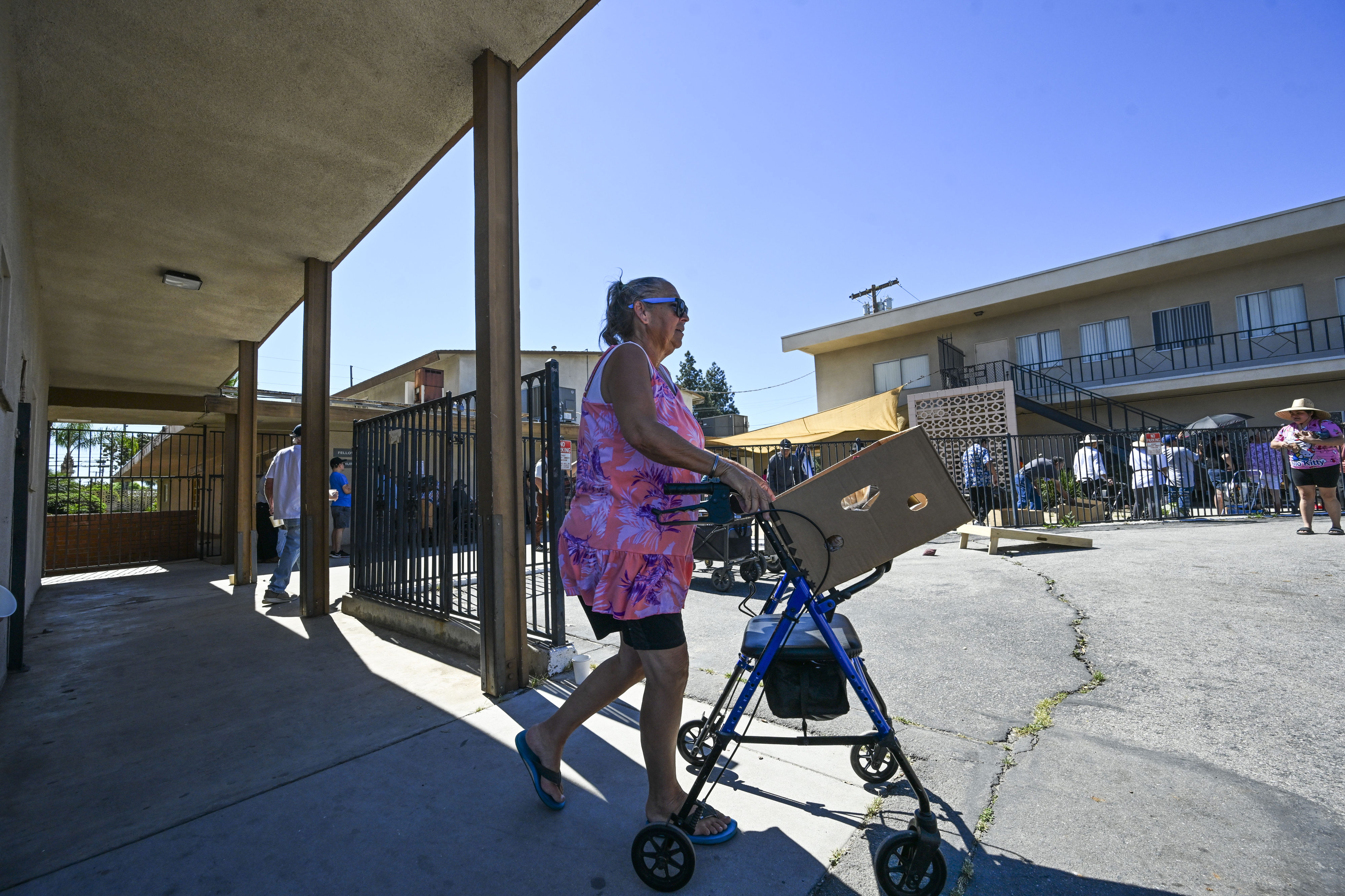
Riverside residents leave the Lighthouse of Hope food pantry in Riverside on Wednesday, March 18, 2026, after receiving dry and fresh goods. (Photo by Anjali Sharif-Paul, The Sun/SCNG)
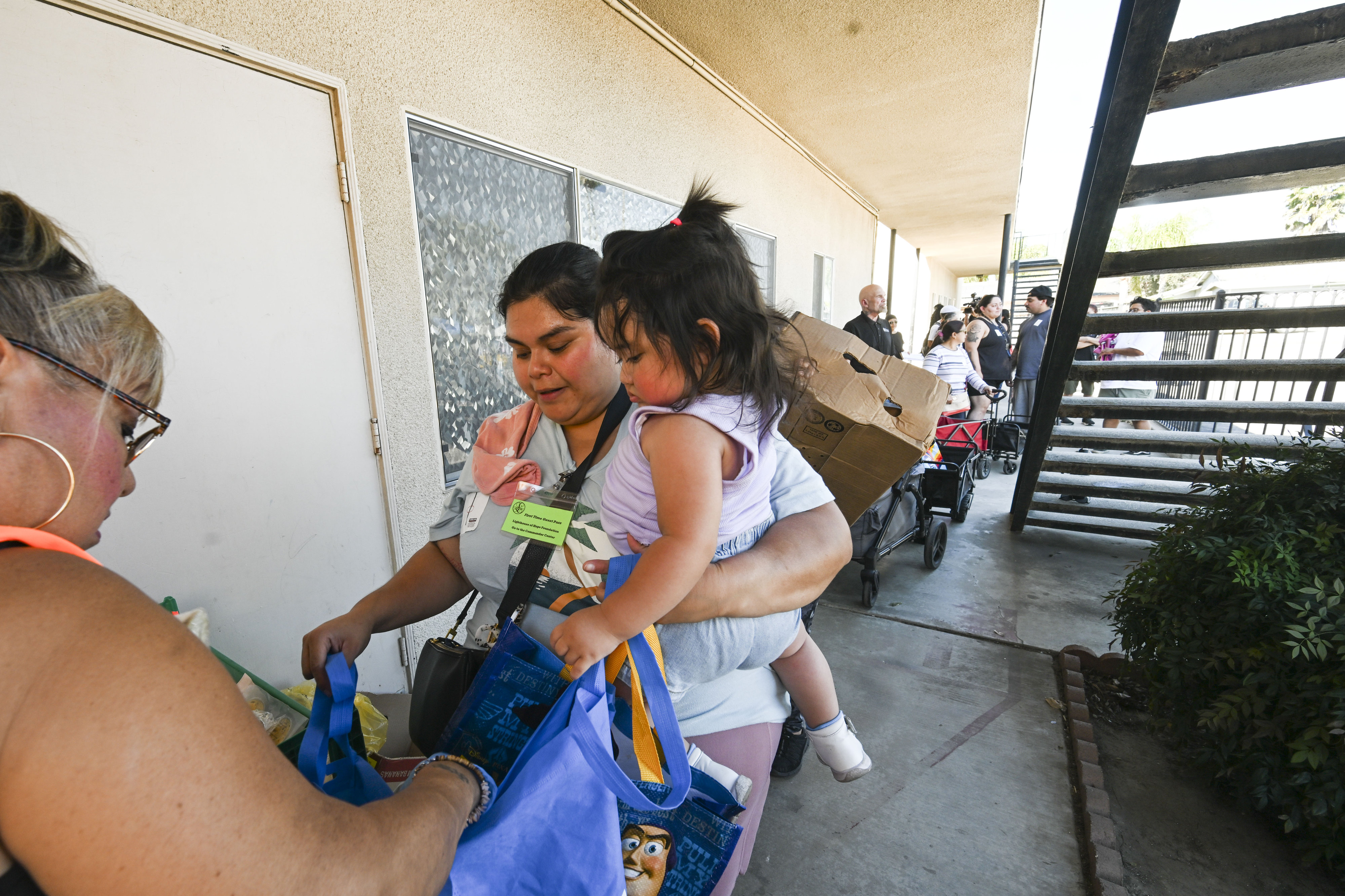
Veronica Garcia and daughter Teresa Delgado Garcia receive food from the Lighthouse of Hope food pantry in Riverside on Wednesday, March 18, 2026. (Photo by Anjali Sharif-Paul, The Sun/SCNG)
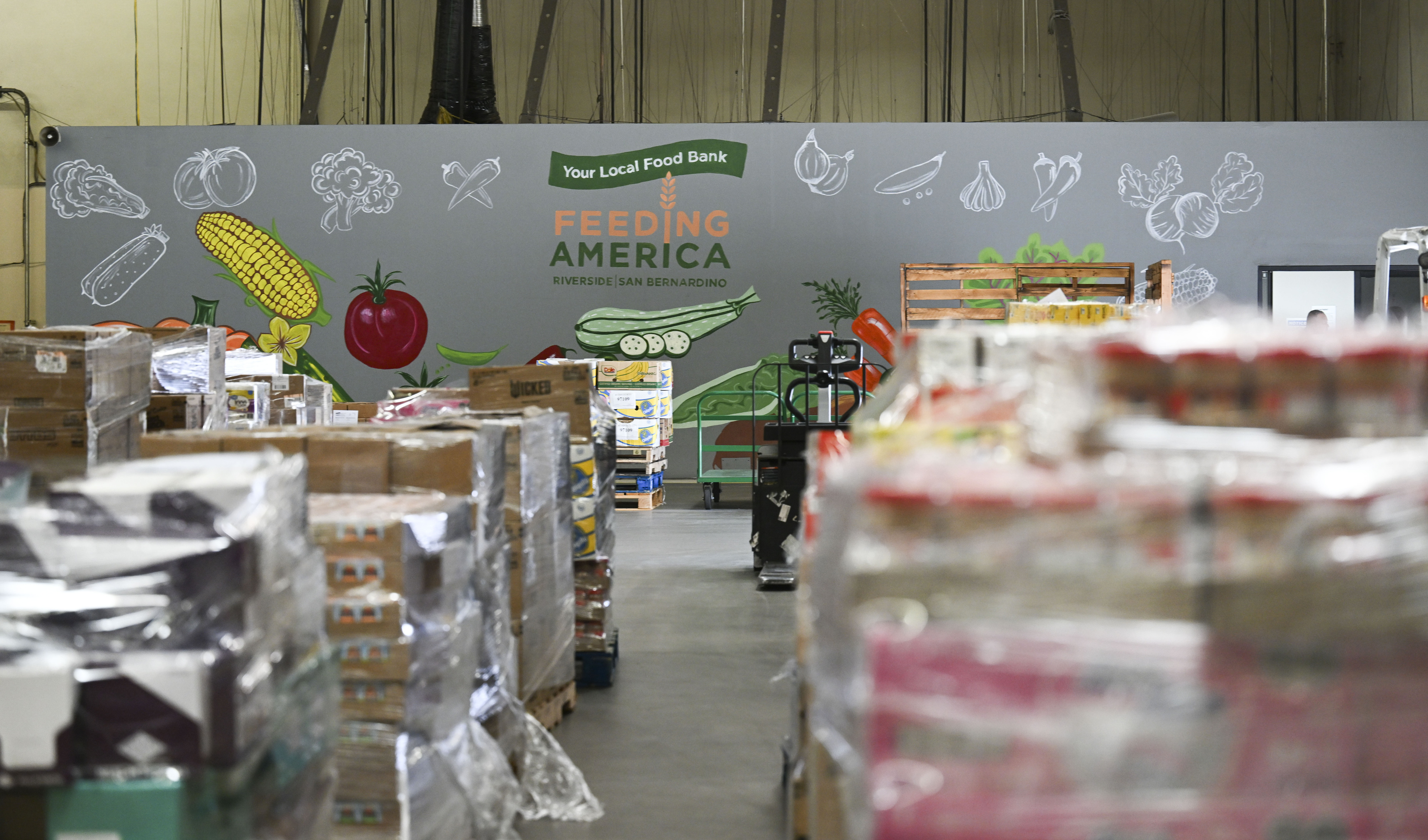
Pallets of dry goods are stacked for distribution Wednesday, March 18, 2026, at the Feeding America Riverside | San Bernardino warehouse in Riverside. (Photo by Anjali Sharif-Paul, The Sun/SCNG)
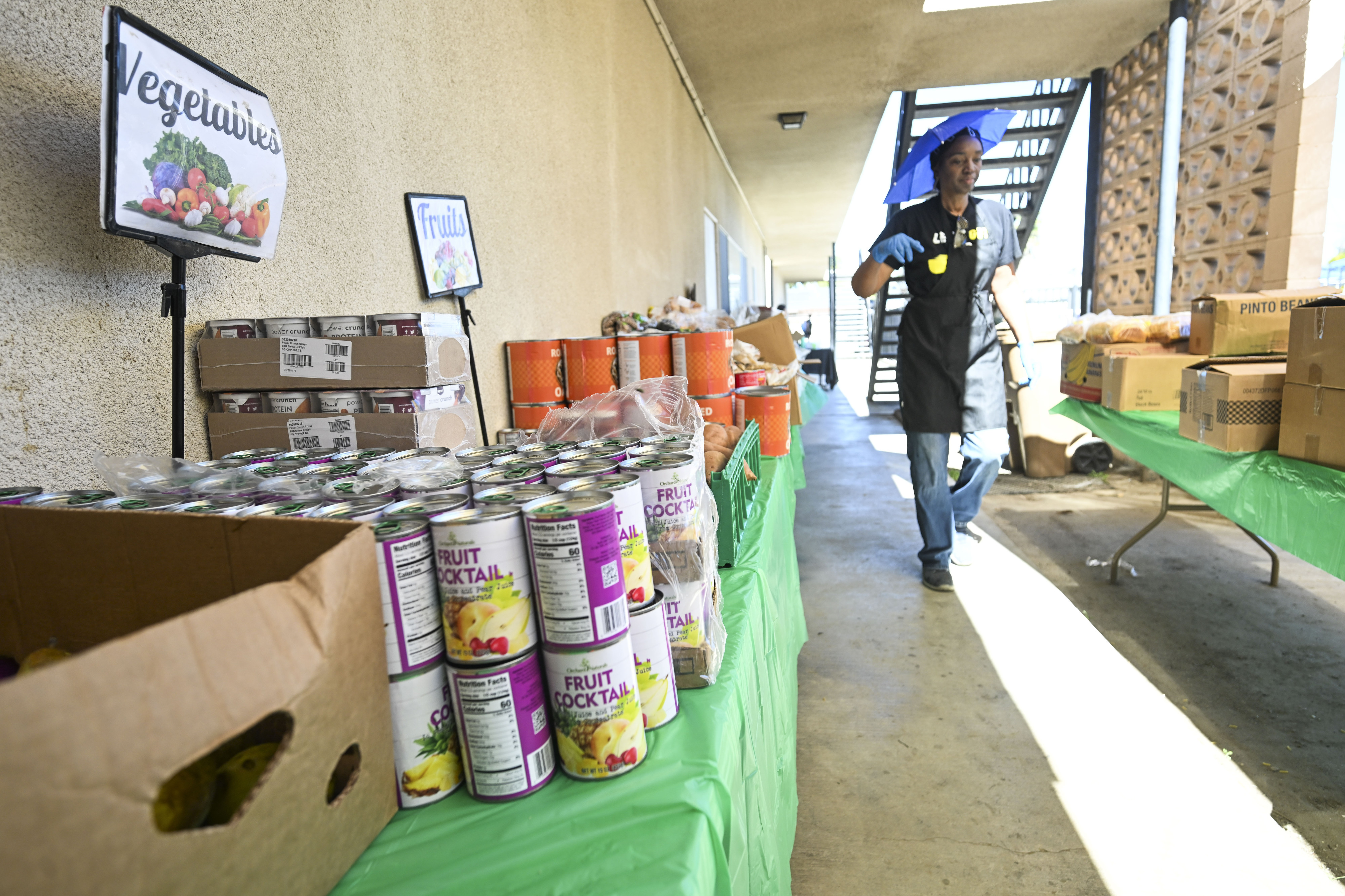
Riverside’s Lighthouse of Hope food pantry is stocked Wednesday, March 18, 2026, as volunteer Evelia McMahon walks by. (Photo by Anjali Sharif-Paul, The Sun/SCNG)
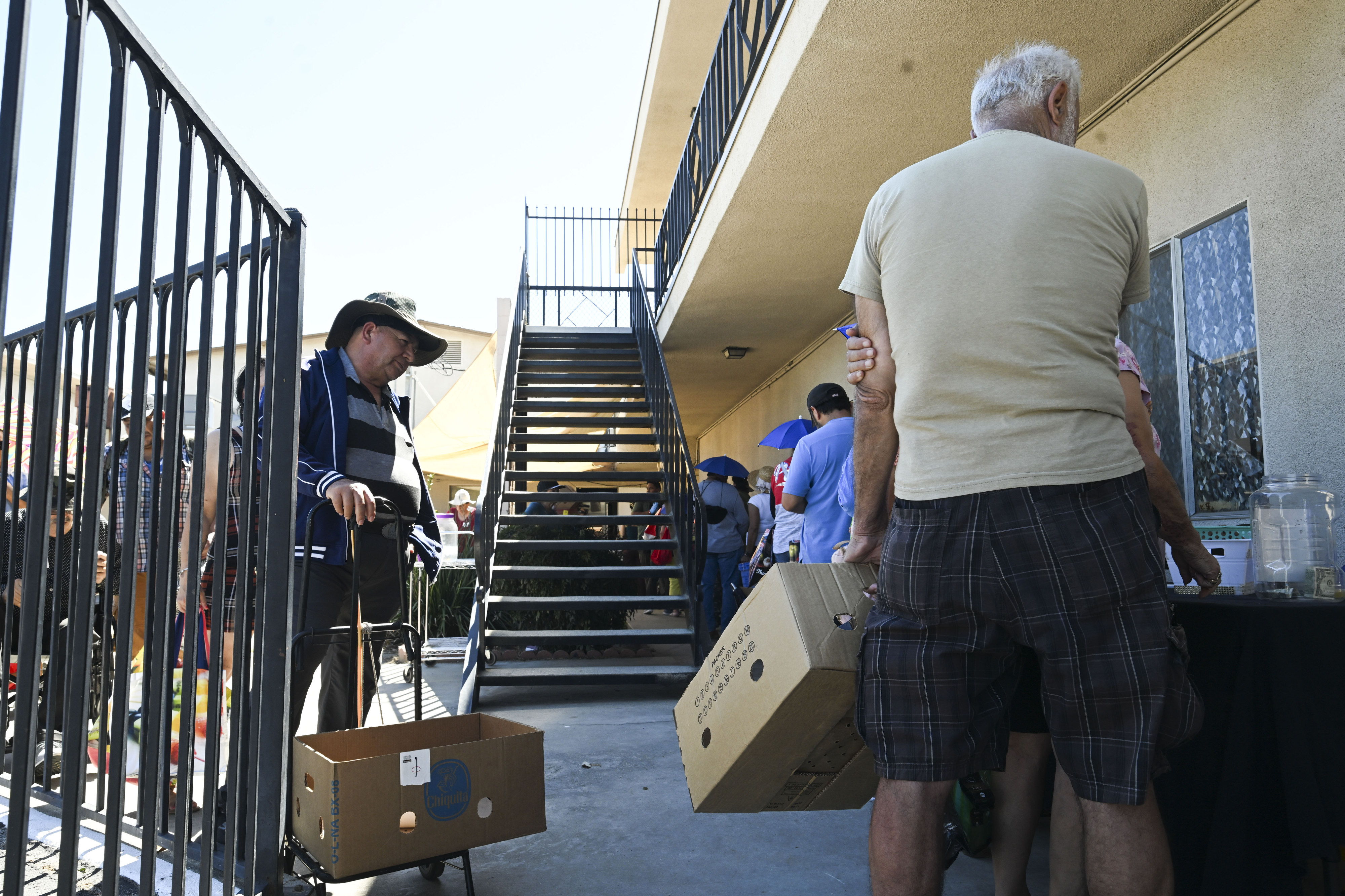
Riverside residents wait in line Wednesday, March 18, 2026, at the Lighthouse of Hope food pantry. (Photo by Anjali Sharif-Paul, The Sun/SCNG)
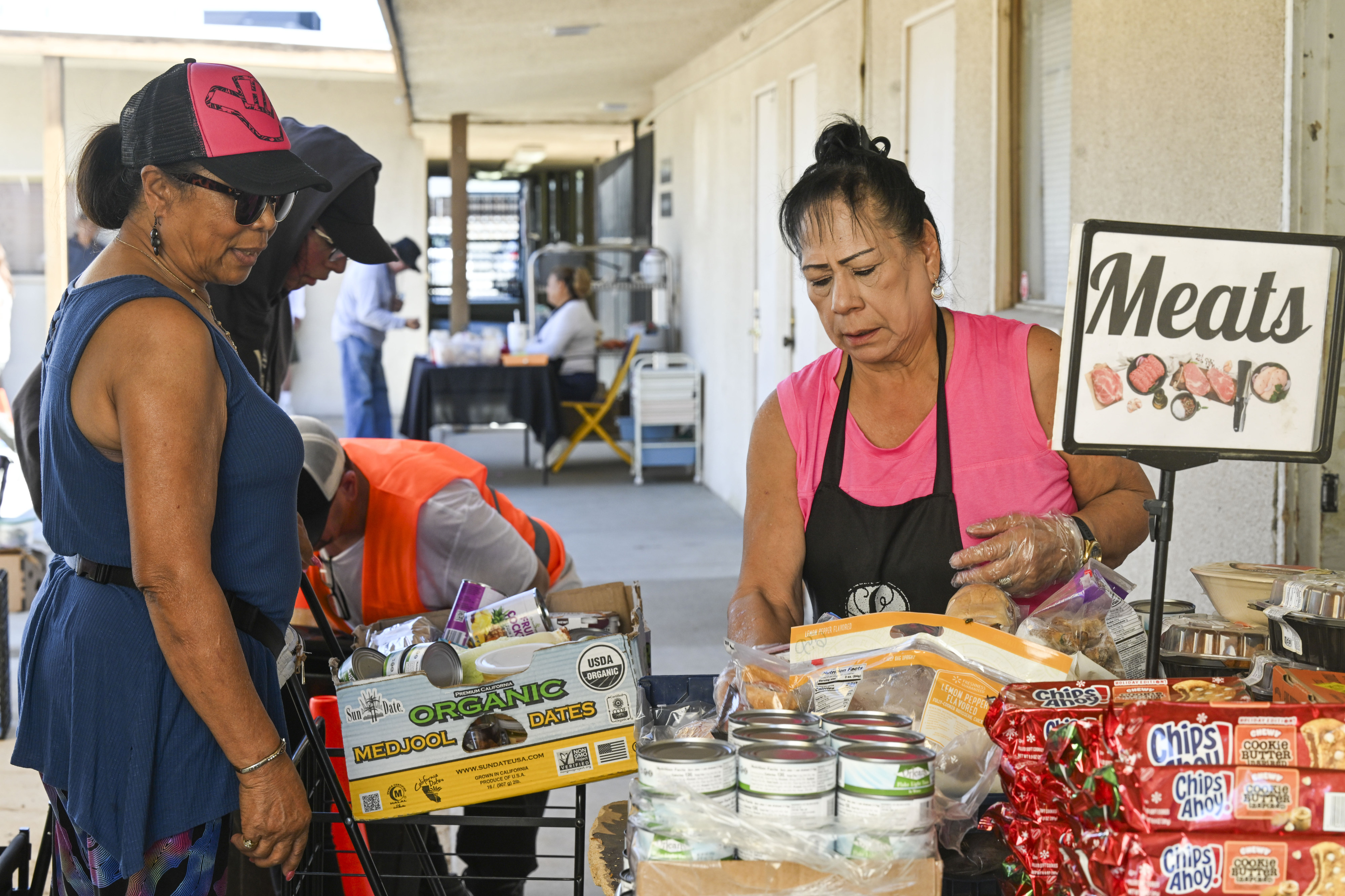
Riverside residents receive fresh food, including meat, at the Lighthouse of Hope food pantry on Wednesday, March 18, 2026. Advocates said more than 150 food pantries across Riverside County could face severe supply reductions if CalFood funding is slashed. (Photo by Anjali Sharif-Paul, The Sun/SCNG)
Show Caption
1 of 11
Riverside residents wait in line at the Lighthouse of Hope food pantry in Riverside on Wednesday, March 18, 2026. (Photo by Anjali Sharif-Paul, The Sun/SCNG)
Expand
With significant cuts to CalFood, officials said, more than half of Feeding America Riverside | San Bernardino’s community pantry partners that distribute food would see a significant drop in donations to its shelves. The food bank works with more than 250 partners handing out food across the sprawling region.
One of those community partners is Lighthouse of Hope Foundation, a 6-year-old nonprofit organization that organizes weekly food and supply pantries around Riverside.
At a March 18 distribution at the Christian Life Center in Riverside, hundreds of families lined up around the block to pick up groceries and other essentials, from meats and lentils to fresh produce, all provided through Feeding America Riverside | San Bernardino’s stock.
Lighthouse of Hope founder Donna Sautia stressed the importance of the partnership, which many local churches, nonprofit groups — and especially families in need and the homeless — rely upon. This year, Lighthouse has served hundreds of families and distributed over 100,000 pounds of food with help from Feeding America, Sautia said.
“Having the Feeding America program has been a huge answered prayer for our families,” she said. “They’re struggling. Their benefits have been cut, and there’s lots of things happening. And hunger knows no rest.”
The impact of potential CalFood cuts would mean Lighthouse of Hope, like many nonprofit organizations, “would not be able to do our job …,” Sautia said.
If the shelves ran out, Sautia added, she would “personally go out and buy it myself — fruits, vegetables, meats, 50-pound bags of beans and rice.” She’s already been seeing “devastating” impacts federal cuts have had on families, especially in the Latino-heavy Inland Empire, where some are afraid of immigration enforcement and fear going out to get groceries. Everything from high gas prices to lost benefits is “affecting everyone in every way,” she said.
“So we’re listening, and doing what we can just to make sure everyone is taken care of,” Sautia said.
Riverside resident Veronica Garcia came to the church food pantry with daughter Teresa and neighbor Elizabeth Cruz after seeing it on Facebook. They worried about rising prices driving up the cost of groceries to make fresh, nutritious meals for their aging families.
“Everything is so expensive, so this gives us room to breathe — especially since we have kids,” Garcia said. “We want to be able to give them healthy, good food, but we don’t have the money for it. So these (food pantries) should be funded. We’re very grateful for them.”
Dining and Cooking