
Il Italian gelato represents a unique paradigm in the Made in Italy panorama, where craftsmanship merges with a cutting-edge industrial visionIt is not just an excellent product, but a integrated supply chain which exports technologies, raw materials, and inimitable know-how throughout the world. This guide explores the pillars that make the
work of Italian ice cream the international reference point for quality, safety and innovation gastronomic.
Sector dynamics: the economic weight of Italian excellence
Italian gelato is one of the most recognizable symbols of Made in Italy food, with a supply chain that combines industry, craftsmanship, and technology. In 2024, production of industrial ice cream in Italy reached approximately 198.000 tons for a value of approximately 2 billion euros, with a per capita consumption of around 2 kg per year, according to data from Unione Italiana Food.
THE export continues to represent a strategic lever:
95.348 tons exported in 2024;
a value of 387,8 million of euros;
with an annual growth of + 19,5 % in volume and +10,8% in value (Unione Italiana Food, 2026).
THEEurope absorbs most of the sales, while among the main ones non-EU markets The United States and the United Kingdom are among the top countries, followed by Germany, Spain and France.
In the compartment crafts
Italy It confirms its leadership in Europe, with a supply chain worth approximately 4,5 billion euros and over 120.000 employees, and over 600 million portions sold in 2024, equal to 26,4% of the EU market, according to the Italian Gelato Institute.
Il global market of the ice cream has reached 92,52 billion dollars in 2025 and is expected to reach $152,96 billion by 2030, with a compound annual growth rate (CAGR) Of the 4,05%. Italy remains the main European exporter of technologies e know-how for artisanal production (Mordor Intelligence, 2026).
Roots and culture: the historical evolution of Italian taste
Ice cream was born in Italy and spread throughout Europe thanks to master ice cream makers of the Renaissance, called to work in the main courts of the continent. Bernardo Buontalenti, architect and artist of Florence, is the legendary figure credited with having invented the first machine for freezing a cream of milk, zabaglione, fruit and wine, celebrated at the Medici court in 1565.
Between the seventeenth and eighteenth centuries, sorbets and frozen creams became symbols of gastronomic refinement, while in the nineteenth century theItalian ice cream making art It spread throughout the world thanks to the emigration of artisans, especially from the Alpine valleys of Northern Italy. Gelato makers from Veneto, Trentino, and Friuli brought their tradition to Germany, Austria, France, and overseas, creating a veritable ice cream diaspora.
In the twentieth century, theItaly regains a central role thanks to the birth of thepackaged ice cream industry, developed in Milan in the early 1950s with pioneering companies like Motta and Alemagna. This process made gelato accessible to an ever-widening audience, transforming it into an everyday pleasure rather than just a seasonal or elite one.
In a few decades, the per capita consumption In Italy it has gone from around 250 grams to around 2 kg per year, a sign of the widespread diffusion of the product (Unione Italiana Food, 2026). Today Italian ice cream is an element of identity of the national food culture and one of the most appreciated expressions of the confectionery tradition in the world.
The production method: science and technique of creaming
The production of homemade ice cream Italian craftsmanship is distinguished by a process that combines technique, science, and creativity. The production cycle includes four fundamental phases:
1. Preparation of the mixture
The basic ingredients – milk, cream, sugars, egg yolks (for cream flavours) or water and fruit pulp (for sorbets) – are mixed in precise proportions.equilibrium between solids, fats and sugars determines the final structure of the ice cream. The use of prepared bases It allows for qualitative standardization, which also allows for the addition of fresh ingredients.
2. Pasteurization
The mixture is heated to 85°C for 15 seconds (HTST – High Temperature Short Time method) or a 65 ° C for 30 minutes (LTLT method – Low Temperature Long Time) to ensure the microbiological safety of the product. This step is mandatory in the self-monitoring plans required by Regulation (EC) No. 852/2004.
3. Maturation
The pasteurized mixture is cooled rapidly and left to rest at 4°C for 4-12 hoursDuring this period, the milk proteins become completely hydrated, the fats crystallize and the stabilizers They perform their function by improving the structure and melting resistance of the finished product (Goff & Hartel, 2013).
4. Stirring and hardening
The matured mixture is fed into the churning machine, where it is simultaneously frozen and incorporated with air. The process of creaming creates a structure of very fine ice crystals (20-50 micrometers) which give the characteristic creaminess of Italian ice cream, with an ‘overrun’ (air incorporation) of 25-35%, much lower than American industrial ice cream which can reach 100-120% (Clarke, 2004).
Italian artisanal ice cream is characterised by a serving temperature of -10/-14°C, higher than industrial ice cream (-18/-22°C), which enhances the organoleptic qualities and the perception of flavours.
Ice Cream Engineering: Made in Italy Technologies
The strength of Italian ice cream lies not only in the final product, but in the integrated supply chain which supports it, composed of:
producers of ingredients and semi-finished products;
companies of professional machinery;
packaged ice cream industries;
thousands of artisanal ice cream shops in Italy and abroad.
According to data from the Italian Food Union, the ingredients and semi-finished products for ice cream parlors they generate approximately 1,1 billion euros of turnover, with the 67% intended for export (Italian Food Union, 2026).
The sector of machinery for artisanal ice cream parlors is strongly oriented towards internationalization, with a turnover of l 750 million euro what is it worth?85% of the global market of ice cream parlor equipment (Il Sole 24 Ore, 2024). Among the Italian industries, the leader Carpigiani holds approximately the 35% of the market share, and is supported by other excellent companies such as Bravo, Frigomat, Telme and Technogel. Italy exports creamers, pasteurizers, display windows and conservation systems in over 150 countries.
Semi-finished products and bases: innovation in noble ingredients
The sector of ingredients for ice cream It represents one of the strengths of the Italian industry, with a highly specialized production system that provides technological solutions to artisanal gelato makers around the world. The Italian gelato ingredient supply chain is divided into various product categories, each with specific technical and functional characteristics.
Ice cream bases: the heart of artisanal production
Le ice cream bases constitute the technological foundation of artisanal production and are divided into three main typologies. complete bases They are balanced, ready-to-use mixes containing all the ingredients needed to make gelato, including sugars, milk proteins, fats, and stabilizers. These solutions allow gelato makers to achieve consistent, high-quality results with standardized processes (Unione Italiana Food, 2026).
Le neutral bases, on the other hand, are partial formulations to be completed with fresh or semi-finished ingredients, which offer greater creative freedom to the ice cream maker while guaranteeing the structural balance of the product. Finally, the special bases They include formulations designed for specific needs, such as lactose-free, low-sugar, vegan, or high-protein products, responding to growing market demands for functional and inclusive products.
Concentrated pastes: tradition and versatility
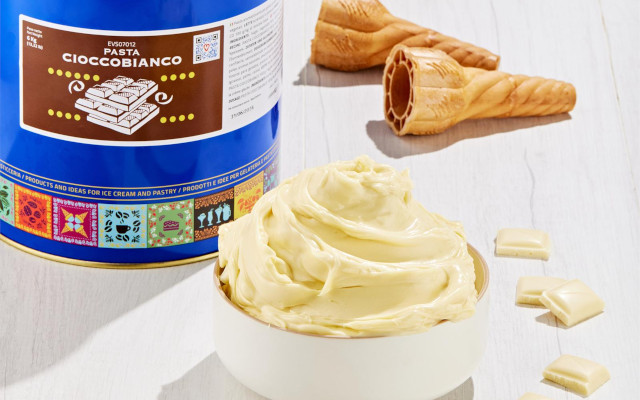
Le concentrated pastes They represent one of the most excellent segments of Italian production. These highly aromatic semi-finished products allow gelato to be characterized by distinctive flavors, using superior-quality raw materials:
le traditional pastas The most common ones include hazelnut, pistachio, almond, coffee and cocoa, sometimes made with ingredients with a Geographical Indication such as the IGP Piedmont Hazelnut or the Bronte Pistachio DOP;
alongside the classic formulations, new ones are developed innovative pastas with new flavor combinations, from exotic spices to superfruits, up to organic and clean label versions that respond to contemporary market trends.
Variegations and toppings: texture and taste
I varied These are thick, viscous preparations made with fruit, chocolate, caramel, or other ingredients, used to create streaks within ice cream or as a garnish. These products must remain stable during low-temperature storage without crystallizing or separating, while also ensuring a distinctive visual and flavor effect.
I topping, on the other hand, include sprinkles, chocolate chips, cookie pieces, caramelized dried fruit, and other crunchy ingredients that add texture and contrast to the ice cream. The ability to maintain crunchiness even at freezing temperatures is a key technical feature for these products.
Specialized decorations and semi-finished products
Le decorations They include wafers, cones, cups, cookies, and other presentation elements that complete the gelato experience. This segment is characterized by a strong focus on design and customization, with solutions ranging from traditional formats to more innovative creations.
I semi-finished products for drinks and desserts Finally, ice cream represents a growing area that includes preparations for granitas, milkshakes, smoothies and other ice cream-based preparations, expanding the commercial possibilities of artisanal ice cream shops.
Champions of the supply chain: industrial hubs and leading groups
The Italian ice cream ingredients industry is dominated by a few historic companies that have successfully combined tradition and innovation, achieving leadership positions in international markets.
Casa Optima: the Italian holding company in the sector
The group Casa Optima It is today the first Italian hub in the ice cream and pastry sector, with over 260 million euro of consolidated turnover in 2024. It includes the company from San Clemente (Rimini) Dude3 – one of the European leaders in the production of bases and semi-finished products for artisanal ice cream, with a turnover of 95 million euro and a share export higher than 70% – as well as Modecor Italiana (pastry decorations, Varese), Giuso (high-end ice cream and pastry products, Alessandria), Pernigotti Maestri Gelatieri (ice cream and pastry products, Milan), Florensuc (pastry decorations, Amiens, France), Domumix (syrups and sauces for drinks, ice cream, and granitas, Rimini), Ambra (pastry decorations, Milan), and the Brazilian company Blend Coberturas (sugar-free products, São Paulo, Brazil).
Disaronno Ingredients: The Strength of the Illva Group
Disaronno Ingredients – division of the Illva Saronno Group, with a consolidated turnover of 400 million in 2024, third largest Italian group in the liquor sector – represents a successful case of vertical integration in the gelato and pastry ingredients sector. With the brands Anselmi 1892, Stella, Montebianco, Alvena, Chiaravalle, Eurobisco, Sepa, Pavone, Disaronno Ingredients offers a range of flavoring pastes and semi-finished products that enhance the tradition of Italian artisan gelato and pastry making and industry innovation in the direction of natural and plant-based ingredients. With estimated revenues of around 100 million euro in the premium segment and a strongly international vocation, Disaronno Ingredients exports to over 60 countries.
Fabbri 1905: Emilian excellence since 1905
1905 locksmiths, founded in Bologna by Gennaro Fabbri, is one of the most historic and prestigious brands in the ice cream and pastry ingredients sector. The company, which in 2024 recorded a turnover of over 100 million euros, is particularly known for its amarena, fruit variegates and high-quality aromatic pastes. With a commercial presence in over 100 countries, Fabbri allocates approximately 60% of production exported, with particular success in the European, North American and Asian markets.
Other protagonists of the Italian supply chain
Alongside the market leaders, the Italian ice cream ingredient supply chain includes numerous specialized companies that contribute to the sector’s competitiveness. PreGel (Reggio Emilia), Comprital (Settala, MI), Leagel (Padua) and Aromitalia (Settimo Torinese), GEON (Emendatori&Vayra1905) (Ferrara) represent excellence in the production of bases, pastes and semi-finished products, each with specific product and market specializations.
This highly competitive industrial ecosystem fosters continuous innovation and the maintenance of high quality standards, consolidating Italy’s position as the world’s leading supplier of artisanal gelato ingredients. Export orientation and the ability to adapt to the needs of international markets characterize the entire supply chain, which on average allocates over 65% of its production to foreign markets.
Quality systems: food safety and traceability
Italian companies producing ice cream ingredients are subjected to rigorous quality standards Food safety and quality, compliant with European and international regulations. The quality management systems implemented include HACCP, BRC, IFS, and ISO 22000 certifications, which guarantee complete traceability of the supply chain and control of every production stage.
Particular attention is paid to the environmental sustainability,, with increasing investments in technologies to reduce energy consumption, manage water resources responsibly, and use recyclable or compostable packaging. Several companies in the sector have joined sustainable procurement programs, favoring suppliers with appropriate certifications.
Innovation and transparency: the Clean Label trend and the regulatory framework
The evolution of the sector is driven by the growing demand for natural ingredients and products’clean label’, which reflect the growing attention of consumers towards transparency in the supply chain. This trend has pushed producers to a radical reformulation of recipes, replacing synthetic additives, flavourings and colourings with natural ingredients and flavourings (e.g. beetroot extracts for colour, natural vanilla flavouring, guar gum as a stabiliser).
Although the use of natural ingredients involves higher production costs and requires more complex technical management to ensure the product stability, the ‘simple label’ positioning today represents a competitive edge Transparency about the origin of ingredients and manufacturing processes also helps tap into premium market segments and strengthen the trust of younger consumers, such as Millennials and Generation Z (Mordor Intelligence, 2026).
In this context, the Regulation (EU) No. 1169/2011 It is a strategic tool for promoting the integrity and superior quality of Italian gelato in the European market.
Strategic Sourcing: A Buyer’s Guide to Procurement
For the international buyersThe Italian ice cream supply chain offers several areas of commercial opportunity, each with specific characteristics in terms of added value, logistics, and market positioning.
Packaged ice cream
The finished product intended for retail distribution and Horeca is characterised by a wide variety of formats (cones, sticks, cups, multipacks, trays), high quality standards and strong recognisability of the Made in ItalyThe premium segment, which values PDO and PGI ingredients, craftsmanship, and innovation, represents the area of greatest growth in international markets.
Ingredients and semi-finished products
The ice cream ingredients sector represents the most strategic opportunity for buyers looking to develop local production of artisanal Italian ice cream. The offering includes complete or customizable bases, aromatic pastes high quality, premium varietals, specialized toppings and solutions for functional or ‘clean label’ lines.
Concentrated pastes of hazelnut, pistachio, almond and other ingredients constitute a niche of excellence, with products that incorporate certified raw materialsItalian suppliers also offer technical support, training, and assistance in formulating customized recipes, facilitating the transfer of know-how to foreign markets.
Machinery and technologies
Italian companies export technology for ice cream parlors all over the world, with solutions that include batch freezers, pasteurizers, display cases, conservation systems and complete industrial linesThe growing integration of automation, energy efficiency, and digital quality control systems is a distinctive feature of the Italian offering.
The Italian artisanal ice cream machinery sector is recognized worldwide for its reliability, performance, and ability to support ice cream makers in producing high-quality ice cream with efficient and sustainable processes.
The support of the GIFT team
The team of GIFT (Great Italian Food Trade) supports international buyers in the selection of qualified suppliers of the entire Italian ice cream supply chain, offering:
scouting for producers of ingredients, semi-finished products and packaged ice cream;
identification of reliable Italian franchising chains for internationalization projects;
support in contract negotiation and logistics processes;
strategic consulting for product positioning in foreign markets.
GIFT facilitates access to a consolidated network of producers, ensuring transparency, traceability, and compliance with international quality and food safety standards. The service also includes organizing company visits, participation in trade fairs, and coordinating co-development projects between Italian producers and international distributors.
Conclusions
Italy’s global leadership in the gelato industry rests on its ability to oversee every stage of the value chain, from machine design to premium ingredient selection. This ecosystem unites artisanal knowledge and industrial leadership, constantly evolving but faithful to its quality roots, offers international partners guarantees of consistent quality and innovation. Relying on the Italian supply chain means choosing a production model synonymous with food excellence and global commercial success.
Cover credit: GEON
Bibliography
Clarke, C. (2004). The Science of Ice Cream (RSC Paperbacks). Royal Society of Chemistry. ISBN 978-0-85404-629-4

Dario Dongo, lawyer and journalist, PhD in international food law, founder of WIISE (FARE – GIFT – Food Times) and Égalité.
Dining and Cooking