
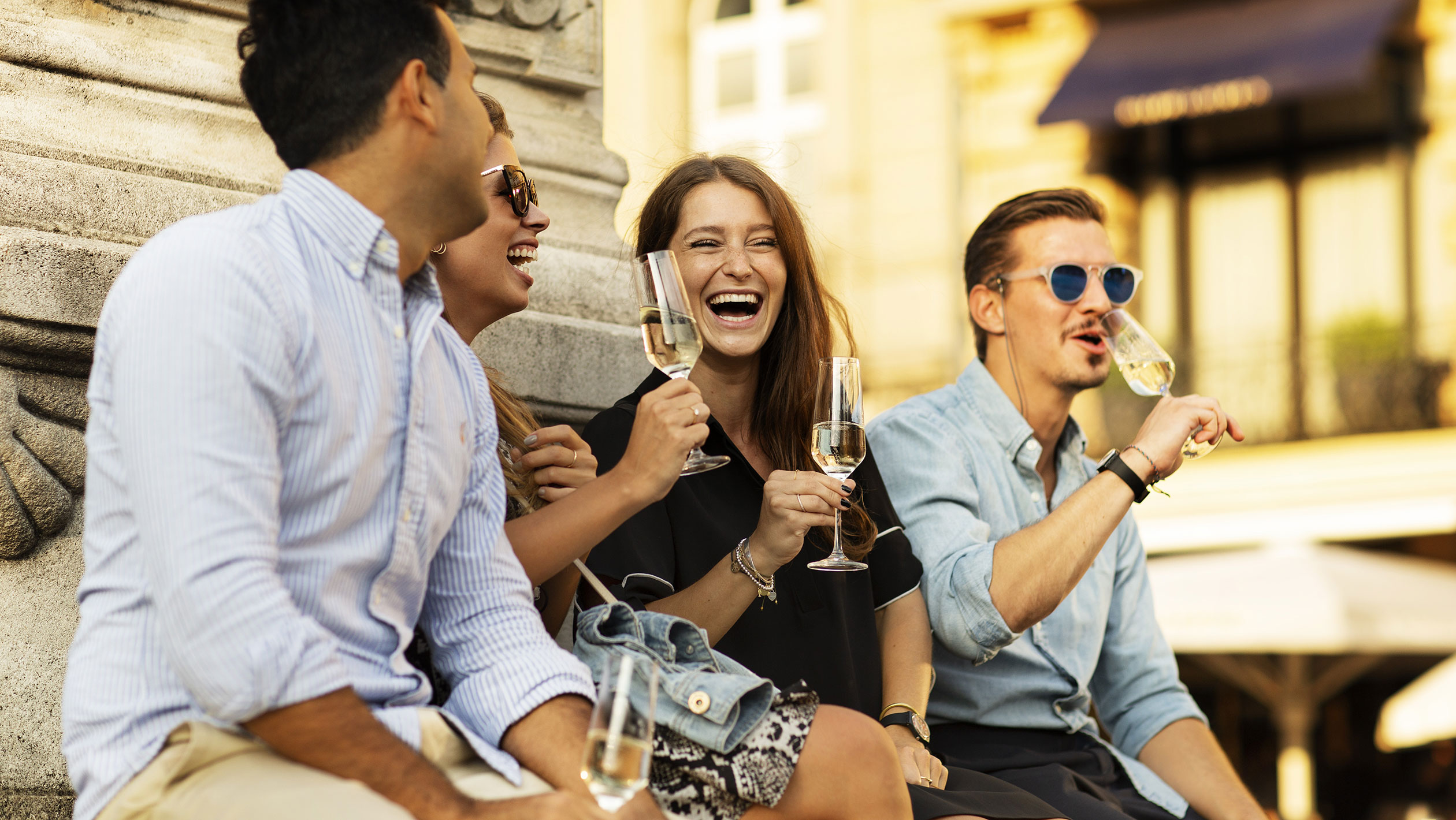
This advertising content was produced in collaboration with our partner, Wines of Germany.
German wine has long been synonymous with lower-alcohol, food-friendly wine styles. Now, as wine enthusiasts increasingly seek moderation and balance in their glass, Germany is becoming the go-to destination for wines that naturally deliver both.
“There’s just so much balance in Kabinett and Spätlese,” says Tira Johnson, the beverage director for We All Gotta Eat Group, which has restaurants in New York and Miami. She points out how the natural residual sugar and high acid—often with lower alcohol levels of 8% ABV—create equilibrium. “It’s like making lemonade … you’re always seeking that balance.”
Beyond naturally low-alcohol wines, Germany also stands at the forefront of innovation in the non-alcoholic space. The country produces some of the most compelling dealcoholized wines on the market—another category seeing strong demand from today’s consumers.
Don’t miss the latest drinks industry news and insights. Sign up for our award-winning newsletters and get insider intel, resources, and trends delivered to your inbox every week.
Julia Burke Freytsis, a buyer and wine educator at Flatiron Wines & Spirits in New York City, highlights the quality of Germany’s non-alcoholic bottlings, such as Leitz’s Eins Zwei Zero. “Having it on the table is a super-easy option,” she says. “It hits the spot.”
It’s no secret that the wine industry is working to better align itself with consumer demand and economic realities—but German winemakers are already meeting the zeitgeist exactly where it is, thanks to the country’s climatic advantages, long winemaking history, and dynamic, modern winemakers.
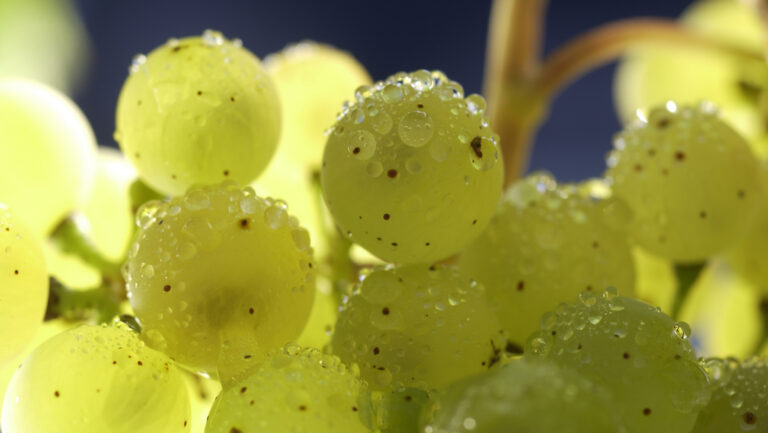 Dealcoholized Rieslings are successful in part because of the variety’s naturally high acidity, which helps to balance the residual sugar commonplace in 0.0% ABV styles. Photo courtesy of Wines of Germany.
The Landscape of No- and Low-Alcohol Wine—and Where Germany Fits In
Over the past two decades, U.S. wine consumers have gradually shifted toward lower-alcohol options. While overall wine sales are in decline, the no- and low-category continues to grow, with IWSR forecasting a compound annual growth rate of more than four percent through 2028.
However, making great no- and low-alcohol wine requires a suitable climate and strong technical know-how. Germany is well-positioned for success in both aspects.
Thanks to Germany’s cool climate and unique topography—with many vineyard sites on steep slopes along rivers like the Mosel, Rhine, and Nahe—the grapes can achieve the perfect balance of biological and physiological ripeness while retaining naturally lower alcohol levels. For non-alcoholic bottlings specifically, these naturally lower alcohol levels allow German producers to create wines that feel more structurally complete following the dealcoholization process.
German producers have been making non-alcoholic wines for over a century, and many technical innovations in the space have emerged in the country. Today, more than 100 German wineries craft quality non-alcoholic wines, in addition to the thousands of vintners producing naturally lower-ABV bottlings.
“The level of precision [German winemakers] can offer with a pretty tricky process gives them a leg up,” says Master Sommelier James Bube. He also notes that aromatic varieties like Riesling tend to retain their character better than others during the dealcoholization process.
German Riesling remains central to its success in no- and low-alcohol. Made in a range of styles, from bone-dry to lusciously sweet and from still to sparkling, with varying alcohol levels, it offers built-in flexibility for buyers.
For traditional styles of the Prädikat system—bookended by Kabinett and Trockenbeerenauslese—German Rieslings clock in at a modest 5.5% to 11.5% ABV. But due to the unique vineyard sites and microclimates, even the driest of Mosel Rieslings can still register at 11.5% or 12% ABV.
Dealcoholized Rieslings—beyond retaining their character—are also successful because of the variety’s naturally high acidity, which helps to balance the residual sugar commonplace in these 0.0% ABV styles.
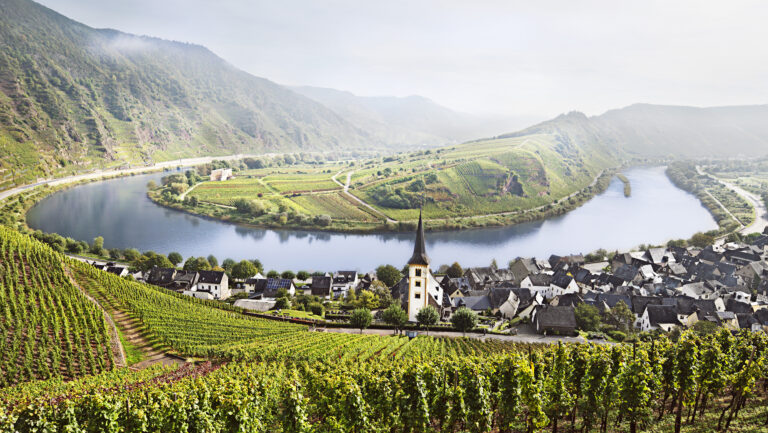 Thanks to unique vineyard sites and microclimates, even the driest Mosel Rieslings can still register at 11.5% or 12% ABV. Photo courtesy of Wines of Germany.
Lighter German Wines Offer Unique Selling Opportunities
While educated oenophiles are aware of Germany’s leadership in the no- and low-alcohol space, there is a meaningful opportunity to broaden the message to drinkers.
“While Riesling can be popular, I’m not sure that consumers are identifying it as a light wine,” says Simi Grewal, the cofounder and CFO of DecantSF. “However, when people are asking for lower-alcohol alternatives, it is really the only starting point.”
In Grewal’s experience, more experienced wine consumers are quick to ask if a Riesling is dry, but younger consumers don’t share that habit. “We all know that it’s really difficult to get younger people to drink wine,” says Grewal. “I have been noticing in the last year that the younger people who are coming in and looking for wine are swaying back to sweeter wine, and I’m seeing sweet Rieslings being an entry point for those consumers.”
While these sweeter styles can be a draw, they are not necessarily well known among younger cohorts. “I think that many people in their late 30s and over were introduced to German wine with Kabinett and Spätlese, and they think of them as low-alcohol wines, but I don’t think that younger people make that association,” says Andrew Fortgang, a co-owner of Flor Wines, Le Pigeon, and Canard, in Portland, Oregon.
This gap in awareness among younger generations presents a clear opportunity: positioning lower-alcohol Rieslings as both approachable and relevant to moderation-minded drinkers, particularly those new to the category.
For example, Bube points to Strub’s 2024 Niersteiner Paterburg Riesling Spätlese, which is sweet at 65 grams per liter of sugar—about the same as a 20-ounce Coca-Cola—but well balanced by high acid, and just 8% ABV. “It’s very playful,” he says. “There’s a ton of applications for wines cut from this cloth.”
Germany’s No- and Low-Alcohol Rieslings Are Gastronomic Powerhouses
Lower-alcohol Rieslings—both off-dry and dealcoholized—are increasingly a valuable tool for sommeliers building surprising and rewarding pairing programs. This is a useful strategy for older consumers who might bridle at the idea of drinking anything off-dry. At Fortgang’s restaurants, for example, “If we put an off-dry Riesling up by the glass, it won’t move on its own … but for pairings we use them all the time.”
Johnson’s sees similar success: “At Sushi Noz, we use a lot of off-dry pairings because with food it offers this ah-ha moment,” she says. “Pairing it with the saltiness and very delicate flavors of Japanese cuisine, you need something that’s lower alcohol because higher alcohol wines just wipe out those flavors.” Low-ABV Riesling is particularly effective in tasting menus, where multiple courses require wines that won’t fatigue the palate.
For a sparkling pairing option with modest alcohol, plus an extremely competitive price point, buyers point to bottles like the Immich-Batterieberg’s 2021 Detonation Bubbles Riesling Brut. “It has a lot of complexity,” says Grewal. “And at a $37 retail price point, this is a lot of wine for that [price].” Fortgang agrees, underlining Detonation’s “really good value.”
Non-alcoholic German wines are also gaining traction in fine dining. “In New York City, there are a lot of diners who are there for the food, and aren’t really into alcohol,” says Johnson. “Having a range of beverages for them is really important. I’m also seeing a desire for non-alcoholic options slipped into [alcoholic] pairing menus so people aren’t doing a full-alcohol pairing.”
Freytsis notes that she’s personally observed non-alcoholic German wines consumed just as fast as their alcoholic counterparts at parties. “People are appreciating the opportunity to not just drink alcohol all night,” she says.
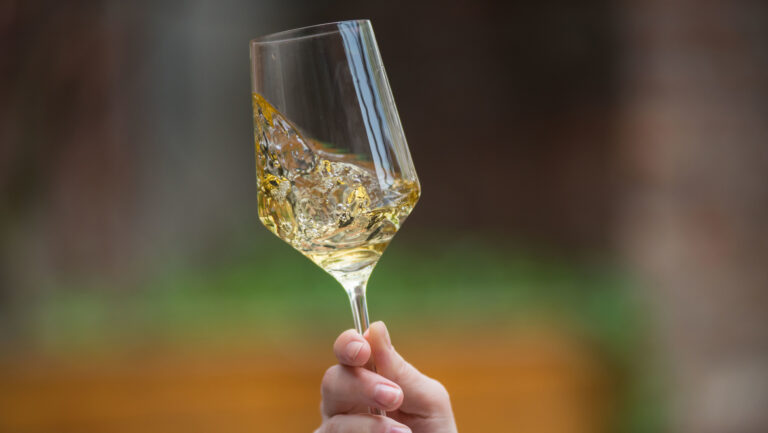 Lower-alcohol Rieslings are both approachable and relevant to moderation-minded drinkers. Photo courtesy of Wines of Germany.
How to Sell Germany’s Lighter Styles
As demand for moderation grows, German wines offer a ready-made solution, but success depends on how they’re presented.
“Within the non-alcoholic wine category, German sparkling wines tend to be the most interesting,” Bube says. He also argues, “There is something to be said for the thirst-quenching nature of Kabinett, and just having a glug of it with impunity. There aren’t a lot of other categories that allow that.”
Johnson concurs, saying she finds Kabinett easy to sell for any occasion. “It is the most pleasurable drink,” she says. “It tastes like pure happiness, and something you can have with breakfast, for dinner, or at the park.”
But in both on- and off-premise wine sales, there’s a need to hone that message with consumers. “I don’t think ‘light wine’ is a concept that has been carved out for the consumer,” Grewal says. “I’m considering offering a flight of low- and no-alcohol German wines, which would be the best way to introduce the concept to people.”
Freytsis emphasizes a simple but often overlooked tactic: highlighting the ABV to wine drinkers. “Making sure people who are looking to drink less know how low in alcohol these wines are—and how they still deliver everything they want in terms of expression, high-quality winemaking, and terroir—is a huge opportunity,” she says.
For both off- and on-premise, this can be as simple as:
Calling out ABV on menus or shelf tags
Grouping wines under a low-alcohol section
Positioning by-the-glass Riesling as an alternative to cocktails or higher-ABV white wines
Grewal points to German wines like Bassermann-Jordan’s 2024 Riesling Trocken—a dry wine that’s just 10% ABV—as a compelling by-the-glass option. “It checks all the boxes in terms of balance, flavor, and palate weight and is something our clientele in San Francisco would appreciate,” says Grewal.
For buyers building wine programs that include lighter styles, Germany offers a selection that is already well aligned with today’s moderation-minded drinkers. The opportunity lies in making that connection clear to consumers.

Dispatch
Sign up for our award-winning newsletter
Don’t miss the latest drinks industry news and insights—delivered to your inbox every week.
Dining and Cooking