
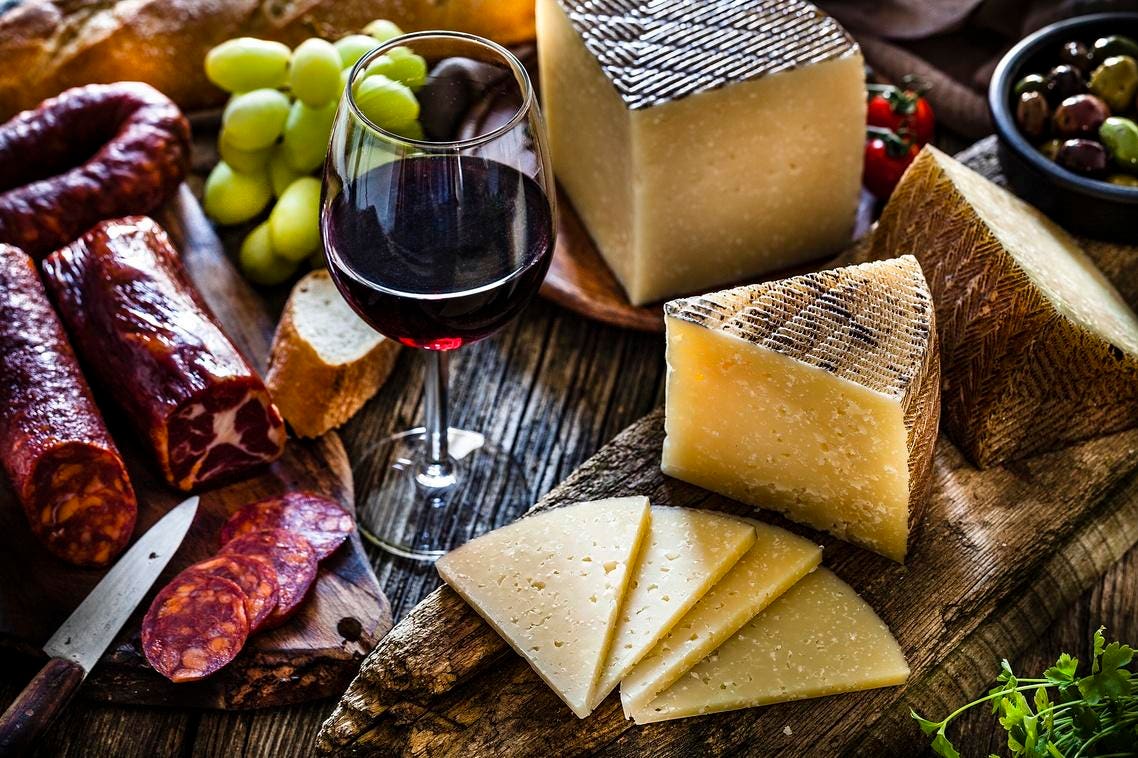
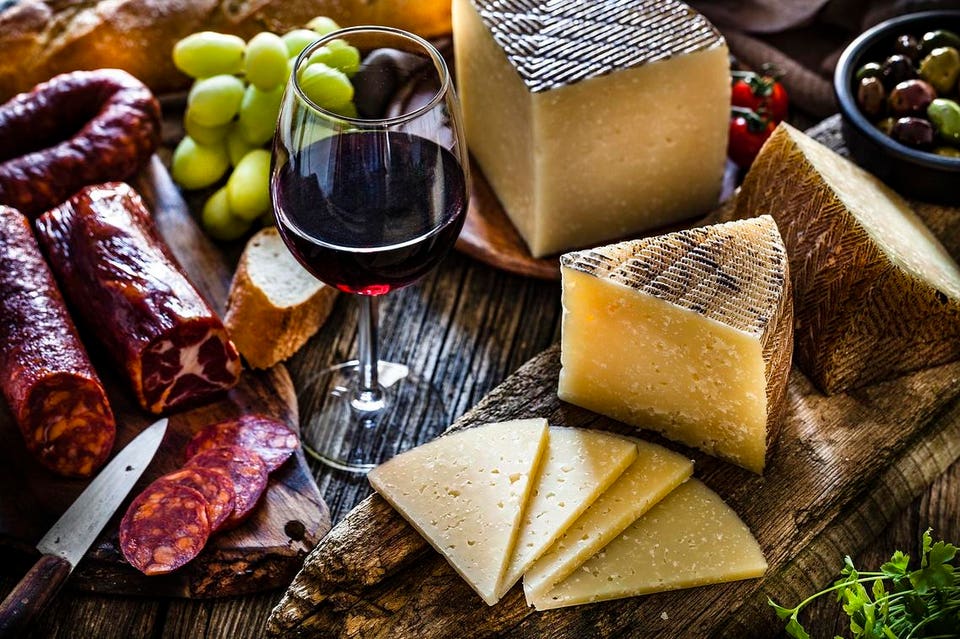
Spanish food: Manchego cheese slices and pieces in a cutting board shot on dark rustic wooden table. A red wine glass is beside the Manchego pieces. Spanish chorizo is visible at the left. A bowl filled with olives, bread and green grapes complete the composition. Predominant colors are brown and yellow. Low key DSRL studio photo taken with Canon EOS 5D Mk II and Canon EF 100mm f/2.8L Macro IS USM.
getty
If you walk into most U.S. wine shops looking for a Spanish bottle, you will probably see familiar names. Rioja. Tempranillo. Albariño. Cava.
All excellent. All widely exported. And all only a small part of what Spain actually grows.
Spain has more vineyard acreage than any country in the world, and much of it is planted to grapes that rarely make it onto American shelves. These varieties are native to small regions, adapted to very specific soils and climates, and historically consumed close to where they are grown. As a result, they have stayed under the radar for many U.S. drinkers.
ForbesUnderstanding Spanish Wine Labels: What Crianza, Reserva, And Gran Reserva Really MeanBy Emily Price
That is starting to change. A growing number of importers and sommeliers are championing these wines for one simple reason. They are distinctive, food friendly, and often remarkably affordable for the quality in the glass.
Here are four indigenous Spanish grapes worth seeking out, along with the regions that made them famous.
Bierzo and Mencía
Mencia grape bunches in El Bierzo (Leon) Spain – Racimos de uva Mencía en espaldera, El Bierzo (León) Spain
getty
Mencía thrives in the hilly, green landscape of Bierzo in northwestern Spain, where Atlantic and continental climates meet. Many of the region’s vines are old and planted on slate and clay soils, which help give the wines their structure and mineral edge.
In the glass, Mencía is often compared to Pinot Noir or Cabernet Franc. It is medium bodied, fresh, and aromatic, with notes of red berries, violets, herbs, and a subtle earthiness. The wines typically have bright acidity and moderate tannins, making them especially versatile with food.
What to drink: Look for bottles labeled “Bierzo Mencía” from producers such as Descendientes de J. Palacios or Raúl Pérez. Expect a lively red that works well with roast chicken, grilled vegetables, or charcuterie.
Valdeorras and Godello
Xestas and vineyards in A Rua region of Valdeorras Ourense Galicia Spain
getty
Godello comes from Valdeorras in Galicia, not far from the Atlantic coast but influenced by inland mountain conditions. The grape nearly disappeared in the 20th century before local growers revived it.
Godello produces textured white wines that sit somewhere between Chardonnay and Albariño in style. Expect citrus, green apple, and stone fruit flavors layered with a stony, mineral backbone and enough weight to stand up to richer dishes.
ForbesRioja Is More Than Tempranillo Now—And Winemakers Want You To Know ItBy Emily Price
What to drink: Seek out Godello from producers like Rafael Palacios or Avancia. These wines are excellent with seafood, roast fish, and creamy rice dishes.
Ribeiro and Treixadura
A cluster of ripe green grapes is beautifully hanging from a vine, showcasing their natural charm and deliciousness
getty
Treixadura is the backbone of many white blends from Ribeiro, another Galician region known for its river valleys and granite soils.
The grape produces aromatic wines with notes of citrus blossom, pear, and fresh herbs. They are typically light to medium bodied with crisp acidity and a clean finish that makes them particularly refreshing at the table.
What to drink: Look for Ribeiro blends where Treixadura is the dominant grape from producers like Viña Mein or Coto de Gomariz. These wines pair easily with shellfish, salads, and simple grilled fish.
Utiel-Requena and Bobal
Mediterranean vineyards in Utiel Requena at Spain wines
getty
Bobal is native to Utiel-Requena in eastern Spain, a high plateau region with hot days and cool nights. Historically, the grape was used for bulk wine production, but old vines and modern winemaking have revealed its potential for quality.
Bobal wines are deeply colored and structured, with flavors of black fruit, spice, and dried herbs. They often have firm tannins and bright acidity, making them well suited to hearty foods.
ForbesThese Volcanic Vineyards In Spain Might Be The Most Unusual In The WorldBy Emily Price
What to drink: Look for old vine Bobal from producers such as Bodegas Mustiguillo or Vera de Estenas. These bottles are a natural match for grilled meats, stews, and aged cheeses.
Why these grapes are worth seeking out
High angle view of three-generation Spanish family toasting with wine and water as they begin traditional midday meal of paella on weekend.
getty
These varieties offer something many wine drinkers say they want but rarely find. Wines that feel new, taste distinctive, and remain reasonably priced.
For anyone looking to expand their wine vocabulary without spending a fortune, these bottles are a practical and delicious place to start.
Dining and Cooking