
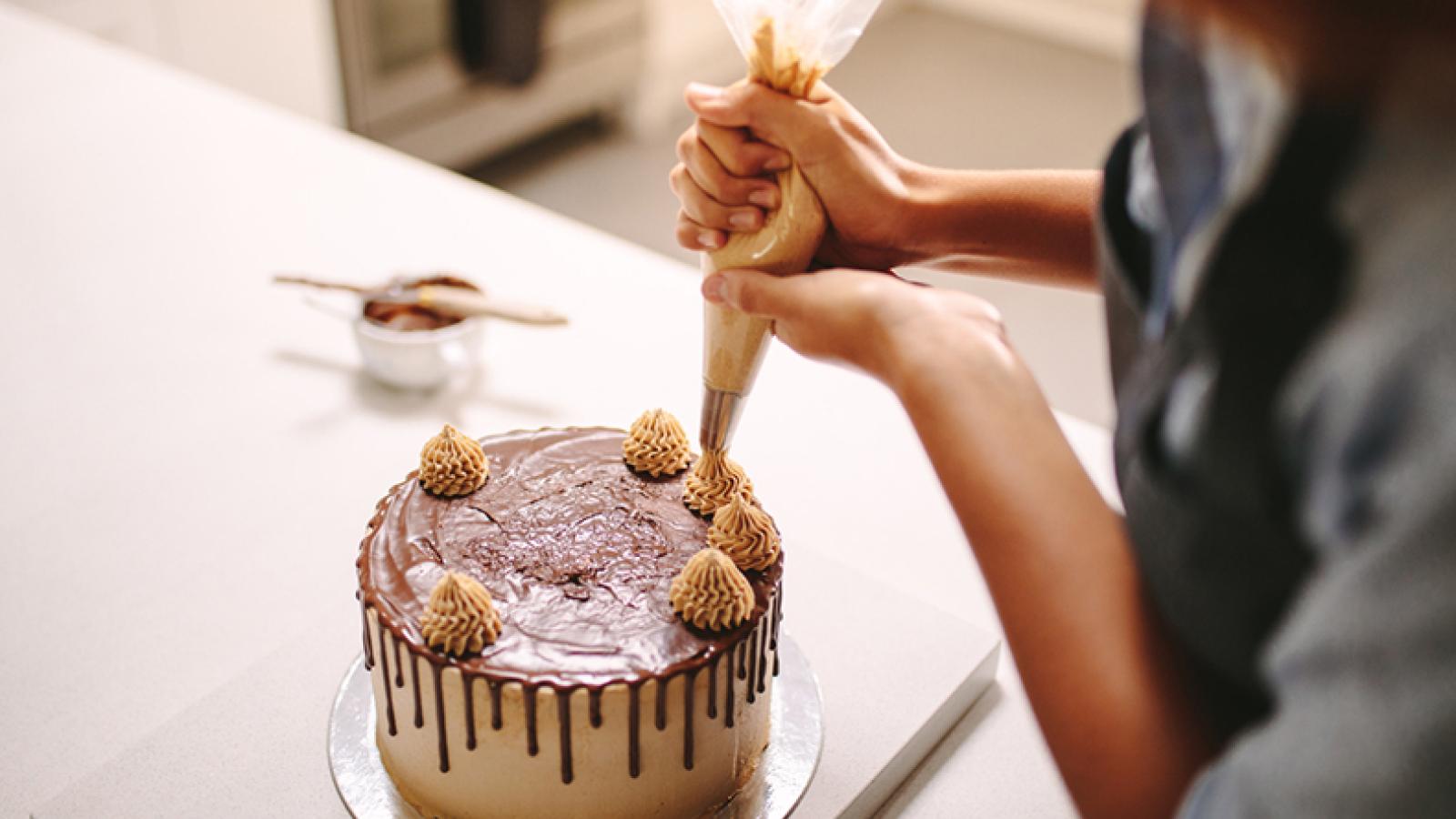
What are the differences between icing cakes and biscuits?
“The main difference is the style in which you ice. Generally, you want a cake to be loaded with filling or a large dollop of buttercream on your cupcake, whereas with a biscuit you only want a small amount of icing so that it doesn’t overpower the flavour of the biscuit. Biscuit decorating requires a lot more precision due to it being on a smaller scale – you should use more delicate piping nozzles to get intricate finishes and designs on top of biscuits, whereas with a cake you can use larger piping nozzles or cover your cake with buttercream using a pallet knife.” – Emma
“Generally speaking, icings for biscuits are designed to set and harden, whereas icings for cakes should remain soft and moist. However, many icings such as fondant icing or ganache can be used interchangeably depending on preference and what the final outcome you are looking for is.” – Heather
“Biscuits can be made in almost any shape, so when icing, follow the edge of the biscuit to guide the icing. Cakes are completely different. For instance, on our birthday cakes we ice freehand designs which can be tricky to get right. Icing the side of a cake is particularly challenging as you have to pipe the design vertically.” – Biscuiteers
How long should you wait after taking your baked goods out the oven before starting to ice them?
“As a general rule you should wait until your bake is completely cool before you start icing. Leave a celebration cake until the day after it’s been baked so it’s easier to level and carve the icing. When baking a basic sponge, cupcakes or biscuits, waiting around 90 minutes will ensure it is completely cool.” – Emma
“Biscuits and cakes must be cool before icing them, otherwise your icing will melt or run off the surface. Use a cooling rack to cool biscuits or cakes quickly.” – Heather
“Biscuits should still seem quite soft when they come out of the oven. We recommend waiting approximately 20 minutes before icing.” – Biscuiteers
Are there any pitfalls to avoid?
“Buttercream requires a lot of beating in order to get it nice and smooth and fluffy. If you don’t beat it enough, it will be more dense and harder to work with. When making a basic icing, always use small amounts of liquid at a time – it will turn before you know it! And make sure you sift the sugar of choice before using it: this ensures you get a smooth icing and nothing to clog up your piping bag when decorating.” – Emma
“Getting the consistency of glacé or royal icing is key to a successful finish on biscuits. A thicker icing is used for outlining the biscuit, while the same icing, slightly thinned down, is used to “flood” the surface area. Getting the consistency right takes a little practise – too thin and you’ll be able to see through your icing, too thick and you won’t get a smooth and glossy finish. Any small bubbles in the icing can be popped with the tip of a knife or a cocktail stick. Temperature is one of the key things to pay attention to and can also determine which icing will be best to use for cakes. For example, a ganache covered cake served on a hot summer’s day can have the tendency to weep or collapse. If the cake is going to be refrigerated overnight, an Italian buttercream is best, but the cake must be gently brought back to room temperature before being served.” – Heather
“Take time to flood your biscuits using a small amount of icing at a time – you don’t want them to overfill. It also helps to have a nice thick, consistent icing outline as any breaks in the outline may cause icing to spill over the edge of the biscuit. It’s best to wait for flood icing to dry before adding any additional detailing in line icing. We also suggest returning biscuits to the oven on the lowest temperature setting for around 30 minutes to help set the icing, so it achieves a glossy and smooth finish. Don’t worry, the biscuits won’t burn and the icing won’t melt.” – Biscuiteers
What are your favourite flavour combinations?
“I love experimenting and creating new flavour combinations that work together, using seasonal flavours depending what time of year it is. A lovely flavour is lemon and white chocolate, which has a lighter, refreshing flavour which is great while the sun is shining. A festive favourite is orange and cinnamon, which has a richer, more warming, sensation to it.” – Emma
“When it comes to cakes, lighter and fruitier combinations are preferable in summer. Strawberries with elderflower or vanilla is a personal flavour favourite for cakes and cupcakes at this time of year. Other lovely fruity combinations include lemon and blueberry, pink grapefruit and earl grey, passionfruit and orange. Chocolate works well with fruits such as berries or citrus in summer or paired with nuts or coffee in the cooler months.” – Heather
And your favourite decorations?
“It’s really fun to make small decorations from fondant icing and using piping nozzles to create different designs. A firm favourite is rose piping which gives a lovely delicate finish.” – Emma
“For biscuits, keep it simple – choose dry decorations such as sprinkles or small sweets, particularly if they’re for children. Otherwise, use different icing colours and let the cookie cutter shapes drive your imagination. For cakes, fresh fruit and edible flowers or foliage always makes for an impressive touch. Just be sure to only serve edible and unsprayed flowers and foliage.” – Heather
“We like to spray biscuits with edible metallic spray, which helps to give a real luxe feel. Multicoloured hundreds and thousands are a classic and simple way to add a bit of fun to designs, and they add an extra texture to biscuits too.” – Biscuiteers
Any final tips?
“My best tip for making buttercream is to make sure you beat your butter until it is nearly white in colour before adding your icing sugar. The longer you can beat it for the better. This allows air to be whipped into the butter which in turn makes the butter a lot lighter and airy.” – Emma
“Icing biscuits and cakes can often end up taking longer than you expect, so set aside enough time so you don’t have to rush. Splitting up the work can make things more manageable – for example bake the cakes or biscuits on one day, wrap well overnight, and ice them the next day. That way you know they’ll be completely cooled and have had time to settle, and it gives you time to relax in-between.” – Heather
“Always practise icing your design on baking paper first before decorating a biscuit. This will help you work out the design and gain confidence when piping your biscuits.” – Biscuiteers
Dining and Cooking