
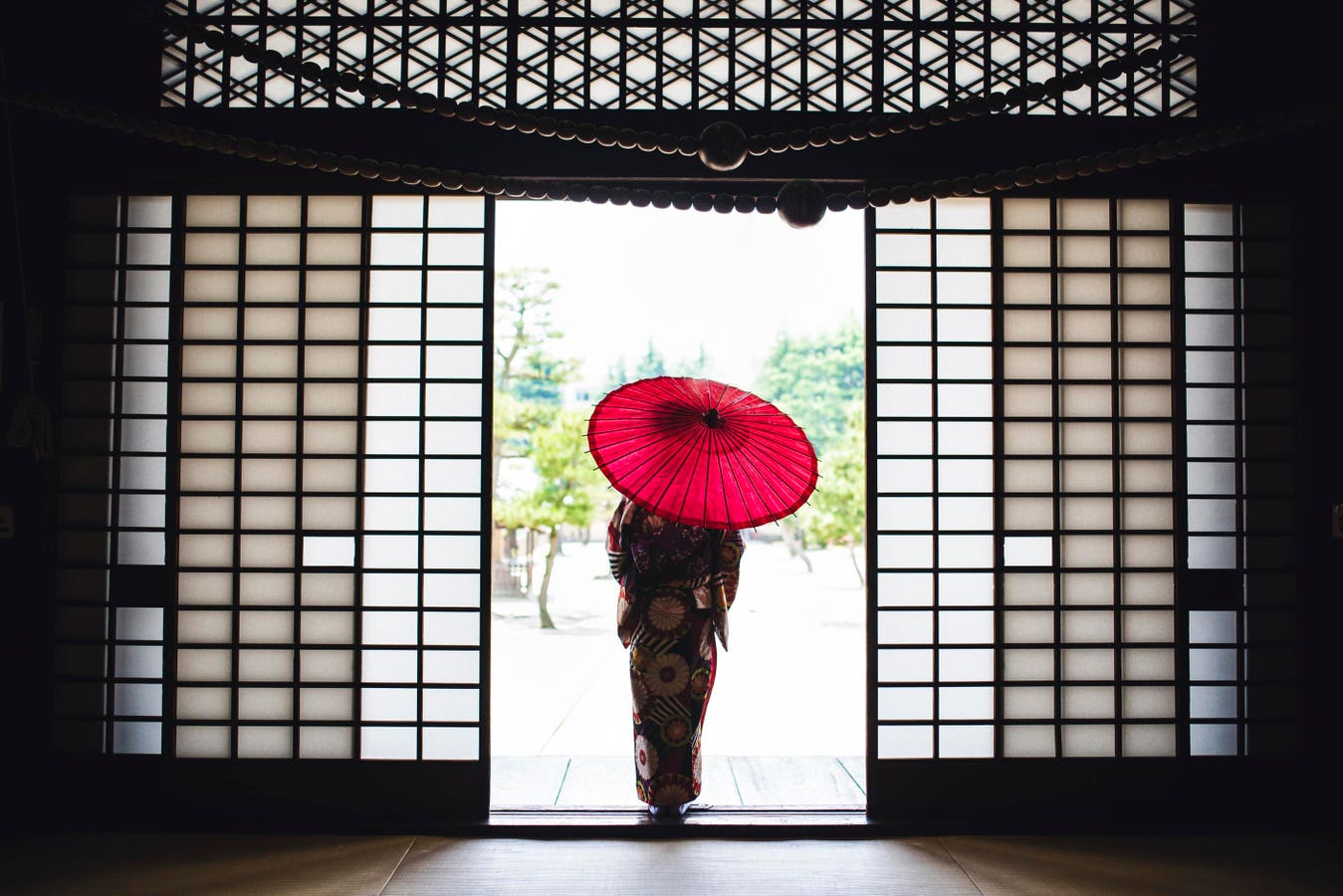
Young woman posing in a kimono in Kyoto, Japan
getty
1961 Alfa Romeo Giulietta Sprint Speciale
getty
The elegantly sleek Bertone-designed body was an exquisite sight beyond any car aficionado’s dream. The engineering was on another level of mastery compared to what the rest of the world was achieving, as it was a high-performance luxury vehicle styled like a sports car, with an aggressively jaw-dropping exterior noted by its signature “shark-nose” grille. This would be the greatest vision a young man could have: finding his way to Turin for a car fair in the North West of Italy, where he had reached the epicenter of high-end cars and motorcycles for enthusiasts such as himself. But then, in an instant, he would come upon an even more profound vision, one he couldn’t believe as he forcefully shut his eyes and slowly opened them again, realizing that he had indeed seen an Italian woman showcasing one of the magnificent automobiles while wearing a Japanese kimono.
A shadow on a sand garden depicting a woman wearing a kimono
getty
He approached her slowly – it seemed he was in a dream as the closer he got, the farther he felt from this impossible vision that represented his own inner life: having a Japanese heart yet an Italian soul, or perhaps the other way around. For a young man in his early 20s during the 1960s no less, to come all the way to Italy from his little town in Japan, traveling around the Italian countryside on just a 125 CC motorcycle, there had to be something so deep inside to make such a pilgrimage to somewhere that was almost on the other side of the world. Yet in a moment, he realized he was standing there staring at the young Italian woman in the kimono; she didn’t mind because she was just as passionate about Japan as he was about Italy, and she was about to go on her first trip to Japan to study Japanese, and so, she was happy to meet a handsome, young Japanese man.
Hideyuki Miyakawa
Azienda Agricola Bulichella
This adventurous young suitor, Hideyuki Miyakawa, took all the right steps to woo this young lady – getting to know her family over time to reassure them that his intentions were honorable and that he wanted to build a life with their daughter. Little did they know at the time how powerful their marriage would become for the Italian wine world and the community as a whole.
Bulichella Estate
And a wonderful life it was as they were able to purchase a winery and vineyards, the Bulichella estate, in Suvereto, a coastal, countryside Tuscan town that was virtually unknown when they bought the estate, but through time, Bulichella has helped gain recognition for Suvereto by pioneering high-quality organic viticulture featuring the area’s terroir. Today, it is an up-and-coming, very high-quality area for Bordeaux blends with Sangiovese and it even holds the highest quality designation for this type of wine – a much more affordable option than Bolgheri. But that is not the only achievement of Hideyuki and his wife Maria Luisa, as they have always been very open minded people who not only wanted to build a strong Italian community with their winery but to root it with a mission of welcoming everyone from all walks of life, and they had seven kids in total with three being adopted from Korea, Italy and India.
A big part of their mission has been helping underprivileged children, whether it is through adoption or establishing rehabilitation programs for youths as an alternative to detention centers, and working with disabled people.
Maria Shizuko and Hideyuki
Azienda Agricola Bulichella
Today, Hideyuki and Maria Luisa’s daughter, Maria Shizuko, runs the estate, with a couple of their grandchildren working with her to carry on the family tradition, including Nicolò Miyakawa. Nicolò noted that Japanese culture is very much a part of every aspect of what they do in the vineyards and winery, with an extreme focus on detail. Although they are most known internationally for the Bordeaux-blends and Syrah, once they decided to make a small amount of rosé wine, they took the project extremely seriously. They harvest Syrah grapes by hand for the rosé and immediately place the grapes in refrigerated containers and allow them to cool down for around 16 hours, after which they place the grapes in a press yet they do not press the grapes as they allow the weight to gently encourage the purest juice to slowly trickle out. They take this pure juice and divide it into three types of vessels for fermentation: stainless steel, terracotta-based amphorae and neutral barrique and then into two types for six months of aging: stainless steel and terracotta-based amphorae; all of this creates a multifaceted rosé wine. Such meticulous attention is given to all of their wines, and although Nicolò’s notes that it can make everything that much more challenging, they welcome the challenges as it is in their blood to strive for perfection.
And part of that perfection is being an organic wine estate since the purchase of Bulichella in 1983.
Enhancing Core Values
Bulichella estate
Azienda Agricola Bulichella
Nicolò’s grandparents may have come from very different cultures, as well as welcoming others from different countries and backgrounds, poor or disabled, with distinctions among the family members as well as those that have been welcomed into the extended family, but in the end, these differences are just diverse manifestations of the same core values: to find a greater purpose together as a community, recognizing that each has different strengths and weaknesses, striving for a higher goal as a group, as this is not only the Italian and Japanese way, as Hideyuki and Maria Luisa discovered very early on in their courtship, but it is the human way; one only needs others to open their arms to them and believe in their worth.
Bamboo with pavilion and flying crane birds
getty
Sadly, Hideyuki passed away last December at the glorious age of 88, and he not only leaves a legacy of being an inspiring figure in the Tuscan wine world but also an incredible family man who went above and beyond for his children, grandchildren, and those who desperately needed a paternal figure to help guide them. Even though he was raised in Italy, Hideyuki’s grandson, Nicolò, treasures certain aspects of his Japanese side, such as what people say to each other at their Bulichella estate after a long day’s work. The saying is “otsukaresama desu,” translated roughly to “you must be tired” but it respectfully serves the intention of expressing “thank you for your hard work,” and those who work at the estate, coming from far and wide, many times having very different cultures from Italian let alone Japanese, understand the depth and sincerity of such a saying as it recognizes the worth and important purpose of each person.
And now, there is a final “otsukaresama desu” to Hideyuki Miyakawa, as his hard work has not only created opportunities for his family but for numerous others who would have been discarded by society, all the while teaching by example that nothing is more important than community, a community that reaches the realization that most have the same core values and those values are only enhanced when a mosaic of cultures are stitched together.
Bulichella Rubino, Montecristo and Coldipietrerosse
Cathrine Todd
All the wine labels are drawn by Nicolò and his cousin as each label encapsulates a story about the family, whether it is two boars (wild boar being common in the area) representing his grandparents on their Vermentino white wine, their grandma’s favorite wine, or their Super Tuscan wine “Rubino,” with the two boars leading their seven little boar adolescents – depicting the family, as it is their wine that they make the largest in quantity with 15,000 bottles made as their other wines are made in much smaller quantities.
2024 Bulichella “Sol Sera” Rosé
Cathrine Todd
2024 Bulichella “Sol Sera” Rosé, Costa Toscana Rosato IGT, Tuscany, Italy: 100% Syrah from their Bulichella estate. An incredible minerality with a hint of white pepper and warm strawberries with broken seashells and juicy raspberries on the palate with crisp acidity.
2024 Bulichella “Tuscanio” Vermentino
Cathrine Todd
2024 Bulichella “Tuscanio” Vermentino, Costa Toscana Vermentino IGT, Tuscany, Italy: 100% Vermentino from the old vineyards within the Bulichella estate. The nose is completely addictive with salty aromas, lemon blossom and sea spray with a deeper layer of lemon confit and white peach skin that has a gorgeous texture that is creamy yet also structured, and is a wine that could pair with a wide range of cuisines.
Bulichella Rubino, Montecristo and Coldipietrerosse
Cathrine Todd
2022 Bulichella “Rubino” Costa Toscana Rosso IGT, Tuscany, Italy: Around 50% Sangiovese and the rest made up of Merlot, Cabernet Sauvignon and Cabernet Franc from the Bulichella estate. Intriguing wine with smoldering earth with a hint of tar and tobacco with blackcurrant tart flavors and a very silky texture that is extremely elegant.
2020 Bulichella “Coldipietrerosse” Suvereto DOCG, Tuscany, Italy: 100% Cabernet Sauvignon from steep vineyards on a hillside exposed to a lot of sun yet faces the sea and gets moderating winds – this is their flagship wine. Delicious nose of Mediterranean herbs with a deep concentration of rich layers of fruit such as cassis and black raspberry liqueur with gravelly rock notes and big, round tannins that are well integrated. Nicolò noted that the aging potential is 40-50 years.
2020 Bulichella “Montecristo” Suvereto DOCG, Tuscany, Italy: 70% Merlot, 20% Cabernet Sauvignon and 10% Petit Verdot and Grenache. Nicolò said that this was the most Japanese wine project they had as it has such a great attention to detail since they will do around three different harvest pickings at various times to get different ripeness levels that give a layered quality to the wine. Big, bold fruit that is at once decadent yet carries itself with lots of finesse with a very complex nose of asphalt, spice and unsmoked cigars with densely packed fruit on the palate of black and red berries that come in waves yet it is nimble and lifted with fresh acidity and a pretty floral note which lingers.
Dining and Cooking