
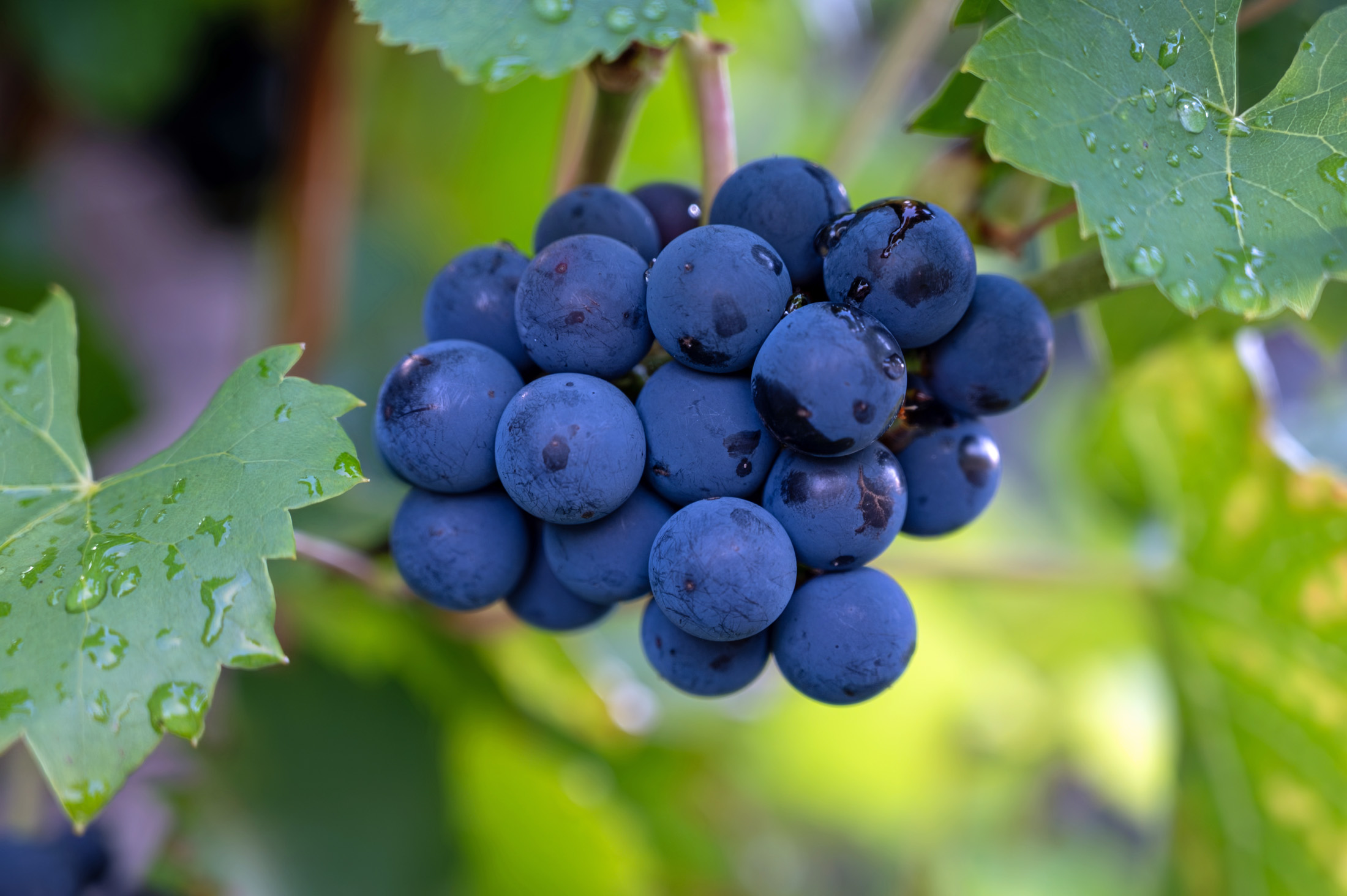
A medieval grape seed has been shown to match a modern Pinot Noir vine exactly, linking one of today’s most famous wine grapes directly to the late Middle Ages.
That continuity places modern vineyards inside a lineage that has been deliberately preserved across centuries rather than recently assembled.
Seeds preserved in mud

Seeds from waterlogged sites across France and Ibiza in the western Mediterranean preserved the seeds so well that their DNA still held a readable record.
Working at the Centre for Anthropobiology and Genomics of Toulouse (CAGT), Ludovic Orlando helped turn that record into history.
His team found Bronze Age seeds that still matched local wild grapes, while later samples carried unmistakable signs of cultivation.
That sequence let the researchers watch grape growing begin, diversify, and harden into a long-running agricultural system.
Early wild grape lines
The oldest seeds came from Bronze Age Nimes, in southern France, and their ancestry looked thoroughly local and wild.
Those grapes belonged to lineages already present around 2300 BCE, before any clear genetic signal of domesticated vines appeared.
Researchers also saw that these western wild grapes stayed surprisingly stable for centuries, even after cultivated vines entered France.
That matters because early French winegrowing did not simply erase native vines, it grew beside them for a time.
Domestic grapes arrive
Between 625 and 500 BCE, seeds from Saint-Maximin in southern France carried the first fully domesticated ancestry yet seen.
Other Iron Age sites mixed local wild grapes with incoming cultivated stock, revealing viticulture, grape growing shaped by choice and transport.
Seeds from several southern French ports linked the region to the Balkans, Iberia, the Levant, and western Asia.
The crop was no longer just a local resource, because people were importing plant material and deciding which traits deserved repetition.
Roman vineyards expand
Roman-era seeds brought the broadest diversity, with lineages tied to present-day France, Spain, the Levant, and the Caucasus.
Many of those grapes also carried local wild input, which means growers were still crossing imported vines with nearby plants.
That blend helped Roman vineyards adapt, while trade routes kept delivering seeds or cuttings from far beyond France’s borders.
By then, French winegrowing had become a connected system, not a string of isolated regional experiments.
Vines grown from cuttings
The study’s clearest practical lesson involved clonal propagation, growing new vines from cuttings so desired traits stay unchanged.
Evidence for that practice appeared by the mid-Iron Age, when genetically identical vines turned up at different sites.
One Iron Age clone linked an inland settlement to Marseille on the coast, showing that planting material already moved deliberately.
Once growers trusted cuttings, they could keep flavor, color, and yield more stable than seeds usually allow.
Clones crossed centuries
Clonal continuity did not stop at one generation, because some lineages resurfaced across hundreds of years and miles.
A Roman seed from central France matched a medieval seed from Valenciennes in northern France, linking vineyards more than 1,000 years apart.
Related grapes also stretched between France and Ibiza, proving that vineyard knowledge traveled with commerce across the western Mediterranean.
These were not random leftovers in wet soil, they were traces of managed agriculture moving through recognizable networks.
Pinot Noir persists
The most striking medieval seed came from Valenciennes in northern France, where a 15th-century seed matched modern Pinot Noir exactly.
In a later interview, Orlando put that continuity into human terms for readers far from any vineyard.
“She could have eaten the same grapes as us,” said Orlando, placing Joan of Arc’s century beside modern drinkers.
That seed does not prove a medieval bottle would taste modern, but it does show the vine itself endured.
Vine practices persisted
Medieval seeds otherwise looked much like Roman ones, with French and Iberian lineages still dominating many cultivated grapes.
Some samples also carried eastern ancestry, showing that outside influences kept entering vineyards long after winegrowing was established.
That persistence matters because growers were not guarding a frozen tradition, they kept selecting, crossing, and sharing vines.
The result was a vineyard landscape built from continuity and change at the same time.
Wine’s lasting impact
Modern France still records the world’s highest wine export value, so this deeper history carries living economic weight.
That is why a few ancient seeds matter beyond archaeology, they reveal how growers built durable varieties people still prize.
The paper cannot reconstruct the exact taste of Roman or medieval wines, because soil, weather, and winemaking also shape flavor.
Even so, these seeds show that famous grapes were historical lineages long before they became commercial brands.
Vineyards hold history
Across 4,000 years, the seeds map a French wine story built from wild roots, imported vines, and disciplined cloning.
Future ancient DNA work may recover more lost varieties, but this study already shows how the past still grows.
The study is published in Nature.
—–
Like what you read? Subscribe to our newsletter for engaging articles, exclusive content, and the latest updates.
Check us out on EarthSnap, a free app brought to you by Eric Ralls and Earth.com.
—–
Dining and Cooking