
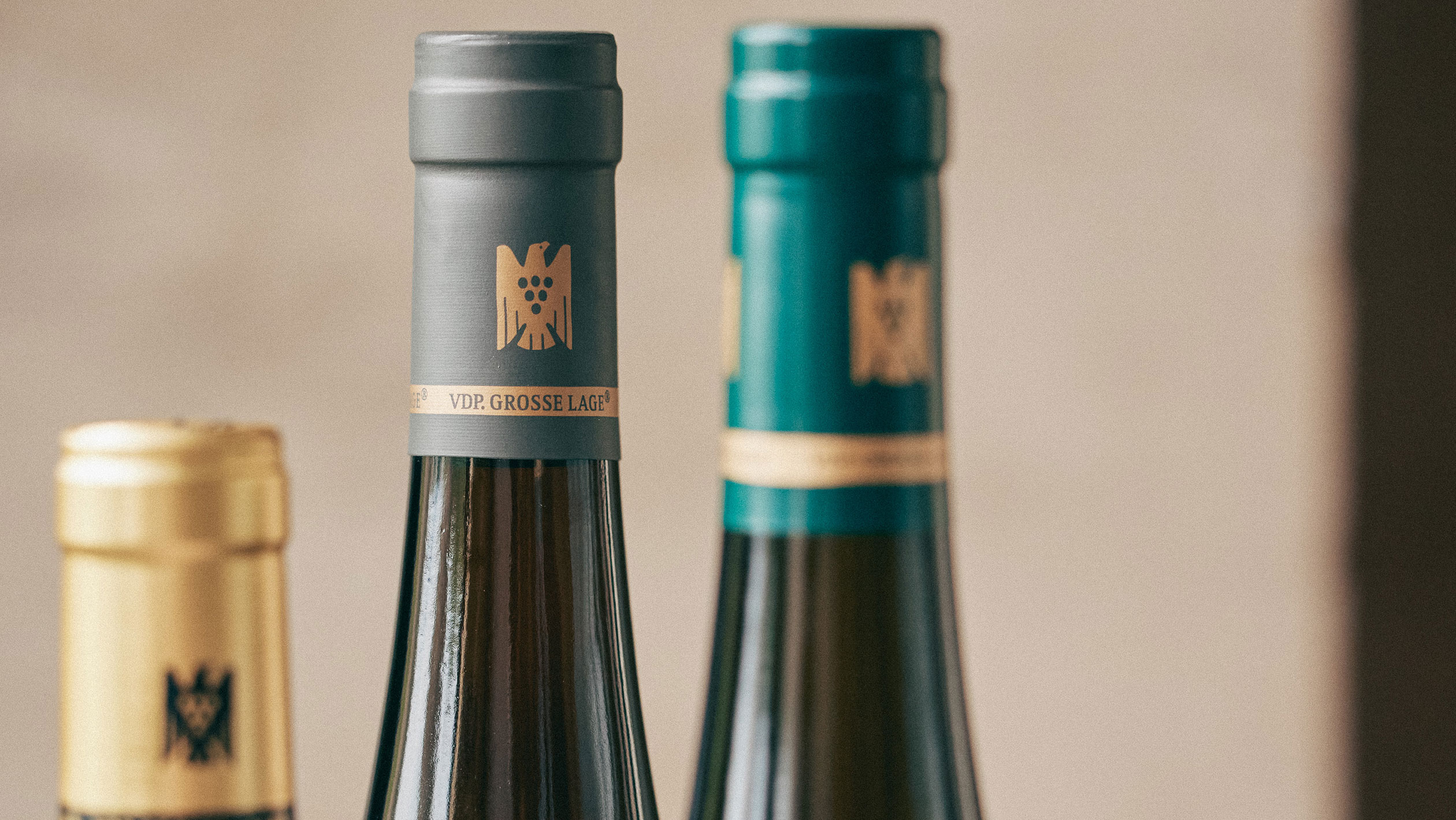
At long last, German wine is about to become easier to understand—in theory. Germany has rolled out a revised, geography-based labeling and classification system designed to make its wines easier to navigate. However, the changes add another layer to an already complex framework. So while the language on the label may become more recognizable overall, German wine isn’t getting any simpler.
“They set up this new German wine law to harmonize with the EU wine law and now we are coming to the end of the transition, but a lot of questions have popped up,” says Thomas Loosen, managing director of Dr. Loosen winery in the Mosel.
The new laws, phased in starting in 2021 and mandatory from the 2026 vintage onward, require a geographically based approach, creating Protected Geographic Indications (PGIs) and Protected Designation of Origins (PDOs). PGI wines, previously known as Landwein or Deutscher Wein in Germany, include wines labeled with their state or country of origin. They are rarely exported to the U.S.
Don’t miss the latest drinks industry news and insights. Sign up for our award-winning newsletters and get insider intel, resources, and trends delivered to your inbox every week.
PDOs, or Qualitätsweine (quality wines), which represent 60 percent or more of German wine production depending on the vintage, can stipulate not just geographical borders but also specific techniques, grape varieties, and other details of production. “The smaller the region named on the label, the higher the quality criteria are,” Loosen says. “This is the whole idea about the new German wine law.”
Power Shifts to the Regions
“The power now lies with the regions in the form of Schutzgemeinschaften,” says Theresa Olkus, the managing director of the Verband Deutscher Prädikatsweingüter (VDP), a private producer association. “It’s basically something like a consortium.”
 “Often in German wine history we introduce new, successful terms but then quality requirements are lowered and it collapses,” says Theresa Olkus, the managing director of the Verband Deutscher Prädikatsweingüter (VDP). Photo courtesy of VDP.
Each Schutzgemeinschaft must represent a quorum of growers and producers in each Anbaugebiet (area), such as the Mosel, Rheingau, Franconia, and the other 10 recognized wine regions of the country. They are empowered to add—but not take away—additional qualifications beyond the general guidelines set in the national law.
Schutzgemeinschaften are also responsible for designating acceptable grape varieties for the Anbaugebiet and managing a tasting board, which approves all wines bearing the Qualitätswein designation.
The Quality Pyramid
The broadest Qualitätswein appellations are the Anbaugebiete themselves. Above them—with each level becoming more geographically specific—are Regions; Ortsweine, or a specific village; and Lagenweine, or a specified vineyard.
The tier designated as Regions replaces the Grosslage designations previously used for broadly sourced, cheap mass-market wines whose labeling caused much confusion by bearing the same “village name-vineyard name” pattern as expensive single-vineyard wines. Going forward, what was previously considered Grosslage will now bear a single region’s name and include the word Region. Goodbye, Piesporter Michelsberg; hello, Region Michelsberg.
“For those producers who used these terms a lot, it’s a big change,” Olkus says. “Cooperatives often used these big Grosslage names, but I feel that was already changing.” They instead opt for simpler branding and labels that often eschew geographical designations entirely.
Lagenweine are to be further classified according to quality, again in three tiers: Einzellage, which are single-vineyard wines with no additional quality additions; Erste Gewächs (1G), which are wines from premier cru-level vineyards; and at the top, Grosses Gewächs (GG) wines from top-quality sites. Gewann, a designation similar to Burgundy’s lieu-dits, also allows producers to apply to have individual parcels of a vineyard recognized on the label.
 From left to right: Erni Loosen, the winemaker of Dr. Loosen Winery; Thomas Loosen, the managing director of Dr. Loosen Winery. Photos courtesy of Bona Fide Productions.
New Standards for Germany’s Top Wines
Perhaps the most contentious point in the new plan concerns the top tiers of single-vineyard wines, Erste Gewächs and Grosses Gewächs. Until now, these terms belonged solely to the VDP.
The new law includes some barebones rules for the two tiers; for both, the grapes must be harvested by hand, the wines must be dry, and they must meet specified minimum alcohol levels, maximum yields, and minimum aging before release. Yields for a 1G wine, for example, can’t exceed 60 hl/ha for a flat vineyard or 70 hl/ha from a steeply sloped vineyard, and the wine must be a minimum 11% ABV. It falls to the Schutzgemeinschaften to decide what other criteria merit a 1G or GG designation, though none have done so yet.
Many are not confident that the Schutzgemeinschaften will be up to the task. “The winners will be the non-VDP producers who want to legalize utilizing GG on their labels,” says Jin Ahn, the wine director of Noreetuh in Manhattan, which offers an extensive selection of German wines. “I think the classifications are good for German wine producers overall, but they will definitely lead to a certain dilution of quality. I don’t know how they’re going to keep this up to the standard the VDP would be happy with, or is it just going to be another lowest common denominator thing.”
“Since 2021 we have been fighting for these terms,” Olkus says, noting that wine professionals and sommeliers around the world recognize the value in the designations. “It’s a good thing when there is an international understanding of a GG and that it’s not just a VDP thing. But often in German wine history we introduce new, successful terms but then quality requirements are lowered and it collapses, so we have been talking with the German Wine Association to ensure that the criteria will be the same.”
The VDP consists of just over 200 members, all focused on premium wine. Members like Dr. Loosen are skeptical that the Schutzgemeinschaften will be as rigorous in crafting their own rules and will take too long to do it. “Here on the Mosel, for example, it took two years to decide that only two grape varieties would be allowed for GG and first-growth wines—two years, just for the grape varieties,” says Loosen.
The VDP’s system for determining a vineyard’s status extends from the state, condition, and character of the vineyard itself to its historical record and market factors, including wine list placement at Michelin-starred restaurants. Olkus says evaluating Germany’s 100,000 hectares of vineyards as rigorously as the VDP does for its members’ 5,500 hectares of vineyards presents an immense challenge. “Of the production of the VDP vineyards, five percent are GGs,” she says. “But of course, value-wise it’s much higher, which is why it is so important for us. The new GGs need to be the same quality.”
The new law creates a structural challenge: a classification that benefits only a small minority of vineyards must now be administered by regional bodies representing everyone. “If you want to do such a classification as a democratic process, where only five percent of the growers own Grand Cru vineyards, what do you think the 95 percent will say?” asks Erni Loosen, Thomas Loosen’s brother and winemaker at Dr. Loosen. “Ideally, the VDP would set up their own quality criteria for everyone, but this is not realistic. I think when the government can’t find a solution, the Erste Gewächs and Grosse Gewächs will be cut from the German wine law.”
For now, the only 1G and GG wines on the market remain those produced under the VDP’s existing classification system, which will persist regardless of what happens with the national rules.
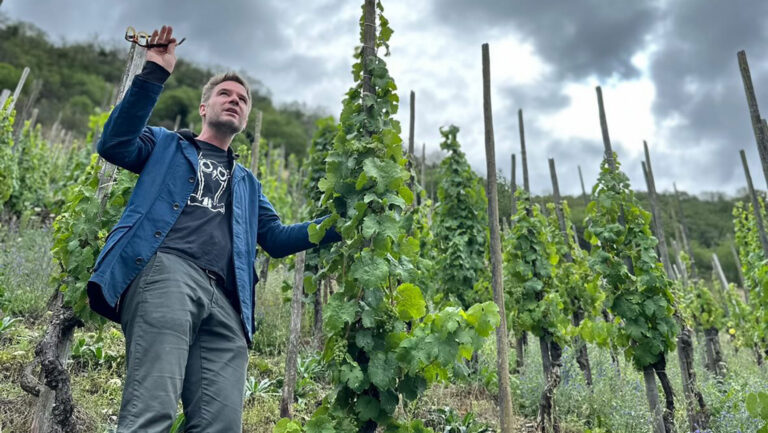 “The GG, without question, has been the single most successful and defining move by German wine in the last 25 years,” says Stephen Bitterolf, the founder of Vom Boden. Photo courtesy of Vom Boden.
Where the Prädikat Wines Fit Now
Under the new framework, wines labeled 1G or GG must always be dry, though they may not actually be labeled Trocken (dry), nor can they include Prädikat levels such as Kabinett or Spätlese. Other Qualitätsweine bottlings may still use Prädikat designations if they meet the ripeness thresholds established under Germany’s 1971 wine law. Prädikat wines can be sweet or dry, the latter of which can use the term “Trocken” on the label.
Prädikat levels have become more style indicators than quality tiers, but represent a spectrum of expressions that remains central to German wine’s identity in the market. “The GG, without question, has been the single most successful and defining move by German wine in the last 25 years,” says Stephen Bitterolf, the founder of the import company Vom Boden. On the other hand, “the Kabinett Trocken wine is perhaps the past, but it’s also the future in terms of being a crystalline, incredibly light, low-alcohol wine.”
Bitterolf is a fan of the sweet wines, “but the thing that is confusing to the consumer about German wine culture is that there are both dry wines and off-dry wines and sweet wines from the same vineyard by the same producer, and no matter what label you stick on that wine, it’s going to be confusing,” he says. He draws a parallel to another famously intricate wine region. “Somehow Burgundy was able to turn what had been a liability—this complexity—into an asset,” Bitterolf adds. “I think that’s the kind of mindset that German wine should have. Yes, it is a complex topic, because it’s a complex wine culture, and that’s not something to run from. That is something, in fact, to embrace.”

Dispatch
Sign up for our award-winning newsletter
Don’t miss the latest drinks industry news and insights—delivered to your inbox every week.
Jim Clarke writes about wine, beer, and spirits for trade and consumer publications, including Beverage Media, Fortune, and World of Fine Wine. He is a sommelier and the U.S. marketing manager for Wines of South Africa.
Dining and Cooking