
Walk into any grocery store, and you are assailed by colorful foods and snacks. Blue sports drinks sit next to blazing red chips that suggest a fiery kick. While most people know that artificial food dyes are common in sweets, drinks, and snack foods, most people wouldn’t expect to find them in a jar of pickles.
But is all that set to change? In the spring of 2025, the U.S. Department of Health and Human Services, along with the FDA, announced a plan to “phase out” all synthetic food dyes.
Does that mean all these dyes are dangerous and getting banned? To find out, I spoke with Cordelia Running, an associate professor in the department of nutrition science.
It turns out the answer is complicated.
“So there’s a difference between harmful and healthful. I don’t think there’s anyone who would tell you there’s a direct benefit to consuming any artificial food dyes. But acutely harmful? Probably not. There is some data that indicates in children with certain types of neurodivergency, particularly ADHD, that it may increase hyperactivity, but it’s specific to certain dyes,” Running said.
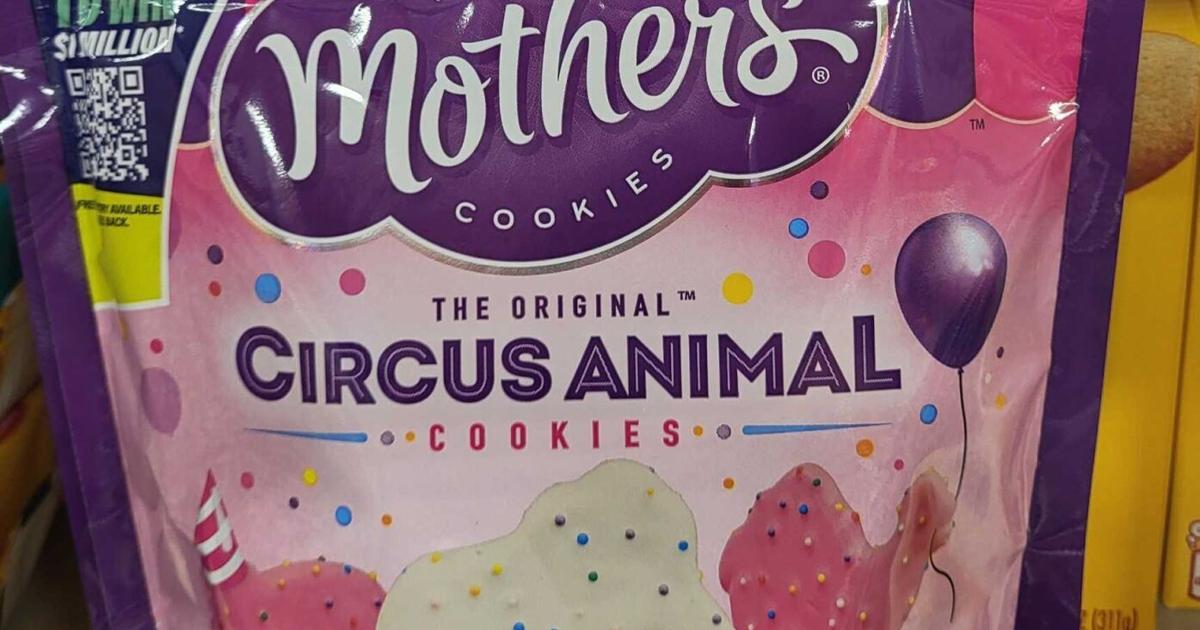
Which is probably why only one of the dyes, Red No. 3, is actually being banned. Red No. 3 is most often found in pink frosting or candy coatings like Circus Animals. Running says that Red No. 3 has had some problems and that its ban is likely appropriate. A ban was implemented in California in 2023, before the FDA announced a full ban on it.
“You have to remember when you talk about food dyes, each one of them is a completely different chemical structure, which would have completely different chemical activities,” Running said.
“Synthetic dyes” refer to petroleum-based dyes. There are only seven, about to be six, FDA-approved petroleum-based food dyes, and they are highly regulated. We owe that to Dr. Harvey Wiley. Yes, like the residence hall. According to his biography on the FDA website, Wiley was passed over for president of Purdue allegedly because he was ‘too young and too jovial,’ unorthodox in his religious beliefs, and a bachelor,” Running said.
Things the current residents seem to strive to uphold. Luckily, this led Wiley to become Chief Chemist for the U.S. Department of Agriculture and to found what is now the FDA.
Since its inception in 1906, the FDA has banned the use of many petroleum-based dyes, which is why we have Red No. 40. But if the ingredients are sourced from natural sources like beta-APO-8’-carotenal, it makes it a “natural” dye.
Caramel color, which is found in many soft drinks like Coke or Pepsi, is made from heating sugars and is therefore natural, but it’s still made in a lab. Carmine, sometimes called “cochineal extract,” is a natural dye made from grinding up little red bugs. Luckily, if that bugs you, due to allergy risks, the use of carmine dye must be included in the ingredient list. In fact, if anything is used for the purpose of coloring the food, it must be listed under the ingredients.
Running says all colors, both natural and synthetic, must go through extensive testing to be approved, more so than flavor additives.
Synthetic dyes have a lot of advantages over natural dyes, primarily stability.
“(Natural dyes) are generally not as stable to things like heat treatment or the pH of the food. That’s particularly a problem with reds, pinks, and blues,” Running said.
This becomes a substantial problem when you realize that many of our foods are baked, cooked, or pasteurized.
“Even something as simple as lemon juice can completely change the color of some of these (natural dyes),” Running continued.
This is why synthetic dyes are much easier to use. They hold their color much more effectively. All the colors you see in snack foods are made with a combination of the soon-to-be six FD&C synthetic food dyes. There is one red (40), two yellows (5 and 6), two blues (1 and 2), and one green. You may also see “Lakes,” which are colors added to powders to make them mix with oils or fats.
U.S. Secretary of Health and Human Services Robert F. Kennedy Jr. has said foods containing synthetic food dyes have much more fat, sugar, and salt than foods that don’t, and that is true, but it’s not from the dyes.
“That’s the stuff you are allowed to put colors in,” Running said.
According to Running, people once dyed oranges to make them more orange, and before the FDA, people would put chalk in water to sell it as milk, or dyed unripe cherries red, but now you can’t do that. You can’t dye lettuce green, but you can make Doritos red.
So, if only one dye is being banned, what is happening with the other six? Well, the FDA will “be working within the industry to phase out all petroleum-based dyes.” It seems like the commercial industry has fervently headed the call with Kraft-Heinz, Smuckers, and Kellogg’s saying they would eliminate certified color additives by 2027. Meanwhile, others like Pepsi and Mars said they would offer dye-free options.
Well, it’s good to see industry leaders looking out for our safety, right? Unfortunately, I’m a little bit skeptical, and I’m not alone.
“Companies have said they are going to do this before, like ‘oh, we’re going to remove all our artificial dyes by 2017.’ They said that in 2015. Mars, Wrigley, General Mills, and Kellogg’s all said they would take them out, and they did not,” Running said.
Mars specifically said in 2016 that all artificial dyes would be gone in five years, but then reversed that in a statement.
These companies are virtue signalling. These actions are performative. They are saying, come look at our product, we have removed those terrible, unhealthy dyes, and now our chips, candy, and sodas are nice and healthy!
Go to the store now and you’ll see many products with big text on their suddenly white and green products that say “Free of artificial dyes,” but many of those products are still dyed with chemicals made in a lab, and they are still just as unhealthy.
“Kraft Mac and Cheese successfully removed the artificial colors a while back, and nobody noticed. They had to do a marketing campaign because nobody noticed and nobody cared,” Running added.
Some people report allergies to artificial food dyes, but people also have allergies to natural food dyes.
Unfortunately, the key to eating healthier isn’t as simple as taking out the dyes. Foods that often have dyes are generally processed foods that are high in fat, sugar, and salt.
“If you eat a balanced diet that’s rich in fruits and vegetables and legumes and whole grains, you’re going to be okay. If you eat (processed foods) in moderation, you’ll be okay,” Running said.
Personally, I think having dyes in processed foods acts as a warning. I know a bright blue drink probably won’t be the healthiest. Like how a brightly colored frog is likely to be poisonous. I also believe that almost all companies will backtrack. I mean, how is JELL-O supposed to work when it needs to be cooked? If I eat a cube of JELL-O that is clear and it tastes blue, I think the shock would kill me.
I put the dyed jar of pickles next to the undyed one, and the latter made me sadder. Maybe that’s insane, but can I enjoy a bit of whimsy in peace?
Cutting back on these foods will help, but cutting back on just the dyes? Not only will it not be healthier, but it likely just won’t happen.


Every Exponent article goes through checks for accuracy before publication. If you have a concern or questions about this article, please email editor@purdueexponent.org.
Dining and Cooking