
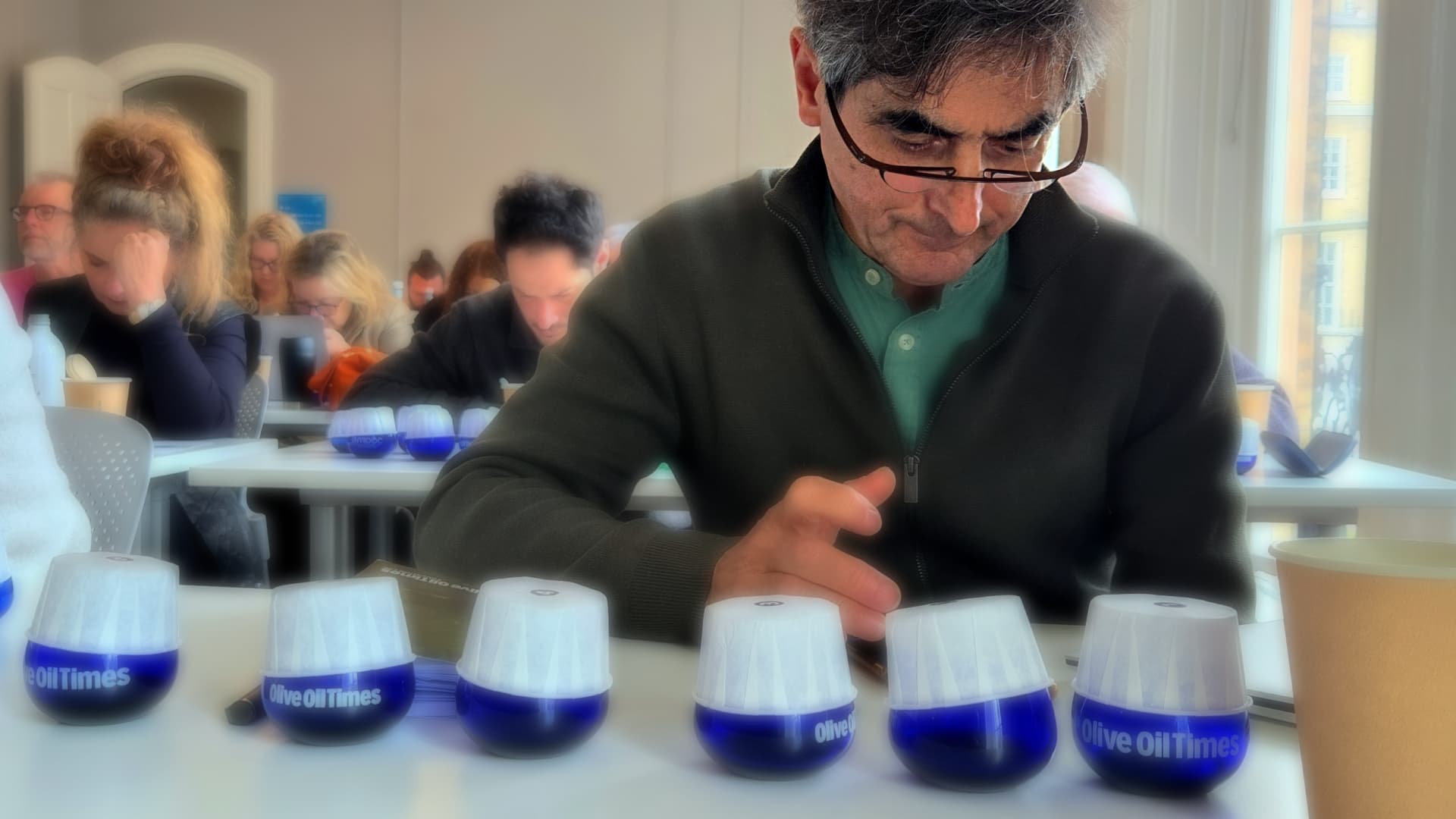
Summary 
The Olive Oil Times Sommelier Program in London trained 28 participants in sensory analysis, production, quality, and professional evaluation of extra virgin olive oil over five days, adding to a network of professionals seeking to deepen public understanding of olive oil. Participants from diverse backgrounds gained a disciplined understanding of olive oil quality and practical skills to apply to their work, with plans to improve production, educate customers, and enhance tasting experiences in the industry.
Twenty-eight participants completed the Olive Oil Times Sommelier Program in London after five days of intensive study focused on sensory analysis, production, quality, nutrition and the professional evaluation of extra virgin olive oil.
Super professional, interesting, inspiring and a tremendously useful course.- Michel Megas, France
The March 9 through 13 session added a new international cohort to a growing network of trained tasters, educators, retailers, producers and food professionals working to deepen public understanding of olive oil.
As in previous sessions, the London program drew participants from a wide range of professional backgrounds. Some enrolled to improve the oils they produce, while others sought to strengthen customer education, develop tasting experiences or build a more rigorous technical foundation for careers in food and hospitality.
For many in the group, the week’s most significant takeaway was a more disciplined understanding of olive oil quality. Through guided tastings and formal instruction, participants learned how to identify positive sensory attributes, recognize defects and connect production decisions to the characteristics of the oils they evaluated.
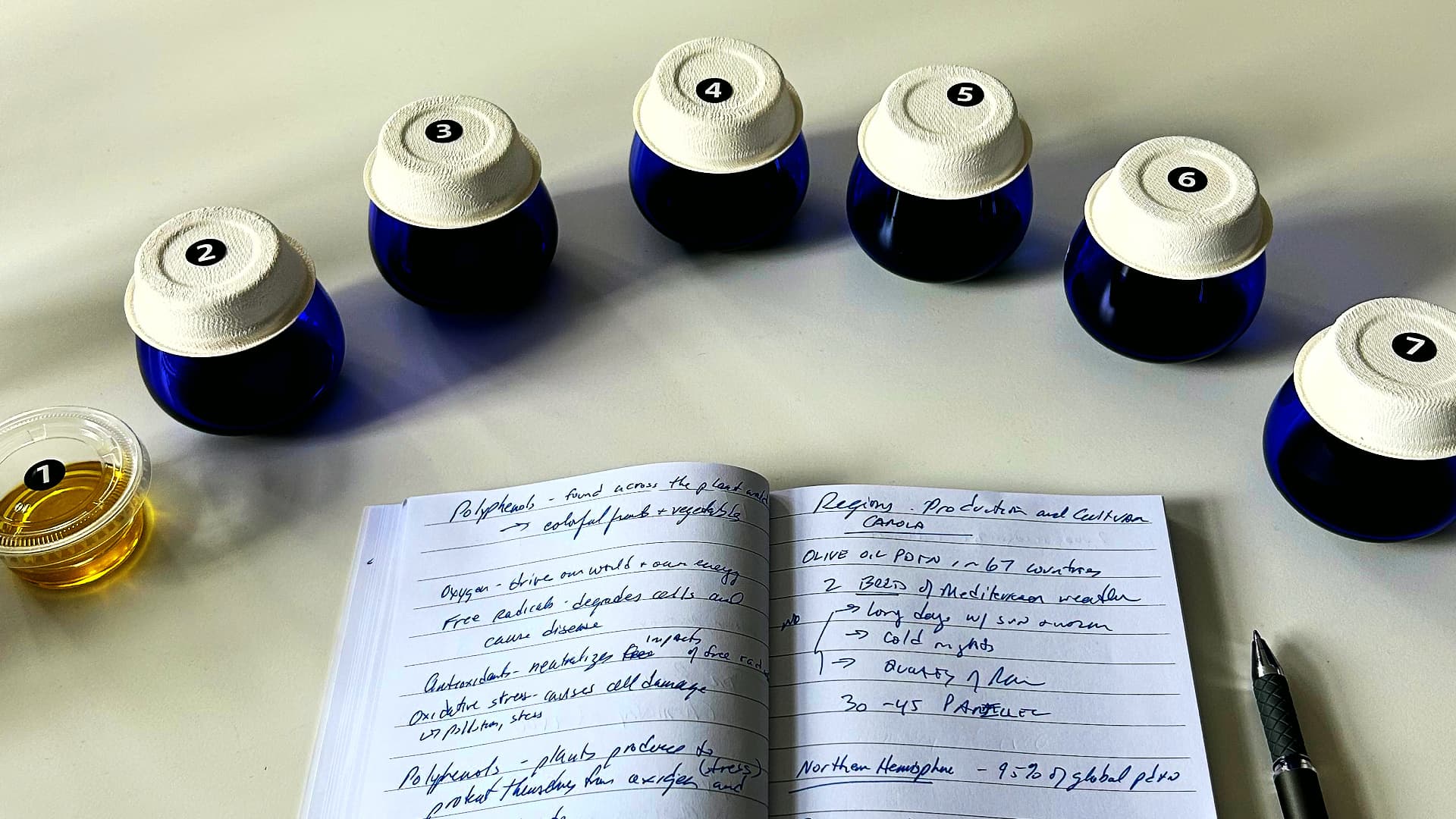 Participants analyzed nearly 100 olive oils from 12 countries during the 5‑day program. (Photo: Michael Seder)
That practical emphasis resonated with attendees already working in the sector. Rainer Nagel, who divides his time between Munich and Greece, said he plans to apply what he learned to the production and marketing of high-quality organic Koroneiki and Manaki oils in the PDO Kranidi area. “Our goal is to produce and market the best possible quality,” he said, adding that he also hopes to encourage nearby small producers to pursue higher standards and better prices.
Nagel described the London session as “a tremendously positive experience,” crediting “competent as sympathetic experts” and “a group of energetic participants with hugely diverse backgrounds and high ambitions in the space.”
Others arrived with a retail focus. Katie Dobie, who operates an olive oil shop and tasting room in British Columbia, said the course gave her the tools to become a more effective olive oil educator and to guide customers “through the journey of the olive,” from grove management and propagation methods to the final oil in the bottle.
Dobie said the program also strengthened her confidence “to tell the story of olive oil” and to highlight “the heritage and hard work behind every drop,” along with the nutritional value and culinary uses of high-quality extra virgin olive oil.
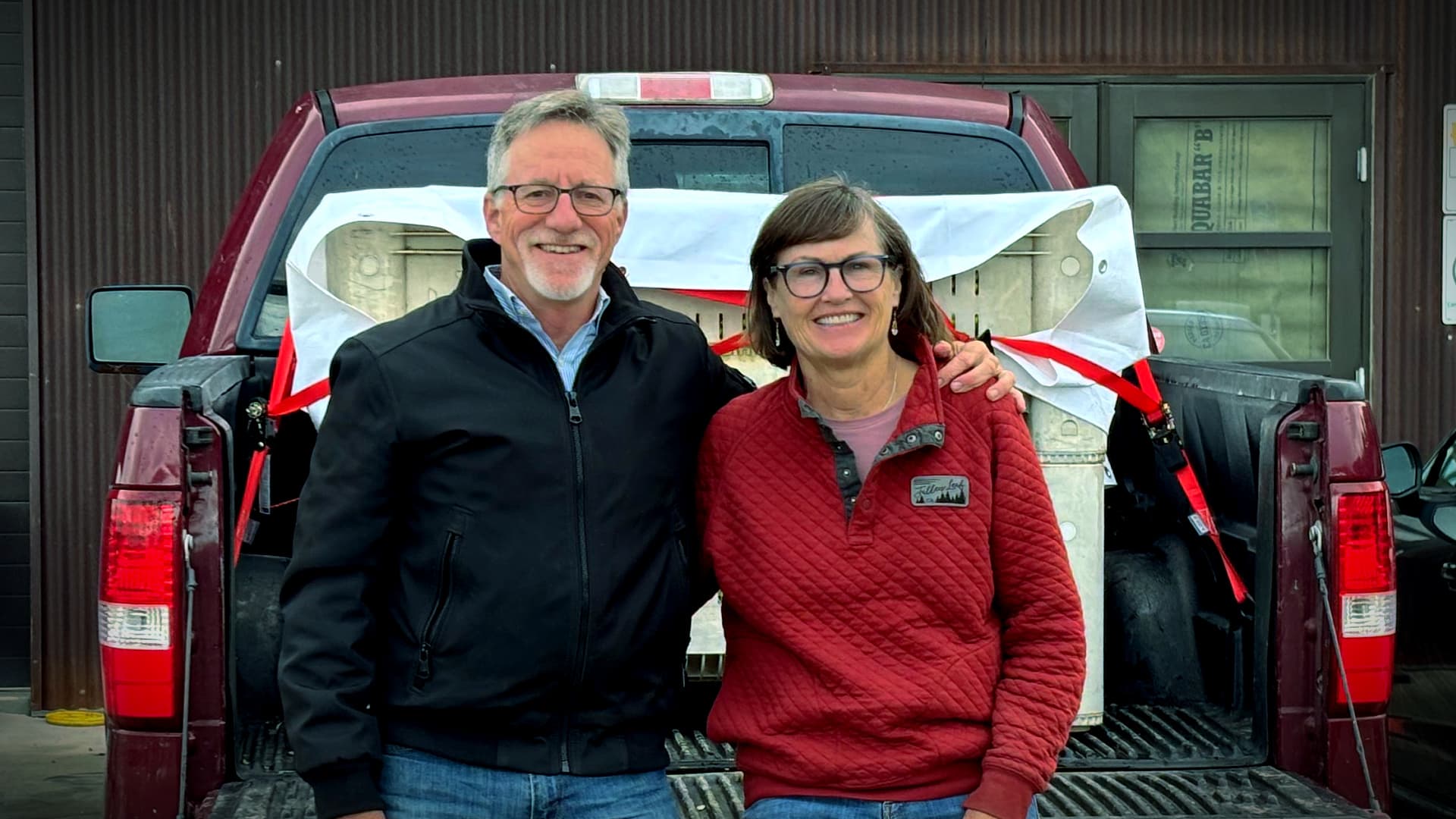 Michael and Denise Seder took the course to support an olive farm in Santa Ynez, California and improve product quality.
In California, Mike Seder took the course to support an olive farm in Santa Ynez and improve product quality. He said the training would help him create “an olive oil education platform and tasting environment,” giving consumers a deeper understanding of the product.
Maria Blackburn, based in the United Kingdom, said the hands-on format stood out. She described the program as “well-structured and engaging,” adding that the tasting sessions and expert instruction “strengthened my confidence and improved my understanding of olive oil quality and sensory analysis.” She said she plans to apply what she learned by educating customers and developing tasting experiences.
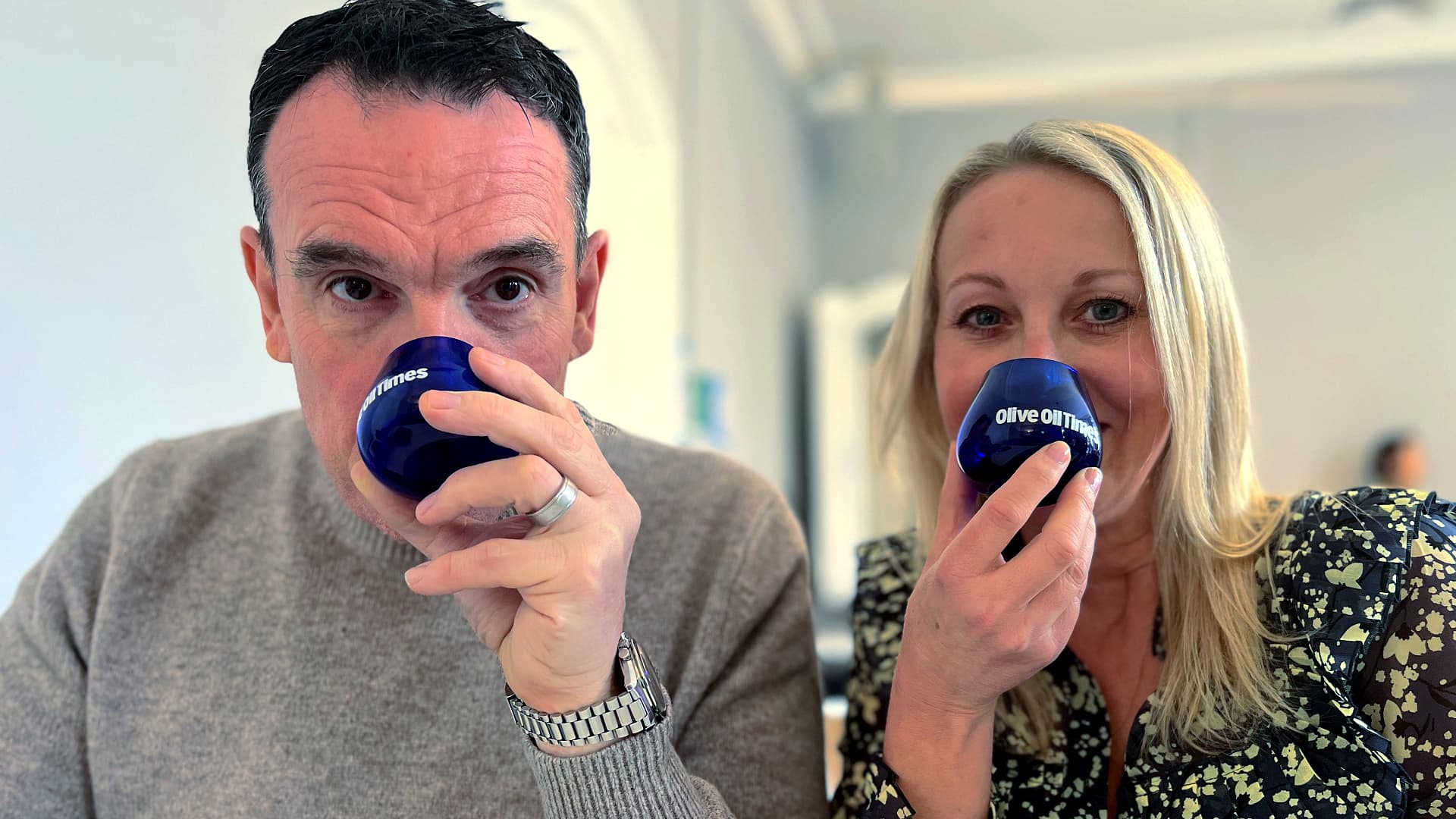 Mark and Maria Blackburn distribute a Greek olive oil brand in the U.K.
The course also attracted culinary professionals seeking greater rigor around an ingredient they use every day. Mansour BouKaram, a chef whose brand focuses on Mediterranean food, said he enrolled because olive oil is “the ingredient I use most in almost everything I cook,” and he wanted a deeper understanding of its role in flavor, balance and identity.
Taken together, the participants’ responses suggest that interest in olive oil education continues to broaden. Formal training is attracting not only producers and specialized buyers but also retailers, chefs, entrepreneurs, and communicators looking to bridge the gap between technical knowledge and everyday use.
That shift is significant because extra virgin olive oil remains widely consumed but often insufficiently understood. Many consumers know what they like, but fewer understand how cultivar, harvest timing, milling practices, storage and freshness shape what ends up in the bottle.
The Olive Oil Times Education Lab faculty brings together a multidisciplinary group of internationally recognized experts in olive oil education, sensory analysis, production, health and culinary application. The team includes Curtis Cord, founder of Olive Oil Times and executive director of the Education Lab; Carola Dümmer Medina, an NYIOOC panel leader and journalist; Pablo Voitzuk, a master miller and consultant; Simon Poole, a physician and author known for his work on the Mediterranean diet; Antonio Jesús Puentes Campos, an agricultural engineer and sensory analysis expert; and Daniel García Peinado, a chef and olive oil ambassador. Together, they offer participants a broad and practical perspective that connects olive growing and milling with tasting, nutrition, communication and professional use.
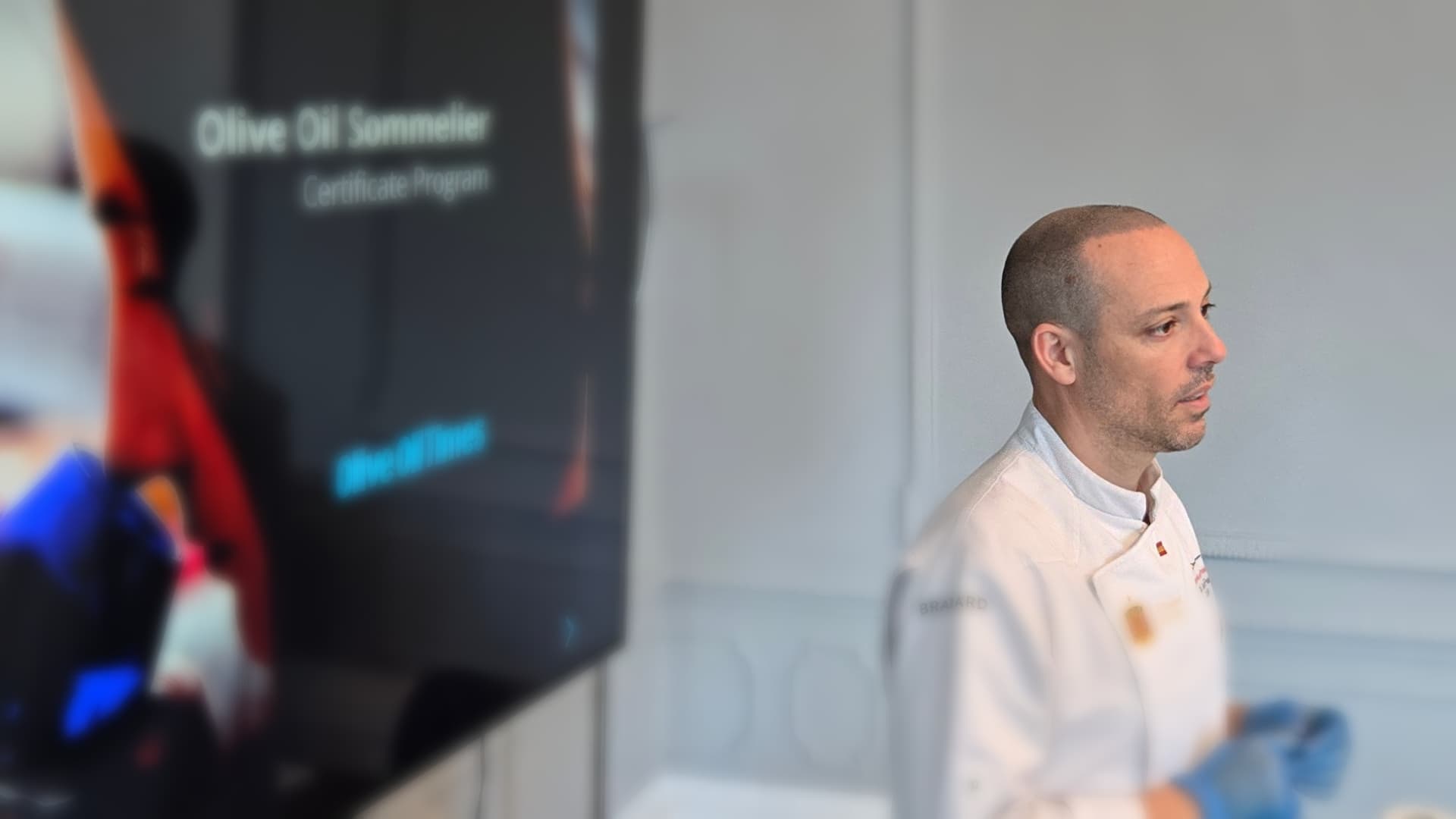 Daniel García Peinado, chef and olive oil ambassador, connects sensory knowledge with the practical use of extra virgin olive oil in professional kitchens.
That breadth of expertise is a defining strength of the program. Rather than approaching olive oil from a single angle, the instructors reflect the full scope of the sector, from orchard management and production methods to sensory evaluation, public education and culinary excellence. The result is a learning environment shaped by professionals with deep field experience and international credibility, giving participants direct access to the knowledge and standards that define high-quality olive oil today.
Over the course of the week, participants worked through the technical and sensory framework needed to assess oils more precisely, while also exploring food pairing, nutrition and the role of education in expanding appreciation for quality.
By the end of the session, what began for many as personal curiosity had evolved into a clearer professional direction. The newly certified sommeliers will take that training back to groves and mills, shops and tasting rooms, kitchens and consumer outreach initiatives in markets stretching from California and Canada to Greece and the United Kingdom.
The March session marked another step in that effort, with 28 new sommeliers leaving London prepared to apply a shared vocabulary and a common foundation to businesses and projects across the olive oil sector.
The next session of the Olive Oil Times Sommelier Program will be held in New York from June 8 through 12.
Dining and Cooking