
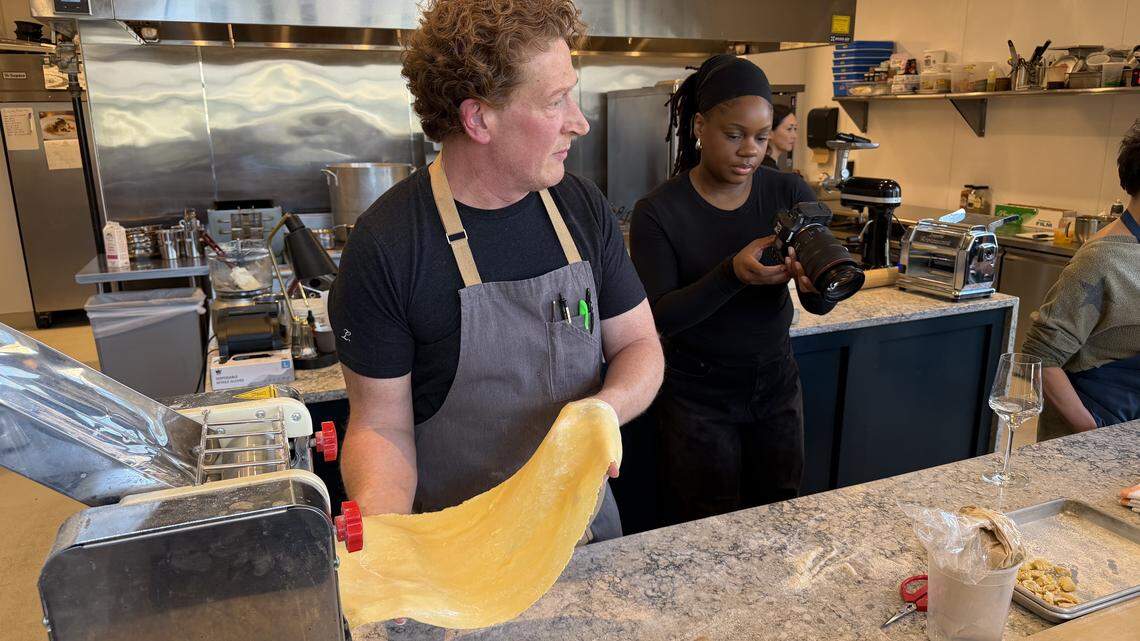
Charlotte seems to be having a bit of a pasta moment, and I’m here for it.
ESO Artisanal Pasta has opened to great success, as has Sorellina Pasta Co. Mano Bella recently expanded. Spaghett chef Kendall Moore is representing Uptown at the StrEATs Tasting Tour on Saturday, April 11 at First Ward Park. And yet another new pasta spot — Lady Funari — is coming soon.
I could go on with examples — including the fact that Little Mama’s and Ever Andalo — are now Michelin recognized — but I’ll stop there and start getting to the point.
That point is that pasta is everywhere. It’s a staple for many people’s weeknight dinners and celebrations alike. It’s a staple many people keep in their pantries, but it’s also pretty easy to find fresh in a specialty store or even on your regular grocery run.
Leveling up on pasta
Pasta making, however, is another story. I’m a fairly well-rounded home cook, and I’ve cooked plenty of commercially made fresh pasta in sauce I’ve made myself. But I’ve never actually made the pasta itself.
So when the Charlotte Regional Visitor’s Authority invited me to join the intimate, 12-seat Pasta Fundamentals class at L’Ostrica as part of Savor Charlotte and Unpretentious Palate’s Dine Deeper series, it seemed like a good opportunity to learn something new from absolute pros.
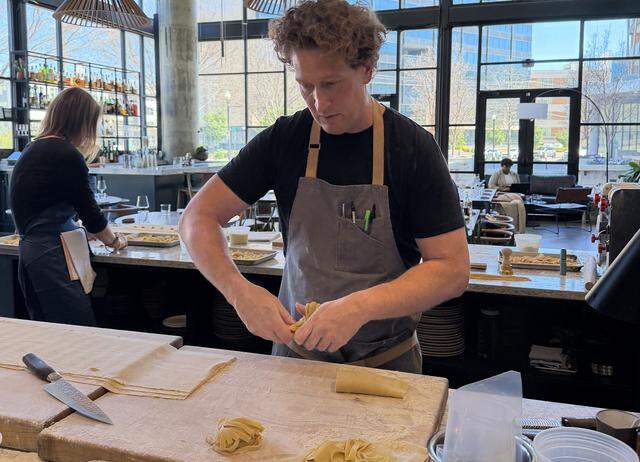 Chef Eric Ferguson demonstrates hand-cut pasta at L’Ostrica. Heidi Finley CharlotteFive
After all, chef Eric Ferguson lived in Italy for about a year. He also trained on the pasta station at three-Michelin star restaurant Quince in San Francisco, then shared in a James Beard Award for America’s Classics in 2014, when he co-owned Nick’s Italian Café in McMinnville, Oregon.
Ferguson is a fountain of food knowledge. During the class, he made the doughs and shaped them into sheets, and we filled, cut and assembled the pasta under his direction. Agnolotti, gnocchi, triangoli and tortelloni, and hand-cut pappardelle and tagliatelle.
Here are a few of his tips I found helpful — some of which I stretched to apply to your pasta nights at home, regardless of whether you actually make the pasta itself.
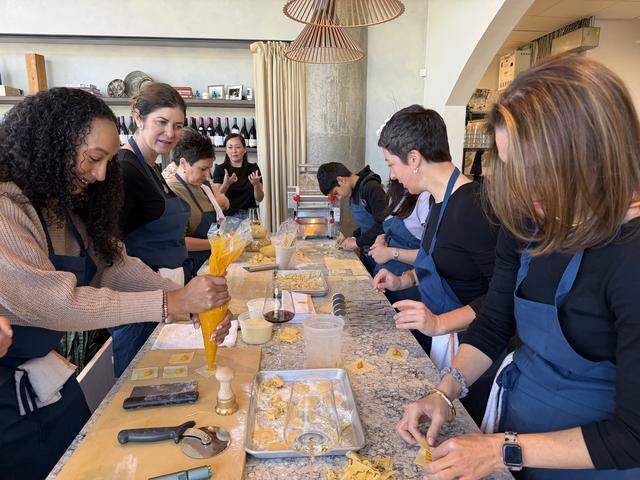 L’Ostrica owner Cat Carter (center) speaks to participants in a pasta making class at the restaurant. Heidi Finley CharlotteFive Use your leftovers
Pro tip: Any roasted winter squash can go in a pasta filling, blended in a grinder or food processor with some ricotta or Parmesan. The same goes for roast pork or tenderloin, or even your leftovers steak and creamed spinach, Ferguson said.
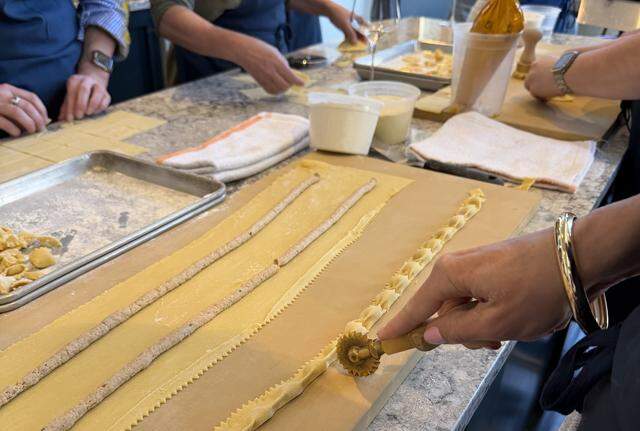 To make agnolotti, roll out a sheet of pasta dough and pipe a blended mixture of protein or produce using a piping bag or other plastic bag with the tip cut off. Then, fold over the dough, cutting off a narrow strip to make it easier to work with. Next, pinch the dough into small pouches, then cut off the small pieces you’ve created to prepare the pasta for boiling. Heidi Finley CharlotteFive
My tip: Even if you’re not making the pasta itself, you can run with the same idea. Add a little cream to your squash mixture to make it loose enough to coat your pasta as sauce. Hand chop your proteins a little smaller, but leave them chunky and build around them with tomato sauce, butter or cream. Throw in a handful of spinach or leftover broccoli, or whatever else you have on hand that seems to make sense.
Don’t oversalt your pasta water
Pro tip: Ferguson believes if you’re making your own pasta, you should season the dough, not the water. Why? Because if you salt both the dough and your pasta, it comes out too salty.
Along the same lines, he cautions against adding pasta water to thin out your sauce for the same reason. If you add salted water to an already-seasoned sauce, you’re going to really crank up that salt level.
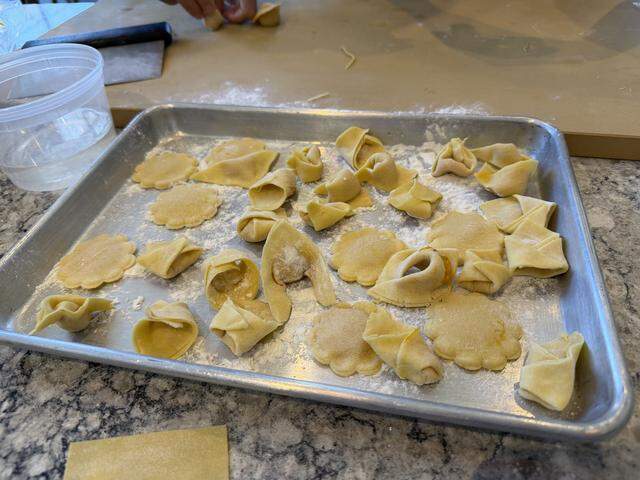 Freshly stuffed pasta sits, ready to boil. If you’re making it ahead of time, pop it in the freezer for later, chef Eric Ferguson said. Heidi Finley CharlotteFive
My tip: Ferguson didn’t mention this, but if you’ve ever watched a cooking show of any kind, you’ll notice the chefs taste as they go. Easy enough, but it’s also easy to forget when you’re in the thick of things, trying to get a meal on the table. Your tastebuds will tell you when you need more salt and when you’ve hit the limit.
Al dente doesn’t mean undercooked
Pro tip: You want protein-dense doughs with whole eggs when you’re making hand-cut pastas to increase their stretchability.
“When people talk about al dente, al dente doesn’t actually mean undercooked — which a lot of people tend to do,” Ferguson said. “It actually is building the protein and building layers in that so it has the bite, so it’s cooked perfectly. But because of the density of the dough, you actually get that nice tooth through it.”
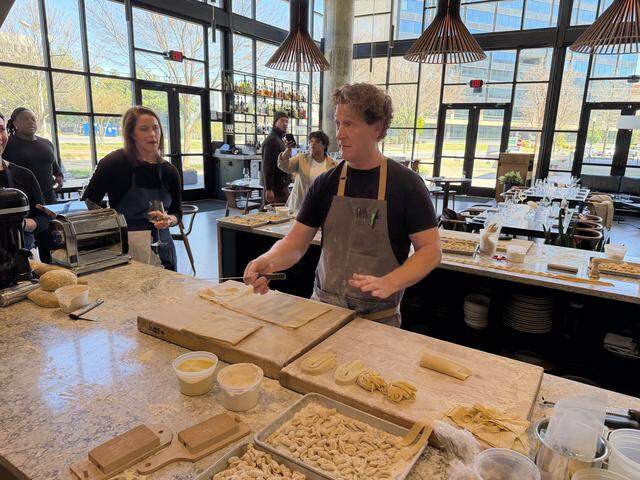 Chef Eric Ferguson prepares sheets of pasta at L’Ostrica. Heidi Finley CharlotteFive
My tip: On the other end of the spectrum, don’t overcook your pasta, either — it will turn into mush. Fresh pasta really only needs a few minutes to boil. Cooking times on pantry pasta can really vary, depending on the size and shape of the noodles. So follow package directions, and taste them near the end to check for doneness.
Start with gnocchi
Of all the pasta shapes we made, the Sardinian-style gnocchi seemed to be the easiest — and fastest — for beginners.
You just roll a dough made from water and semolina flour into a log, cut off tiny pieces and roll them along a gnocchi board with your thumb, then flour the pieces a tiny bit more so they don’t stick together. (The financial investment needed is lower than a takeout meal, too — you can get the boards online as cheap as $10.)
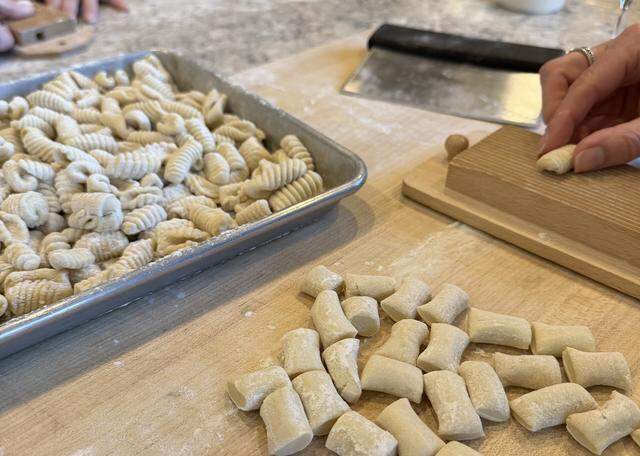 Pillows of dough are rolled on a gnocchi board to create the pasta’s trademark ridges. Heidi Finley CharlotteFive
Pro tip: Ferguson paired the gnocchi with a creamy, smoky tomato sauce made with ‘Nduja sausage — and it was perfection. The thick concoction clung to the ridges of the pasta, just as intended.
My tip: If that sounds good to you, too, you can find the Calabrian sausage at specialty retailers including Enzo’s Italian Market.
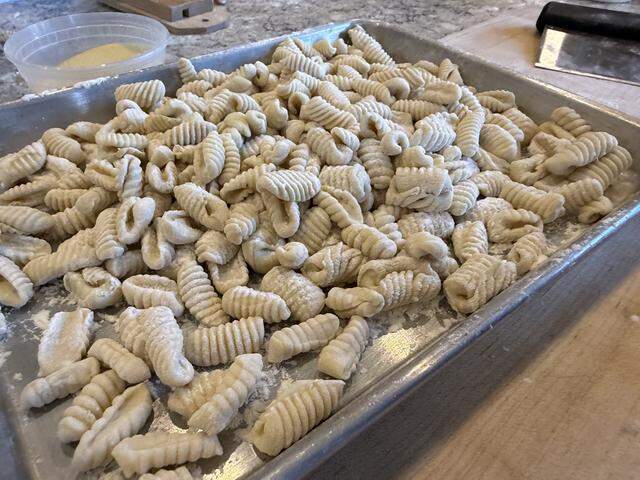 A pile of handmade gnocchi at L’Ostrica. Heidi Finley CharlotteFive Don’t overcomplicate it
Pro tip: Use what you’ve got, and don’t stress too much. If you’re making sheets of pasta and have a pile of leftover trimmings or shapes that didn’t come out quite right, cook them up and add butter, salt and pepper to feed folks as dinner awaits — that’s what the Italian nonnas do, Ferguson said.
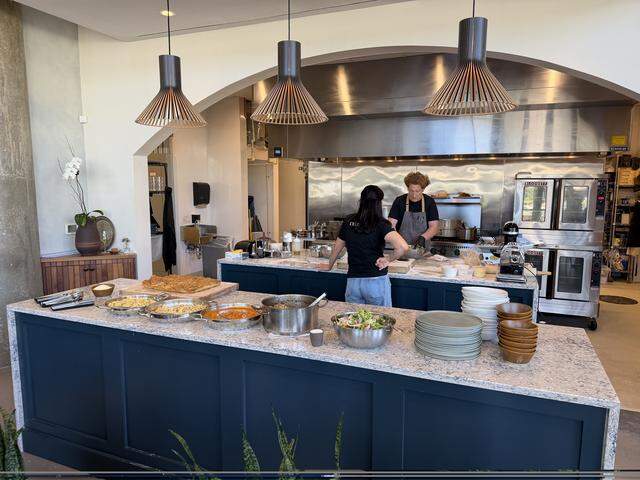 L’Ostrica owners Cat Cora and chef Eric Ferguson finish up a meal in the kitchen. Heidi Finley CharlotteFive
My tip: Pile up a plate and sit down to enjoy all your hard work. Will it all turn out perfectly? Who knows, but if it feeds you, it’s a job well done.
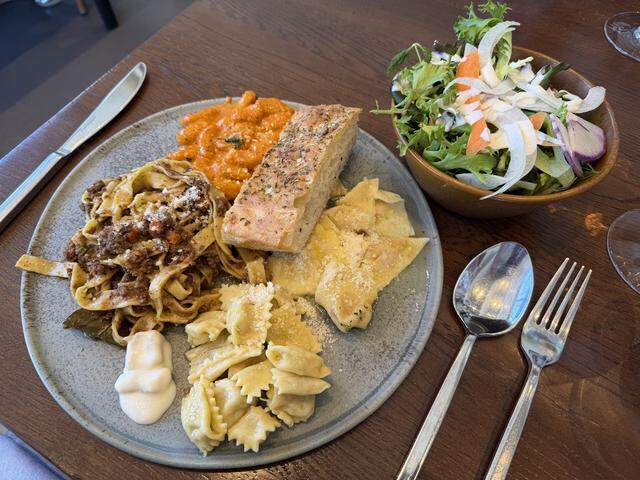 The results of L’Ostrica’s pasta making class. Heidi Finley CharlotteFive
Location: 4701 Park Rd, Charlotte, NC 28209
Menu
Cuisine: Tasting menu, bar menu
Instagram: @lostrica_clt
Related Stories from Charlotte Observer

Heidi Finley
The Charlotte Observer
Heidi Finley is a writer and editor for CharlotteFive and the Charlotte Observer. Outside of work, you will most likely find her in the suburbs driving kids around, volunteering and indulging in foodie pursuits.
Support my work with a digital subscription
Dining and Cooking