
More people than ever in Massachusetts say they don’t have enough food to eat.
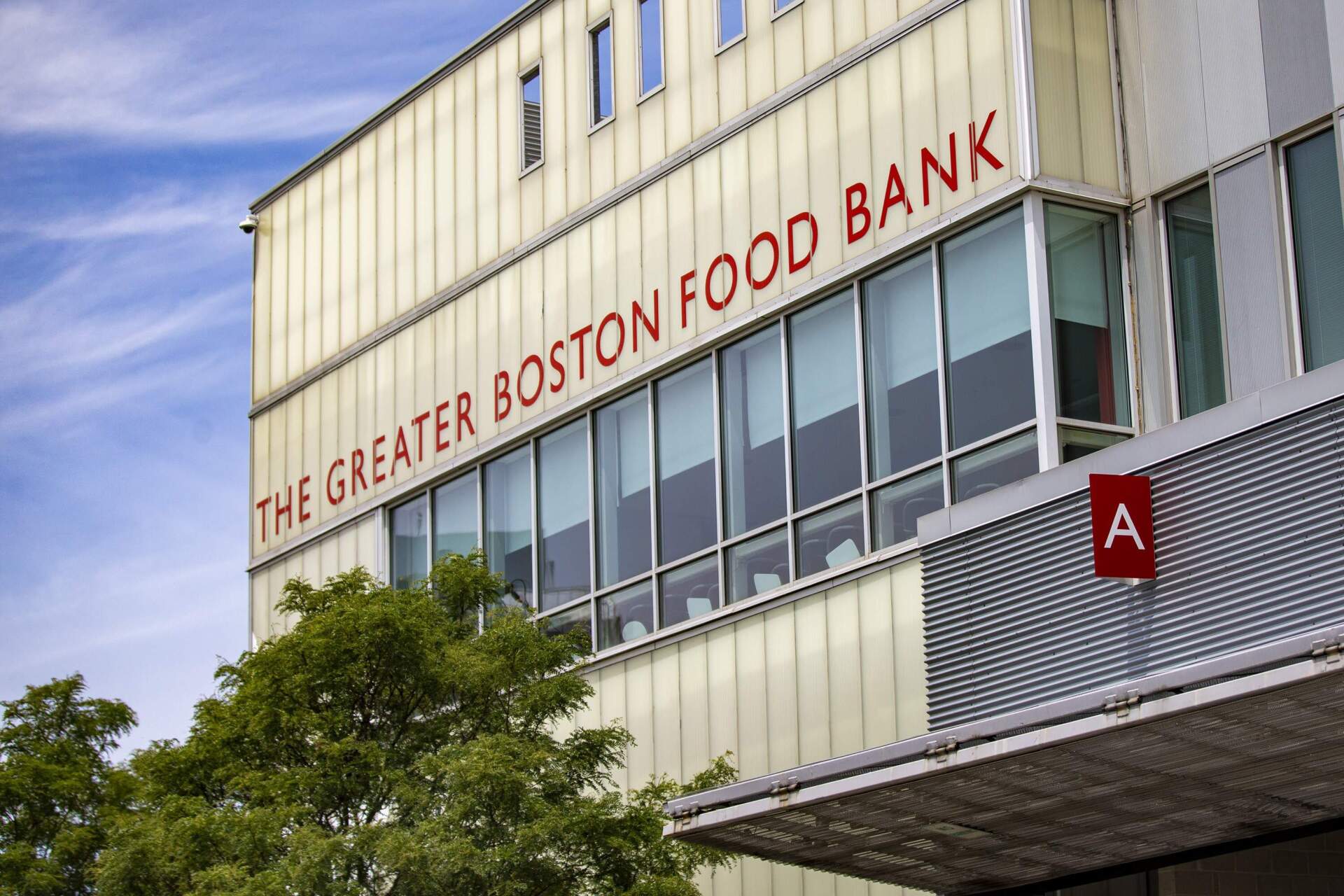
That’s a major takeaway from the latest Massachusetts Food Access Report from the Greater Boston Food Bank and Mass General Brigham. According to the data, 40% of survey respondents said they’re food insecure — double what the survey measured for 2019. The rise comes as the cost of living increases and the federal government makes cuts that affect benefits, such as food stamps.
“It’s been a very difficult year for people across the commonwealth,” Catherine D’Amato, president and CEO of the GBFB, said. “We now have a record number of Massachusetts residents facing food insecurity and federal support continues to diminish.”
The survey asked roughly 3,000 people more than 300 questions on all aspects of food security, including access to food. More than half of food insecure households say they turn to the state’s charitable food system of banks and pantries to have enough food. And the majority of respondents receiving federal food benefits from the SNAP program (75%) say what they get doesn’t fully cover their food needs.
“We are seeing need, and quite frankly, anxiety at the highest I’ve ever seen it in my over 10 years of working in this space,” said Tina Powderly, executive director of the Franklin Food Pantry.
The survey comes as the U.S. Department of Agriculture ended its decades-old food insecurity survey last September. And in October, Massachusetts and all other states will have to pay a larger share of money to support its own SNAP recipients, something food security organizations worry will increase the need for food.
“We are seeing need, and quite frankly, anxiety at the highest I’ve ever seen it in my over 10 years of working in this space.”
Tina Powderly, Franklin Food Pantry executive director
Powderly said the Franklin pantry saw a record number of people come through their doors last year. Between last October and December, they recorded 40% more people needing food than that same time period in 2024. There were 700 households that used the pantry just in November — close to the amount they typically serve in an entire year.
The recorded increase came as SNAP benefits were in limbo for more than 1 million state residents during a government shutdown.
“More and more folks are walking through our doors saying, ‘We’re two-income households, we aren’t able to meet the rising cost of fuel, the rising cost of our rent and our prescription costs. So we need to be here to bridge that gap in order to meet our basic needs,’ ” Powderly said.
That’s in line with what the survey report recorded statewide. Data show 88% of food insecure households say they’re having trouble paying for at least one basic expense. On average, those households say they need an additional $500 per month to meet their basic needs. This is on top of the rising cost of food, which has increased nearly 30% since March 2020.
“ When you’re squeezed for housing or you’re squeezed for childcare … the only thing that maybe you can squeeze is your food budget and by eating less,” said Dr. Lauren Fiechtner, a pediatrician with Mass General Brigham for Children and a research advisor at the Greater Boston Food Bank.
Fiechtner said food insecurity is a cycle. It exacerbates other health problems. According to the survey data, eight in 10 adults living in households with food insecurity say they have at least one chronic condition, including diabetes, dental or gum disease, mental health conditions or obesity. Among the households experiencing food insecurity, about a third say they’ve skipped routine medical care because of the cost. Of that group, this includes skipping prescription medication (67%), routine medical (47%) and dental care (40%).
“ So people have to skip prescription medication or routine medical appointments because of costs,” Fiechtner said. “Then you come in when it’s an emergency … then obviously the high cost of healthcare or major chronic condition that you’re diagnosed with can also lead to food insecurity.
“That’s the cycle we’re really hoping to break,” she said.
The report makes suggestions on how to do that. It calls for more state-level funding for the Department of Transitional Assistance to hire more caseworkers to run SNAP, as well as more money for the Massachusetts Emergency Food Assistance Program (MEFAP). This year MEFAP was funded at a record $50.5 million, and advocates are pushing for an additional $7.5-million dollars for next fiscal year.
The report also suggests expanding access to local state and federal programs that have helped lower food insecurity, like the Women, Infants, and Children (WIC) nutrition program, the Massachusetts Healthy Incentives Program and universal school meals. D’Amato, with GBFB, acknowledged funding is limited and in high demand right now. That’s why she said state and local organizations need to collaborate on better solutions.
“We have to work together. It’s not a time for ownership,” D’Amato said. “It’s really a time for partnership and how we build those ways to work together.”
Dining and Cooking