
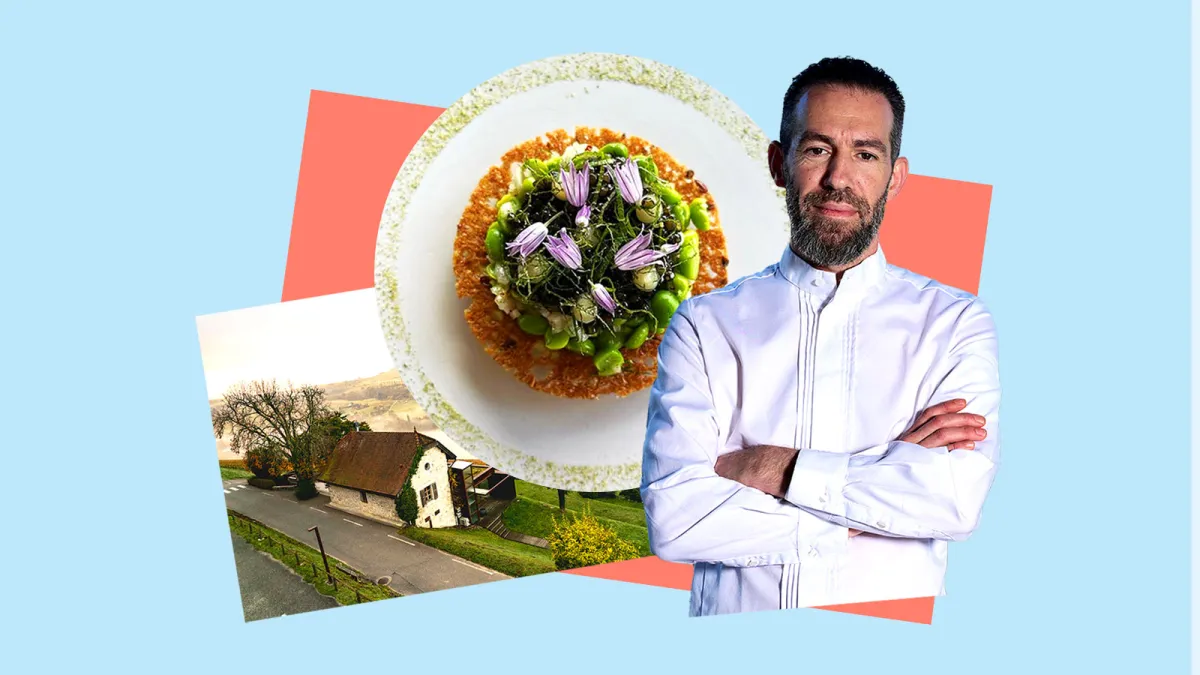
The €280 Menu Expérience at Les Morainières restaurant in southeast France is as much a work of art as it is a meal. The 11 courses are crafted from local produce — fish from the river running through the Alpine valley below; mushrooms from the woods above; vegetables from the surrounding fields — and served in a kaleidoscope of tastes, textures and colours.
Diners are expected to spend between four and five hours at the table. Anything less is considered fast food in these parts. The wine list alone runs to 62 pages, and ranges from a €60 red from the Gard département to a €16,950 bottle of Romanée-Conti from Burgundy.
In March, Les Morainières was elevated to the pinnacle of French gastronomy when it was awarded three stars by Michelin, the highest mark given by the guide. A total of 30 restaurants have the maximum rating in France, along with one in Monaco — Les Morainières was the only one added to the list this year. The distinction thrust the isolated, rural establishment to the centre of the country’s culinary firmament.
Food newsletter
Restaurant reviews, insider insights and recipes from the best chefs in the business.
Sign up with one click
Yet when Michaël Arnoult, the owner and head chef, stepped up to receive the award at a ceremony in Monaco, Parisian experts expressed surprise and a hint of irritation. They had predicted that other, higher-profile restaurants would be promoted to join the small circle already holding three Michelin stars.
Many seemed to know little about Arnoult, who was described by Le Monde as a “hermit”. Some specialists admitted — somewhat sheepishly — that they had never even eaten in Les Morainières.
Stéphane Durand-Souffland, Le Figaro’s feared restaurant critic, was put out by the whole episode. He accused Gwendal Poullennec, the Michelin Guide’s director, of “sadism” for allegedly leading the culinary world to believe that another restaurant, La Table de Pavie, in Saint-Émilion near Bordeaux, would get the three-star rating instead.
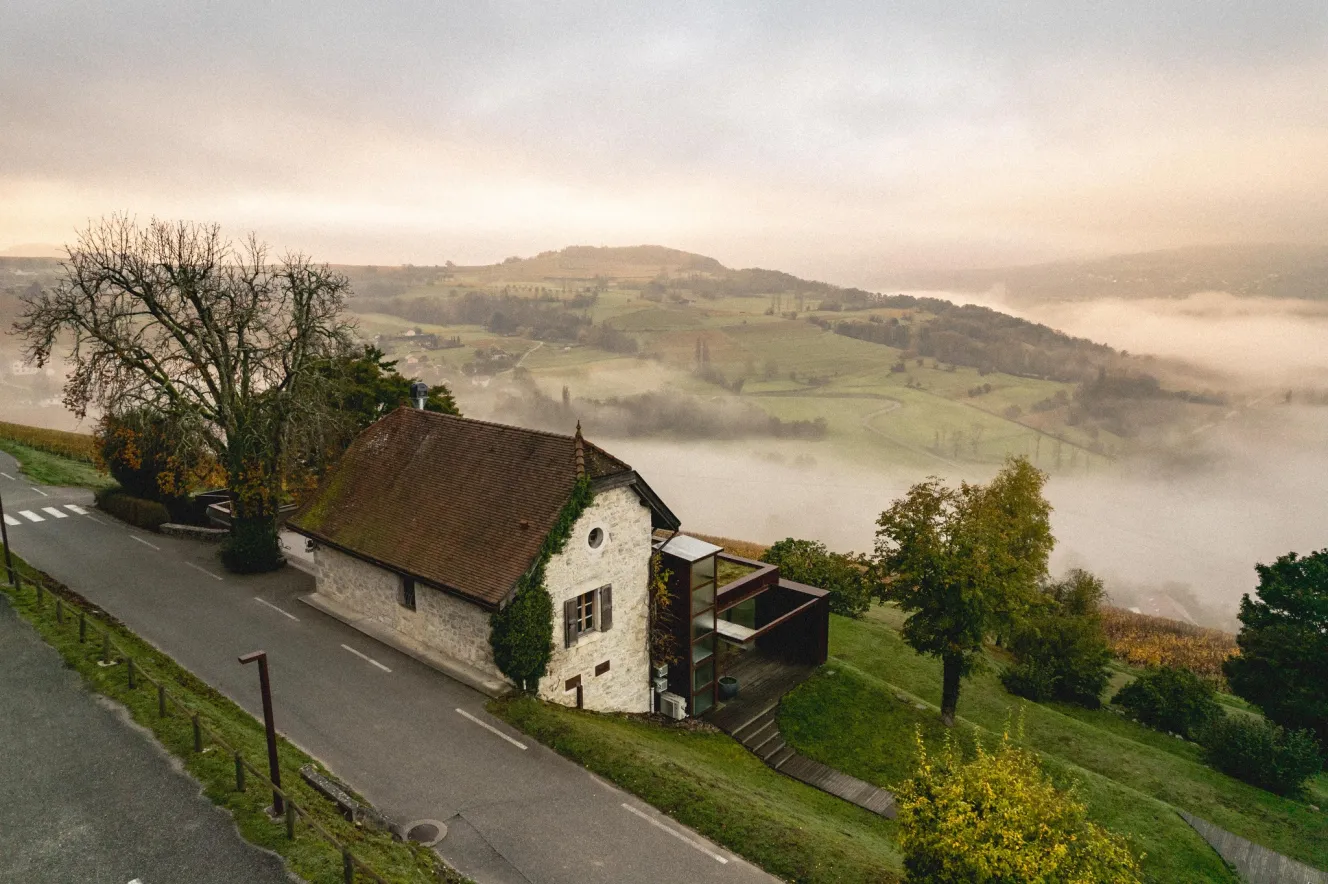 Les Morainières is perched on a hillside surrounded by vines on the edge of Jongieux, southeast France Les Morainières
His ire was perhaps understandable. Parisian critics are more familiar with the jet-setting chefs who have come to dominate French cuisine in recent years. The likes of Alain Ducasse have numerous restaurants and fly from one to another. They draw up the menus, but generally leave underlings to do the shopping and the cooking while they themselves attend to business and media duties.
Arnoult, who opened Les Morainières in 2005 with Ingrid, his wife, is different. He flees television studios and has had few dealings with journalists — at least until now.
His 25-capacity restaurant is “lost in the middle of nowhere”, as he freely admits. Perched on a hillside surrounded by vines on the edge of Jongieux, a village of 289 people, in the Savoy département of the Alps, it lies half an hour’s drive from the nearest town. The setting is exceptional, with a view over the Rhône river winding through the valley below and the green hills of the Bugey vineyards opposite, but the the stone façade of what was once a winemaker’s house blends so unassumingly into the decor that it is easy to miss.
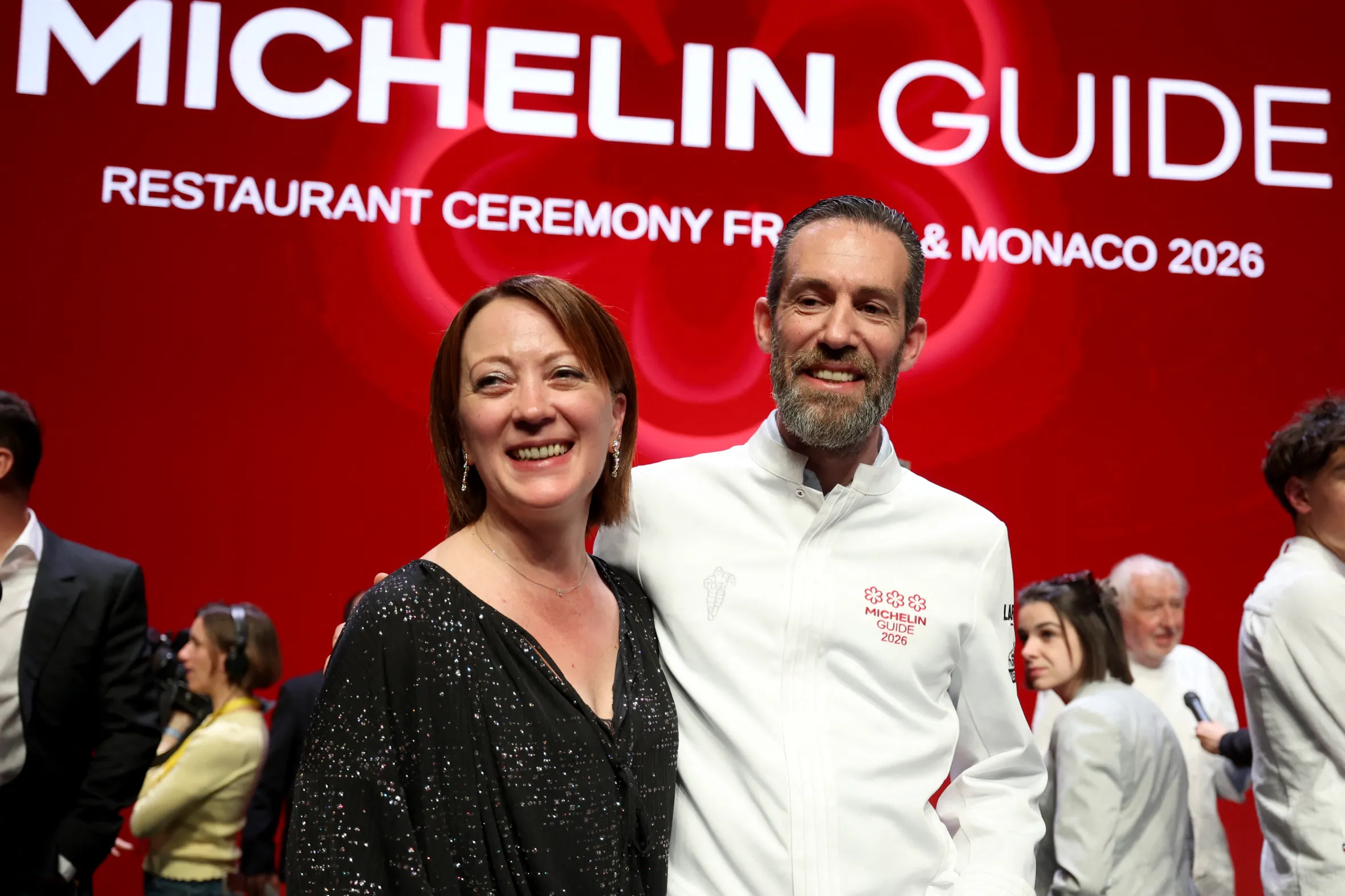 Michael Arnoult with his wife Ingrid at the award ceremony in Monaco on March 16Valery HACHE/AFP
Arnoult, 48, has nothing of the jet-setter. When the restaurant closes for a month in January, he takes his holiday in the area, he said. When it is open, he is either in the kitchen, or buying vegetables in the market in nearby Chambéry, or fish caught in the Rhône or in the Alpine lakes. He gets truffles from people who supplement their retirement income by scouring the woods for the pungent fungus, and mushrooms from those living in the vicinity.
Last week, a gatherer had turned up with the first morel mushrooms of the season. “I’m always excited when a new product arrives,” said the chef, who spent the previous evening working on a new recipe of morels stuffed with veal, shallots and wild garlic. He says he adapts dishes all the time, depending on seasons, catches and harvests.
“The idea is not to tell the fisherman: ‘I want this or that fish’. It is to take what they catch and work with it. I think that nowadays, we must adapt… to the producers. They are the ones who can tell us what we should be doing at any given moment”, he says.
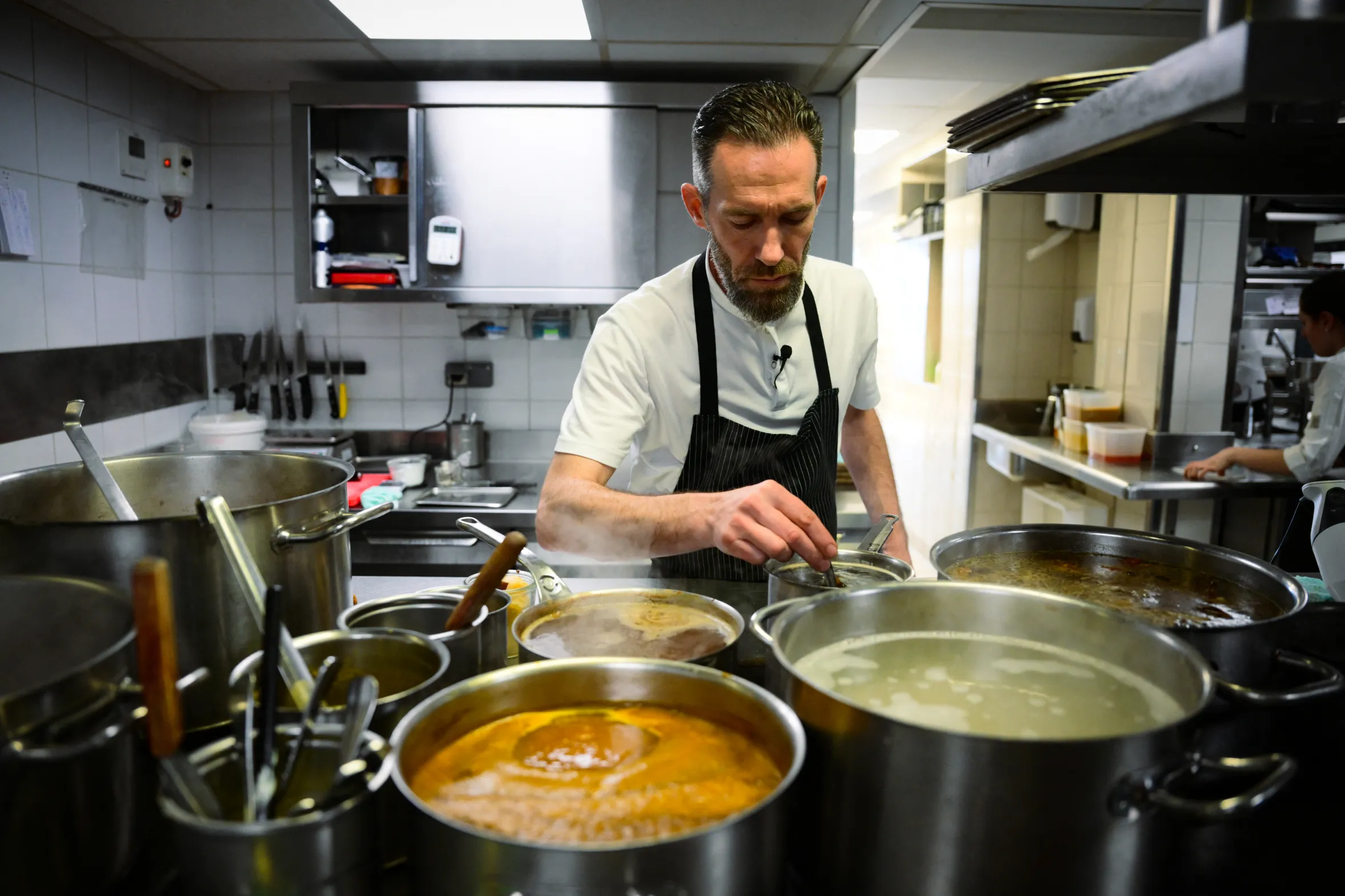 Michaël Arnoult in the kitchen at Les MorainièresOLIVIER CHASSIGNOLE/ AFP
The result is a menu that features catfish caught in the Rhône and served as a brandade with smoked potatoes, onions and pike fish caviar, or Arctic char from Lake Léman with butternut squash and bergamot orange.
“The idea is to take everything you see out there,” said Arnoult, pointing to the panoramic view from the window, “and to put it in your plate. That is the identity of this restaurant. It is to have a cuisine that makes sense here. It is a cuisine that cannot be transferred anywhere else.”
The unnamed Michelin inspector who ate at his restaurant — they are always anonymous — expressed praise for dishes like the carpaccio of Beaufort trout, with its “brunoise of fork-tender carrots” and a “sprinkling of trout roe”, all “bound together by a remarkable sauce of carrot, caraway and lemon that was naturally sweet and deeply aromatic”. As for the Rhône crayfish tartare with shell jus and mandarin and marigold whipped butter, it was hailed as a “showstopper”.
Arnoult, who is from Orléans, south of Paris, and his wife, who was born on the Atlantic coast, met when they were both employed at the Oakley Court hotel in Windsor. He was in charge of making the sauces in the restaurant and she of room service. Arnoult says they enjoyed Britain and would have stayed longer had he not been called back to France for his military service. “They said: ‘It’s the army or prison’”, he recounted.
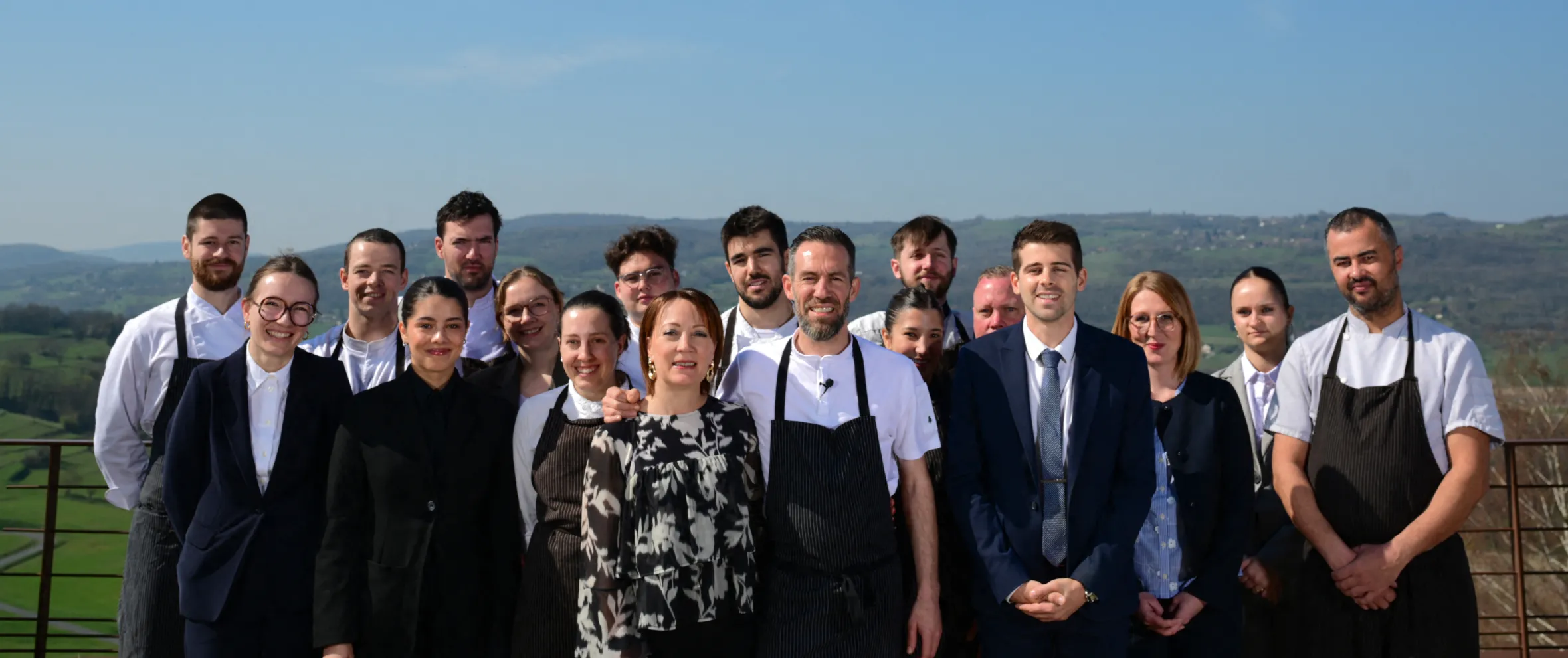 Michaël Arnoult and Ingrid with his staffOLIVIER CHASSIGNOLE/AFP
He added that France had misconceptions about British cuisine. “There are always prejudices. People think that in Morocco the only dish is couscous and they imagine that in England, all you ever get is that jelly which wobbles. But it’s not true. There are good things everywhere.”
The Arnoults moved to Savoy when he got a job as an assistant chef, and decided to stay on to open their own restaurant two decades ago. They came to Jongieux in part because of the scenery and in part because it was all they could afford. “We didn’t have much money in those days,” he said.
Arnoult quickly realised that no one would stop at the establishment by chance. Diners had to be lured there, and, in this respect, Michelin has been pivotal, awarding Les Morainières a one-star rating in 2007, two in 2012 and three this year.
The guide has many critics who say it is overly conservative in its selection, and stifles culinary innovation. But its influence remains unparalleled, with a Michelin star said to add 30 per cent to a restaurant’s takings. Arnoult said that for “restaurants like ours, Michelin is essential. Without it we would not exist”.
Nevertheless, there are downsides to the three-star rating. One is having to deal with sudden media attention, as Arnoult is discovering. During his interview with The Times, as he was explaining his “passion” for local producers, he suddenly remembered that he had left something on the stove. “Excuse me,” he said as he sprung from his chair mid-sentence, making a bolt for the stairs that led down to the kitchens, a look of worry spreading across his thin, bearded face. He returned a few minutes later at a more leisurely pace, relieved to have reached the stove before the dish had burnt.
The other disadvantage of having the maximum rating is the strain of trying to maintain it. Many chefs live in fear of a downgrade, and some say the pressure is unbearable. A few have pleaded with Michelin to withdraw them from its guide in recent years.
Arnoult insists that is not the case for him. “We did not set up our restaurant with a view to [Michelin] stars,” he said. “We are just passionate about what we do. We always want to go further and to find tastes that are more striking and a cuisine that is different from everyone else’s.”
Yet since receiving his third star, he has put up the price of his menus to fund an increase in staff numbers. For now, he can afford to do so, with the restaurant booked for months ahead.
Dining and Cooking