
An anti-inflammatory diet may help reduce chronic inflammation — a prolonged response to how your body handles danger. Chronic inflammation can damage your heart, brain and other organs. And it plays a role in nearly every major illness, including cancer, heart disease, Alzheimer’s disease and depression.
Advertisement
Cleveland Clinic is a non-profit academic medical center. Advertising on our site helps support our mission. We do not endorse non-Cleveland Clinic products or services. Policy
So, how can the foods you eat contribute to how you feel? Registered dietitian Julia Zumpano, RD, LD, explains.
What is an anti-inflammatory diet?
The food we eat — and don’t eat — can soothe and even prevent inflammation by quashing your body’s inflammatory responses.
The idea is that what you eat plays a role in how you feel. But because everyone’s inflammatory triggers are different, there’s no one-size-fits-all anti-inflammatory diet.
“The term ‘anti-inflammatory diet’ doesn’t refer to a specific diet regimen but to an overall style of eating,” Zumpano clarifies.
But she does credit two eating styles that have been shown to help with inflammation: the Mediterranean diet and the DASH diet.
“Positive research reports that these diets are successful in reducing inflammation, as well as cholesterol, weight, blood pressure and blood sugar,” she adds.
Benefits of an anti-inflammatory diet
The health benefits of an anti-inflammatory diet include:
Clearer skinDecreased muscle or joint painDecreased swelling in your hands and feetFewer headachesImproved gastrointestinal symptoms (diarrhea, gas, nausea, stomach pain)Improved sleepLess anxiety, stress and/or brain fogLess bloatingLower blood pressureLower blood sugarMore energyWeight loss
The biggest hint that your anti-inflammatory diet is working is if you start feeling better, so keep an eye on your symptoms and look for positive changes to your health.
“There are a lot of different ways your body can react to an anti-inflammatory diet,” Zumpano notes.
Video content: This video is available to watch online.
View video online (https://cdnapisec.kaltura.com/p/2207941/sp/220794100/playManifest/entryId/1_zlsxt967/flavorId/1_5f3sgelj/format/url/protocol/https/a.mp4)
Registered dietitian Julia Zumpano explains how you can begin an anti-inflammatory diet.
Registered dietitian Julia Zumpano explains how you can begin an anti-inflammatory diet.
Foods to eat and avoid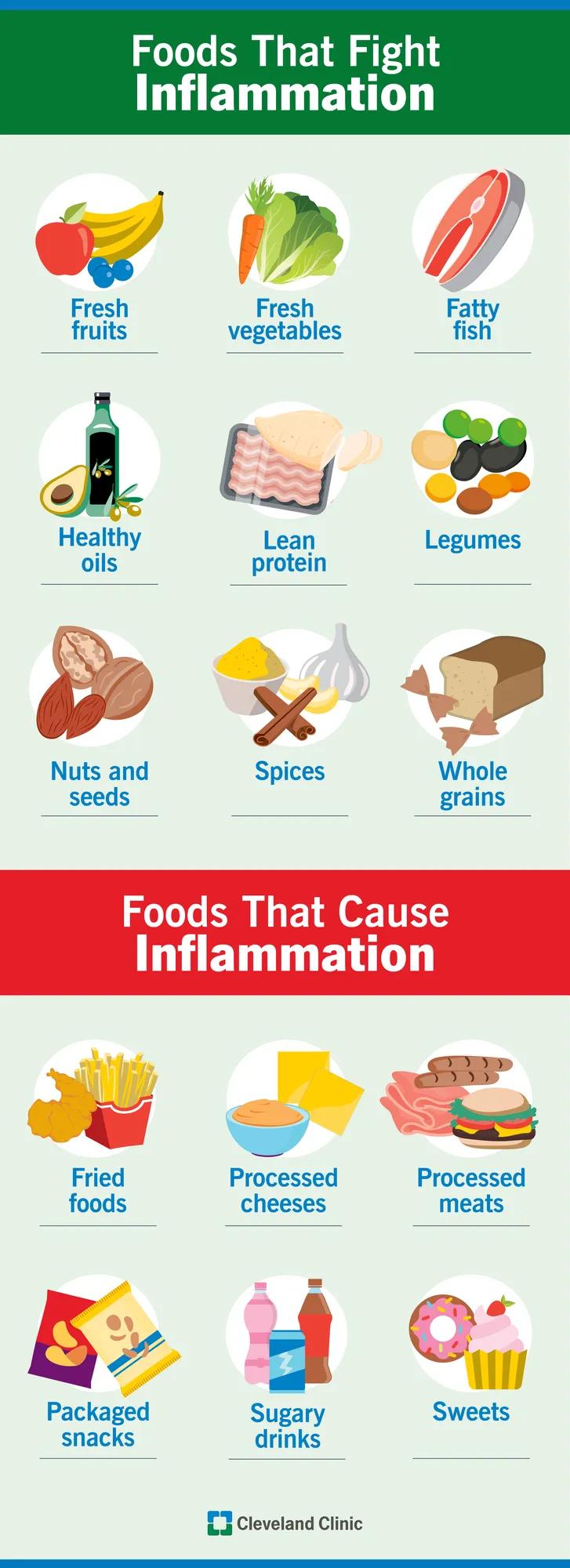
Image content: This image is available to view online.
View image online (https://assets.clevelandclinic.org/transform/80a5974e-44de-4f9e-9e89-b6d9c506ed80/anti-inflammatory-diet-infographic)
If you want to follow an anti-inflammatory diet, focus on whole foods and minimally processed foods, says Zumpano.
An example of an anti-inflammatory food list may look something like:
Fresh fruit: Like apples, berries, avocados and orangesFresh vegetables: Like leafy greens, peppers and broccoliLean protein: Like chicken and turkeyFatty fish: Including salmon, tuna, herring or mackerelWhole grains: Like brown rice, wild rice and oatsLegumes: Like dried beans and peasNuts and seeds: Including walnutsSpices: Like turmeric and cinnamonHealthy oils: Like extra virgin olive oil (EVOO)
In short, if you can find it in nature, it’s probably a whole food.
On the other hand, there are certain foods you should avoid or limit, including:
Sweets: Like commercially baked goods, pre-packaged desserts, ice cream and candyPackaged snacks: Like potato chips and microwave popcornProcessed meats: Including bacon, sausage, hot dogs, bologna, pepperoni and salamiProcessed cheeses: Like nacho cheese dip and American cheese slicesSugary drinks: Including soda and sports drinksFried foods: Like fried chicken and French fries
Even if you don’t have a chronic condition, you can experience inflammation when you eat foods that you’re sensitive to.
“When you have an immune response to a food, your antibodies rise, which can cause inflammation,” Zumpano explains. “Your body basically sees that food as a foreign body and starts working against it.”
Even so-called “healthy” snacks, like granola bars, trail mix and baked chips, can have a lot of processed ingredients, including added sodium and sugar.
“There’s no real nutritional benefit to them, so you’re not lacking anything when you cut them out,” she adds.
Should I try this diet?
Everyone’s inflammatory triggers are different, so there are a few reasons you might experience inflammation.
For example, if you’re living with a chronic health condition, you may be living with chronic inflammation, too. Conditions associated with inflammation include:
Crohn’s diseaseHeart diseaseHigh blood pressureIrritable bowel syndromeMultiple sclerosisObesityPsoriasisRheumatoid arthritisType 1 diabetesUlcerative colitis
“We know of some general associations,” Zumpano says. “Refined starches and processed meats aren’t good for people with heart disease (or anyone); gluten and dairy can further inflame bowel disorders; and nightshades can be inflammatory for arthritis. But each person needs to find their personal triggers.”
Foods that cause inflammation in one person might not cause it in others — like how you can enjoy the occasional slice of pizza without issue, while eating a slice causes severe inflammation in your friend who has a gluten sensitivity.
Keep in mind that although you may not experience a physical sign of inflammation, all processed foods can lead to internal inflammation. So, keep them to a minimum, even if you don’t have a particular sensitivity.
Tips to help you follow an anti-inflammatory diet
Here are some guidelines to eat in a way that reduces the likelihood of inflammation:
Assess what you’re currently eating. The first key to minimizing inflammation is cutting out foods that cause it. “An anti-inflammatory diet is one that includes minimally processed foods,” Zumpano says. “That typically means staying away from anything that comes in a box or a bag, or anything that has a laundry list of ingredients — especially if they start with sugar, salt or a processed oil and include ingredients you don’t recognize.”Read nutrition labels. So, do any processed foods make the grade? “Foods that have more than one ingredient can still be made up of whole foods — for example, store-bought hummus, dried fruit and nut snack mix or a pasta sauce,” Zumpano states. “The key is to always review the ingredient list.” That means choosing breads and pastas that are minimally processed, minimally preserved and made with whole grains.Go slow. Starting an anti-inflammatory diet isn’t a magic pill. Your results will vary based on the severity of your intolerance and inflammation. “Drastic changes never lead to long-term success, so give yourself three to six months to make diet changes and to begin seeing results,” Zumpano advises. “Start by making small changes that you know will be impactful, and then slowly continue to add on.”Bottom line
Following an anti-inflammatory diet like the Mediterranean diet and the DASH diet may help you determine how your body reacts to certain foods. And by cutting out certain inflammatory foods, you may see results as soon as two to three weeks after eliminating that food from your diet.
“This can be very encouraging and motivating,” Zumpano reassures. “People often tell me that they never realized how bad they felt until they changed their diet and began to feel so much better.”
Dining and Cooking