
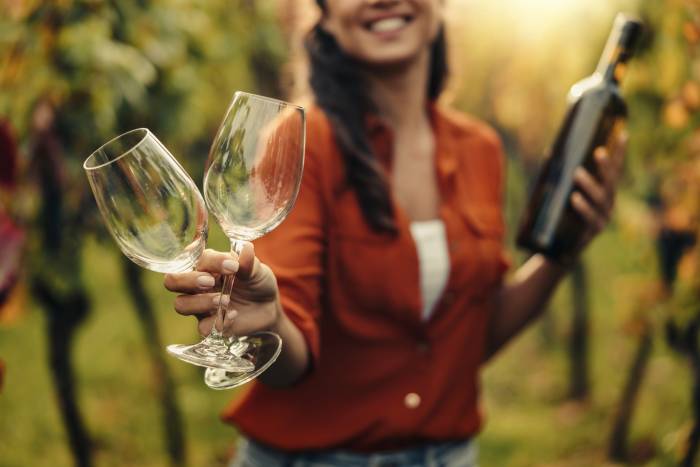
In 2026, an estimated 18 million Italians are expected to participate in wine tourism experiences, marking an increase of 4.5 million compared to 2024. This growth is accompanied by a rising interest in meeting producers directly at their facilities. Over the past three years, the share of Italian tourists visiting production sites has grown from 60% in 2021 to 77% in 2025. These visits now include not only wineries but also dairies, olive mills, and pasta factories.
These figures were presented today in Milan at the Lombardy Regional headquarters by Roberta Garibaldi, president of Aite—the Italian Association for Food and Wine Tourism—in collaboration with Ascovilo, the Association of Wine Consortia of Lombardy. Ascovilo brings together several regional consortia, including Garda Doc, Lugana Doc, Vini di Valtellina, Valtenèsi, and Valcalepio. The event comes just days before Vinitaly 2026 in Verona, where wine tourism will be a central theme.
The data show that Italian wine tourism is entering a new phase marked by significant demand growth and changing traveler behavior. For the first time, visits to family-run wineries have become the most popular wine tourism activity among Italians, surpassing even the purchase of wines at favorable prices. This shift highlights a growing preference for personal interaction and authentic experiences, even as digital tools become more prevalent.
Interest is also increasing in more comprehensive experiences. Wine tastings at wineries have risen by 15%, with visitors showing greater interest in food and wine pairings rather than simple tastings. At the same time, tourists are visiting fewer wineries per trip—three or more in 2026, down by 12% from 2024—indicating that winery visits are becoming just one part of broader travel itineraries rather than the sole focus.
Human connection remains crucial for customer loyalty. Among Italians who return to a winery they have already visited, 68% cite hospitality and staff professionalism as key reasons for coming back. Other important factors include ease of booking and organizing the experience (66%) and the opportunity to try new activities compared to previous visits (64%). These findings suggest that simplifying processes and offering fresh experiences are now essential for businesses seeking to remain competitive.
When choosing both destinations and specific wineries, Italian tourists prioritize rural scenery, value for money, and geographic proximity. Proximity is cited by 65% when selecting a destination and by 63% when choosing a winery. This trend opens up opportunities for local wine tourism that can attract not only overnight visitors but also residents from nearby areas.
Technology is also reshaping how tourists plan and enjoy wine-related experiences. Artificial intelligence is emerging as a tool for personalizing visits based on individual preferences, supporting sustainable choices, and providing operational support such as translation services. According to recent data from Phocuswright, 56% of American tourists say they have found travel inspiration through AI tools. However, only 2.8% of tourism operators currently possess specific skills in this area.
Spending patterns among wine tourists vary: 36% prefer experiences costing less than €20, while 31% spend between €21 and €40, 16% between €41 and €60, and about 18% opt for premium experiences above €60. More complex activities like participating in grape harvests still see limited willingness to pay higher prices; only 14% are prepared to spend between €40 and €60 for such experiences.
Wine tourism continues to be a strategic driver for Italy’s tourism sector, with significant potential linked to enhancing experiences, promoting local travel, and integrating technology with human interaction. The challenge ahead will be developing business models and governance structures that can meet increasingly sophisticated and quality-oriented demand.
Roberta Garibaldi emphasized that wine tourism is undergoing a dual transformation: growing demand for authenticity and human contact on one side, and the deep impact of AI on customer journeys on the other. She urged businesses to invest in skills development, hospitality quality, and understanding new visitor needs. Garibaldi also warned against raising prices without delivering corresponding improvements in quality; high prices are already seen as the main barrier to visiting production sites by 63% of enotourists. She stressed that winery hospitality should be both a sustainable business model for producers and an effective promotional tool that turns satisfied visitors into brand ambassadors.
Dining and Cooking