
Kitchn and Yahoo may earn commission from links in this article.

Credit: Photo: Alex Lepe; Food Styling: Rachel Perlmutter
I share a few things in common with Julia Child. I love butter and French cuisine, I write cookbooks, and I do cooking demonstrations all while wearing pearls (just look at my headshot!). I also shop at Savenor’s Butchery, which is where Julia sourced all of her meat for The French Chef and her home kitchen, no doubt. It’s also where I source a lot of my meat for my own cookbooks, especially when I need meat beyond the usual grocery store fare of chicken, beef, and pork.

Credit: Jarrett Melendez
I shop at Savenor’s because I know that every single butcher there is knowledgeable, has strong opinions on meat, and is willing to do the stuff I don’t want to do, like trimming, shaping, and tying a crown pork roast for my upcoming Santa Claus Conquers the Martians Cookbook, trimming the excess fat from a pork shoulder for carnitas, or butterflying a chicken when I’m feeling just too lazy to do it myself. I also know that it’s the only place by me where I can walk in as someone walks out with an entire lamb, expertly butchered and bagged, over their shoulder. That poor guy will then get refused a ride from his Uber driver (which, sure, fair enough), come back into the shop, and ask if they can store his lamb for him until he can come back with his friend’s car. This is a true story.
Related: Mashed Potatoes
They are masters of their craft and know pretty much everything there is to know about meat, which makes sense. They have an almost century-long legacy to uphold, after all. I recently asked them for their best advice for shopping for meat, and here’s what they told me.

Credit: Joni Hanebutt/Shutterstock
1. For the best flavor, know what to look for on the label.
“Knowing what to look for when reading the label on your proteins can make all the difference,” says Grace Mortenson, general manager. If you’re shopping for chicken, pork, and beef, she has some key things you should look for on the labels too.
Chicken: “It’s best to buy air-chilled, not wet-chilled!” she tells me. This indicates how the chicken was processed, and ones that are air-chilled contain less water by weight. “Ever cooked some chicken breast and been left with a puddle of water? It was probably wet chilled!”
Beef: Mortenson suggests looking for either USDA Prime or Choice for the best flavor. “This grading indicates fat content, and fat is flavor!”
Pork: Go for a heritage breed for the best-tasting pork. These can be a bit pricier, but the difference in flavor is worth it. “My favorite heritage breed is Berkshire. It’s darker in color, a rich pink rather than the light-pink-almost-white color you see on commodity pork,” she says.

Credit: Photo: Alex Lepe; Food Styling: Rachel Perlmutter
2. Embrace the braise.
If you’re looking to save a little money, ask for “braising cuts,” says Margaret Sargent, one of the many talented butchers at Savenor’s. These hardworking parts of the animal like shoulders and shanks “tend to be both very flavorful and quite a bit cheaper than some of their flashier loin-centric neighbors.” Admittedly, “they take a little more love (i.e. time), but you can cook them to perfect fall-off-the-bone tenderness without breaking the bank,” they tell me.
These hardworking parts of the animal also tend to have the most connective tissue, which, when braised, breaks down and fills your braising liquid with collagen and gelatin, giving it a rich, sticky mouth feel (think: tonkotsu ramen broth or even that slight stickiness you find in carnitas).

Credit: bernardbodo / Getty Images
3. Don’t fear the freezer section.
If you’ve ever cooked (or been served) freezer-burned meat, you know that it has an off-taste that’s very unpleasant. It also doesn’t look the prettiest. “Many customers turn their noses up at the freezer section because of bad experiences they’ve had in the past,” says Declan Manning, butcher apprentice. “But freezing tech has advanced a lot and meat freezes with virtually no degradation in quality,” if you have a competent butcher.
I’m always happy to shop the freezer section at Savenor’s because that’s where I’m going to find more interesting game meats, like wild boar, elk, even alligator. “If you’re looking for game meats or offal, or anything that doesn’t sell quickly enough to warrant putting in the case, the freezer is often your best bet, and there are some real treats there,” he tells me.

Credit: BearFotos/Shutterstock
4. When in doubt, ask the butcher!
Nobody knows what’s going on in the meat case better than the butcher, whether you’re shopping at a big grocery store or a butcher shop like Savenor’s. Director of E-Commerce and Butcher Judy Yao urges all of us to “ask the butcher what they’d take home for themselves!”
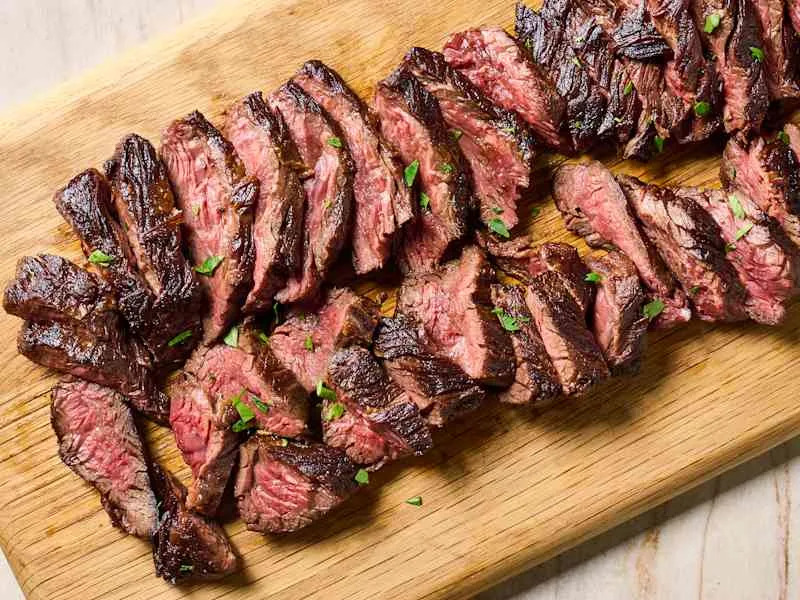
If you are lucky enough to have a local butcher shop, I urge you to pay them a visit. And if you do, talk to the butcher. “They’ll be able to suggest great cuts like the Denver steak, bavette, chuck club, pork coppa steaks, and other treasures you won’t likely find in the grocery store,” Yao tells me. “Your local butcher is a font of knowledge — never be afraid to ask them for advice.”Got a tip to share from your local butcher? Tell us about it in the comments.
The Weekly Checkout
Sign up for The Weekly Checkout to get the most up-to-date grocery news, tips, and highlights.
Subscribe to The Kitchn!
Further Reading
5-Ingredient Slow Cook Dump Dinners Are Easy & Comforting
I’ve Made Hundreds of Batches of Cookies — This Is Hands-Down the Best Recipe
Grandma’s Roasted Potatoes
Sign up for The Kitchn’s Daily newsletter to receive our best recipes, posts, and shopping tips in your inbox.
Dining and Cooking