
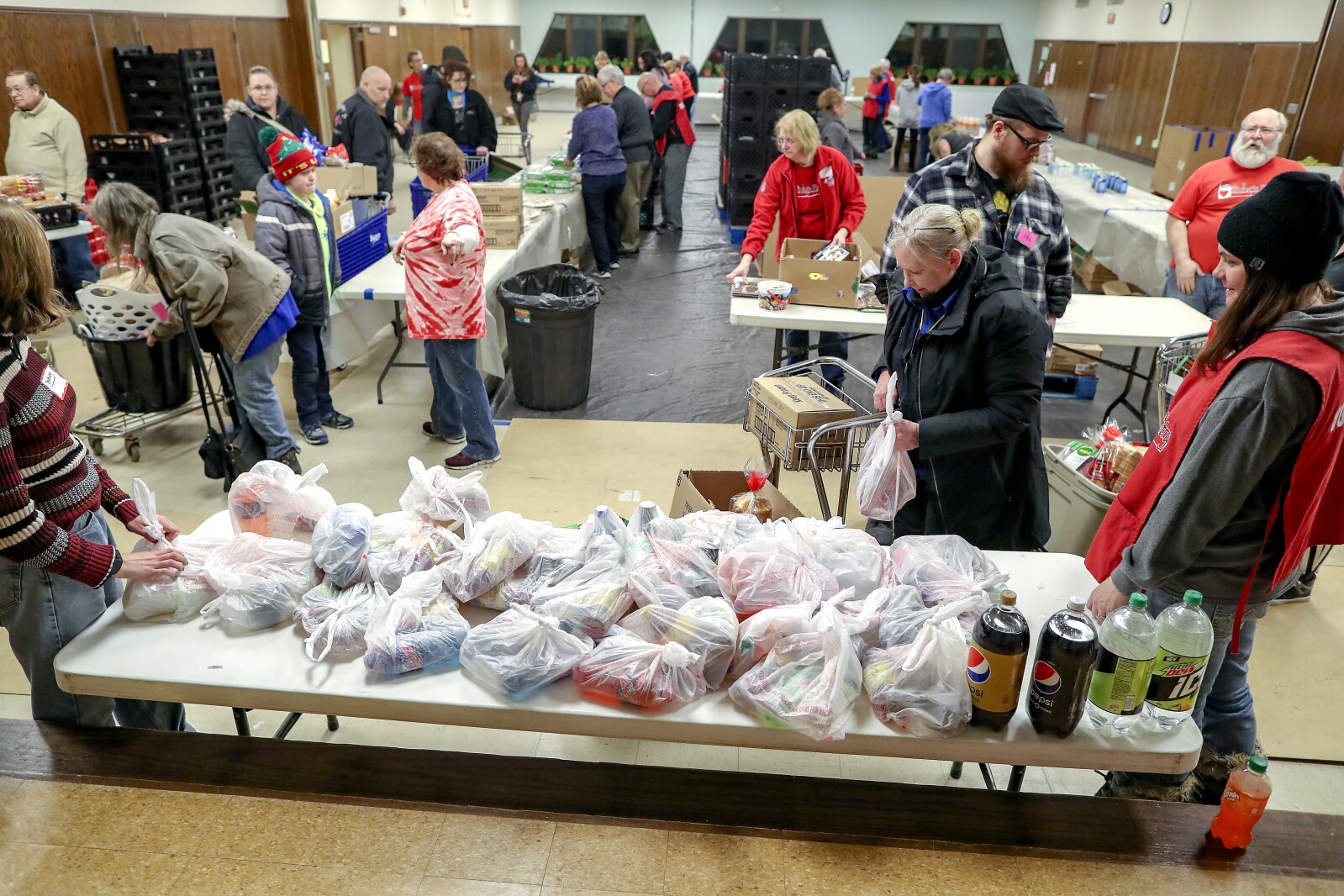
DULUTH — Last week’s announcement that
Ruby’s Pantry has ceased operations
came as a surprise for those receiving and providing food access services through the nonprofit organization.
The loss of the “safety net” program is anticipated to place an additional strain on food shelves regionwide, according to Carrie Pellinen, food access manager at Arrowhead Economic Opportunity Agency.
As a nonprofit serving a nine-county area (including St. Louis and Carlton counties), AEOA partners with the Northeastern Minnesota food shelves network to fiscally sponsor eight food shelves.
The closure of Ruby’s Pantry is expected to increase food shelf visitors — especially among first-time users, Pellinen said.
Unlike other food shelves with income and usage limitations, Ruby’s Pantry helped ease the strain for those who may fall just outside the parameters to qualify for assistance, according to Brian Kreager, co-coordinator of Ruby’s Pantry Coppertop in Duluth.
Coppertop First United Methodist Church was one of the 84 Ruby’s Pantry food distribution sites across the Midwest. The program helped lower-middle-class families struggling with rising costs and stagnant wages — serving a diverse group of people ranging from college students to the elderly.
“This enabled them to stretch the grocery dollar so that they could make that extra payment for medication or what have you,” Kreager said. “Now they’re going to be falling through the cracks.”
Similar to Ruby’s Pantry, Second Harvest Northland aims to provide food to people in need or crisis, with a focus on income-eligible individuals. The regional food bank works with 275 different programs throughout the region, in addition to 70 area food shelves.
The loss of Ruby’s Pantry is not expected to significantly impact Second Harvest Northland’s food donations, according to Shaye Moris, the president and CEO of Second Harvest Northland. Collaboration between the organizations was limited to donations of Ruby’s occasional leftover food distribution and cross-promotion.
However, Second Harvest Northland faces challenges of its own, Moris stated. The organization began the fiscal year in July with an approximate 1.3 million meal shortfall.
“That was largely due to a reduction in state and federal funding,” Moris said. “That reduced the food available in our region, so we are all kind of strained with resources.”
Meanwhile, the demand for accessible food continued to rise as regional food shelves saw a 16% increase in use following recent changes to the state’s Supplemental Nutrition Assistance Program, Moris noted.
This month, Minnesota SNAP enacted expanded work requirements, added stricter dependency rules and reduced eligibility for lawful immigrants due to federal law that passed last July.
Pellinen noted that AEOA provides
SNAP outreach and application assistance.
SNAP benefits may be used to purchase fresh produce and other items at farmers markets, which is an underutilized benefit for those seeking food access in rural areas, she said.
“We know neighbors are experiencing high inflation. It costs a lot for basic needs,” Moris added. “We don’t want anybody to be going without, skipping a meal, or sending their kids off to school without food. It’s most important that people know that there are resources.”
Second Harvest Northland’s website
lists food access resources, including senior commodity supplemental food programs, school pantries, mobile food pantries and area food shelves that are available to support the community.
Ruby’s was not funded by governmental grants or subsidies. Instead, it relied on corporate and individual donations. A $25 donation per family was also requested to offset the program’s operational costs.
Since the pandemic, the volunteers and donations that Ruby’s Pantry relied on have declined, resulting in site closures and the loss of paid employees, Kreager said.
The shuttering has resulted in an immediate need for communities to form localized, smaller-scale programs, as well as to continue partnerships with manufacturers and distributors to address community needs effectively.
Kreager indicated that a steering committee plans to meet this week to brainstorm solutions for filling the gap left by the pantry closure. Community members are also encouraged to consider volunteering and starting local free pantries at their place of worship or employment.
“I don’t know that we’ll ever be able to fully replicate or replace the program,” Kreager said. “Millions and millions of pounds of food, and over 200,000 families on an annual basis receiving groceries — that’s huge!”
Dining and Cooking