* 200g of Urad Dal * Murukku press * 20g Salt * 10 Dry Red chillies * 20g Black Peppercorns * 10g Cumin * 25g Butter * 800g Steamed Plain Flour * 100ml Warm Water * 300ml Vegetable Oil
**Directions**
1. Place 200g of Urad Dal in a food processor. 2. Add 10g of Salt and 10 Dry Red Chillies into the food processor. 3. Blend the mixture in the food processor until well blended. 4. Remove the mixture from the food processor, into a bowl. 5. Add 800g Steamed Plain Flour into a bowl. 6. Grind 20g of Black Peppercorns and 10g of Cumin in a Pestle and Mortar and add to the mixture in the bowl. 7. In a separate bowl dissolve 10g of Salt in 100ml of warm water. 8. Melt 25g Butter in a saucepan. 9. Pour the melted butter into the bowl of steamed plain flour, black peppercorns and Cumin. 10. Mix the dry ingredients and the melted butter well using a spoon. 11. Add in the warm water and salt to the bowl of dry ingredients and melted butter. 12. Mix well 13. Knead until you have a good dough consistency. 14. Add some of the dough into the murukku press. 15. Leaving a plate under the murukku press, spin the handle of the murukku press whilst moving your hand clockwise (as shown on the video) to start making a murukku. 16. Once a murukku of reasonable size is made, take off any excess dough from the end and join it to the murukku. 17. Repeat steps 16 and 17 until all the dough is finished. 18. Place a pan on the cooker and add 300ml of vegetable oil. 19. Wait until the oil has heated up. 20. Once the oil starts to boil, one by one add each murukku (as much as you can fit in the pan). 21. Fry each murukku. 22. Once the murukku’s are done, drain using a strainer spoon and place on some kitchen roll on a plate or colander to cool. 23. Enjoy!
Hope the sparkles of Diwali fill your year with peace, success, happiness and love!
me2pleez
This Tuesday’s episode of Tasting History covered these with some history to go with it, if you’re interested. He talks about all the different names and I think this is the same thing?

2 Comments
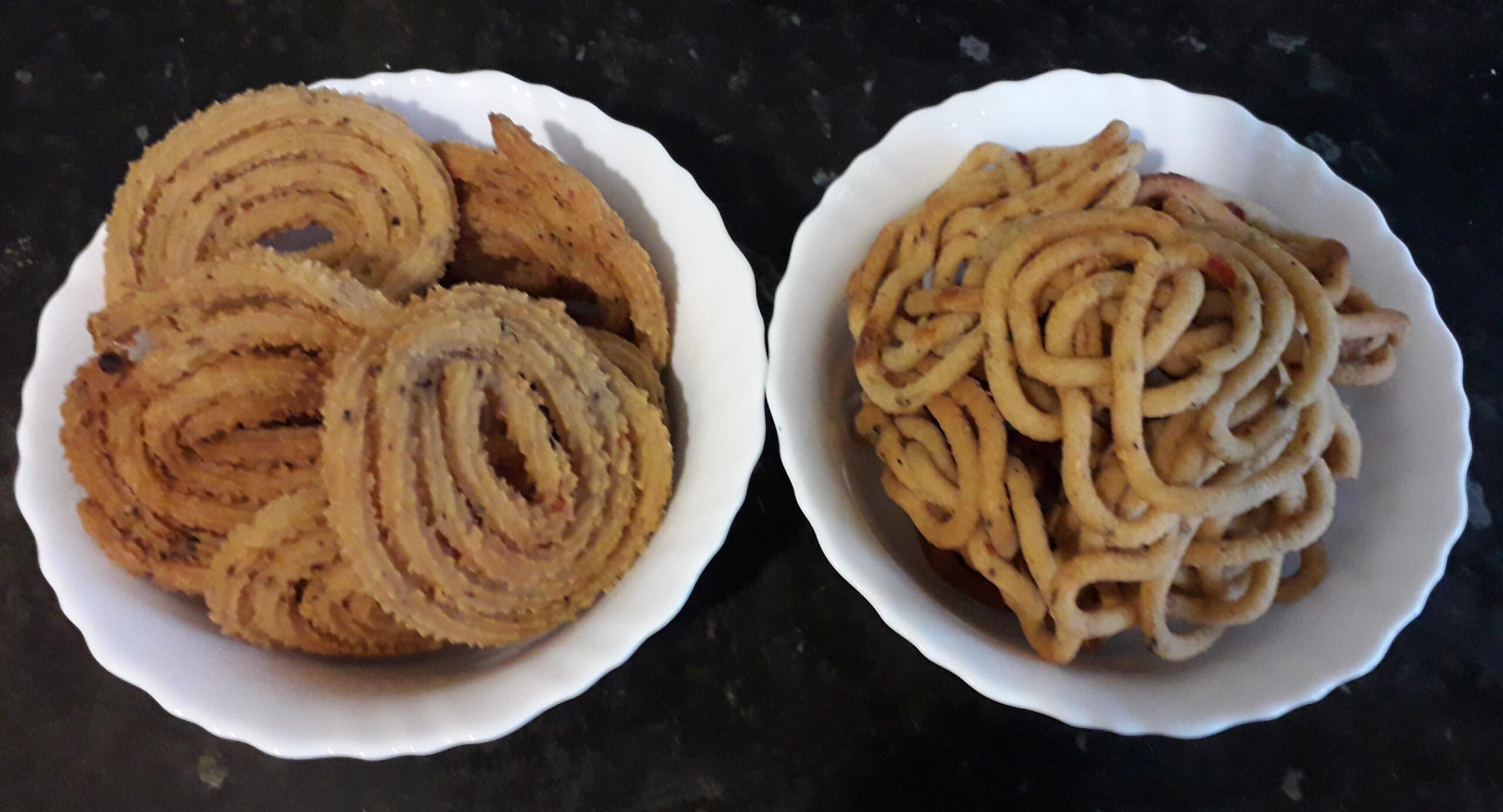
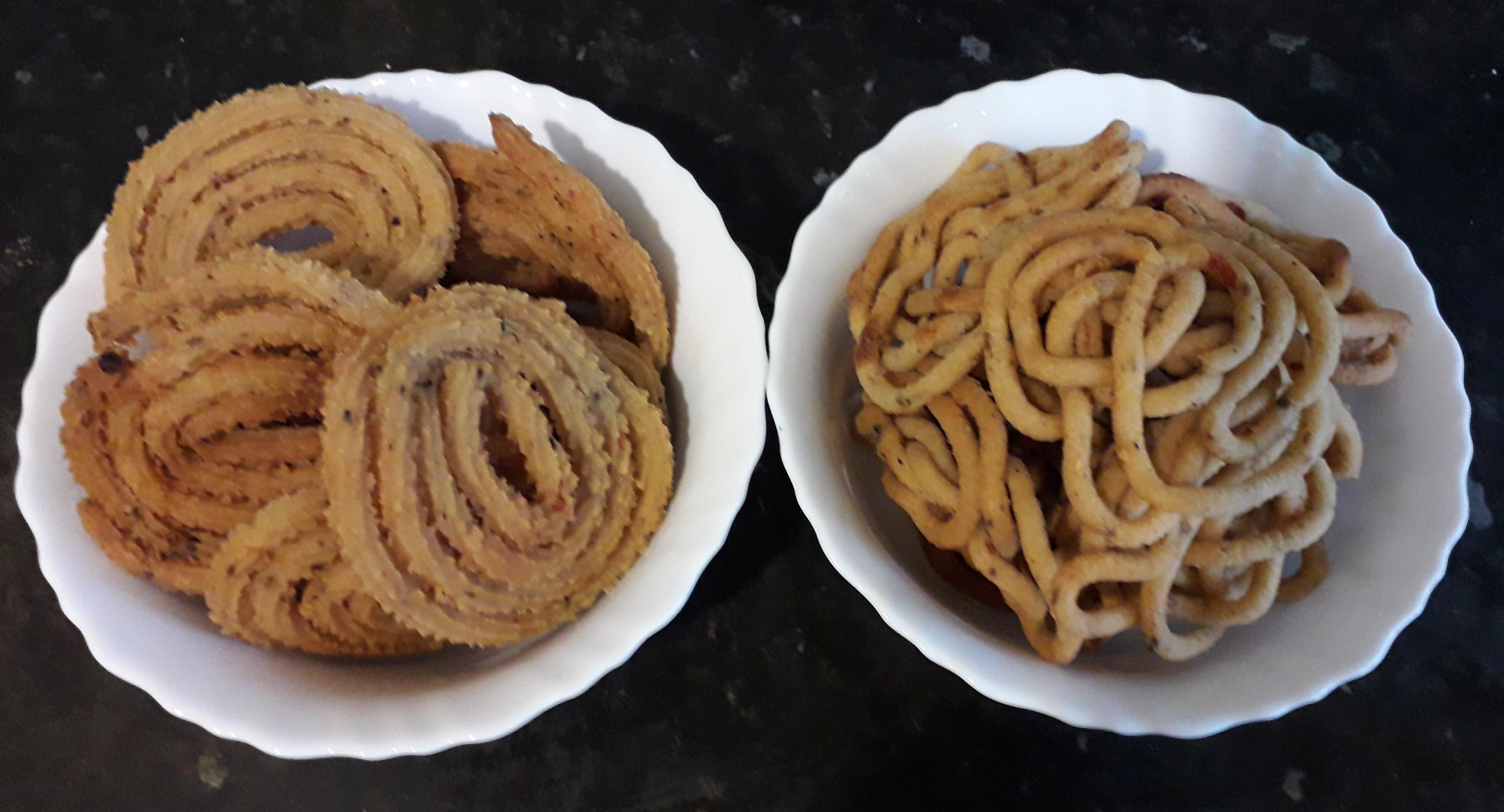
Here is a warm delicious savoury snack to celebrate Diwali.
You can see how I made these crispy butter murukku [here](https://www.youtube.com/watch?v=CaiWH3Yb-Yg). A classic delicacy from India!
**Ingredients**
* 200g of Urad Dal
* Murukku press
* 20g Salt
* 10 Dry Red chillies
* 20g Black Peppercorns
* 10g Cumin
* 25g Butter
* 800g Steamed Plain Flour
* 100ml Warm Water
* 300ml Vegetable Oil
**Directions**
1. Place 200g of Urad Dal in a food processor.
2. Add 10g of Salt and 10 Dry Red Chillies into the food processor.
3. Blend the mixture in the food processor until well blended.
4. Remove the mixture from the food processor, into a bowl.
5. Add 800g Steamed Plain Flour into a bowl.
6. Grind 20g of Black Peppercorns and 10g of Cumin in a Pestle and Mortar and add to the mixture in the bowl.
7. In a separate bowl dissolve 10g of Salt in 100ml of warm water.
8. Melt 25g Butter in a saucepan.
9. Pour the melted butter into the bowl of steamed plain flour, black peppercorns and Cumin.
10. Mix the dry ingredients and the melted butter well using a spoon.
11. Add in the warm water and salt to the bowl of dry ingredients and melted butter.
12. Mix well
13. Knead until you have a good dough consistency.
14. Add some of the dough into the murukku press.
15. Leaving a plate under the murukku press, spin the handle of the murukku press whilst moving your hand clockwise (as shown on the video) to start making a murukku.
16. Once a murukku of reasonable size is made, take off any excess dough from the end and join it to the murukku.
17. Repeat steps 16 and 17 until all the dough is finished.
18. Place a pan on the cooker and add 300ml of vegetable oil.
19. Wait until the oil has heated up.
20. Once the oil starts to boil, one by one add each murukku (as much as you can fit in the pan).
21. Fry each murukku.
22. Once the murukku’s are done, drain using a strainer spoon and place on some kitchen roll on a plate or colander to cool.
23. Enjoy!
Hope the sparkles of Diwali fill your year with peace, success, happiness and love!
This Tuesday’s episode of Tasting History covered these with some history to go with it, if you’re interested. He talks about all the different names and I think this is the same thing?
https://www.youtube.com/watch?v=Qud0SI5ZgC0