2 teaspoons sugar – adjust to taste, 1-3 teaspoons
1 tablespoon sesame oil
1 tablespoon water
Instructions
Rice: Cook the rice, without soaking and using a little less water than the amount you normally use. The rice for bibimbap should be a little drier than usual for best results.
Meat:
Beef: Cut into thin 2-inch long strips. Mix in 1.5 tablespoons of soy sauce, 2 teaspoons of sugar, 2 teaspoons of sesame oil, 2 teaspoons of rice wine, 1 tablespoon of chopped scallion, 1 teaspoon minced garlic, 1/2 sesame seeds and a pinch of pepper. Marinate for 20 minutes. Sauté in a skillet for 2-3 minutes over high heat.
Vegetables:
Bean sprouts: Bring 2 cups of water to a boil. Add the bean sprouts and briefly blanch, about 1 minute, flipping over once. Drain quickly and shock in cold water to stop cooking. Drain again. Toss with 1/2 teaspoon of minced garlic, 1 teaspoon of sesame oil, 1/2 teaspoon of sesame seeds, and salt (about 1/2 teaspoon).
Spinach: Blanch the spinach in salted boiling water only until wilted, about 40 seconds. Drain quickly and shock in cold water. Squeeze out water. Cut into 3-inch lengths. Toss with 1 tablespoon of chopped scallion, 1/2 teaspoon minced garlic, 1 teaspoon of sesame oil, 1/2 teaspoon of sesame seeds and salt (about 1/2 teaspoon).
Cucumbers: Cut the cucumbers in half lengthwise and then thinly slice crosswise. Generously sprinkle salt (about 1/2 teaspoon) over sliced cucumbers and set aside for 10 – 15 minutes. Squeeze out excess liquid. Toss with 1 tablespoon of chopped scallion, 1/2 teaspoon minced garlic, 1 teaspoon sesame oil and 1/2 teaspoon of sesame seeds. Mushrooms and carrots: Thinly slice the mushrooms and carrots. Sauté each vegetable in a lightly oiled skillet for 1 – 2 minutes over medium-high heat, sprinkling with salt (about 1/4 teaspoon).
More vegetable options:
Kongnamul (Soybean sprouts): Bring 2 cups of water to a boil. Add the soy beansprouts and boil for 2-3 minutes. Drain quickly and shock in cold water to stop cooking. Drain again. Toss with 1/2 teaspoon of minced garlic, 1 teaspoon of sesame oil, 1/2 teaspoon of sesame seeds, and salt (about 1/2 teaspoon) to taste.
Musaengchae (spicy radish salad): Cut 10 ounces of Korean radish (mu) into matchsticks. Add 2 tablespoons of chopped scallion, 1 tablespoon of gochugaru, 1 teaspoon minced garlic, 1/2 teaspoon salt (or more to taste), 1 teaspoon sugar, and 1 teaspoon sesame seeds. Mix everything well.
Onion: slice and sauté onion with oil and salt
Red Cabbage: clean and used raw
Optional Eggs: Fry the eggs sunny side up or to your preference.
Bibimbap sauce: Combine all of the sauce ingredients in a small bowl and mix thoroughly.
Assembling:
Place a serving of rice in a big bowl. Nicely arrange a small amount of each prepared vegetable and beef over the rice. Drizzle a little sesame oil over. Top with an optional fried egg and serve with the sauce.
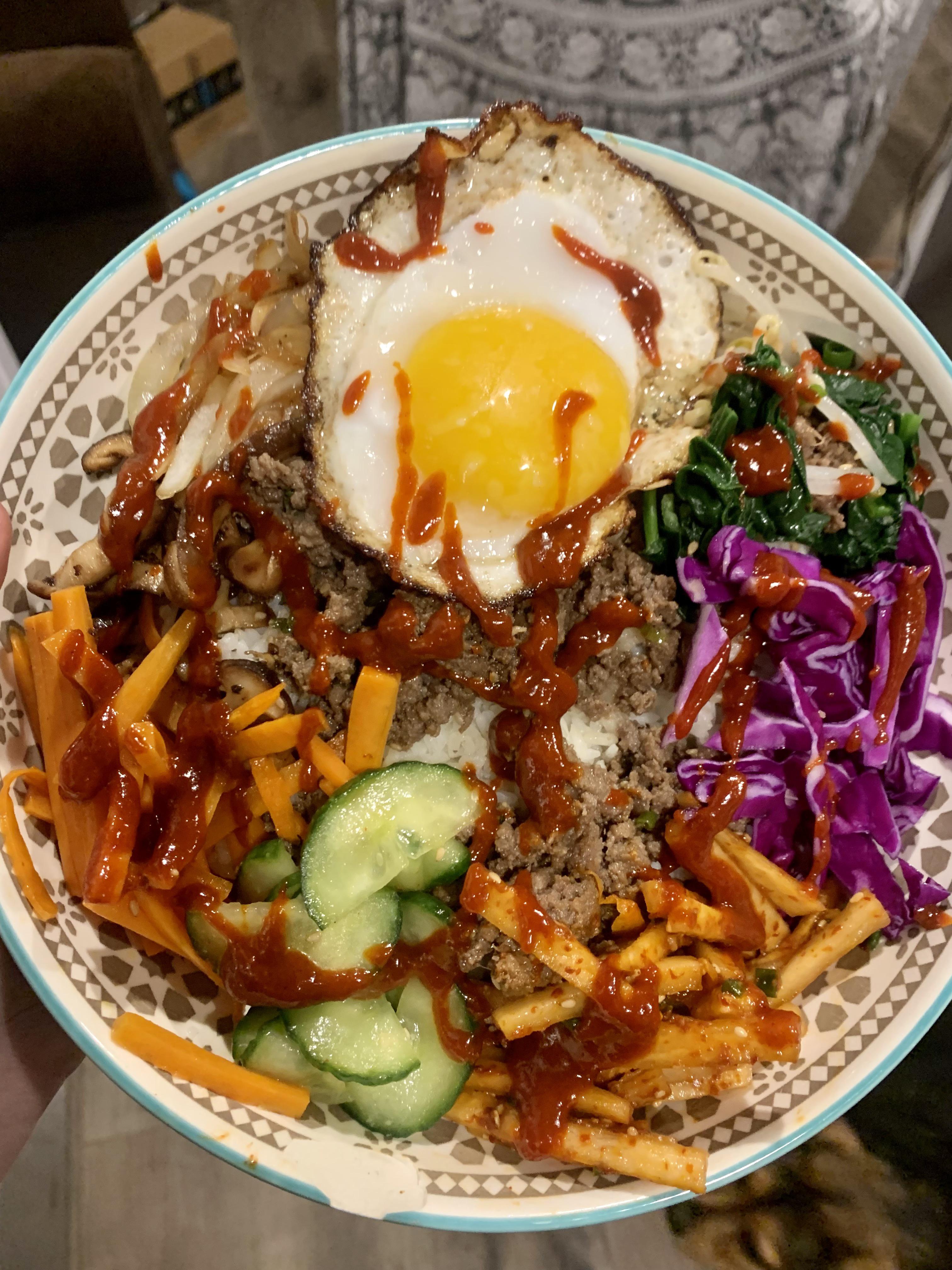
Recipe is from [Korean Bapsang](https://www.koreanbapsang.com/bibimbap/). I used all optional vegetables/toppings and a duck egg. I added the sautéed onion and red cabbage. HIGHLY recommended trying this recipe!


1 Comment
Ingredients
Rice:
3 cups short grain rice
Meat:
8 ounces thinly sliced tender beef (rib eye, sirloin, etc. or ground beef)
1.5 tablespoons soy sauce
2 teaspoons sugar
2 teaspoons sesame oil
2 teaspoons rice wine
1 teaspoon minced garlic (This recipes needs 2.5 teaspoons minced garlic in total. Mince it all at once for efficiency.)
1 tablespoon chopped scallion (This recipe needs 4 tablespoons, 1 or 2 scallions depending on the size, in total. Chop them all once for efficiency.)
pepper to taste
Vegetables and eggs:
8 ounces mung bean sprouts (sukju, 숙주) or soybean sprouts (kongnamul, 콩나물) – see more vegetable options below.
1 bunch spinach, about 8 ounces
2 small cucumbers, about 5 ounces
4 ounces mushrooms (shiitake, white, cremini, etc.)
1/4 red cabbage sliced
1 white onion sliced
2 medium carrots, about 5 ounces
1.5 teaspoons minced garlic, divided
3 3 tablespoons chopped scallion, divided
sesame oil
sesame seeds
salt
4 eggs – optional
cooking oil
More vegetable options
8 ounces Kongnamul (soybean sprouts)
10 ounces mu (Korean radish)
Bibimbap sauce
4 tablespoons gochujang, 고추장
2 teaspoons sugar – adjust to taste, 1-3 teaspoons
1 tablespoon sesame oil
1 tablespoon water
Instructions
Rice: Cook the rice, without soaking and using a little less water than the amount you normally use. The rice for bibimbap should be a little drier than usual for best results.
Meat:
Beef: Cut into thin 2-inch long strips. Mix in 1.5 tablespoons of soy sauce, 2 teaspoons of sugar, 2 teaspoons of sesame oil, 2 teaspoons of rice wine, 1 tablespoon of chopped scallion, 1 teaspoon minced garlic, 1/2 sesame seeds and a pinch of pepper. Marinate for 20 minutes. Sauté in a skillet for 2-3 minutes over high heat.
Vegetables:
Bean sprouts: Bring 2 cups of water to a boil. Add the bean sprouts and briefly blanch, about 1 minute, flipping over once. Drain quickly and shock in cold water to stop cooking. Drain again. Toss with 1/2 teaspoon of minced garlic, 1 teaspoon of sesame oil, 1/2 teaspoon of sesame seeds, and salt (about 1/2 teaspoon).
Spinach: Blanch the spinach in salted boiling water only until wilted, about 40 seconds. Drain quickly and shock in cold water. Squeeze out water. Cut into 3-inch lengths. Toss with 1 tablespoon of chopped scallion, 1/2 teaspoon minced garlic, 1 teaspoon of sesame oil, 1/2 teaspoon of sesame seeds and salt (about 1/2 teaspoon).
Cucumbers: Cut the cucumbers in half lengthwise and then thinly slice crosswise. Generously sprinkle salt (about 1/2 teaspoon) over sliced cucumbers and set aside for 10 – 15 minutes. Squeeze out excess liquid. Toss with 1 tablespoon of chopped scallion, 1/2 teaspoon minced garlic, 1 teaspoon sesame oil and 1/2 teaspoon of sesame seeds.
Mushrooms and carrots: Thinly slice the mushrooms and carrots. Sauté each vegetable in a lightly oiled skillet for 1 – 2 minutes over medium-high heat, sprinkling with salt (about 1/4 teaspoon).
More vegetable options:
Kongnamul (Soybean sprouts): Bring 2 cups of water to a boil. Add the soy beansprouts and boil for 2-3 minutes. Drain quickly and shock in cold water to stop cooking. Drain again. Toss with 1/2 teaspoon of minced garlic, 1 teaspoon of sesame oil, 1/2 teaspoon of sesame seeds, and salt (about 1/2 teaspoon) to taste.
Musaengchae (spicy radish salad): Cut 10 ounces of Korean radish (mu) into matchsticks. Add 2 tablespoons of chopped scallion, 1 tablespoon of gochugaru, 1 teaspoon minced garlic, 1/2 teaspoon salt (or more to taste), 1 teaspoon sugar, and 1 teaspoon sesame seeds. Mix everything well.
Onion: slice and sauté onion with oil and salt
Red Cabbage: clean and used raw
Optional Eggs: Fry the eggs sunny side up or to your preference.
Bibimbap sauce: Combine all of the sauce ingredients in a small bowl and mix thoroughly.
Assembling:
Place a serving of rice in a big bowl. Nicely arrange a small amount of each prepared vegetable and beef over the rice. Drizzle a little sesame oil over. Top with an optional fried egg and serve with the sauce.
Recipe is from [Korean Bapsang](https://www.koreanbapsang.com/bibimbap/). I used all optional vegetables/toppings and a duck egg. I added the sautéed onion and red cabbage. HIGHLY recommended trying this recipe!