Sweet potato stems/shoots, known as 고구마 줄기 or 고구마순, are a seasonal banchan in Korea that can be cultivated and eaten only in summer. My foreign friends told me that the Chinese and Southeast Asian diaspora also eat these tender shoots, stir-fried with their regional variations of condiments or add-ins.
This banchan was originally prepared as a way to avoid hunger through the last months before the annual rice harvest: people would forage or collect any greens they could eat and make use of them. Even mildly poisonous plants like gosari (고사리, fernbrake) and dureup (두릅, Aralia sprouts) were blanched to remove the toxins before eating. Goguma was another crop that acted as a replacement for rice, and its edible leaves (albeit not as popular nowadays) and shoots certainly didn’t go to waste.
Goguma-julgi is mostly overlooked these days due to not being a profitable vegetable or requiring too much manual labor for prepping; some farmers toss them out for compost or even leave them sitting for bystanders to take them for free. So don’t take these delicious banchan for granted, they’re a labor of love! To prepare goguma-julgi, you need to trim the leaves and peel off the tough skin¹ one by one. It is a tedious task if you’re not used to this, and you’ll end up with dirt stains under your fingernails. However, don’t be intimidated, it’s simpler than you think! An easy way to peel them off is to start by breaking off the leaf (if they come whole), yank it down to let a part of the peel fall off with it, snap the middle of the stem in the opposite side, and peel that side off. Repeat until you’re left with shorter pieces of the stems (roughly one-fourth of the original length) and most of the peel has come off. You don’t have to be too perfectionist with this job, but the more you peel it off, the more tender the final result will be.
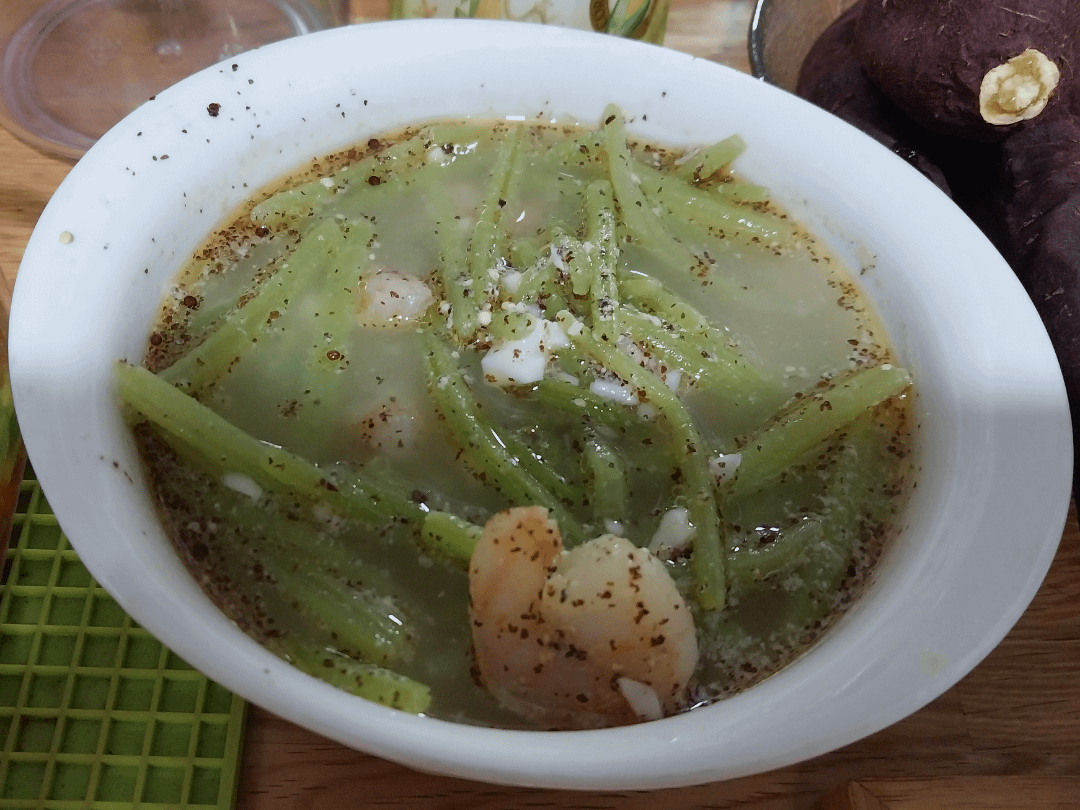
I then rinse off any remaining impurities, blanch it in water (to reduce the cooking time) and a pinch of salt (to maintain the green color), drain it, and stir-fry it in a tablespoon of cooking oil², some fish sauce³, and minced garlic. If you want to make it spicy, add some chopped red chili; if you want to flavor it with some protein, shrimp/prawns and mussels are good pairings. (I prefer shrimp.) When the shoots turn completely tender and the seafood (if using) are fully cooked, turn off the heat, add a generous tablespoon or two of 들깨가루(perilla seed powder)⁴ and stir in a teaspoon of sesame oil.
¹ The skins can be purple or light green depending on the variety. I’ve mostly seen purple-skinned shoots sold in bulk with the leaves still intact, while shoots with green skins are more often displayed in grocery stores, packaged in plastic and with their leaves removed. The fresher they are, the easier they are to skin. ² Any neutral-flavored oil will do, but if you have perilla oil (not sesame oil!), I highly recommend it. It’s my first choice for stir-frying squash/zucchini. If you’re using perilla oil, you do not need to preheat the pan since it has a low smoke point. Add the minced garlic right away and let it heat gently before you add the drained shoots. ³ 까나리액젓 (sand lance fish sauce) works better than anchovy-based fish sauce IMO. Replace it with soup soy sauce if you can’t consume it or find it. ⁴ Totally irreplaceable in my version since it has such a distinct flavor, but there are some households that don’t make it liquidy as mine and simply top it off with toasted sesame seeds.

1 Comment
Sweet potato stems/shoots, known as 고구마 줄기 or 고구마순, are a seasonal banchan in Korea that can be cultivated and eaten only in summer. My foreign friends told me that the Chinese and Southeast Asian diaspora also eat these tender shoots, stir-fried with their regional variations of condiments or add-ins.
This banchan was originally prepared as a way to avoid hunger through the last months before the annual rice harvest: people would forage or collect any greens they could eat and make use of them. Even mildly poisonous plants like gosari (고사리, fernbrake) and dureup (두릅, Aralia sprouts) were blanched to remove the toxins before eating. Goguma was another crop that acted as a replacement for rice, and its edible leaves (albeit not as popular nowadays) and shoots certainly didn’t go to waste.
Goguma-julgi is mostly overlooked these days due to not being a profitable vegetable or requiring too much manual labor for prepping; some farmers toss them out for compost or even leave them sitting for bystanders to take them for free. So don’t take these delicious banchan for granted, they’re a labor of love! To prepare goguma-julgi, you need to trim the leaves and peel off the tough skin¹ one by one. It is a tedious task if you’re not used to this, and you’ll end up with dirt stains under your fingernails. However, don’t be intimidated, it’s simpler than you think! An easy way to peel them off is to start by breaking off the leaf (if they come whole), yank it down to let a part of the peel fall off with it, snap the middle of the stem in the opposite side, and peel that side off. Repeat until you’re left with shorter pieces of the stems (roughly one-fourth of the original length) and most of the peel has come off. You don’t have to be too perfectionist with this job, but the more you peel it off, the more tender the final result will be.
I then rinse off any remaining impurities, blanch it in water (to reduce the cooking time) and a pinch of salt (to maintain the green color), drain it, and stir-fry it in a tablespoon of cooking oil², some fish sauce³, and minced garlic. If you want to make it spicy, add some chopped red chili; if you want to flavor it with some protein, shrimp/prawns and mussels are good pairings. (I prefer shrimp.) When the shoots turn completely tender and the seafood (if using) are fully cooked, turn off the heat, add a generous tablespoon or two of 들깨가루(perilla seed powder)⁴ and stir in a teaspoon of sesame oil.
¹ The skins can be purple or light green depending on the variety. I’ve mostly seen purple-skinned shoots sold in bulk with the leaves still intact, while shoots with green skins are more often displayed in grocery stores, packaged in plastic and with their leaves removed. The fresher they are, the easier they are to skin.
² Any neutral-flavored oil will do, but if you have perilla oil (not sesame oil!), I highly recommend it. It’s my first choice for stir-frying squash/zucchini. If you’re using perilla oil, you do not need to preheat the pan since it has a low smoke point. Add the minced garlic right away and let it heat gently before you add the drained shoots.
³ 까나리액젓 (sand lance fish sauce) works better than anchovy-based fish sauce IMO. Replace it with soup soy sauce if you can’t consume it or find it.
⁴ Totally irreplaceable in my version since it has such a distinct flavor, but there are some households that don’t make it liquidy as mine and simply top it off with toasted sesame seeds.