
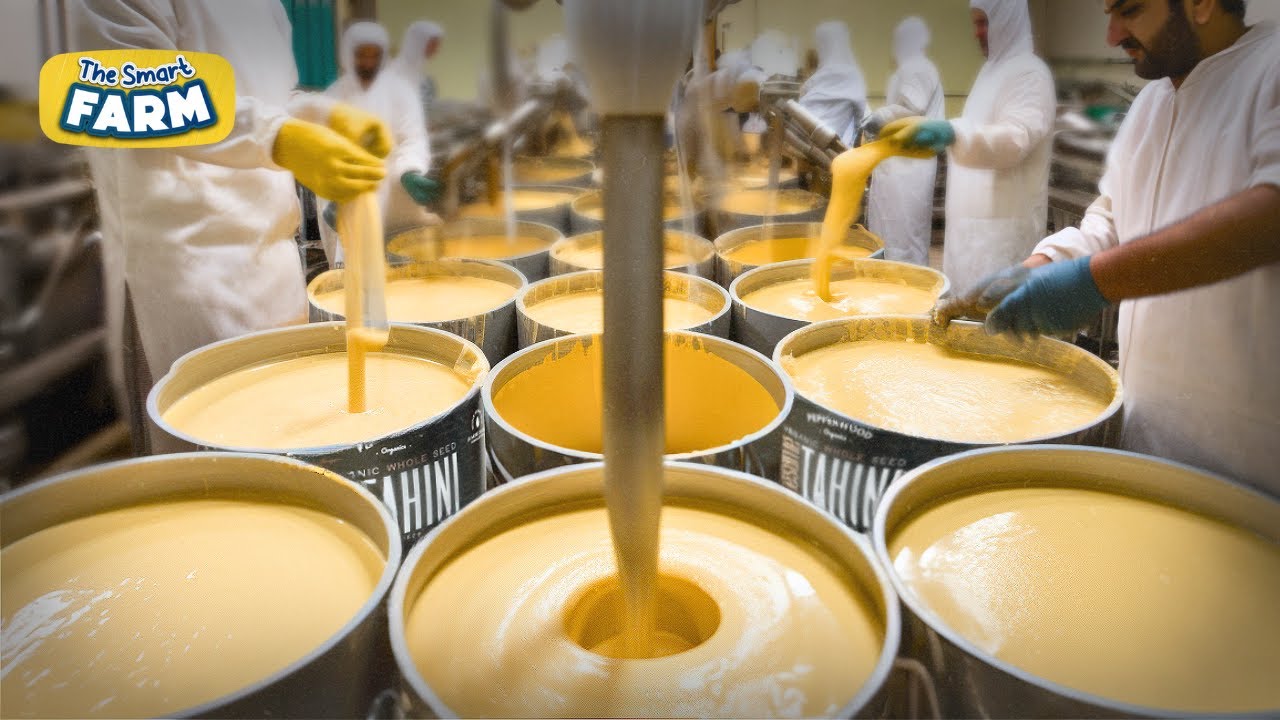
The global production of Tahini Sauce has been on the rise, reaching impressive figures with an estimated market value of US$ 2.04 billion in 2023. What makes Tahini so special? Tahini is a super ingredient in making delicious hummus and other mouthwatering dishes.
In today’s video we’ll uncover the secrets behind crafting Tahini sauce from scratch, following the original recipe that has captivated food enthusiasts worldwide. But that’s not all – we’ll also explore other sesame seed products like Halva and Sesame Oil, discovering how these delectable treats are made.
This is The Smart Farm! A heavenly space featuring harvesting innovation and production line insights.
🟡 SUBSCRIBE to THIS channel ➤ https://www.bit.ly/3N8x9Ie
🟡 LIKE the video for support!
You can support the companies featured in this episode:
Mira Food
IDHAYAM
https://idhayam.com/
Tradin Organic Agriculture B.V
https://www.tradinorganic.com/
Aky Technology
https://www.akytechnology.com/
Al Nakhil Co.
https://www.al-nakhil.com/
If you are the owner or if you want to be featured please contact us at thesmartfarm2024@gmail.com
We will follow your request as soon as we receive your message.
Copyright disclaimer section 107 of the Copyright Act 1976. “fair use” is allowed for purposes such as criticism, comment, news reporting, teaching, scholarships, and research.
We are not affiliated with the businesses whose products are shown in this documentary.
#tahinisauce #tahini #sesameseeds #howitsmade
Sesame seed transformation in factory production lines brings forth tahini oils and Hala let’s dive into this incredible production Line tahini sauce has gained widespread popularity globally leading to a significant demand for its production on a large scale processing facilities for tahini are strategically positioned across various regions worldwide to meet this growing demand tahini is produced from sesame seeds this production Journey Begins With The cultivation of Sesame plants
Primarily in warm climates like India China Sudan Myanmar and Ethiopia harvesting occurs when the Sesame pods mature and turn brown prompting the extraction of seeds either manually or mechanically establishing a secure and consistent supply chain for highquality sesame seeds is Paramount for large-scale production of Sesame based products har harvested sesame seeds are
Packed in Secure breathable bags for transport to processing facilities the seeds are now set to produce tahini sauce upon arrival at the tahini facility sesame seeds are fed into a vibrating screen cleaner this machine quickly shakes the seeds removing impurities like dirt and Stones the specific type of Machinery used for
Cleaning SES seeds is often a vibrating or oscillating C or screen cleaner this equipment utilizes rapid shaking or vibrating movements to separate the seeds from unwanted materials the SE of or screen has specific openings that allow smaller impurities to fall through while retaining the larger sesame seeds the shaking action helps to
Dislodge and eliminate any debris adhering to the seeds this cleaning process is crucial for ensuring the quality of the tahini product and other sesame seeds based products roasting of the seeds imparts a rich flavor and distinct nuttiness to the sesame seeds the duration of roasting a carefully controlled step
Influences both the final taste and color of the tahini the seeds then undergo grinding using the traditional method of a Bas salt grindstone this involves placing the seeds on the grindstone often made of volcanic rock and using the Stone’s grinding action to crush the seeds into a fine paste
Thick and dense Tahini paste is gradually blended with carefully measured liquid ingredients such as water or lemon juice this gradual incorporation of liquids is crucial to avoid clumping and promote an even distribution facilitating a smoother texture the blending process itself is a carefully controlled sequence utilizing proper equipment like blenders or food
Processors designed to handle the dense consistency of tahini sauce after the tahini sauce undergos filtration it proceeds to Quality Inspection where the sauce is examined to ensure it meets stringent standards for flavor texture Purity and overall quality Laboratory Testing May Encompass sensory evaluations chemical analyses and adherence to specific production parameters
The tahini bottling process in the production facility encompasses various container types including jars bottles and larger buckets for bulk distribution versatile automatic machines are employed to dispense the tahini sauce accurately into each container companies make deliberate choices between glass and plastic containers each decision is shaped by a
Myod of factors glass containers revered for their impermeability and non-reactivity stand out in preserving the freshness and original Taste of tahini the weightiness of glass however poses considerations for transportation costs although the recyclability of glass aligns with sustainability goals on the other hand plastic containers with their lightweight nature
Reduce transport expenses yet the the environmental impact of plastic waste prompts a nuanced evaluation the choice extends to aesthetic considerations with glass often associated with premium quality and artisanal appeal while plastic offers versatility in design the containers proceed to the ceiling stage automatic capping machines adapted to accommodate different lid
Sizes securely seal each jar bottle or bucket this step is vital for preserving the freshness and preventing any potential contamination during storage and Transportation Sesame seeds offer their rich flavors and versatile applications also in the production of sesame oil the production line for sesame oil involves a meticulous process that harnesses the distinct qualities of sesame seeds one noteworthy aspect is the infusion of palm jery during the pressing stage contributing not only to
The oil’s traditional taste but also acting as a natural preservative the roasted sesame seeds undergo pressing to extract the oil with the residual sesame gingely oil cake serving various purposes such as animal feed or fertilizer a crucial step in the production process is the filtration of sesame oil to ensure Purity and
Clarity the bottling process is streamlined through automated Conveyor Systems that guide bottles through filling stations automated machines precisely dispense sesame oil into containers with the addition of palm jaggery if applicable for flavor and preservation subsequently capping machines seal each bottle ensuring freshness and preventing contamination the labeled bottles are then efficiently
Packed for distribution catering to various markets from retail to Industrial clients pouches are another convenient and versatile packaging solution for sesame oil offering a lightweight and flexible alternative to traditional rigid containers their adaptability is evident in catering to diverse consumer needs providing options for on thee-o individuals households and even industrial
Applications another delightful sesame seed based product is halva a sweet and dense confection with roots in various culinary Traditions the production line for halva typically begins with the roasting of sesame seeds intensifying their nutty Aroma once roasted the seeds are ground to form a thick paste often
Mixed with ingredients such as sugar or honey this mixture undergo a heating process creating a smooth and dense consistency depending on Regional variations additional ingredients like nuts or flavorings may be incorporated the semi-solid mixture is then shaped into blocks or molded into various forms the final step involves Cooling and
Solidifying the halva resulting in a delectable treat enjoyed worldwide the production of halva showcases the Artistry of combining sesame seeds with sweet elements to create a unique and satisfying confection A prevalent method for packaging Hala involves encasing the confection in plastic or other sealed materials catering to both retail and bulk distribution this approach is chosen based on considerations such as consumer preferences the target market and the specific type of Hala being produced once the halva has been shaped
Aped and placed into the plastic containers a sealing process is initiated to ensure freshness and product Integrity the automated sealing machines are equipped with mechanisms that carefully apply heat or pressure to create a secure and airtight seal on the plastic packaging this technology plays a crucial role in preserving the
Freshness of the Hala extending its shelf life and meeting the hygiene and quality standards required for commercial distribution the diverse world of Sesame seed-based products including tahini sesame oil Hala and more showcases intricate production processes that blend tradition with modern technology if you are curious to learn more about similar
Process lines and the fascinating world of food production just click one of our next videos Here
3 Comments
NICE , WONDERFUL VLOG
Thank you for the video, it is very useful,
Nice to see the video,👍
Al Nakhil tahini is the best worldwide