
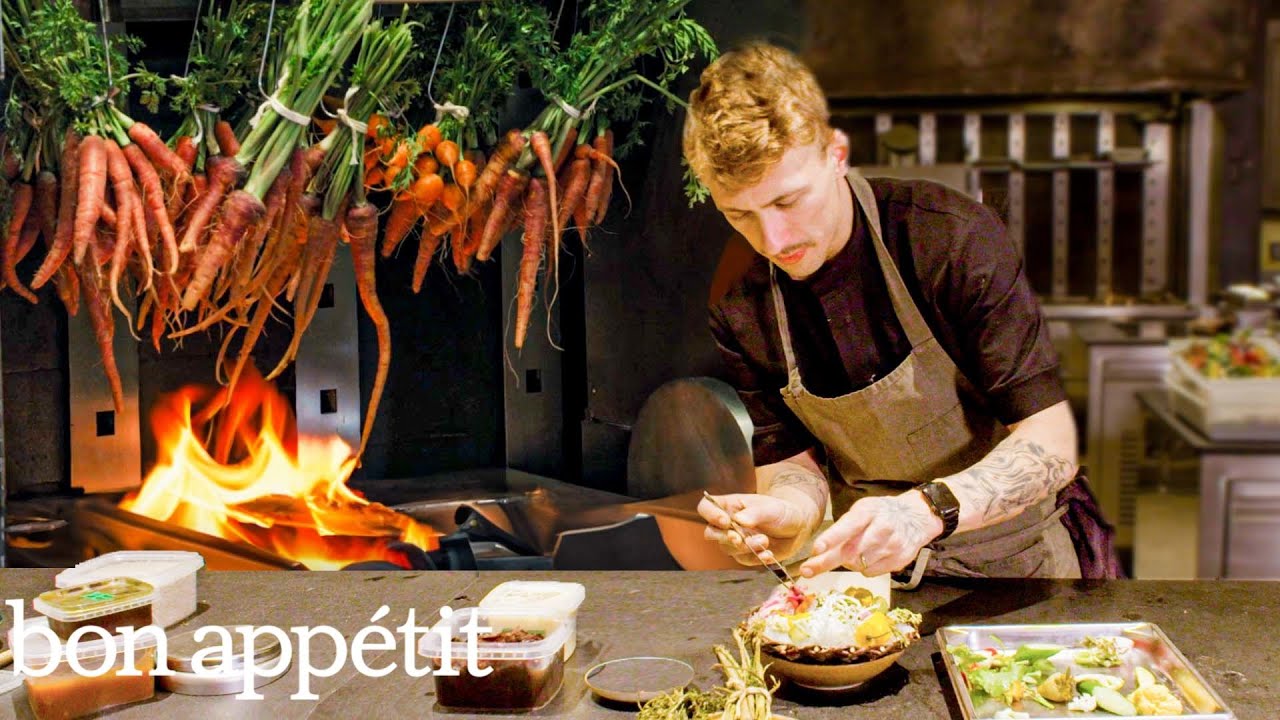
“Every second that I am breathing inside of this restaurant, I need to come up with new dishes.” Bon Appétit spends a day on the line with chef Kane William Sorrells, Chef of Research and Development at Ilis in NYC–the new brainchild of Noma co-founder, Mads Refslund.
Director: Gunsel Pehlivan
Director of Photography: Lucas Riffle
Editor: Kristopher Knight; JC Scruggs
Featuring: Kane Sorrells
Director of Culinary Production: Kelly Janke
Creative Producer: Parisa Kosari
Line Producer: Jen McGinity
Associate Producer: Amanda Broll, Oadhan Lynch
Production Manager: Janine Dispensa
Production Coordinator: Elizabeth Hymes
Casting Producer: Vanessa Brown
Camera Operator: Carlos Araujo
Assistant Camera: Lucas Young
Audio Engineer: Lily van Leeuwen
Production Assistant: Rowmel Findley
Post Production Supervisor: Andrea Farr
Post Production Coordinator: Scout Alter
Supervising Editor: Eduardo Araújo
Assistant Editor: Andy Morell
Colorist: Oliver Eid
Filmed on Location at: Ilis, 150 Green St, Brooklyn, NY 11222
Want Bon Appétit shirts, hats and more? https://shop.bonappetit.com/?utm_source=youtube&utm_brand=ba&utm_campaign=aud-dev&utm_medium=video&utm_content=merch-shop-promo
Still haven’t subscribed to Bon Appétit on YouTube? ►► http://bit.ly/1TLeyPn
Want more Bon Appétit in your life? Subscribe to the magazine! https://bit.ly/313UWRu
ABOUT BON APPÉTIT
Bon Appétit is a highly opinionated food brand that wants everyone to love cooking and eating as much as we do. We believe in seasonal produce, properly salted pasta water, and developing recipes that anyone can make at home.
[mellow pop music] – Every second that I’m breathing inside of this restaurant, I need to come up [camera shutter clicking] with new dishes. I’m the chef of research and development. In order to be able to change the menu as frequently as we do, we need to have one person whose job it is
To find these things to create preservation, fermentation. My typical day starts at buying produce from the farmers market and creating a dish by 5:00 p.m. Chef Mads Refslund is the owner, and he was one of the original chefs who founded noma in Copenhagen. So the dishes we create are expected to be perfect
And the service level has to be perfect. [mellow pop music continues] Yo, what’s up, guys? My name’s Kane. I’m the chef of research and development at ILIS. Here at Union Square Farmers Market. It’s the bloodline of the restaurant. It’s how we get everything to be inspired. All the flavor starts here.
Last night, we decided we wanna change a bunch of stuff, so we need to come up with some stuff before service today around 5:00 p.m. So let’s hit it. We gotta go get all these vegetables. Time’s ticking. [laughs] [mellow electronic music] Halal Pastures, they’re an incredible source for us.
They grow in the black soil, so a lot of their root vegetables, things that have higher sulfur contents, very spicy, rooty things, are very great from them. What up, Willie? – [Willie] Mornin’. – How’s it going? Willie is a very talented cook at the restaurant. He kinda takes care of the daily grind
Of things we already have established. I would say that 80% of what we’re getting is gonna be for dishes that already exist. And then the other 20% are things that are working that are new. We have an idea. So I need to pick something that can fall into that idea
That I’ve already kind of started in my head or Mads, specifically, has started in his head. He was the chef [camera shutter clicks] who started noma. To me, he’s the most creative chef in the world. [camera shutter clicking] He can see the sunchoke a million times, but he sees it today
And it’s like the first time he’s looked at it. And he starts to conceptualize and just break things down in his head visually. Everything is always going to change just based on today. So this is something that is gonna change. Now, I’m already thinking about it. Let’s grab some carrots, chef.
We’re changing the snacks for the short menu and this is what I’m gonna be working on today. These vegetables are gonna be a representation of things that are now. It’s about 14 or 15 different preparations. Some of them are inspired by today. Some of them started a year ago.
And we do a lot of fermentation. It’s a big part of my job as a research and development chef to be able to preserve these things. We’re done shopping here in Halal Pastures. – Thank you for stopping by. – Yeah. Yeah, no worries, thank you. – Thank you all.
– [Kane] And we’re gonna move on to Norwich Farms. They’re doing this on a scientific level. Their ability to actually produce new seeds and new flavor, it’s where we can meet, right? It’s where we see eye to eye. What is this? This is… [chuckles] – [Vendor] It’s called murasaki. – So beautiful.
– It’s a cauliflower. It’s a Japanese variety, so it tends to be very sweet. – These are so beautiful. Everything about these, we need. We will grab some peppers. We’re gonna grab some aji dulces, which are sweet but having a very tropical flavor. Norwich, for me, grows the best peppers. [mellow jazz music]
I’ve always naturally been curious about what goes on in the farming side of things. This is where it always starts and it will end with me as far as cooking goes. It’s the single most important thing for me as an R&D chef for ILIS. So today, we have about 150 pounds of stuff.
It’s very much a light haul for us. So we’ll probably spend about four to $500 in produce outside of the pumpkin season. We’re going back to the restaurant, guys. We gotta start puttin’ all this stuff up. We got dishes to make by 5:00 p.m. We gotta go. [mellow jazz music continues]
I’m bringing you guys into the kitchen. We’re gonna kinda disperse these vegetables to some of my friends who will be joining us in the kitchen soon. [camera shutter clicks] When you come into ILIS, you guys are dining inside the kitchen. You’re not dining inside of a restaurant.
Our cooks are servers, our servers are cooks and just offer a different style of dining and bringing the cooks to the table. So I’m taking all this stuff out. We get a good idea of what needs to get done for today. I’m gonna get changed and then we’re gonna come down here
And start cooking over the fire, getting some stuff prepared for tonight. You guys ready to run? You got your running shoes on? I’m not holding back now. I gotta cook. I’m cooking. You ready? – Yeah, go. [fingers snap] – Let’s go. We’re gonna take these carrots. We’re gonna dehydrate over the fire.
We use about three different types of wood here. Just a mixture of different fruit woods that grow along the Hudson. So [stems crunching] walnut, oak, different types of cherries and apples, all foraged trees that are actually dying, so we’re not killing any trees. It creates an interesting element for cooking
’cause the woods all burn differently. We’re gonna dip them in the sauce that we made. The sauce is gonna be made from a vinegar from parsnips, its kind of white counterpart, right? These are overwintered parsnips from last year we juiced and then we made alcohol of them.
From that alcohol, we turn it into a vinegar. So we’re just gonna dip them, hang them, dip them, hang them, take ’em over the fire. It’s gonna highlight the sweetness by using some honey in there. So beautiful to be able to have this as an element for us to prepare food.
Some things like, okay, this is normally something we’d throw away. We just hang it and then just dry it above the fire. Make a powder, make a vinegar, make an oil, anything. It just helps expand our flavor vocabulary, continuing to compound flavors into it. [mellow music]
It is always our priority to constantly evolve and paying attention to things throughout its micro-seasons, right? Restaurants thrive on consistency. But for us, the constant change, it’s just better for Mads and I to create. He told me one day that I like to salt things, blend them,
And ferment them, and that’s what I’m good at. So that’s what we’re gonna do now. [mellow music continues] We’re gonna go ahead and get these sunchokes processed. Sunchokes, super sweet, will tend really, really well to the fermentation process of using koji. Koji’s an active fungus that you use to break down starches
And proteins into flavor, umami. These sunchokes are full of starch, full of sugar, so it’s gonna lend to a very beautiful miso in the end. So it’s a vessel for us to maintain certain seasons that might not be as long as we want them to be.
This is a huge part of my role as the chef of research and development because our larder is what defines the flavor here at the restaurant. So these guys are gonna get smoked until they’re tender, and then we’re going to put them through a meat grinder,
Mix ’em with our koji, put ’em at a certain temperature, and just forget that they’re there ’cause I’m really impatient. [poker clattering] Right now, I’m just stoking the fire. We want like a nice smoking temperature. I grew up in Texas, the land of barbecue, and I think barbecue can extend beyond meat,
But smoking is such a beautiful tool. We like to indirectly cook things over the heat, not just grill them. The idea is for us to kinda dehydrate them, pull some of the sugars out, and then we can incorporate more water later. And we wanna keep this nice and low and slow.
So I’m gonna close this guy. We want it to smoke at about 140 Celsius, 150 Celsius, until the sunchokes are nice. I’m gonna start some grits. It’s gonna be an added level of starch and protein for our miso. We have a spice wall here. It’s representation of past, present, and future works.
A beautiful way to display it, get inspired, and just see what we have in-house. The flavor library, exactly, exactly. These are pencil grits coming from Anson Mills. All of our greens that we actually make the koji with, we inoculate on Anson Mills greens. So while we’re getting these sunchokes ready,
I’m gonna get these fermentations from downstairs. These are all our vinegars that we’re taking off today. It’s all been fermenting for a very long time. Alcohol is what vinegar is made from. So we started with a yeast. Takes about a month in order for us to produce sufficient-enough alcohol.
And we’ll add sugar, we’ll taste things. About the six to eight-week mark, the natural yeast will dissolve all of the alcohol and produce acid, and that’s what vinegar is. This one is a vinegar made from berries and roses. This is a vinegar that we made from wild cherries that I foraged from Maine.
And then this last one is from feral apple. So I’m just tasting for acidity right now, making sure that all the alcohol is metabolized. Should be acidic and not alcoholic, right? [tub scraping] [spoon clanks] [chefs chattering] – Not bad. [lips smacking] – These all need more sugar
And it just needs to go for a little bit longer. So this is a sugar from Japan, a unrefined sugar. Just has a higher level of like umami and earthiness to it. The sugar will help feed the yeast and it will produce a higher level of acidity. [lips smacking]
This one is for sure done. This is the fig vinegar. We took figs, we pectinase them, and then added Okinawa brown sugar to it. So we’re gonna strain this one off, and then let’s see if we can use it for something for service tonight. What’s coming out right now, [mixture trickling]
It’s called a SCOBY. [mixture splashes] That SCOBY is actually where the yeast lives whenever it’s inside of the vinegar. I took a red wine vinegar SCOBY that I’ve had for about 10 years, and I use that as the mother for this one. All of these starters and cultures you have,
The more you use them, the more you’re actually gonna have these deeper flavors. So it’s really fun to be able to keep something alive for 10, 15 years. It’s like a sourdough starter but with vinegars and kojis. This is actually a garam that we made from wild boar.
Garam is the oldest way of making fish sauce. In Rome, they would take all the fish from the boats, and then they would salt them whole, guts, everything in there, and those enzymes from the guts would help break down the fish and produces very umami-like sauce. [lips smacking] [spoon clatters] Tastes great.
Tastes like Parmesan, plums, and smoked meat. So this is the man, the legend, Mads Refslund. Chef, I don’t know what to say about you. You’re one of the best people I’ve ever met in my entire life. – I think the same about you. That’s why we click. [Kane laughs]
– I [beep] love this guy so much. We get in the kitchen and we just- – We became brother from another mother very fast. – So this is the actual roasted like garam garam. It needs to get strained. And this is the actual miso product. – I love it. What’s that?
– [Kane] Fig vinegar. – [Producer] Chef, do you get spoon-fed often? [Mads and Kane chuckling] – It’s every single day. [Kane laughs] – All right, this is gonna come off. We’re gonna go strain this in the back. I’m gonna give it to my boy, Nate. So this is made from bison.
So we’re gonna do a bison tartare with the garam sauce that we produced. We just decided right now. So that’s how fast the menu can change. We’re gonna take the liquid and that becomes an actual true fish sauce style liquid. Press the paste through a wine press
To get as much liquid extracted out of it as possible. And then all of the paste is also edible. So we’re not gonna throw anything away. All right, so we’re gonna start grinding some of our components for the miso-making process. Take these guys out. So we have the sunchokes. They’ve been smoking.
We have grits nicely cooked and it’s gonna bind everything together. Get this broken down so it actually mixes for the miso. Vegetable-based misos like this, they take a little bit more time. And there’s less enzymatic properties to it, so we’re gonna let this age for about eight to 12 months,
Probably right around when the sunchoke flowers become a thing. Planning out a dish for next year, basically. We popped some corn earlier. This is gonna go into our miso. It’s just gonna give it another layer of complexity. All the popcorn is adding its flavor to it.
I don’t know, this is something I decided this morning. I snuck off and bought some popcorn. It’s kinda funny to think about something dried being fresh, but dried corn right now is really at its peak and we’ll see what the flavor does. That’s the fun thing about R&D’ing
Is like it doesn’t always have to be so exact. We’re gonna hit it with some koji. This is salt. We’re gonna pack this in a little bit at a time. Packing it super, super tight. Try to prevent any air pockets in there and that’s gonna prevent it from spoiling.
We’re gonna put a layer of salt on this, throw some plastic on it, put a weight on it, and it’s gonna go into our fermentation area. So it’s 2:00 p.m. We’re gonna get some of our lighter pickled vegetables ready. It would be a shame for us to get these really beautiful, spicy radishes
And not try to highlight some of its just really fresh qualities. We’re gonna use [peeler rattling] an apple vinegar that I took off yesterday. Probably with like ginger and sake leaves, something like light and floral. I love this idea of like sheeting vegetables, so you’re eating like a fruit leather almost.
This is really weird. Oh, I see. This is kinda interesting. Look at that. [chuckles] R&D’ing always came about because of my love for the creative side of this, but I know that this was the job that I was born to do. I’ve always wanted to be a chef, always wanted, never anything else.
First time I worked [tool tapping] a 14-hour shift in a kitchen, I was 13 years old. I would skip class and I would go cook. I’m gonna show Mads this and see what he thinks about it. This is one of the settings for the roller. You see that? [Kane laughs]
– Yeah, I love it. – noma itself was such an impactful restaurant on me. I gave up everything to just follow Mads for the past couple years, and moved my life to Mexico and moved my life to here, travel with him, and just did whatever I could to just understand this man’s brain.
[objects clattering] – It’s kinda stupid. – Is it stupid? [laughs] I like the idea of cooking it out like that almost. It has- – Put it in water. Just put in water. It’s fine. – The cold water will probably change the texture. And see if we change our mind about it.
The way that I learned from Mads is you have to keep an open mind. If you try to overthink things, you lose that flow of what the possibility could be. It’s about 2:15 right now. We need to get moving on what we need for service tonight. [mellow chillhop music]
This is some sea urchin that just got flown in from Maine. These are similar to the ones that you’re gonna see in Hokkaido. So very small. They’re buffoon. Very beautiful. I love sea urchin. I have a tattoo of it on my hand. It’s one of my favorite things in the world.
We always imagine this restaurant being almost like an extension of the market. So this is gonna be part of our snacks. So we have these carts go around. We present some options for them to add on to their meal at the beginning as a way for us
To kind of bring the market to them. I’m gonna go ahead and take this off, pass it to the boys in the back. They’re gonna get it all brined in seawater so it’s ready for service. “Mario Kart.” [chefs chattering] Chef. [water trickling] – Chef. – You finish these up.
Get ’em all like this. And then Nate knows how to get ’em all brined, but we just need to take the tongues out. – [Mads] Guys, line up. – [Kane] We’re gonna go into a meeting and talk about tonight. [mellow hip-hop music] – [Staff Member] Yeah. – Okay, very fast. Seven-course menu.
There’s some changes to the menu. – It’s uni. We’re not doing bay scallops tonight. – It was too noisy yesterday. That’s why I walked around to you guys who would make the noise. Do you need a hammer? Do you need a drum set? – Yeah. [staff laughing]
– [indistinct], you can make a lot of noise, but we are in a completely open kitchen. It’s okay people feeling they’re part of the kitchen. That’s a part of the show. Really be careful. – [Staff] Yes, chef. – We do have an event on Sunday.
It will be a busy, busy, busy two days. Let’s have one house. – [Staff] One house. Got one house. – Oh, my God. On camera, too. [staff laughing] Come on, guys. [mellow chillhop music continues] The garam that we pulled off this morning
Is gonna be going into a new set for our menu tonight. In the sauce, I also mix some of the fig vinegar. So this is the two sauces that we actually said, “We’re completely done.” This is bison that we get from a ranch, these bisons that just kind of roamed
On their land for a long time. This tartare is a reflection of the actual meat that we turned into the garam itself. The sauce will actually be a paste of these crickets in dried currant leaves. Burned some onions in there. We fermented some garlic.
This is gonna be kind of the base of the flavor. Mads conceptualized this idea of kinda plating over the top of this lid, thinking about a beautiful way for us to kinda present something in a very unique way. And then we mix it into a sauce that we made from some egg yolks.
So kinda classic tartare flavors going on here, right? So this is just gonna kinda give us a base for these radishes that we got from Amoon Farm to kinda stick. Super spicy. Are gonna go really, really well with the tartare. The idea is that these radishes become a way
For you to actually pick up the meat and then dip it into the sauce. These capers are from last year. We foraged a bunch of blueberries from New Jersey in the Pine Barrens. And this is just gonna add to some acidity. It’s kind of like one of our favorite way to preserve berries.
Salt them in their unripe stage. This is the bison heart cured and smoked, like katsuobushi, like bonito. I’m just gonna shave that over the top of it. It’s gonna give it like a smoky, kinda salty dried meat flavor. This goes like this.
And then now chef says yes or no, and we taste it, and we see if we’re happy with the flavor, the idea of the actual dish. – And nine out of 10 times, I will say no. It tastes like [beep]. [Kane laughs] So the idea with this dish
Is you’re eating it with your hands. And I don’t know if anyone here have been hunting before, but there’s a tradition. If you have your first kill, you should take a bite of a raw heart, carving out the heart and eat with your hands.
So I like this kind of raw meat with raw hands. You just dip it like this. – Forgot the fried shallots. – You need that, yeah. – Yeah. Crispy shallots? – Were these cooked? – [Kane] Yeah. – It’s very powerful. – [Kane] Too powerful? – It’s too much sauce here. – Yeah?
Put less sauce? – And this is too much, too big. – [Kane] Okay. – And put a little bit less on this. – Okay. There it is. He has spoken. Tastes delicious. It’s just too much. You’re getting 12 courses. This is a lot. So we’ll plate one more up, try it again.
We always just keep trying and trying and trying and trying until it’s perfect. We do use very beautiful products here. So when we price things out, there is a certain level of food cost that is probably more than your average restaurant. Biggest impact of us being able to combat that
Is utilizing the scraps, and nothing goes to waste. We don’t throw anything away. So the food cost for us balances itself out. – So this is perfect now. This is approved. I think it’s good to go. – These are the carrots that we saw hanging by the fire earlier today.
Really happy with them. They’re still raw, [carrot crunches] which is the most important part. Taking the raw flavor, but they’re still crunchy. So these carrots are gonna be served with the snacks, accompany some of our vegetables that we have fresh from the market this morning. So we took the peppers from Norwich
And then we pickled them. This is the leaves from the cabbage that we bought this morning from Norwich, and then last year’s turned into a white kimchi. The idea is that we’re just making a very beautiful garden with all of these vegetables that we got from the market this morning.
This is a mixture of minimalism and deep technique. We’re gonna serve it with a sauce that we make from last year’s citrus. It’s like creamy vinaigrette and salted beach plum and shiso paste. This is from the pumpkin seeds that we saw earlier today,
And it’s gonna be going inside this pumpkin sea urchin dish we wanna try out. They took all of the inside out of this pumpkin, so we completely cleared it out. It’s gonna be paired with mandarin, so I’m just gonna cut some fresh mandarin. I think pumpkin and uni
Is a really classic flavor combination in my mind. So we have some salted egg yolks, which we’ve just cured, and some soy and mirin, some marigold flowers. Pairs really well with mandarin. This is some dulse. The dulse is a very beautiful and delicate seaweed. This is pumpkin broth. And this is the oil.
I’m gonna see if Mads is okay with this. [Mads faintly speaking] – The same pumpkin seeds, just toasted and deglazed with a little bit of fish sauce to give ’em a salty [indistinct]. – [Mads] Good to go. Think it’s good. – [Kane] Yeah? – Mm-hmm. – Okay. – Great, tastes good.
– Happy with it. All right, we got the menu sorted out right before we serve it. It’s kinda classic our style, right? All of the dreams that we had in our head were accomplished, and I think even more so. There’s things in the back of my mind
That I’m already working on for next week. I can’t wait for our guests to come in and try it themselves. Thank you so much for following me. And now you know what it’s like to be the chef of research and development for Mads Refslund at ILIS. Peace.
39 Comments
Kane's enthusiasm is healing 🙏
Wow that is insane
sad that the noma restaurant has closed due to high costs..
I hope people are actually getting paid
It’s so creative but oh so stressful for me
The amount of planning dedication and discipline in order to keep bacteria that you can feed people with for 10-15 years is mind-boggling.
Dude loves the word umami
We need a entire show in 20 episodes please
Everthing looks inedible
Halal products should be banned. Unbelievable that this is still allowed in this day and age
That is amazing. Glad to be a part of the process
Omg . I never wanna eat there. 😂 Mmmm bird food
Chef looks 20
Is he an R & D Chef?
Breathe.
Jeez, all that kitchen staff. I wonder how many of them are getting paid properly 😂
whaaaaaaaa
Dude, we know you are the chef of research and development..
I stopped at 6 mins, I may rewatch and play a drinking game every time he mentioned research and development.
I need to know what the green shirt he is wearing in the market is. PLEASE HELP.
This guy might have the coolest job ever
Amazing talent and dedication!
Long shot, but does anybody know what shirt he’s wearing when he’s in the farmers market ?
Just serve me Grandmas cooking
Cricket paste 😢😰 My taste and my mental state aren’t refined enough for that.
Brad would love this
me knowing I have yeast allergy and still watching this
So we not washing are Carrots
Rene Redzepi founded NOMA. Why does this guy say twice that his boss, who is not RR, did? Odd.
Wait. Is he a research & development chef? I can’t be totally sure because he only said it about 17 times. 😂
Fun
Super cool
Expensive things have a bad looks and taste.. yeah cool
Didnt clean the carrots😯
After watching the video, I have just one question. Who is the chef of R&D, did he mentioned that?
most of the dishes seem like straight noma copies…
sad that noma is closing end of this year.
"Crickets." Yeah, no.
This is one of the most inspiring things to be filmed. This is very well made.