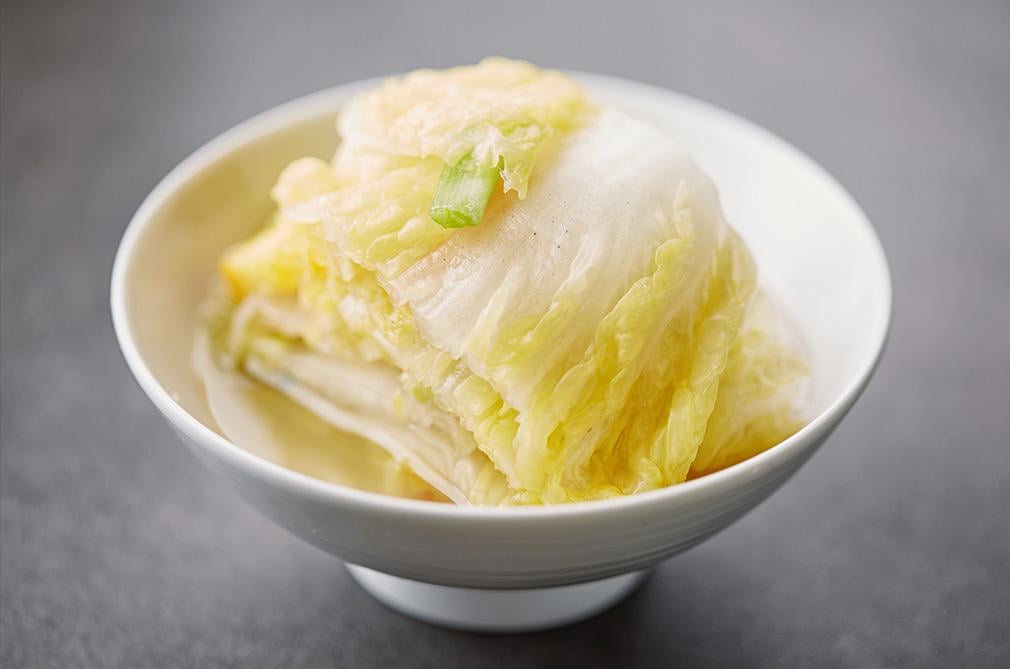
Kimchi originally did not contain chili pepper powder
Average amount of chili used per head of cabbage kimchi per year : before 1900: 0g(estimated) / 1930s: 5.75g /1940s: 8.83g / 1950s: 13.8g 1960s: 20.25g / 1970s; 28.42g / 1980s: 53.37g / 1990s: 54.45g / 2000s: 60.03g / 2101s: 71.26g
by suunyside
2 Comments
MysteriousSector3878
It is estimated that red pepper was introduced to the Korean Peninsula around the 10th century. Before that, kimchi would naturally have been white.
I’m curious about the source of yours.
wds1
That’s a lie. Gochu has been around for thousands of years.
There are many books that mention the cultivation of gochu on the Korean peninsula. There are no records that show that gochu grew in the wild; however, because it was recorded in “The Chapter of Dongyi in the Book of Wei, the records of the Three Kingdoms, 三國志魏志東夷傳” (years 233–297, Chen Shou) for the first time, it can be verified that it existed on the Korean peninsula 2,000 years ago. If “The Chronicles of Three States (三國史記)” (Kim Bu-sik, early Goryeo) is examined, records [Chodo (椒島), the island where gochu was planted; Fig. 1] show that gochu was already being cultivated during the period of the three kingdoms of the Korean peninsula, Kokuro, Paekje, and Shilla (37 bc – 668 ad), indicating that the demand for gochu was high even during that time. In addition, it can also be inferred that gochujang and kimchi were being made by fermenting gochu during this period as well.

2 Comments
It is estimated that red pepper was introduced to the Korean Peninsula around the 10th century. Before that, kimchi would naturally have been white.
I’m curious about the source of yours.
That’s a lie. Gochu has been around for thousands of years.
Here’s an excerpt from an [academic research journal article](https://www.sciencedirect.com/science/article/pii/S2352618114000043) busting that myth
There are many books that mention the cultivation of gochu on the Korean peninsula. There are no records that show that gochu grew in the wild; however, because it was recorded in “The Chapter of Dongyi in the Book of Wei, the records of the Three Kingdoms, 三國志魏志東夷傳” (years 233–297, Chen Shou) for the first time, it can be verified that it existed on the Korean peninsula 2,000 years ago. If “The Chronicles of Three States (三國史記)” (Kim Bu-sik, early Goryeo) is examined, records [Chodo (椒島), the island where gochu was planted; Fig. 1] show that gochu was already being cultivated during the period of the three kingdoms of the Korean peninsula, Kokuro, Paekje, and Shilla (37 bc – 668 ad), indicating that the demand for gochu was high even during that time. In addition, it can also be inferred that gochujang and kimchi were being made by fermenting gochu during this period as well.