
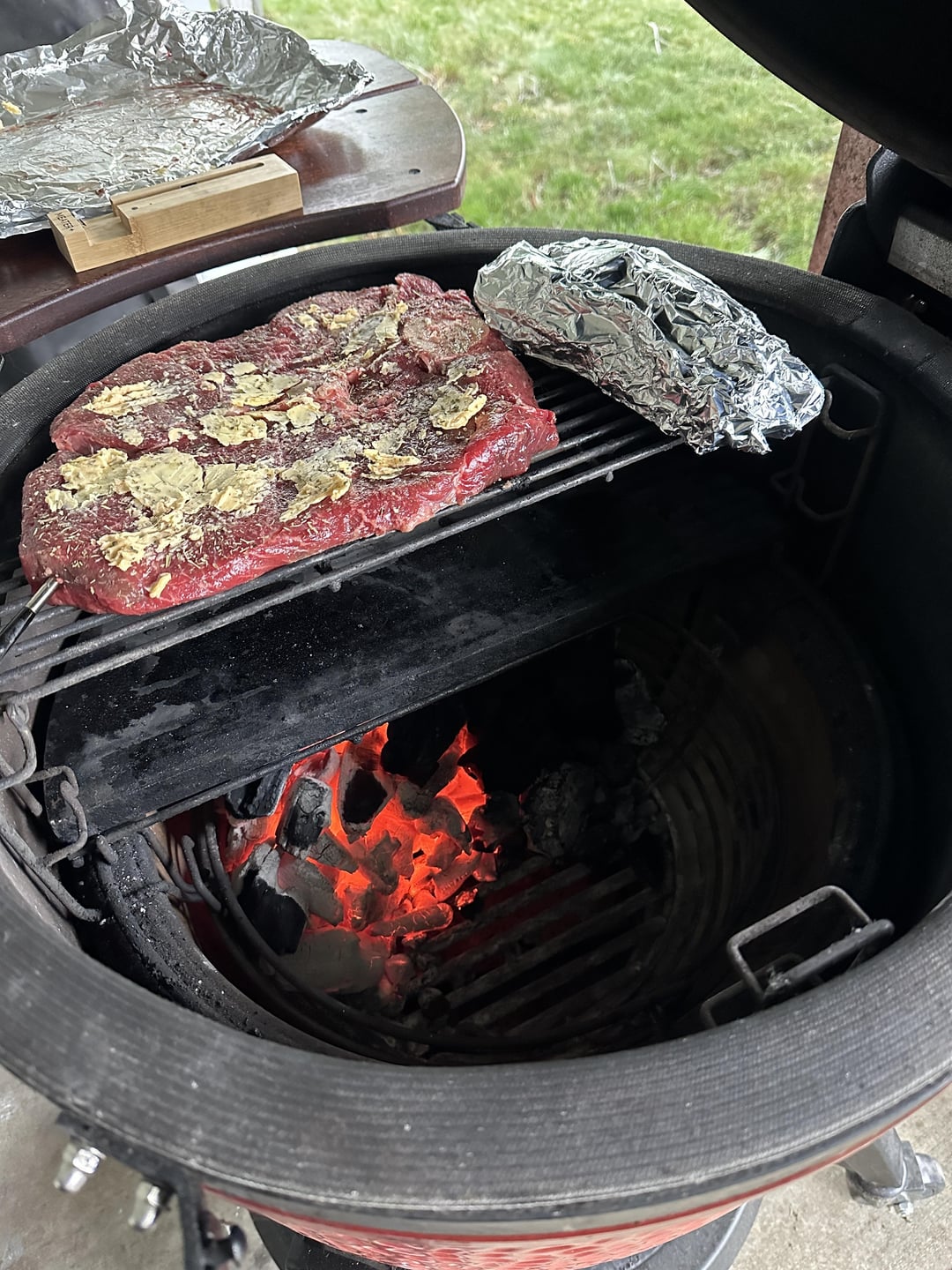
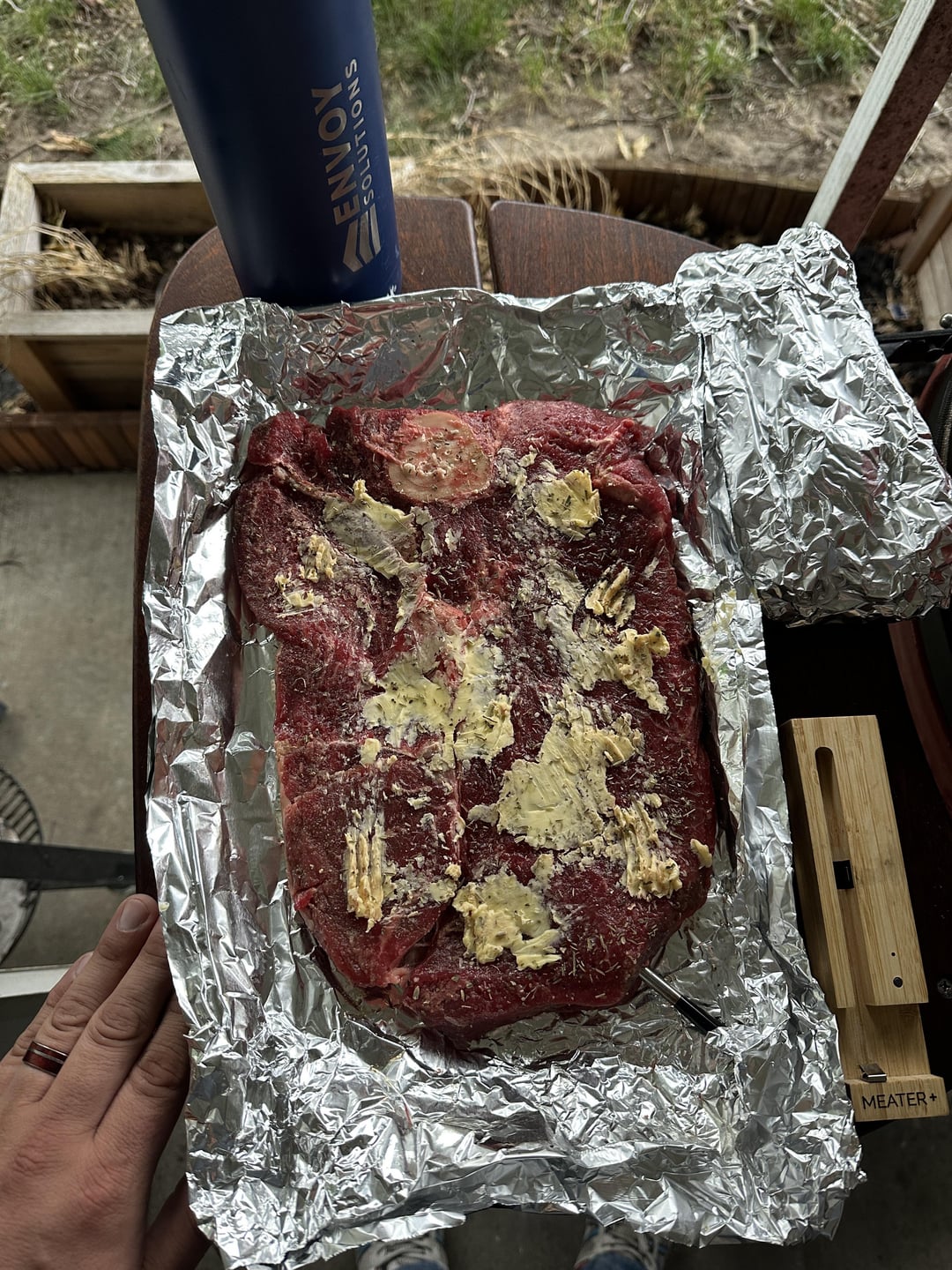
Figured I would post my method for conveniently cooking a reverse sear steak via Soapstone as deflector.
Why do reverse sear? The low and slow climb tenderizes and breaks down the tissue and fat throughout, then searing at the end gives you that dreamy crust.
Bank lump to one side, light toward the front (fire naturally travels to the back during cooks).
Put soapstone on lowest position right over the coals, with the second grate at the highest position. (Soapstone acts as a heat deflector).
Get dome thermometer temp stabilized to 250° or so.
Bring internal steak temp to 100°-110° on top rack (during this time the soapstone is rising hotter and hotter acting as a deflector).
Pull steak to rest, remove top grate to easily access soapstone surface later (or place grate on other side to cook veggies, then open all vents wide open to start inferno mode and further heat the soapstone to 400°-600° surface temp (takes 5-15 minutes depending) checking with an IR gun.
Sear 1 minute per side on Soapstone, flipping until internal steak temp reaches desired (128° is mine then pull to rest, steak will continue climbing to medium rare).
EAT (after rest).
by FrickParkMalcolm
2 Comments
What’s the approximate total time on this? And is that a KJC or Big Joe?
Reverse sear doesn’t help break anything down. Connective tissues and fats don’t really start rendering until upwards of 180f.
What it does do is decrease the heat gradient from the outer edge of the meat to the center so you get a very even cook. It also allows you to let that heat come down and pre rest your steak. Because the internal temp drops during your rest, it’s a lot easier to get a good sear without raising the internal temp past your target.