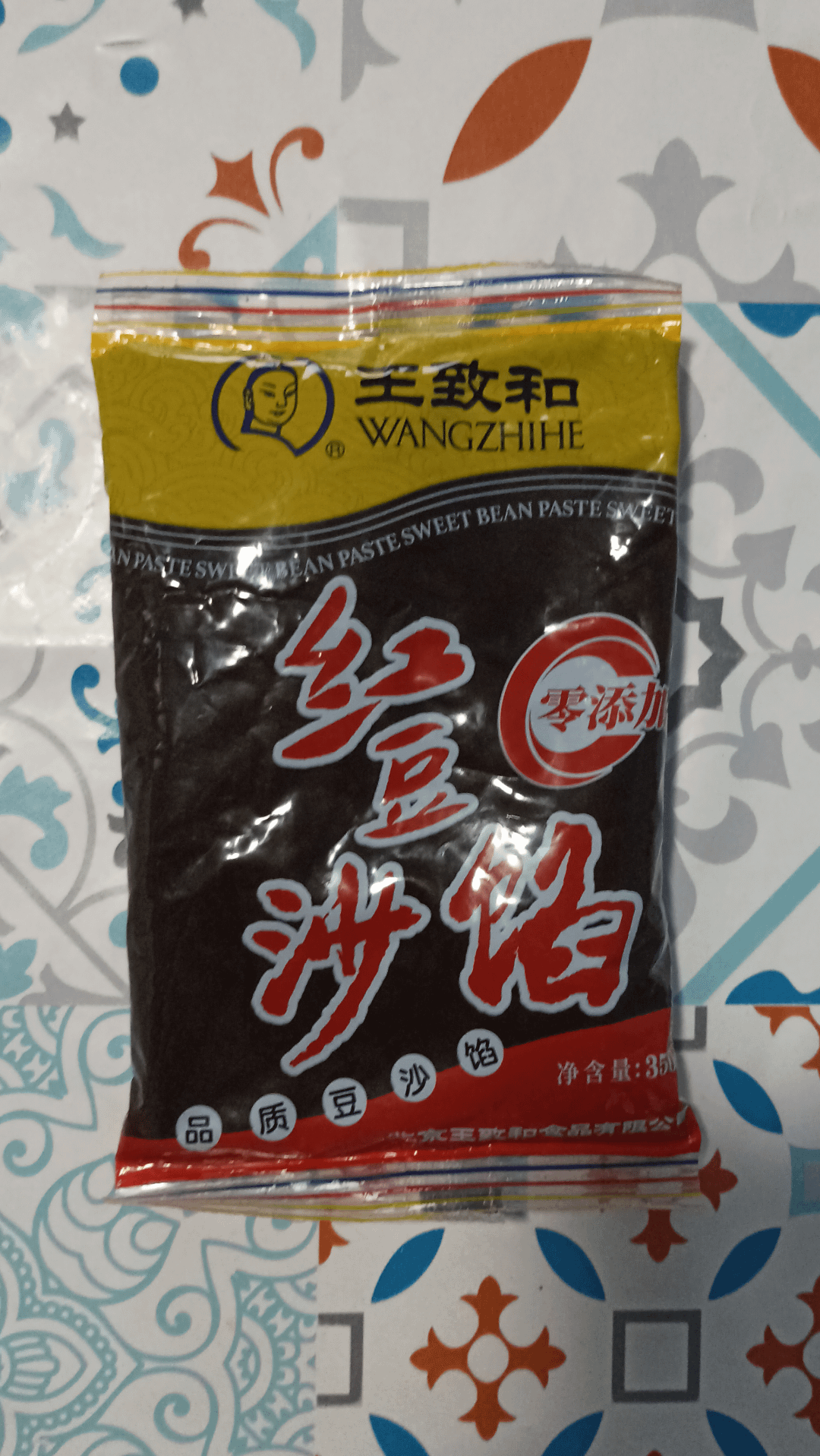
I recently went to Chinatown in Milan and saw this red bean paste. I thought I could use it for jjajangmyeon but I'm not sure how to use it or if it's the right ingredient. I'm open to every tips and recipes!!
by Traveler631
3 Comments
Itoshikis_Despair
That is Chinese sweet bean paste – ie red bean paste with added sugar. You can make red bean buns (baked or steamed) out of it or use as a filling for hotteok. Or I’ve seen some people put a few dollops on yellow millet porridge, though that isn’t particularly Korean afaik (and very old-fashioned way of eating it).
vannarok
The package says it’s sweet bean paste. The brand isn’t Korean but sweet red bean (azuki bean) paste is used for desserts in Korea, China and Japan – a few examples are *chapssaltteok* (a general Korean term for glutinous rice cakes, including one type that’s also known by its Japanese name “mochi”), *yanggaeng* (sweet bean paste coagulated with agar agar or gelatin, “yokan” in Japanese), or *jjinbbang* (steamed bread, either made sweet with the red bean filling or savory with minced meat and vegetables). A chunkier version of this paste is also an ingredient added to *patbingsu* (*pat* means red bean and *bingsu* is Korean shaved ice).
aoileanna
Jjm uses (fermented) black bean paste
This is a red bean paste that’s sweetened so it’s good for daifuku, dessert soups, filling mochi, or in between little pancakes (dorayaki). It’s really yummy as is, on a spoon straight out if the bag too! Just once you open it, store your left overs in a container in the fridge. Try it on toast or biscuits

3 Comments
That is Chinese sweet bean paste – ie red bean paste with added sugar. You can make red bean buns (baked or steamed) out of it or use as a filling for hotteok. Or I’ve seen some people put a few dollops on yellow millet porridge, though that isn’t particularly Korean afaik (and very old-fashioned way of eating it).
The package says it’s sweet bean paste. The brand isn’t Korean but sweet red bean (azuki bean) paste is used for desserts in Korea, China and Japan – a few examples are *chapssaltteok* (a general Korean term for glutinous rice cakes, including one type that’s also known by its Japanese name “mochi”), *yanggaeng* (sweet bean paste coagulated with agar agar or gelatin, “yokan” in Japanese), or *jjinbbang* (steamed bread, either made sweet with the red bean filling or savory with minced meat and vegetables). A chunkier version of this paste is also an ingredient added to *patbingsu* (*pat* means red bean and *bingsu* is Korean shaved ice).
Jjm uses (fermented) black bean paste
This is a red bean paste that’s sweetened so it’s good for daifuku, dessert soups, filling mochi, or in between little pancakes (dorayaki). It’s really yummy as is, on a spoon straight out if the bag too! Just once you open it, store your left overs in a container in the fridge. Try it on toast or biscuits