
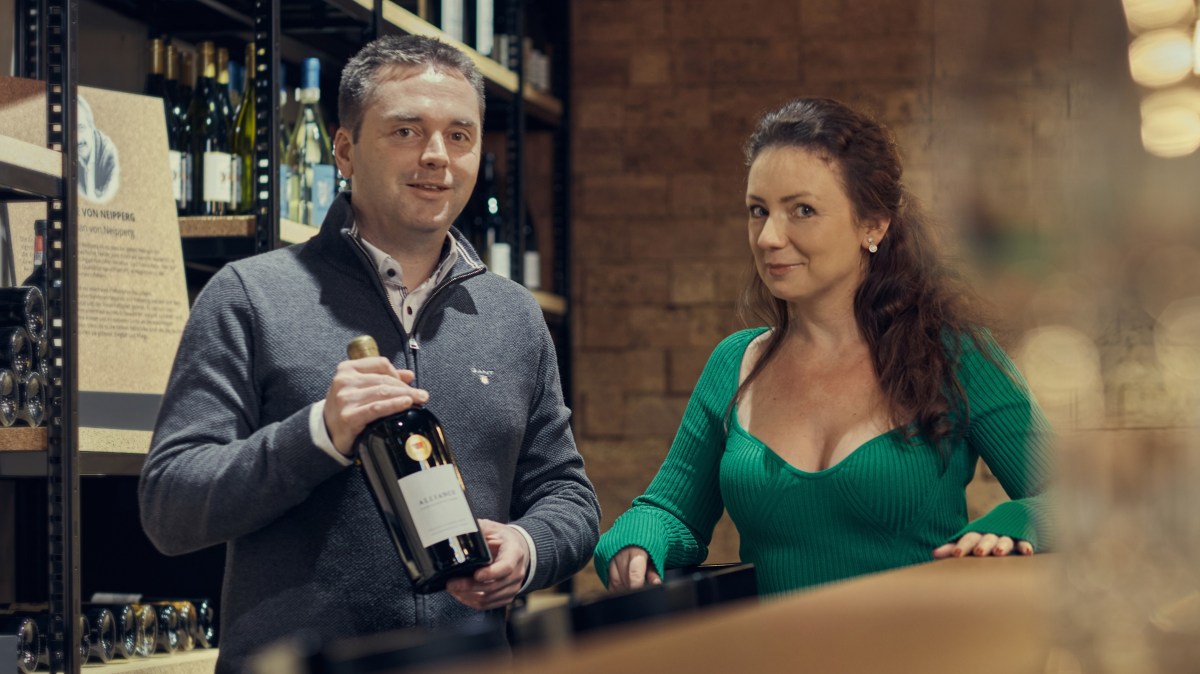
When Stefan Hauser, a vintner, read about the alleged theft of £300,000 worth of cheese from an artisan dairy in London, his jaw dropped.
Hauser and his father, Johannes, together run a wine merchant in Switzerland and Germany, supplying restaurants and private owners. Last year they had 6,500 bottles of German red wine stolen.
Like the cheese, the wine order was delivered to a warehouse, after the company was approached by a buyer claiming to represent a large French chain, who had “good knowledge” of the product. After the wine was handed over in Paris, it disappeared, and so did the buyer without transferring the money.
“I follow Jamie Oliver on social media and saw he had posted about the cheese being stolen in the UK,” Hauser, 42, said. “It made me very angry.”
Oliver, the celebrity chef, posted an Instagram video last week about an unprecedented theft at Neal’s Yard Dairy, the London wholesaler and retailer of specialist cheeses, which lost 22 tonnes of some of the world’s best cheddar to criminals last month. A 63-year-old man was arrested by the Metropolitan Police economic crime unit last week on suspicion of fraud by false representation and handling stolen goods.
When Hauser learnt of the loss, he got in touch with Neal’s Yard — based in Covent Garden, central London — and shared his own experience with the dairy’s co-owner, Sarah Stewart.
His is one of three separate small companies that have been in touch with Neal’s Yard Dairy since the firm went public about the cheese theft. They include Hauser’s wine company, a high-end smoked salmon producer based in Suffolk, and an eco-friendly bag retailer in Worcestershire. Each had lost products in similar circumstances.
In these three cases the business owners were approached by a supposed buyer for a large, reputable company. Like Neal’s Yard, Hauser conducted due diligence checks that left him feeling reassured. The theft of £52,000 worth of wine almost bankrupted Vinothek Hauser. “We were very close to having to finish,” Hauser said. “It’s really disgusting what they did to us.”
On July 27 last year, Hauser received an email from a fraudster claiming to work for a distributor on behalf of a large French supermarket chain. “Good day, we are interested in your wine products,” read the email written in slightly broken English, from somebody posing as a legitimate supplier.
Hauser had never been in contact with the writer before, but looked up their name on LinkedIn and found it matched the profile of someone who worked for a large distributor for the supermarket.
It later appeared that criminals had hijacked the real-life distributor’s identity. They had also obtained the company’s VAT number, and SIREN code, a unique nine-digit identifier for a company in France, which allowed the prospective purchasers to pass further verification checks.
“The emails looked realistic, everything looked very professional,” said Hauser, who set up the business with his father in 2015. Like the other companies who got in touch with Neal’s Yard, Vinothek Hauser is a small family-run business.
On August 4 last year, an order was made for 6,500 bottles of pinot noir, the largest wine order they had ever received. Hauser specialises in importing German wine into Switzerland and his company has a small warehouse near Stuttgart in southwest Germany.
The criminals ordered bottles of Alsheim Spätburgunder 2021; Pinot Noir 2021; III Freunde Rosé 2021; and Frühmesse Riesling 2022. “The Pinot Noir 2021 has a special label,” Hauser said. “The wines we sold to them have been labelled with Pinot Noir. Normally it’s sold as Spätburgunder. So if anyone finds a Pinot Noir 2021 of Graf Neipperg it should be one of our pallets.”
As a precaution, Hauser took out insurance on the order, costing £2,500. Hauser checked with his bank, which said the purchase looked legitimate. The bank checked the VAT and SIREN details belonging to the real food and drink distributor and cleared the transaction.
On August 5, a haulier was arranged by the purchaser to pick up the wine from Vinothek Hauser’s Stuttgart warehouse. Two days later it arrived at a warehouse in the Beauchamp area in the northern outskirts of Paris. CCTV shows the 6,500 bottles of wine were stacked in pallets in a car park at the front of a warehouse. A few hours later, another truck arrived, loaded up the pallets of wine and drove away.

CCTV footage of the lorry used to pick up the wines from a warehouse near Paris. Since then the buyers have disappeared without payment for the order
The haulier which delivered the wine to Paris told Hauser that when the 12 pallets were unloaded near the warehouse, their drivers spotted a worker who was unloading while calling someone. They said there was a small truck nearby.
There is no suggestion that the logistics firms had knowledge of the scam. The haulier said it had been subcontracted by a major European haulier firm which had initially been instructed by the criminals posing as buyers.
The money for the wine was supposed to be transferred into the wine merchant’s account within 30 days, but it never arrived. It was reported to German and French police who have been investigating, Hauser said. No arrests have been made so far.
Hauser believes the goods may have ended up in Russia where there could be a strong black market value for European wine. “They don’t have any of the good stuff there,” he said. He had also noticed several visits to his website by a person from the Ivory Coast, which has a record of online “sextortion” scams, online blackmail where people are threatened with having sexual information shared unless they hand over money.
Beth Williams, the UK owner of Turtle Bags, which sells eco-friendly bags made by the Women’s Empowerment Programme in Bangladesh, said she lost £66,000 of stock after she was approached last November by the “director of buying” for a fashion brand based in Paris.
“We began a dialogue which took place over a period of weeks discussing designs and specification and firming up an order,” Williams said. A contract was sent by the purchaser, which she checked with a legal team. “The order took a few months to prepare.”
The producer in Bangladesh was paid by Williams to prepare the order, and a haulier instructed to deliver them to the fashion company, which had requested they be sent to a warehouse in Essex. She was never paid for the bags. Williams reported the theft to Action Fraud, which handles claims of fraud and cybercrime on behalf of City of London Police, but says she was told there were “no viable lines of inquiry”.
Chapel and Swan Smokehouse in Exning, Suffolk, which makes smoked salmon, has also lost money on a large order that appears to have been placed by a fraudster. Chris Swales, the company owner, said the authorities needed to act against “high-end food fraud”.
In his case a fraudster who gave the name of a real French food supplier ordered four tonnes of salmon, cut into 1kg portions, to be delivered in two batches 21 days apart. Only one batch was delivered after Swales grew suspicious. He was never paid for it.
Swales said his smoked salmon was delivered to a warehouse in Walthamstow in east London. “I spoke to a few people in the yard,” he said. “There were people walking around with XL bully dogs. It was not a nice place to be and they didn’t like me asking questions, so I got out of there.”
On Friday morning the site was strewn with car parts, abandoned electrical appliances, and rusting shipping containers. A worker at the yard said the containers were sometimes used as a temporary storage facility for food produce, but did not specifically recall seeing Swales’s salmon.
“There was no fish delivered here last month, man,” he said. “There are so many lorries coming around here all the time and stuff can end up being delivered to the wrong place.”
Swales wondered about how easily his fish could have made it to France unnoticed. “There are just too many checks and paperwork now,” he said. “I’m convinced they must have had somebody at the border who can wave trucks through.”
A Met spokesman said the force had received a report of a theft of a large quantity of cheese from a manufacturer based in Southwark and added: “Investigating officers have since arrested a 63-year-old man on suspicion of fraud by false representation and handling stolen goods. The man was taken to a south London police station where he was questioned. He has since been bailed pending further inquiries.”