
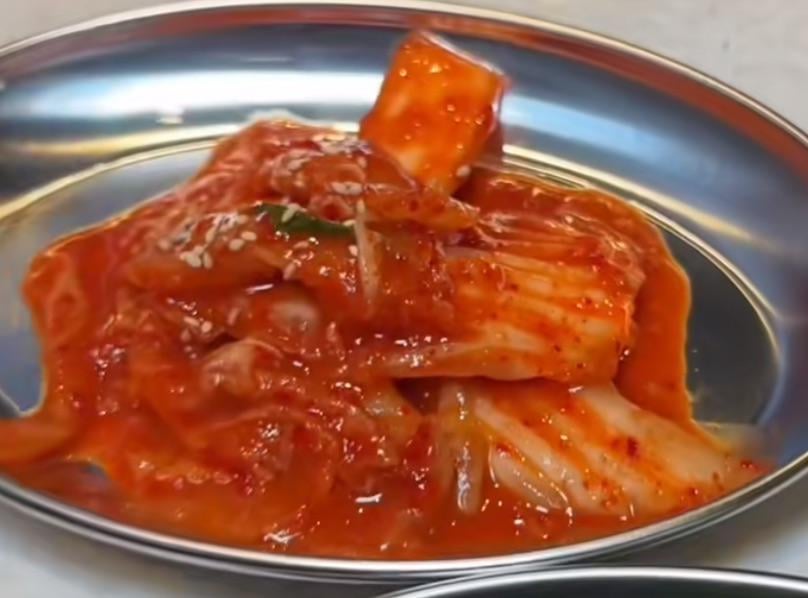
I recently visited a Seollongtang (ox bone soup) place, and noticed that they served a much more thick-pasted and salty kimchi. It had no sour aftertaste at all (not fermented)
I loved it so much, and think I like it more than regular fermented kimchi. I love the super salty taste and pairs well with rice.
Upon doing initial research, the closest thing I could find was Geotjuri (fresh kimchi). However, it didn’t look like it matched the thickness of the sauce on the kimchi. I’ve attached the image below, if anyone can let me know what it is I’d be super grateful!
PS: this restaurant was located in Atlanta where I was for a work trip. I unfortunately could not ask as the staff spoke limited English, and the line was getting pretty long
by Credit_Owl_667
6 Comments
Typically, seollongtang is served with kkakdugi (radish kimchi) which is NOT the kimchi pictured here. It looks like this restaurant served the typical baechu kimchi. From the look of this kimchi, it looks like they lathered a thick layer of the kimchi paste to the cabbage and it might be possible that they have their own special kimchi recipe that they serve to their customers. I have been to restaurants where I know they are making their own kimchi and it is so delicious that I keep coming back.
It’s said each household has its own kimchee recipe. And even one batch of kimchee will taste different in day it was made, a week later and 2 months later, due to fermentation.
Some use seafood in the ingredients and it can SMELL really really strongly but taste amazing.
Some make what’s called emergency kimchee with bare minimum ingredients when in a pinch.
Check out https://www.maangchi.com/ for recipes.
It’s served with radish kimchi generally. I like to dump a bit of the juice into the seolleongtang broth 🙂
It might be 석박지, but it doesn’t look the same as the picture u posted
To add, since seollungtang doesn’t have a strong flavor, the kimchi used is typically fresher. While many people are saying they only use radish kimchi, the places I used to go to in Seoul always had the freshest baechu (lettuce) kimchi. It pairs so well with the richness of the broth.
Although most kimchis vary even if you copy the recipe (due to the fermentation), typically baechu kimchi can be very new and fresh tasting, or older and sour tasting. It’s due to the continuing fermentation that occurs as the kimchi ages. They used to make kimchi fresh, like 100 heads of napa cabbage at a time, then eat it throughout the year. By the end of the year, the kimchi would be sour and quite flavorful.
Anyway, all that to say: You likely won’t be able to pick it up at your local grocery, kimchi is pretty unique to the restaurant. But it sounds like you prefer fresher kimchi to the more sour/older kimchi. If you can, try to find fresh kimchi vs older kind.
It’s fresh kimchi. Geotjeori. They’re just making their sauce thicker.
People keep saying seolleongtang is served with kkakdugi, but it’s more typically served with kkadugi *and* fresh kimchi.
And welcome to enjoying fresh kimchi! Part of me dies every time I see people make kimchi and leave it outside without even having any of it. Eating fresh kimchi is the best! If you liked this, you will love bossam, which is boiled pork with fresh kimchi. It’s customary to have boiled pork on kimchi making days in Korea.