
Restaurants in France are going bust in record numbers with mediocre food cited as a key factor, along with rising costs and changing customer habits, say experts and owners.
The land of haute gastronomy saw 17 per cent more restaurants go into receivership in January compared to the average in the pre-Covid decade of 2010 to 2019, according to the Banque de France.
Around 25,000 jobs are under threat, the latest edition of the Banque Populaire Caisse d’Epargne Observatory said.
The quality of food in a slew of mid-range French restaurants has turned off droves of customers, warned Stéphane Manigold, owner of eight restaurants in Paris, including Maison Rostang, Granite, Contraste and Le Bistrot Flaubert.
“There’s a crisis of confidence between the French and the restaurant world,” he told Le Monde.
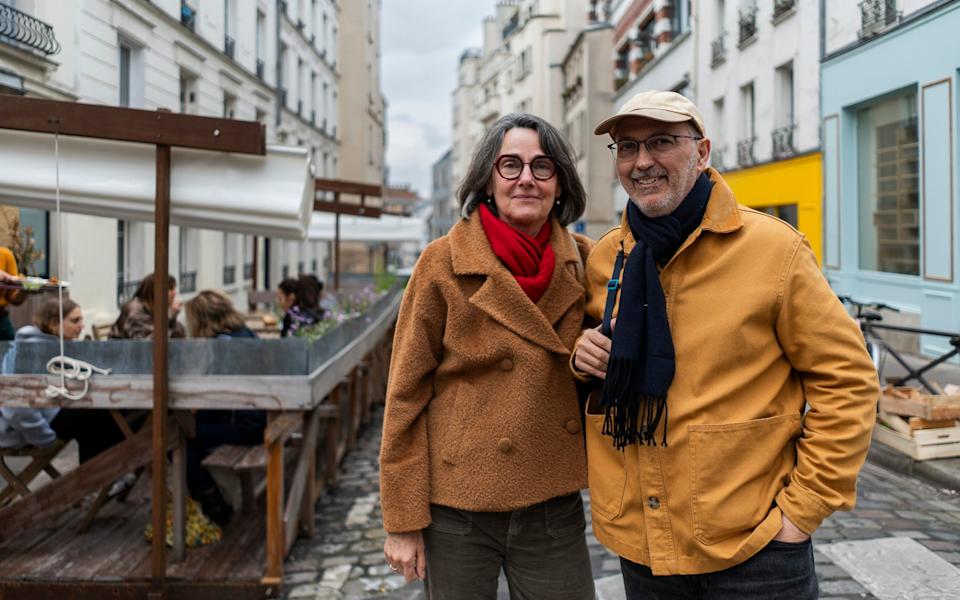
Lois and Pascal Brunet said ‘there is a whole swathe of mediocre restaurants’ – Bruno Fert for The Telegraph
“France claims to be the country of gastronomy, and yet the customer doesn’t know whether the food on his plate is home-made or a frozen dish made in Poland, just out of the microwave.
“It’s better to stay at home. We need an electric shock to bring about greater transparency,” he warned.
Some Parisians concurred.
“My dad used to say that one thing about France is you can eat just anywhere and it’s always great,” Lois Brunet, 63, originally from New York but who has lived between the US and France for the past 40 years, told The Telegraph.
“That’s no longer the case. There is a whole swathe of mediocre restaurants. For example, I ordered a burrata salad on grilled vegetables in a brasserie by the church of Saint-Eustache in the centre of Paris the other day. It was so plain and pretty expensive.”
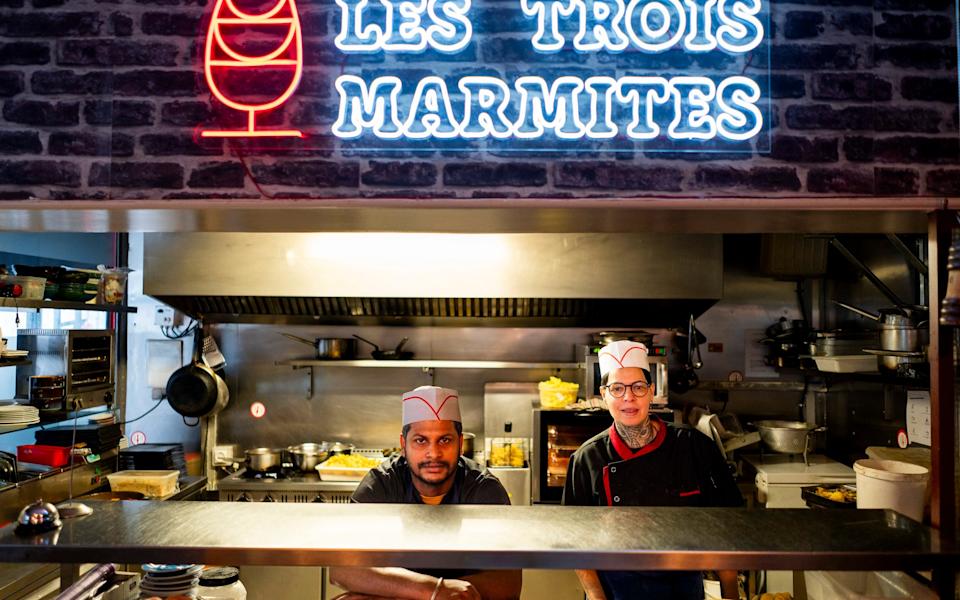
Trois Marmites is a bistro a stone’s throw from Ménilmontant church in Paris’ 11th arrondissement – Bruno Fert for The Telegraph
Even top-class restaurants can disappoint, said her husband Pascal, 67. “We went to the Plaza Athénée in central Paris, it was very pricey and we had to send one of the plates back – foie gras that was just gras.”
Rising costs – a la carte prices have risen by 20 per cent in two years – and changing customers habits are also taking their toll, say restaurateurs.
At the Trois Marmites, a bistro a stone’s throw from Ménilmontant church in Paris’ 11th arrondissement, staff were preparing their lunch menu, with a pièce du boucher (steak), frites maison and salad just €13,50 or a full menu at €19.
Despite the reasonable prices, manager Zelda Ariche, 41, said the restaurant was feeling the pinch, along with its customers, mainly local Parisian workers, school teachers and families.
“Before the Covid crisis, we were really full; people would wait in the restaurant to get a table. Now we wait for the customer,” she said.
“We used to see many [customers] three or four times per week at lunchtime. Now we only see them once a week. Teleworking has also changed a lot.”
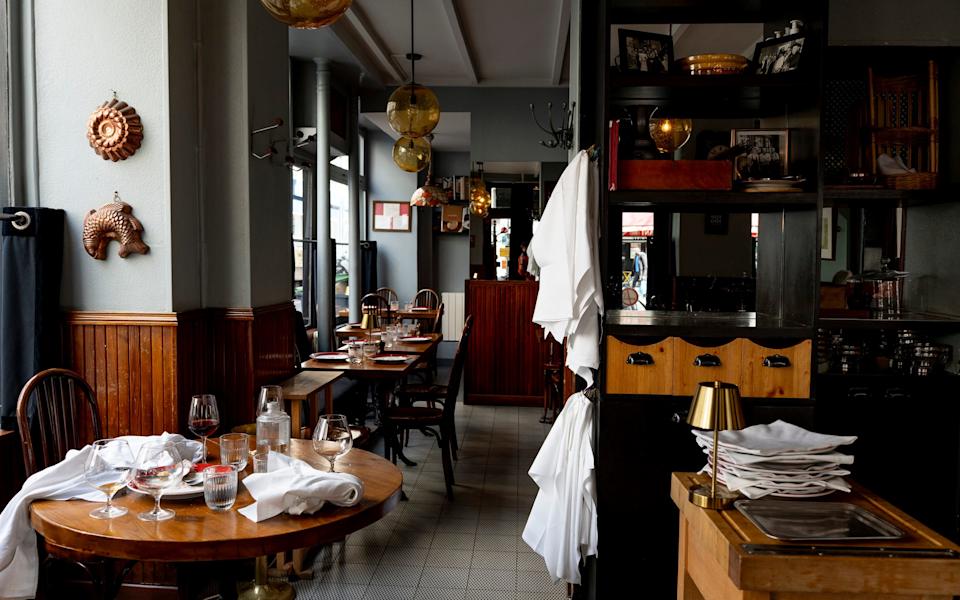
L’Astier is famed for its cheese platter and wine cellar – Bruno Fert for The Telegraph
All their dishes were made from fresh, locally sourced produce, she insisted, but inflation had hit basic products like coffee and potatoes, forcing them to raise prices.
“Before, customers could afford a formula or even starter, main course and dessert. Nowadays, many pay for just one dish. They used to buy either a quarter litre of wine or more, but now often a single glass or even a carafe of water,” she said.
“We’ve hit a cliff edge,” said Franck Pinay-Rabaroust, founder of the specialist food media outlet Bouillantes. “Those that are holding out are, on the one hand, those in tourist areas that attract foreigners, with rather high prices. On the other hand, there are those who offer very low prices and high volumes. In between, there is a rump of restaurants that are suffering. In the big cities, there are more and more closures,” he said.
Many one-starred Michelin eateries are also finding it hard to survive, and increasingly closing at lunch due to lack of custom to focus on evening clientele, he added.
“Some restaurants were artificially protected in the years following the Covid-19 pandemic, thanks to the subsidy system. They are now being caught up, and the weakest are closing down,” added François Blouin, director of Food Service Vision.
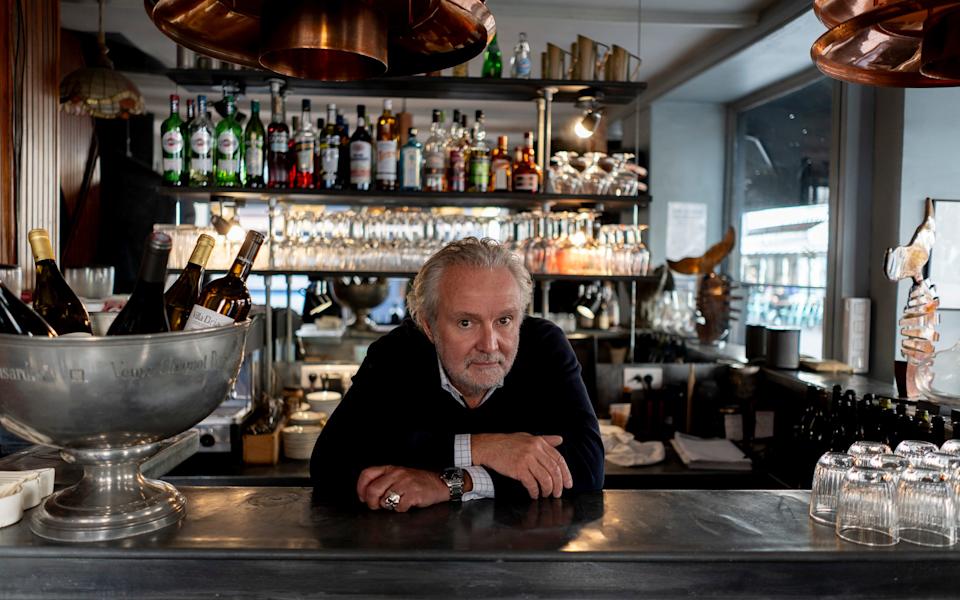
Frédéric Hubig runs L’Astier and has previously run six restaurants in Paris – Bruno Fert for The Telegraph
At L’Astier, a traditional bistro-brasserie whose name has not changed since 1956, owner Frédéric Hubig served his last lunch customers a glass of armagnac after a meal washed down with red wine.
“So the armagnac’s on the house?,” said one regular customer. “Sure, and my shotgun is just behind the bar,” he shot back with a smile.
L’Astier, which serves a lunch menu at €29, is a local institution famed for its cheese platter and wine cellar and recently won an award in the Gault Millau as the top traditional restaurant in the Paris region. An evening meal costs around €60-70.
“We’re doing alright and as you can see some customers continue to do the proper French lunch,” he said. Even so, the French are drinking less and less, bringing down profits, he lamented, adding that many Parisians now leave the city on Fridays and weekends, further denting business.
“Speaking to vignerons who sell wine to restaurants in Paris, they tell me many are steeped in debt,” he warned. “I fear a lot of bad surprises in the coming weeks and months.”
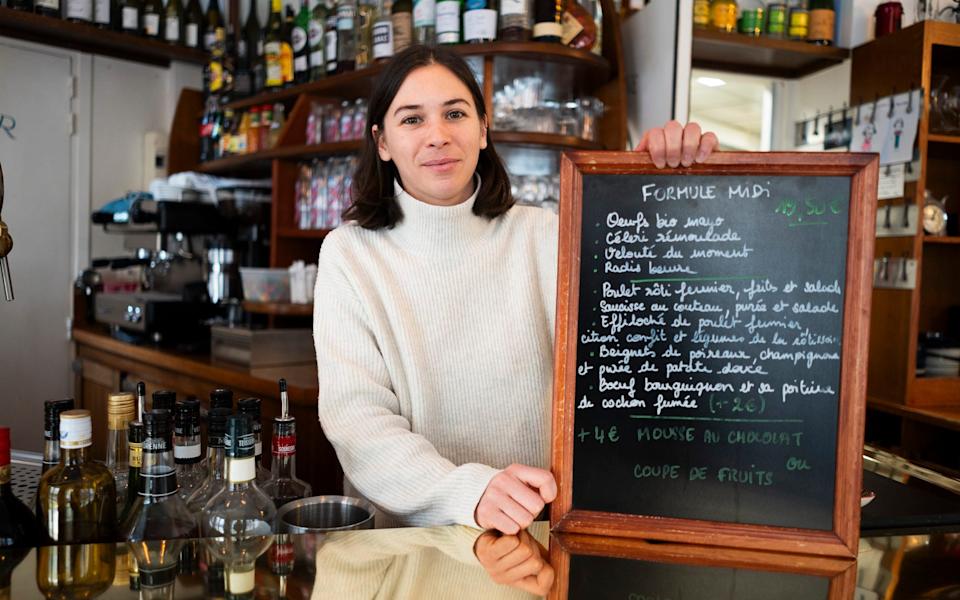
Candice Darcy opened Bistro Darcy offering comforting French favourites like boeuf bourguignon and snails – Bruno Fert for The Telegraph
However, it’s not all doom and gloom; while the number of restaurants closing down in France has reached record levels, the overall number of eateries actually increased by three per cent last year, even if profits had decreased slightly, according to France Service Vision.
Among these in Paris is Bistro Darcy, which opened 10 months ago, offering comforting French favourites like boeuf bourguignon, snails and saucisse au couteau with mashed potato. “They’re all cooked according to my husband’s grandmother’s recipes,” said Candice Darcy, 32, who owns the eatery with husband Pierre-Antoine.
“Of course we’d like more customers but we’re doing just fine. Discerning Parisians know when something’s frozen or good and fresh.”
And while uninspired mid-range restaurants may be suffering, a plethora of inventive, dynamic and cheaper restaurants are thriving under the banner of bistronomie.
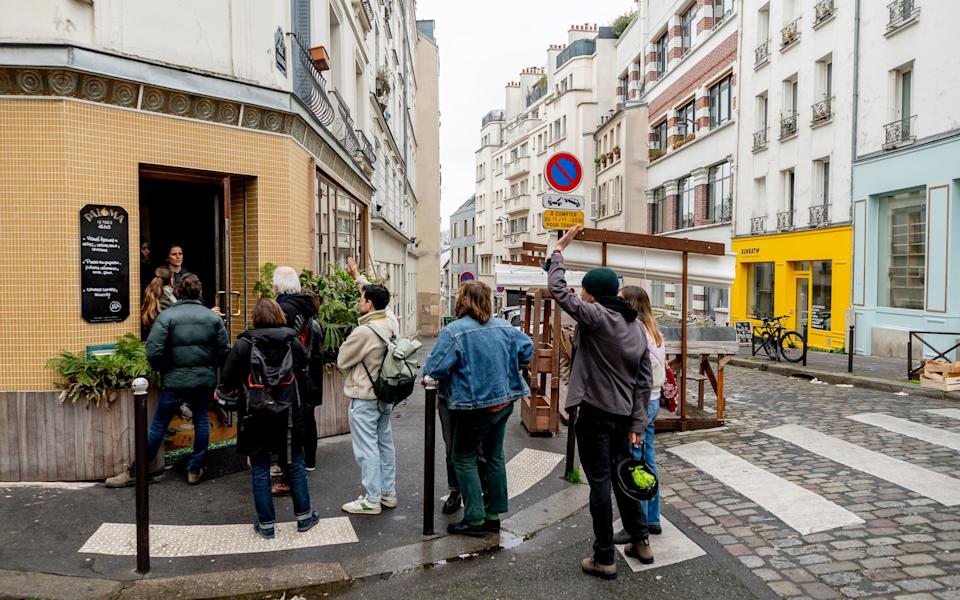
Every day, a queue forms outside Paloma’s restaurant
Among them is Paloma in the 20th arrondissement, where a queue of mostly trendy young foodies were queuing outside for the right to taste its fixed lunch menu.
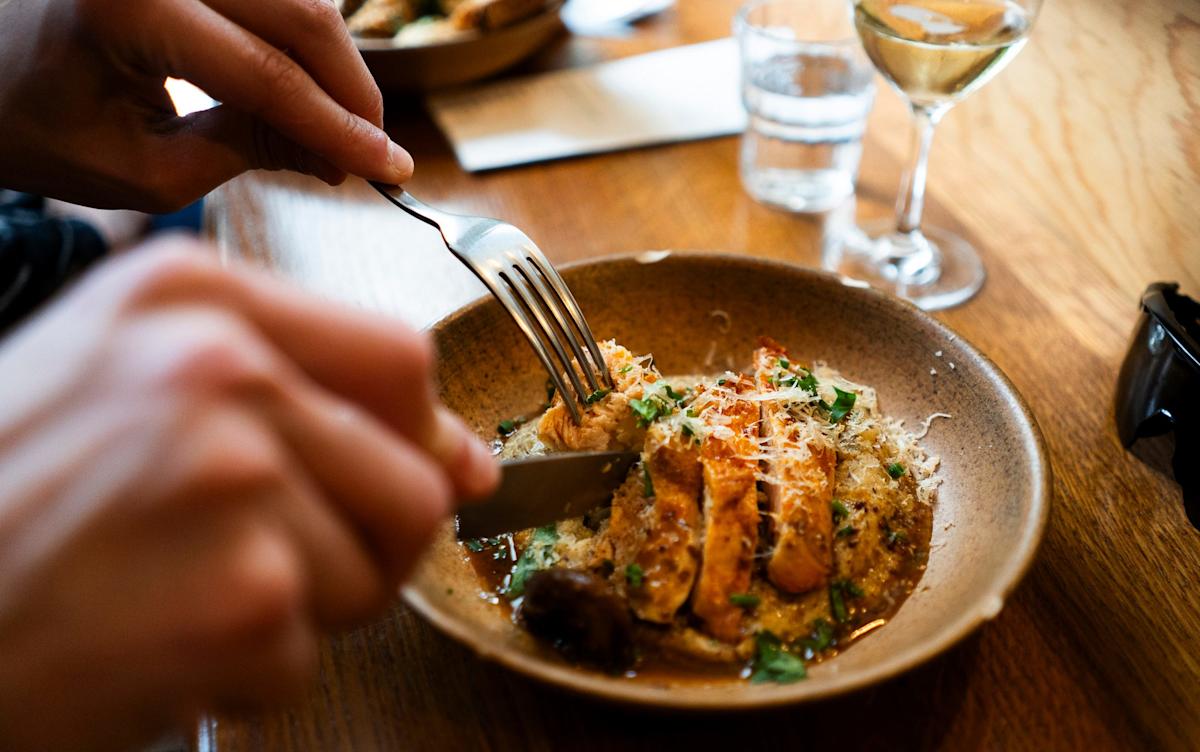
For a mere €16, they were served spinach and nettle velouté followed by paprika chicken and creamy polenta with cauliflower and a dessert of churros with cinnamon and chantilly. The wine was organic natural fare.
In the queue, Manon Jochyms, 32, a digital marketing manager said: “It’s true there are less people in restaurants but if you offer really inventive dishes with fresh produce at €16 like here, people come.” Many brasseries offered only one dish at that price or more.
Co-owner Olivia Brunet, 36, said the restaurant was a labour of love for her and partner and chef Marie-Anna Delgado, 37. “We don’t earn much and work 80 hours a week but it’s our baby. We care about every dish,” she said, adding that the menu changes every day and is published on Instagram – a key marketing tool.
“There are really, really good cooks around in Paris. There are really great restaurants to go to that are affordable. And so why would you wanna go eat, like, a frozen piece of salmon?”
Broaden your horizons with award-winning British journalism. Try The Telegraph free for 1 month with unlimited access to our award-winning website, exclusive app, money-saving offers and more.