
Been meaning to make this post for a while and finally found the opportunity to do so. Did a research paper on various additives that can increase shelf life and desirablility of baked good a while back and wanted to share my findings with the community 🫶🏾.
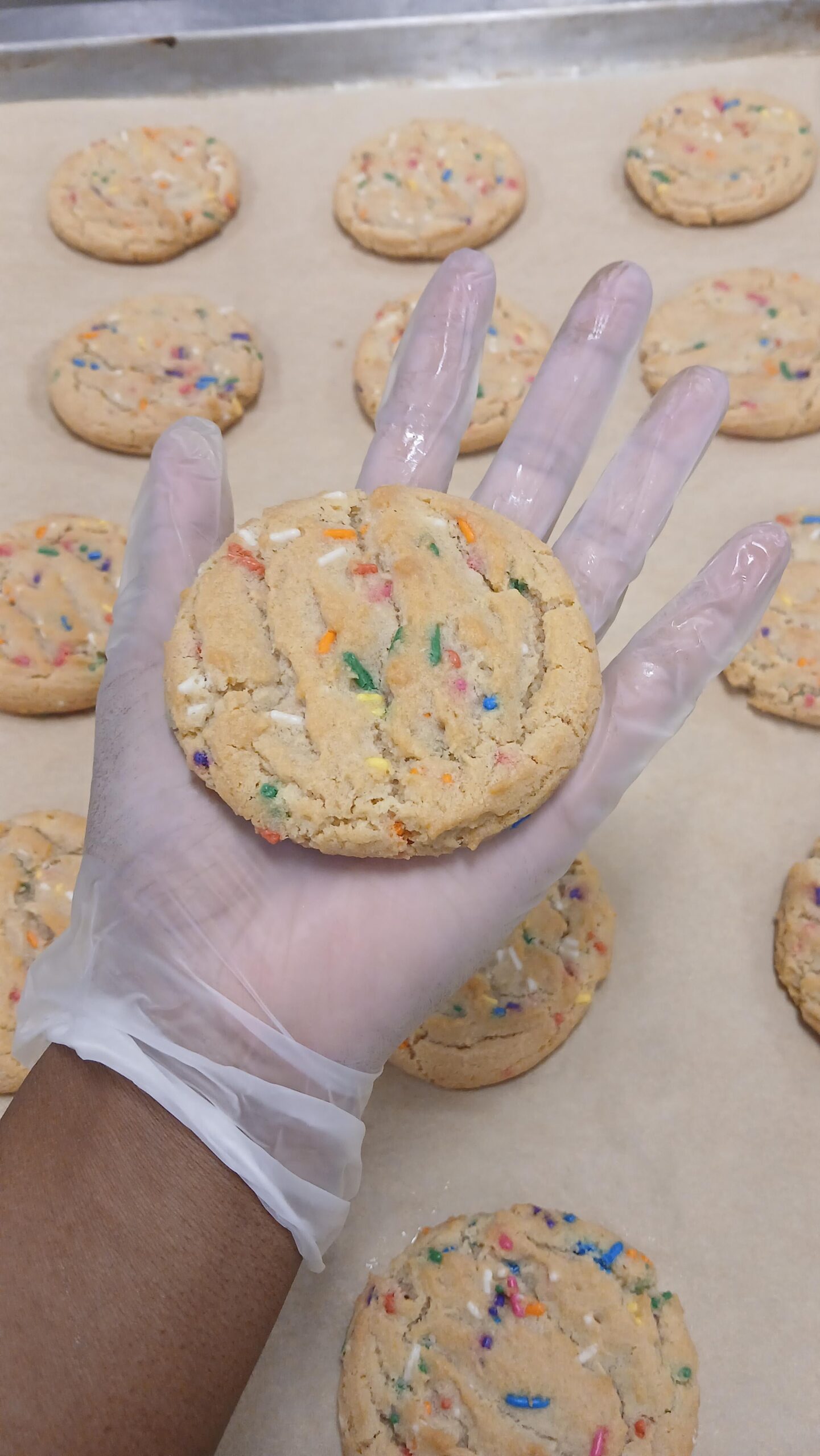
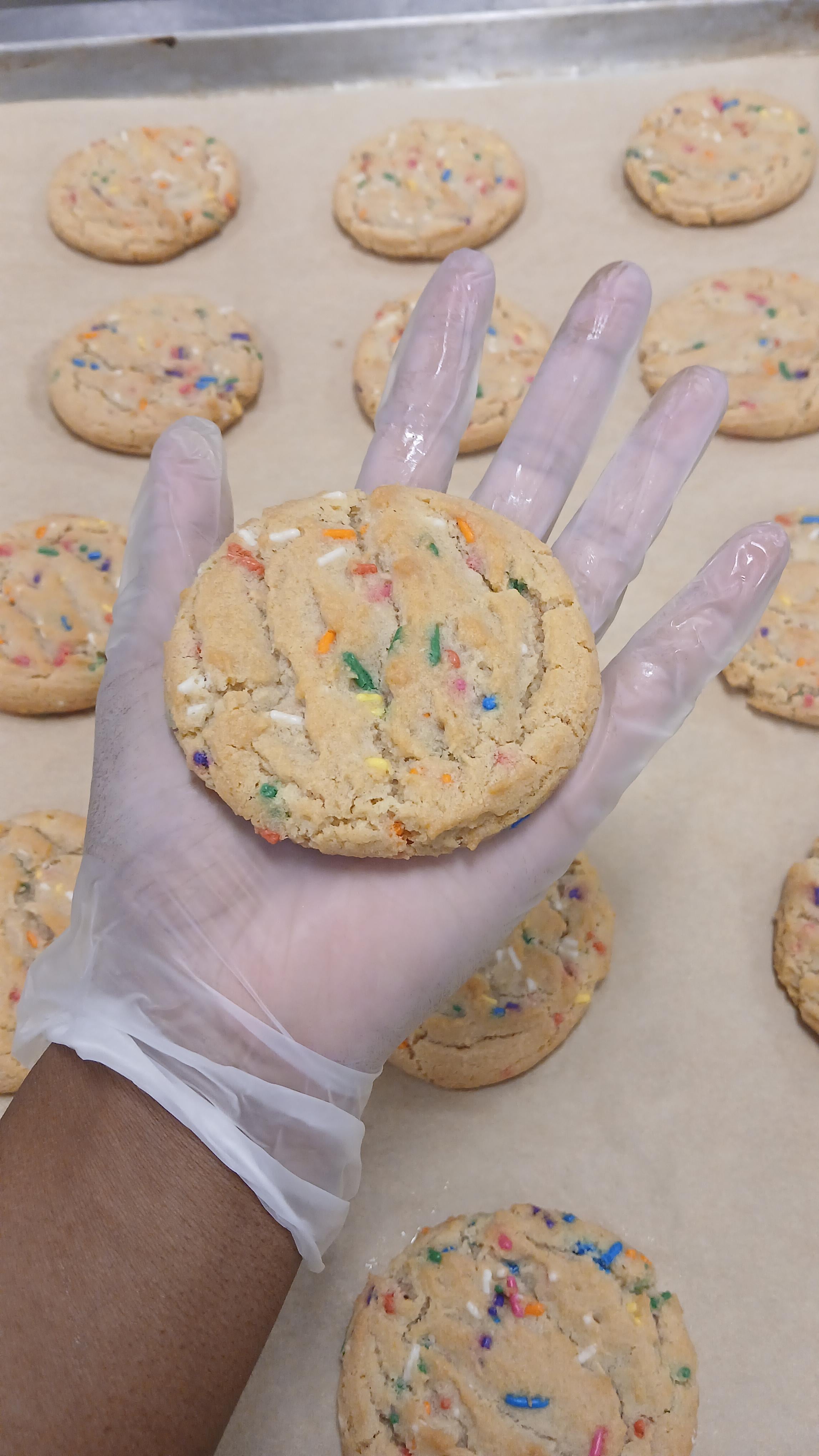
Okay so pictured here I have my sprinkle sugar cookies and the magic ingredient (aside from milk powder) is instant clear jel. It had one ingredient, modified corn starch, which is literally just regular cornstarch on crack. I know it might sound a little scary/dubious but modified cornstarch is literally just regular cornstarch that's been swollen with water then dried back out. This breaks down the starch, giving it the ability to retain more water than normal, resulting in cookies that are chewier, thicker, and retain more moisture.
In my experience, cookies made with clear jel last 3-4 days longer than cookies without. The thickening power of this stuff is no joke, so if you do use it make sure you reduce the amount of flour in the recipe down by one measurement (so if your recipe says 1 1/2 cup flour go down to 1 1/3. 1 1/3 becomes 1 1/4 and so on). Trust me, if you don't reduce your flour you'll end up with a pocky puck!
As you can tell by the pic, i'm on mobile at work right now. I'll link my sources and where you can buy clear jel and stuff on pc once i get home. Happy baking!
by EllorenMellowren
15 Comments
Oh this looks really good! Is there any impact on the flavor that you notice?
A bakers trick is to add a small amount of regular cornstarch to a cookie recipe, which breaks gluten chains and yields a softer crumb. Does the modified food starch maintain this effect, or is it’s benefit solely the increased moisture retained over time?
Got a recipe for those cookies?
Something about that glove and cookie makes me say no thank you
What does milk powder in a cookie recipe help achieve?
Thanks for sharing, this is so smart!
As a Canadian “pocky puck” is so funny to me 🤣 they mean hockey pucks! 🏒
Can you make the clear gel with just cornstarch or any other starches like arrow root or tapioca?
A lady friend of mine made me some chocolate chip cookies years ago. I left them on the counter, and they stayed soft for like 5 days! Mine would get hard after a day or so. So I asked her for her secret and the recipe. She gave me the recipe, and her secret was instant vanilla pudding in the cookie dough! I’ve made my cookies like this ever since. If you want flavored. Try banana pudding chocolate chip. Or butterscotch chocolate chip. Or if you want double chocolate chip cookies. Try chocolate pudding!
I add a pkg of instant vanilla pudding powder to my cookie dough. They stay soft and perfect every time.
Modified corn starch is in instant pudding. Several bakers recommend adding it to dry ingredients to add moisture. I’ll try the clear gel next.
I don’t think this strategy is for me, but I’m glad you’ve found success. It’s an interesting solution.
Not sure what the difference between that and glucose syrup is. But glucose syrup is a pretty good ingredient for the sort of bakery style cookies
Things I have learned: Clear Jel is not available here in France (mostly). Clear Jel is a product made from a type of cornstarch called “[waxy maize](https://en.wikipedia.org/wiki/Waxy_corn)”. This stuff is available in bulk for body builders and costs a fraction of what you will pay for a jar of Clear Jel.
https://www.amazon.fr/dp/B0758BWHK9
Thank you for this tip!
Sources
[A patent that explains how modified starch increases shelf life](https://patents.google.com/patent/US20050191387A1/en).
[Article that briefly explains the absorption difference between regular and damaged starch](https://www.sciencedirect.com/science/article/pii/S0260877412005729#:~:text). Might be paywalled so here’s the quote.
>”Damage facilitates swelling of starch granules, due to destruction of the forces which prevent granules from swelling in water ([Tester, 1997](https://www.sciencedirect.com/science/article/pii/S0260877412005729#b0270)). Therefore, damaged starch has the ability to absorb more water than native granules, native wheat starch can absorb between 39% and 87% its weight in water, while damaged starch between 200% and 430% ([Berton et al., 2002](https://www.sciencedirect.com/science/article/pii/S0260877412005729#b0035)).”
Everything else I’ve put in the post and comments is just stuff I figured out with months of trial and error :p