
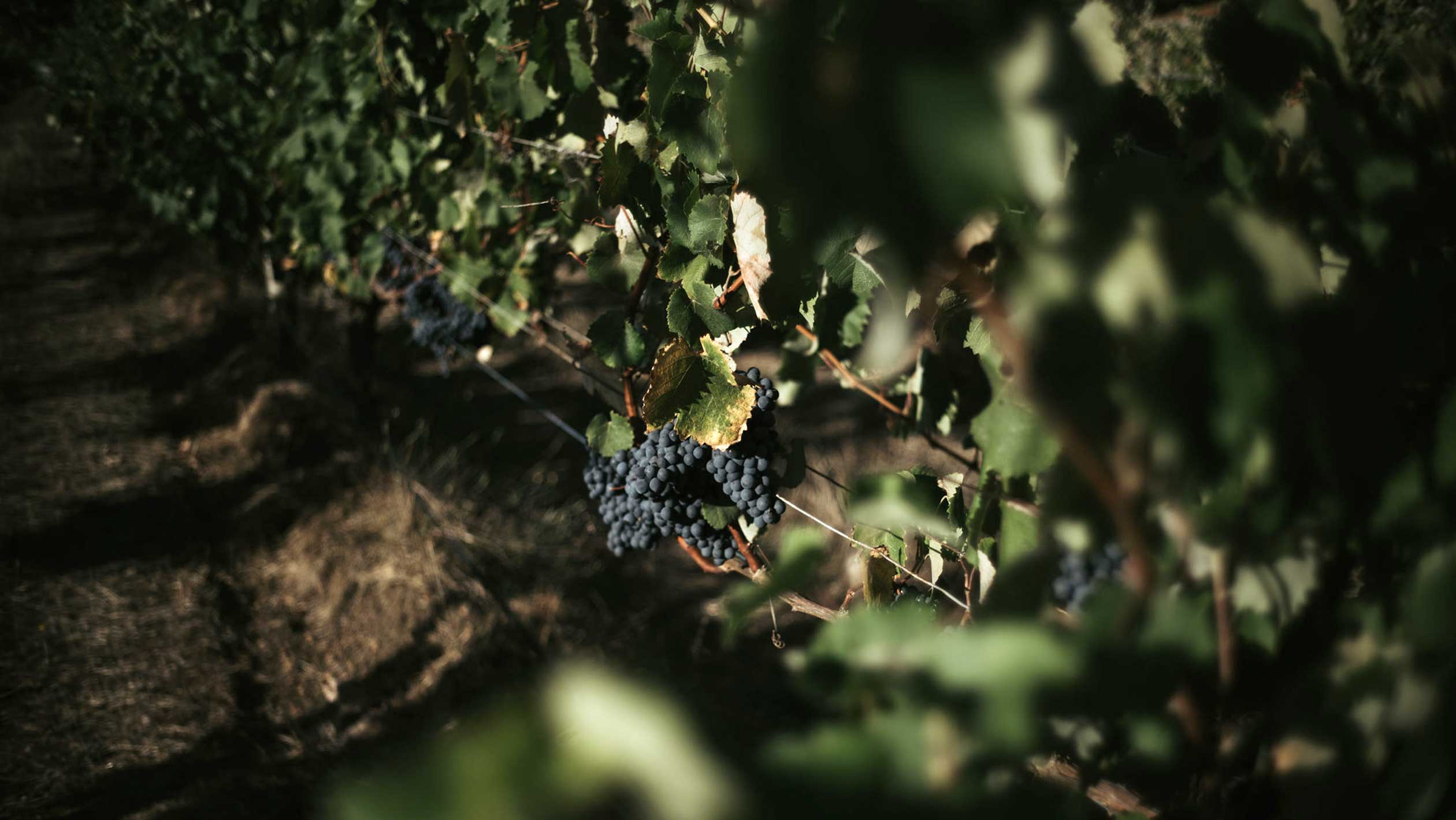
There are few grape varieties as closely linked to a specific style of wine as Shiraz. For many, the only thing that separates Shiraz, as it’s dubbed in Australia, from Syrah, as it’s known in France, the U.S., and beyond, is style. The archetype of Australian Shiraz is full-bodied with jammy fruit flavors and high alcohol, while Syrah—the same exact grape—evokes a sense of nuance, balance, and freshness.
Yet Shiraz—or Syrah—grown in Australia is not inherently ripe, jammy, or high in alcohol. “Australia has been making diverse, interesting, balanced Shiraz and Syrah from across the country for decades,” says Jane Lopes, the cofounder of Legend Imports, which specializes in Australian wine.
Part of the disconnect may lie in the way the category is commonly presented in the U.S. “I don’t like the term Australian Shiraz because we would never say, ‘what does French Syrah taste like?’ Or, ‘what does American Syrah taste like?’” says Aaron Meeker, the national sales manager for Vine Street Imports in New Jersey. “There needs to be more discussion about what do [wines from specific] states taste like, and what do regions taste like within those states?”

Don’t miss the latest drinks industry news and insights. Sign up for our award-winning newsletters and get insider intel, resources, and trends delivered to your inbox every week.
Indeed, there can be no single style of Australian Shiraz in a country with such a large and diverse winegrowing culture as Australia. “Australia has over 65 different growing regions and they all make Syrah/Shiraz,” confirms Lopes. “So, there is just a huge diversity on the market.”
But the dynamic nature of this category also makes it difficult to understand, especially for American consumers and trade professionals who often have little exposure to the diversity of styles available, and less familiarity with Australia’s many wine regions. After a deep dive into the category, one thing is clear: The monolith of Australian Shiraz is a thing of the past—and the U.S. market has a lot of catching up to do to reflect that reality.
Boom and Bust for Shiraz in the U.S.
While the category’s nuances may be elusive, an image of Australian Shiraz is alive and well in the U.S. market, and it stems all the way back to the 1990s. “Australian Shiraz had its heyday in the U.S. in the late ’90s and early 2000s, when Robert Parker scores were paramount and Yellow Tail came on the scene,” says Lopes.
Australia had all the elements needed to produce the international style of red wine that was in demand at that time: warm, sunny wine regions that produced healthy, ripe grapes with ease; a well-established red variety (some plantings of Shiraz date back to the 1800s) with a penchant for fruity, full-bodied styles; and a fun, easy-to-understand marketing approach that featured cute Australian critters.
The wines were highly popular in the U.S., but by the mid-2000s, demand started to wane as Shiraz became overly big and alcoholic, chasing higher and higher scores. Then, global events caused U.S. imports of those wines to take a hit.
 Jane Lopes, the cofounder of Legend Imports, says U.S. perceptions of Australian wine changed with the recession. Photo by Urban Bay Photo.
“If you look at the Australian-focused importers [that existed] prior to the recession in 2008, a lot of them went out of business or diversified away from Australia,” says Meeker. Lopes echoes this sentiment. “Due to a number of factors—the global financial crisis being primary among them, and the resulting lack of availability of quality Australian wine in the U.S.—Australian wine fell out of favor in the U.S.”
As a result, the story of Shiraz—and Australian wine more generally—was put on pause. “You had a pretty long period of time where there were no new ideas of Australian wine coming into the U.S. market,” says Meeker. “All this great Shiraz was being made in Australia and there were no storytellers [here].”
From Shiraz to Syrah—and Everything in Between
While the image of Shiraz was on pause in the U.S., its evolution was accelerating back in Australia. By the mid-2000s, the dominance of jammy, high-alcohol Shiraz began to slip. “It took a few maverick, punk rock winemakers to change things,” says Meeker.
A good example of this shift is the late Taras Ochota, who started Ochota Barrels in 2008. “He worked for big wineries, like huge co-op farms,” says Meeker. “He made those [big] styles of wines, but then he started his own brand with his wife—and it was the antithesis of all those wines.” Fresh, adventurous, and energetic are all words that have been used to describe Ochota’s wines—not descriptors typically used to describe Australian Shiraz in the U.S.
“There was a dominant style [of Shiraz] in the 1990s, or at least a more famous style, and that still exists,” says David LeMire, MW, the head of sales and marketing and the joint CEO of Shaw + Smith in Adelaide Hills. That well-known style was “rich, ripe, and intense. Now, though, that is one of a number of different prominent styles, and in a lot of cases that is because producers are leaning into their regional characters and showcasing them.”
One example comes from Australia’s coolest region, Tasmania. “We first planted Syrah in 2000,” says Matt Pooley, a second-generation family member and the brand ambassador and export manager for Pooley Wines. While it took years of trial and error to learn how to best grow Shiraz in Tasmania’s cool climate, Pooley was ultimately successful. “We just don’t have those heat degree days that they’re getting in South Australia, so Tasmanian Syrah tends to have more of the peppery, herbaceous sort of characters.”
While both big, warm-climate styles and leaner, cool-climate styles of Shiraz are well represented in Australia, some winemakers have found a middle ground. Meeker points to Mac Forbes in Yarra Valley as an example. “His [wines], in the mid-to-late 2000s, were sometimes 10 or 11% ABV,” says Meeker. “It was a response to how big some of those wines were in the mid-2000s. Now, the wines are between 12.3 and 13.5% alcohol. I think Shiraz has done the same thing. You had that rebellious nature of [asking] ‘What does Shiraz look like at 12% ABV?’”
Today, the stylistic variations of Shiraz are endless. “You’ll truly find every style of the grape being grown across the country,” says Lopes. “It’s pretty cool—how often do you find a country that plants a grape in all of its regions, where you can really map how climate and terroir impact it?
What’s in a Name?
The variation in Shiraz is certainly cool, if a little hard to keep track of. To complicate things further, the name of the grape used—Shiraz versus Syrah—now varies widely across Australia, as does the reason for selecting one name over another.
A primary reason for choosing a specific name is perhaps the most obvious one—style. Many Australian producers making a Rhône-style wine use the French spelling to communicate what’s in the bottle to the end consumer. “It is now quite common to label a wine Syrah, especially for wines from cooler climates,” says LeMire.
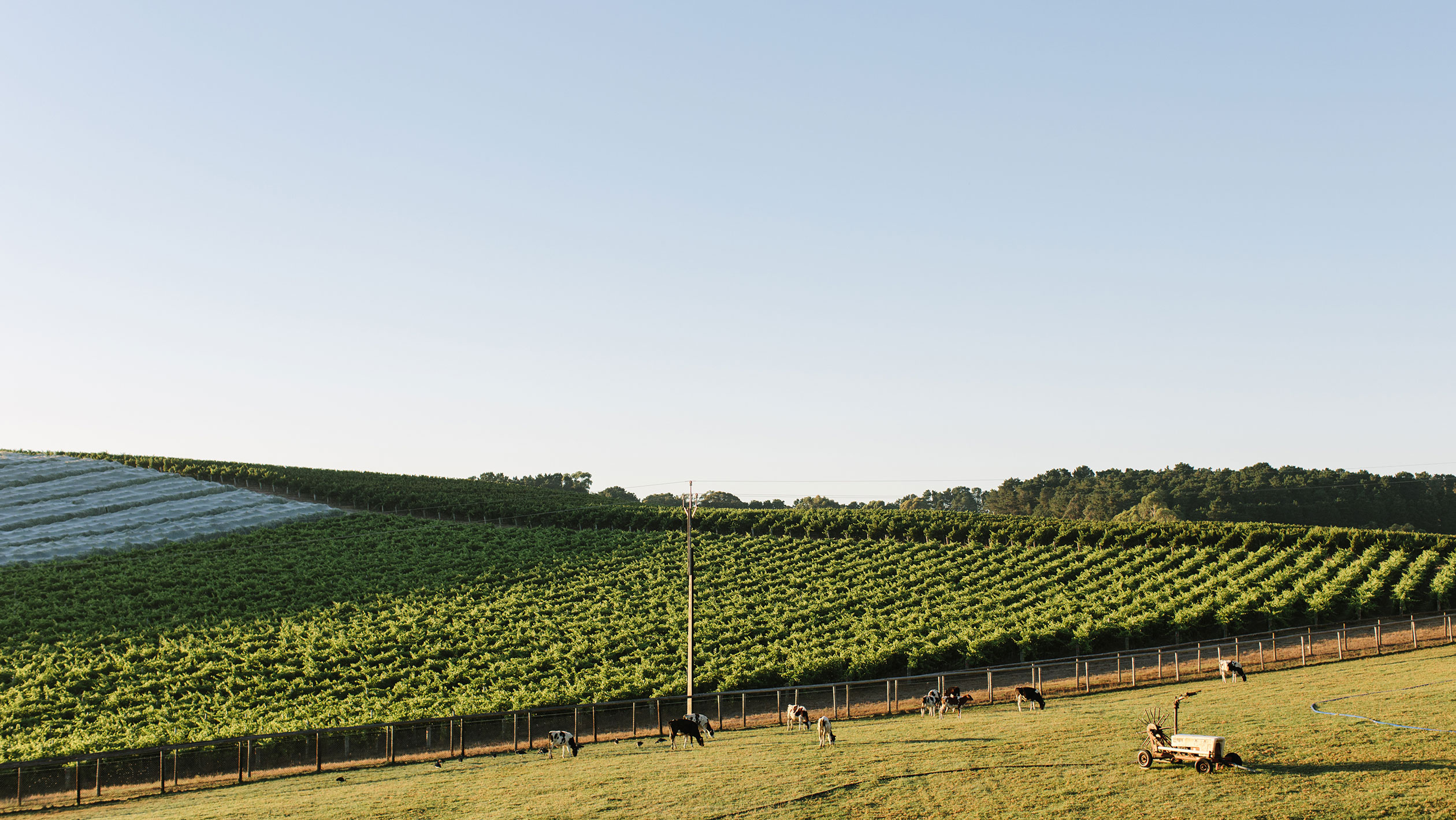 Shaw + Smith’s Shiraz defies common expectations of the style. Photo courtesy of Shaw + Smith.
In Tasmania, Syrah is commonly seen on labels, including on Pooley’s wines. “I feel it’s the way in which we can distinguish ourselves from mainland Shiraz,” says Pooley.
However, LeMire adds, “There is still some grey area, a bit like with [Pinot] Gris and Grigio—we know what the producer is indicating, but sometimes one producer’s Shiraz is another’s Syrah—so it can be confusing for consumers.”
Other times, the name on the label is not meant to suggest a particular style. For example, Shaw + Smith’s Shiraz, which LeMire describes as “perfumed, medium-bodied, with some savory spice and freshness that reflects our cool, elevated sites,” does not use the cool-climate-indicating Syrah.
“I completely understand why some people label their wines Syrah,” says LeMire. “However, Shiraz is such a uniquely Australian name, and I think it can be used for all sorts of different styles of the variety. So, we don’t need to cede the name to one style in particular.”
Still others use the two names as an indication of different quality levels. “[Syrah] has become quite common and well understood at premium price points, but less common at cheaper price points for larger volume markets,” says LeMire.
This is the approach that winemaker Jacopo Dalli Cani takes at McHenry Hohnen in Margaret River. “We make both Syrah and Shiraz,” he says. “[The Syrah] is fermented with some whole clusters and a portion of Viognier to elevate the spice and floral characters of the wines. The Shiraz we produce is a bit more juicy, fruit-driven, and less savory.”
The choice on the label may also boil down to marketing and sales. In Australia, for example, Shiraz is the better-known name, and the far more popular choice. “[Producers] call it Shiraz because a lot more people know what it is,” says Pooley, speaking about the Australian market. In the U.S., however, “by using the term Syrah, you’re definitely going to get more people buying it,” says Amy Mundwiler, the national wine and beverage director for Maple Hospitality Group in Chicago, suggesting that the French version resonates more with U.S. consumers and trade professionals.
More Hurdles for Shiraz in the U.S.
In 2018, a decade after the financial crisis, Gordon Little, the cofounder of Little Peacock Imports, which also specializes in Australian wine, made a case for selling quality Australian wine in the U.S. He articulated many of the reasons—from disinterest to pricing misconceptions—why Australian wines were struggling to sell in the U.S. market. Unfortunately, it seems that limited progress has been made in the past seven years.
“If you go to your average U.S. restaurant, people don’t even pour [Shiraz] anymore,” says Meeker. “So many wine lists are identical. If the industry would give Australian Shiraz a chance, you can find homes for those wines that will make the staff happy, the bottom line happy, and the consumer happy. It’s not the wine’s fault—it’s the entire path along the way to the end consumer.”
Indeed, the image of Shiraz among U.S. trade professionals is still a major hurdle. “In the U.S., as a young somm, you have these ideas about Shiraz,” says Mundwiler. “You think of the days when it was everywhere, all the grocery stores, and they were all value-priced, big, jammy wines.”
Isabel Kardon, a sommelier at The Modern in New York City, shares this sentiment. “I remember being taught that the entirety of Australia was a hot place and that all Shiraz was jammy,” she says. “In these entry-level [wine] courses, you need to simplify, but this oversimplification of Australia has done a disservice to the nuances of the country.”
 Isabel Kardon, a sommelier at The Modern, says her initial wine education oversimplified Shiraz. Photo by Nikhil Chitre.
“The problem is,” says Mundwiler, “I don’t think the average consumer can get away from the mindset of cheap, jammy Shiraz. So it’s kind of a fight, or a passion project [when selling]—like ‘no, please, [Shiraz] is not the same, you’re going to love it!’”
Off-premise sales can be just as difficult. “When you go to buy wine in an Australian section, there’s no consistency to it across America,” says Little. “With most [stores], they’re going for brand recognition and style, rather than trying to build depth.”
A Bright Spot for Classic Australian Shiraz
Nevertheless, Lopes still feels that Shiraz is a driver for Australian wine in the U.S. “It is at least a recognizable category of Australian wine,” says Lopes. “A retailer or restaurant might feel like they need to have an Aussie Shiraz in their program, in a way they wouldn’t feel for, say, Australian Chardonnay or Cabernet.” But this also reinforces the singular image of Shiraz that stubbornly persists in the U.S., ultimately creating another problem.
For better or worse, the popularity and recognizability of those early wines helped cement Australian Shiraz as a singular brand—one that many U.S. consumers are still aware of, and still seek out.
“If you need to fill a spot in an Australian section, for the most part people are looking for a Shiraz that is more on the full-bodied side,” says Little. “They don’t want a lean and mean one.”
While lighter, lower-alcohol wine styles seem to dominate the market today, big red wines, like classic Barossa Shiraz, haven’t gone anywhere. In fact, these styles remain top sellers for many wine producers and distributors. At Vine Street Imports, for example, Dandelion Vineyards’ fruity, 14.5% ABV Shiraz is their top-selling Australian wine. “If the wine’s delicious, it’s delicious,” says Meeker. “And Shiraz can be remarkable at 14.5 to 15% ABV.”
LeMire agrees. “The best of the rich, ripe, intense styles from the Barossa in particular are still important and impressive,” he says. “There’s evolution, but the great sites still come through. Producers like Henschke, Standish, Sami-Odi, and Hentley Farm are making Shiraz that can remind us of why Barossa Shiraz has timeless appeal.”
In the U.S., “People are definitely interested in drinking high tannin, high alcohol, rich, round, ripe styles of red wine,” says Kardon. “Napa Cabernets under $200? We can’t keep them stocked. Big reds never went out of style, so I think it is up to the retailer or the educator to convince people that Australian Shiraz is capable of high quality, even at lower price points.”
Stereotypical Australian Shiraz, with all its bold, jammy flavors, certainly has a place in the U.S. market, but it’s far from the only style of Shiraz that should matter to U.S. consumers or wine professionals. The breadth of diversity makes the category incredibly exciting and full of discovery, which can make selling these wines all the more fun, even if it requires a bit more work to win over the end consumer.
“Changing perceptions among U.S. consumers is tough,” says Lopes. “It’ll be a very long time before the various styles of Shiraz/Syrah enter the collective consciousness, but in the meantime, great wine professionals across the country will continue to pick up the wines that they love and introduce them to their clientele.”

Dispatch
Sign up for our award-winning newsletter
Don’t miss the latest drinks industry news and insights—delivered to your inbox every week.
Caitlin A. Miller is a New York-based wine writer and a senior editor for SevenFifty Daily. Her work has appeared in Food & Wine, Vinous, and Christie’s International Real Estate Magazine. She holds the WSET Diploma in Wines, the WSET Level 2 Award in Spirits, and was the recipient of the 2020 Vinous Young Wine Writer Fellowship.