
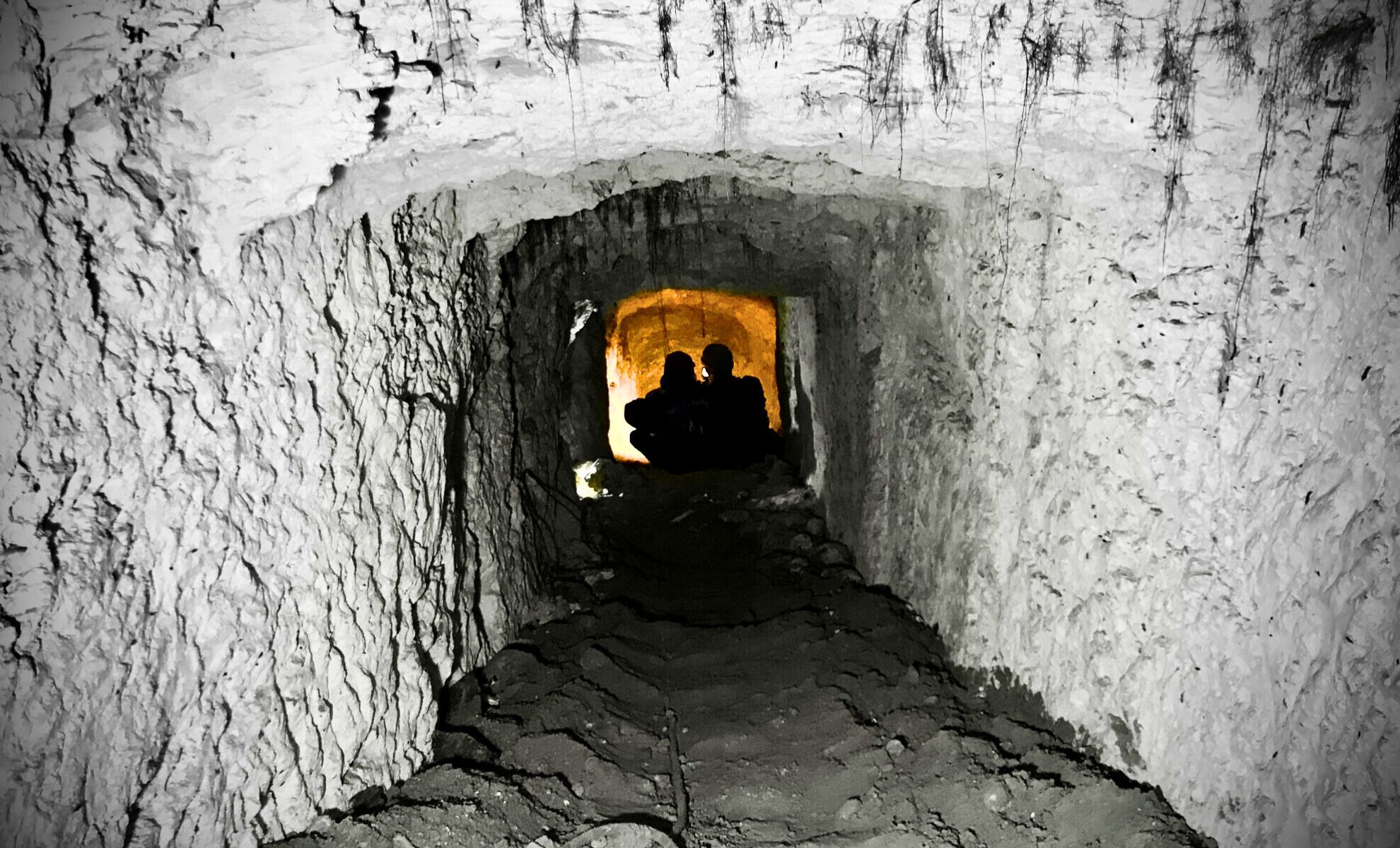
In a remarkable turn of events, a group of history enthusiasts has uncovered a German tunnel buried 30 meters underground in the forest of Oise. This unexpected find, in an area once part of the German front lines during World War I, has uncovered a treasure trove of historical artifacts. The tunnel, stretching 122 meters, holds invaluable relics that offer a unique window into the lives of soldiers during the conflict.
History Enthusiasts Uncover a Hidden Relic
The discovery was made in August 2021 by 17 members of the Association of German Undergrounds of Puisaleine and Surroundings (ASAPE 14-18). While exploring an old military site in the woods of Moulin-sous-Touvent, a village in the eastern part of the department, the group initially thought they had stumbled upon a badger or fox burrow.
However, upon closer inspection, they realized they had found the entrance to a tunnel used by German soldiers during World War I. Maximilian Hiebinger, president of ASAPE 14-18, shared his excitement:
“It’s such an intense feeling to be the first to return to these places 106 years later. You can smell the earth, the dampness, and sometimes the powder (…) we use a multi-gas detector to make sure there is enough oxygen concentration and no dangerous gases. Then we ventilate.”
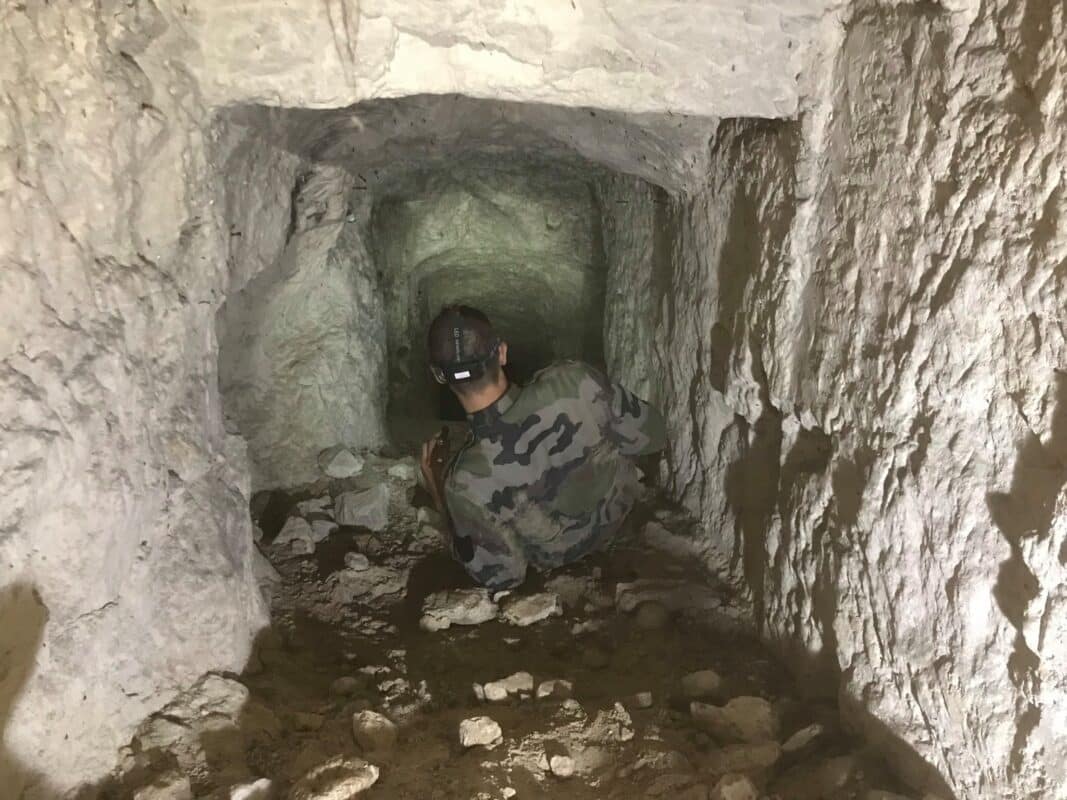 The first few metres of gallery G24.
A Thorough Exploration of the Tunnel
After obtaining the necessary permits, the group proceeded to clear the tunnel entrance, which had been concealed under a thick layer of barbed wire, buried 1.5 meters deep. The moment they uncovered the tunnel, their expectations were surpassed. Beneath the earth lay a 122-meter-long underground gallery.
The group, equipped with specialized safety measures, carefully ventured into the tunnel to explore further. Among the many relics found were engravings that bore the names of soldiers and military units, graffiti, shoes, as well as bottles of German wine and Alsatian sparkling wine.
In addition to these personal artifacts, the group discovered old munitions—typical of such explorations—highlighting the military nature of the site.
Preserving the Past for Future Generations
The tunnel, which dates back to 1916, has been named “G24” by the association. The items discovered have been offered to the town of Moulin-sous-Touvent for display until November 11, and the relics have been shared with archaeologists from the Direction Régionale des Affaires Culturelles (DRAC). The goal is to ensure that these objects are preserved and studied in their historical context.
Once the exploration is complete and the artifacts have been documented in 2D and 3D photographs, the tunnel will be sealed to protect it from further degradation and potential looting.
The ASAPE 14-18 group hopes to continue their explorations of similar tunnels in the area, with plans to cover 1,200 hectares of forest between Bailly and Autrêches, contingent upon obtaining permission from landowners.
This discovery not only sheds light on the history of World War I but also emphasizes the importance of preserving such sites for future generations to better understand the experiences of those who lived through this devastating conflict.