
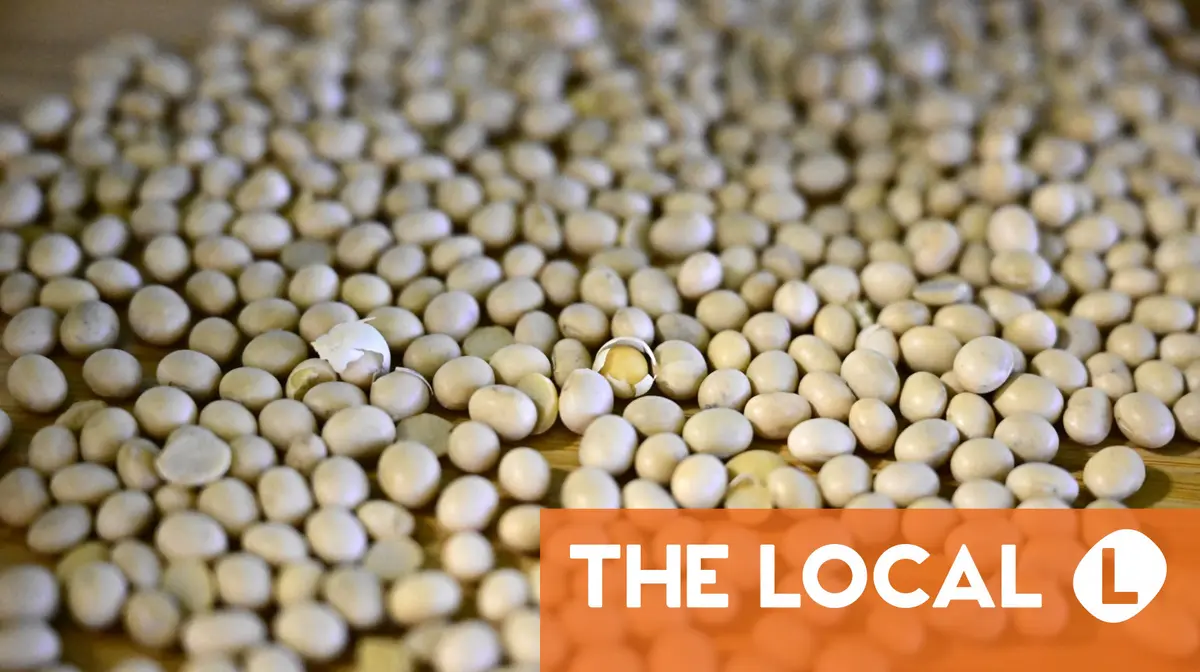
France’s national food safety body has recommended that soy products should not be served in workplace or school canteens.
The French national food safety agency, Agence nationale de sécurité sanitaire (ANSES), issued a recommendation on Monday that French canteens should remove soy-based products, due to health concerns.
The warning was issued for all age groups and for all ‘mass catering’ operations, such as cafeterias in daycares, primary and secondary schools, private companies, nursing homes hospitals and clinics.
This would cover foods such as soy-based types of veggie burgers, non-dairy alternatives milk and yogurts, and other snacks and foods high in soy – although it remains only advisory.
The agency advised that canteens instead diversify their plant-based offering to other alternatives such as chickpeas and lentils, to avoid heavy reliance on soy products.
ANSES says that its recommendation is to ‘avoid overconsumption’ of soy, and echoes advice given to the general public on the consumption of soy products.
The food safety body explained that soy-based foods contain high ‘isoflavone’ levels, which can mimic female hormones and are referred to as phytoestrogens. As ‘endocrine disrupters’, they have potentially harmful impacts on health at all age levels, when consumed at large volumes.
Eating large quantities of soy-based products can “disrupt hormonal function and cause adverse effects on the reproductive system”, the head of the Nutrition Risk Assessment Unit at ANSES told AFP.
In 2023, French health authorities issued a press release about the safety of consuming soy products. It noted that “occasional consumption of soy foods does not appear to pose a problem, with the exception of young children, pre-adolescents, and pregnant women.”
Advertisement
The food safety agency explained in their warning that the threshold for harmful effects starts once someone consumes more than 0.02mg of isoflavones per kg of their body weight per day. This level drops down to 0.01mg for pregnant women, women of childbearing age, and prepubescent children.
They noted that 76 percent of children aged three to five exceeded health risk thresholds, as well as 53 percent of girls aged 11 to 17 and 47 percent of adults aged 18 to 50.
The health risks of over-consumption of soy are a contested area – some clinical studies have disputed the impact of soy products and isoflavones on male reproductive health, and shown that they do not have ‘feminising’ impacts on men.
Advertisement
Studies have also established some positive health benefits for soy-based diets, including research by European health authorities, which showed lower risks of cardiovascular disease, stroke, and coronary heart disease.