
Preheat oven to 350°F. Butter 1 (12-inch-wide, 2-inch-tall) round cake pan; line bottom with parchment paper (see Note).
Sift together flour and baking powder into a large bowl. Set aside.
Beat egg whites and salt in a stand mixer fitted with a whisk attachment at medium until soft peaks form, 1 to 2 minutes. Transfer meringue to a medium bowl; set aside. Wipe mixer bowl clean.
Add castor sugar and butter to cleaned mixer bowl; beat with a stand mixer fitted with a paddle attachment on medium until creamy and fluffy, 3 to 4 minutes, stopping to scrape down sides as needed. Beat in vanilla, cinnamon, cloves, and the orange zest, about 10 seconds. Add egg yolks, one at time, beating until combined after each addition, about 30 seconds to 1 minute.
Stir baking soda into orange juice in a 2-cup measuring cup with a spout; whisk in milk and brandy until well combined.
With mixer on low, add flour mixture to butter mixture, alternating with orange juice mixture, ending with flour mixture and beating just until nearly combined, about 3 minutes. Fold in walnuts just until combined.
Gently fold meringue into batter in 3 additions.
Spread batter evenly in prepared baking pan. Insert 1 flouri into batter pan.
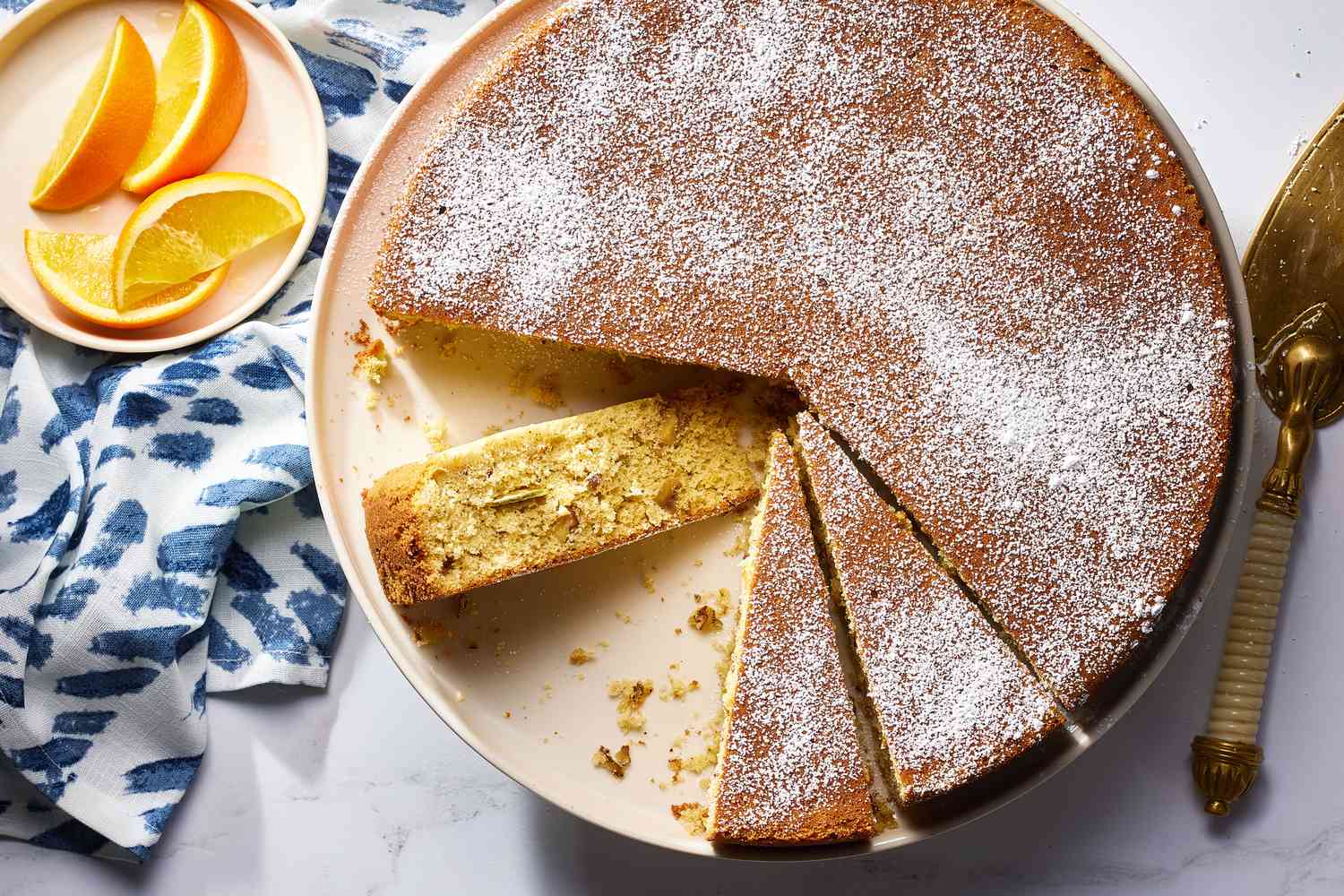
Bake the cake until a knife inserted into center comes out clean, 35 to 40 minutes. Let cake cool in pan on a wire rack for 15 minutes. Flip cake onto a wire rack. Remove and discard parchment paper. Allow cake to cool completely, about 2 hours. Trim cake flat using a serrated knife, if desired, and place cut side down on a serving platter. Dust generously with powdered sugar. If you wish to write the year or blessings on top of your vasilopita, you can use melted chocolate or icing.
About this recipe
Greek tradition says that the vasilopita cake should be cut by every family member immediately at the dawn of the new year in each household. According to Argiro Barbarigou of Papadakis restaurant in Athens, Greece, the vasilopita cake tradition is very old, originating in the ancient Greek festivals known as Kronia (Saturnalia in ancient Rome) with the Franks later adding a hidden coin, known as the “flouri,” inside the cake. The lucky one to find the coin achieves the title of “King of the Night,” with extra good fortune coming their way.
The ingredients of the cake offer rich flavors and distinctive aromas that symbolize the prosperity and abundance for the new year. Barbarigou says her family, on the island of Paros, has a special traditional recipe they make every year, adding “If you ask me, I will tell you that the family recipe for our vasilopita is the best tasting, most aromatic and fluffiest cake.” She shared a version with us.
Frequently Asked Questions
Where can you get the flouri coin to hide in the cake?
Purchase the flouri coin online through Etsy or Amazon.
What can be used in place of the brandy?
If you don’t have brandy on hand, rum, cognac, or even whiskey can be used in place of the brandy. If you’d like to skip alcohol altogether, simply replace the brandy with more orange juice.
Notes from the Food & Wine Test Kitchen
When folding the meringue into the cake batter, the first addition mostly helps to loosen and lighten the batter, so it’s ok to be slightly more aggressive when stirring it in. With the next couple additions, be more gentle and take care while folding into the batter. Stop immediately once everything is incorporated to retain a lighter texture.
This cake can also be baked in two (9-inch-wide, 2-inch-tall) round cake pans. Butter the pans, lining the bottoms with parchment paper. Prepare, bake, and finish the cake as directed.
Make ahead
Store the cake in an airtight container at room temperature for up to three days.