
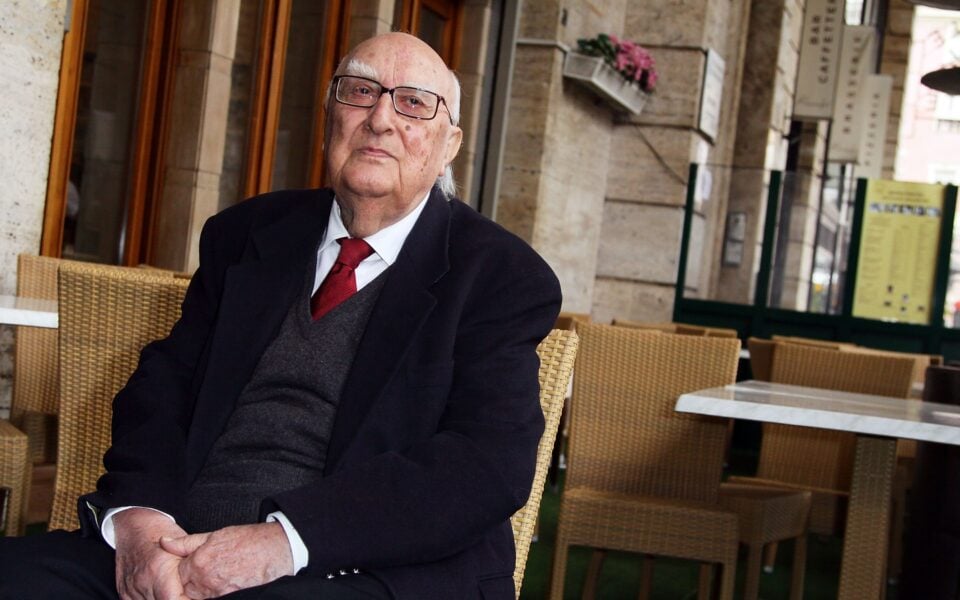
Writer Andrea Camilleri is seen in a 2019 file photo.
Pesto trapanese, pasta alla Norma, pasta ‘ncasciata, Sicilian cannoli, arancini: for fans of Andrea Camilleri, this is all a day in the life of his gourmand detective Salvo Montalbano – when he’s not hunting down mobsters and murderers at least.
The quirky sleuth’s love of his native Sicilian cuisine is one of the highlights of the 21st Thessaloniki International Book Fair, which opens on Thursday, with Italy as its guest of honor and a special tribute to Camilleri. Alongside his books, visitors will also get to taste some of the dishes featured in his stories, specially prepared by two Italian restaurants in Thessaloniki.
“We’ll be serving pasta alla Norma, Montalbano’s favorite dish from Catania, made with eggplant, tomatoes, and basil,” says Pasquale Lembo, chef and owner of Mare e Monti in the northern port city’s Panorama district. The dish is named after Bellini’s opera “Norma,” another Sicilian masterpiece.
“We’ll also serve pasta trapanese, a dish from Trapani with tomatoes, basil and almonds, which the inspector also enjoys. And maybe we’ll offer pasta ‘ncasciata – oven-baked and typically served on Sundays in Sicily, made with provolone and ricotta. It’s like Montalbano’s version of pastitsio,” adds the chef.
The idea for a Montalbano-themed fair was developed by the Hellenic-Italian Chamber of Commerce in Thessaloniki and the Book Fair, as part of the centenary celebration of Andrea Camilleri’s birth (1925–2019). In Camilleri’s Mediterranean noir universe, food plays a central role, and Montalbano often solves crimes over a good meal.
“Camilleri himself ate very little in his later years for health reasons, but he wrote about food often, just like his inspiration, Spanish author Manuel Vazquez Montalban,” explains Francesco Neri, director of the Italian Cultural Institute in Athens and curator of Italy’s program at the fair.
“We wanted to create a tribute not only to Camilleri’s books, but also to his cuisine,” says Neri. “This way, the exhibition reaches beyond its venue and connects with the city.”
“We Italians talk about everything at the table – with food and wine. So we thought, why not present Camilleri’s books in a way that lets us also taste them?” adds Lembo, who is also vice president of the Hellenic-Italian Chamber.