
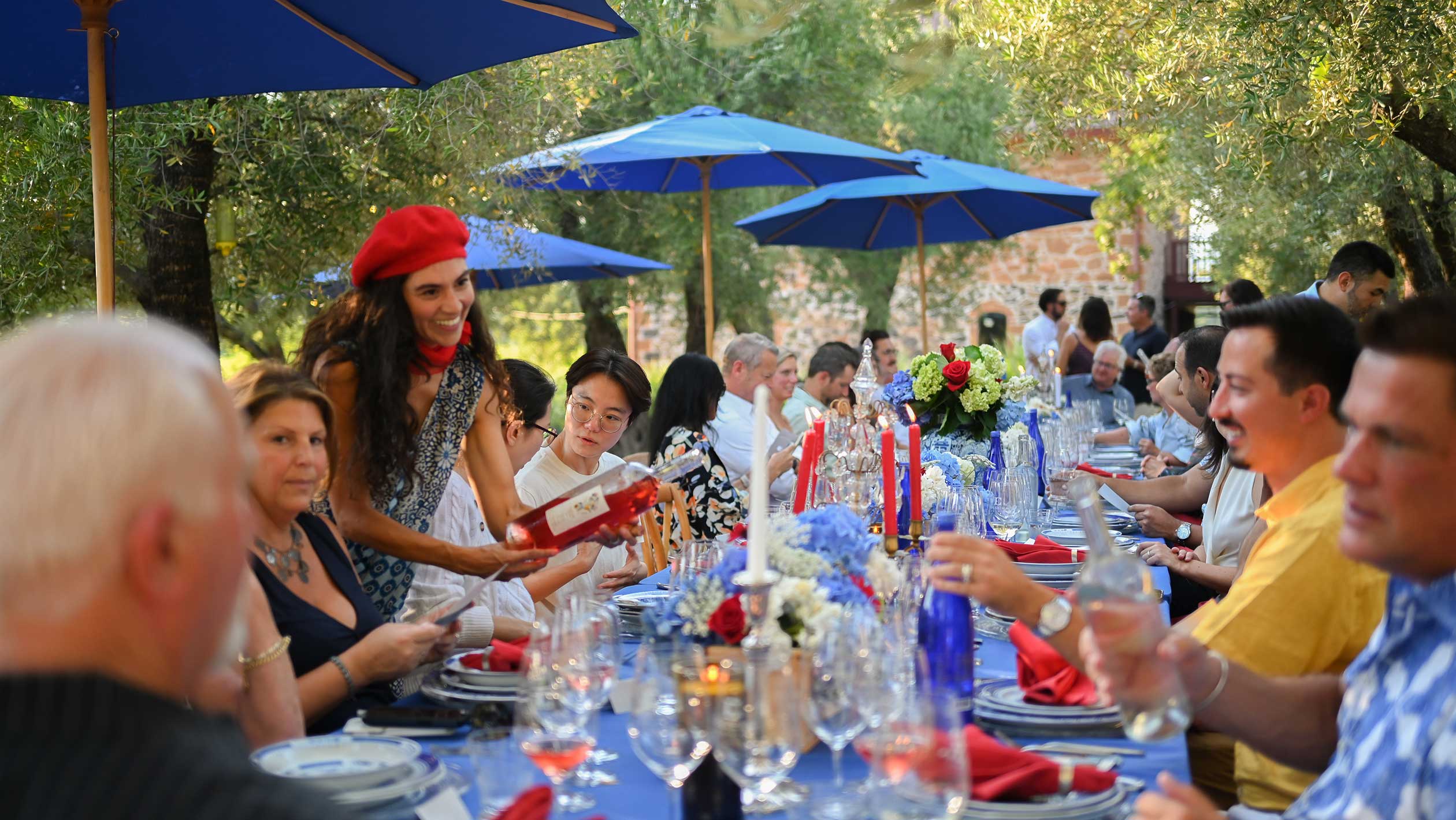
Warm weather typically marks the end of dormancy in wine country, for grapevines and tourism alike. Yet just in the last year, established wine producers, such as Silver Oak, Trinchero, Turley, and Duckhorn, have shuttered some of their tasting rooms while widespread layoffs have plagued other estates, including Jackson Family Wines.
According to data from BMO’s 2025 “Wine Market Report,” a staggering 56 percent of revenue for the majority of U.S. wineries comes from direct-to-consumer (DTC) sales. For premium producers, DTC sales often contribute 80 percent of revenue—which makes reclaiming visitation and direct access to customers paramount.
The struggle to attract visitors isn’t limited to a single region or particular price point, according to Silicon Valley Bank’s annual “State of the U.S. Wine Industry” report. Because the downturn involves both oversupply and shifting demographics, data suggests it will likely continue throughout 2025 and 2026 as supply shrinks to meet current demand and producers adapt to consumer preferences.
Don’t miss the latest drinks industry news and insights. Sign up for our award-winning newsletters and get insider intel, resources, and trends delivered to your inbox every week.
This complex scenario presents a significant challenge for producers, and DTC sales often contribute the highest margins to a winery’s bottom line, but without a steady stream of customers, tasting rooms can become an unsustainable expense.
“The tasting room is a huge expense,” says Sandra DeMaria, the director of sales and marketing at Ehlers Estate in Napa Valley, “but it’s also the best way for us to convert [drinkers into buyers].”
Accordingly, BMO data shows that DTC is still the top avenue that wineries plan to tap to increase revenue, especially with challenges in the wholesale market continuing amidst ongoing tariff uncertainty. SevenFifty Daily spoke to wineries across the country to find out what’s behind the drop in footfall and what can be done to remedy it.
Soaring Costs Present a Barrier
According to Silicon Valley Bank (SVB) data, the soaring costs of a visit to American wine country—tasting fees, transportation, lodging, and others—have likely contributed to declining visitation at domestic tasting rooms. Since 2012, the average tasting fee has risen 200 percent, with prices doubling since the COVID-19 pandemic as producers battled inflation and tariffs. The average tasting fee is now roughly $38, with reserve tastings reaching nearly $72.
In response, Napa Valley has offered incentives and campaigns designed to bring visitors back to wine country, including the Napa Neighbor program facilitated by the Napa Valley Vintners. This ongoing initiative allows participating wineries to offer an experience or discount exclusively for locals.
“Our neighbors from within a 100-mile radius really came in,” says DeMaria. “It was a great indicator for us of why people hadn’t been coming in—which was mainly the high cost of entry. Even though we didn’t see a huge increase in sales, we’ve seen referrals and subsequent purchases from those people, not to mention the value of all the data we collected.”
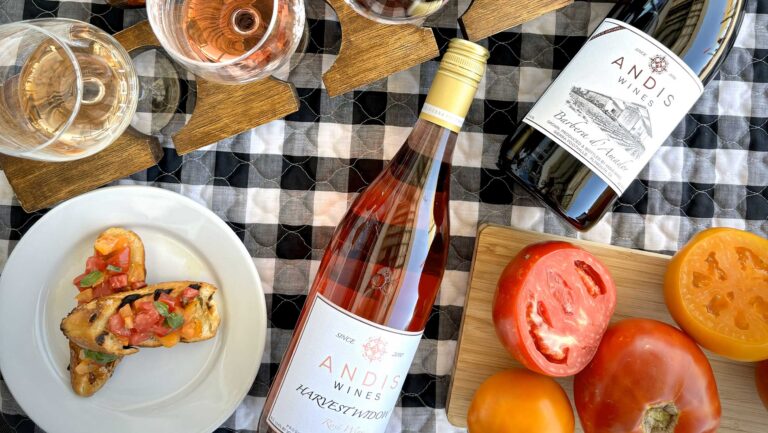 While visitation may be down, individual wineries report that the time spent by guests has increased. Photo courtesy of Andis Wines.
The average tasting fees in seven of nine regions surveyed by SVB decreased in 2024, indicating some wineries may be responding to the downturn by reducing their prices—though tasting fees only account for a small portion of the overall costs of visiting wineries.
“People still compare our prices to wines from older regions, forgetting we don’t have centuries of inherited infrastructure,” says Jules Bandy, the director of consumer sales and marketing at Willamette Valley’s Soter Vineyards, which saw an estimated four percent dip in traffic in 2024. “Farming responsibly in the U.S. is expensive. Labor, land, compliance, climate—all uphill.”
International travel into the U.S. also hasn’t rebounded since 2019; according to Visit Napa Valley, international visitation remains down more than 10 percent from pre-COVID levels. Data from Smith Travel Research likewise shows occupancy in the region was up 1.9 percent in 2024 compared to 2023, but visitation still lags behind 2019 numbers.
“We’re still only seeing 89 percent of the people we saw before the pandemic, but [hotel prices] are up 25 percent,” says Linsey Gallagher, the president and CEO of Visit Napa Valley, noting Napa’s trends parallel those across the Golden State.
“A trip to California could be as expensive as a trip to Europe,” says Jonathan Walters, the VP of vineyard and winery operations at Lake County’s Brassfield Estate Winery, where tasting fees are nearly 50 percent below the average at $20 and waived with a two-bottle purchase. Across Lake County, Walters estimates traffic remains down by 15 percent. “Overall, we’re seeing more adventure seekers coming to Lake County who might add on a single wine tasting, rather than coming here for wine and adding an adventure,” he adds.
Shifting Demographics Confront the Traditional Wine Club Model
Converting casual visitors into wine club members has traditionally been a key sales goal for wineries. Wine club and tasting room sales account for more than 50 percent of revenue at over half of all wineries, according to BMO data, with that number jumping to 70 percent at wineries producing between 1,000 and 5,000 cases annually. However, DTC shipment volumes have declined steadily since the pandemic peak of 8.5 million cases in 2021 to 6.4 million cases in 2024.
“Over the last seven years, the attrition in our club has been increasing,” says DeMaria, noting Ehlers Estate’s average membership lasts 62 months. “We’ve had increases in price so we naturally saw attrition then. One shift is that people now are not buying big amounts; they’re buying things that are ready to drink or they’ll buy a library wine, but skip stocking up their cellars.”
This decline has inspired some estates to reimagine their club models, a decision with potentially significant impacts considering that Gen Z made up a larger—though still small at five percent—portion of wine club revenue in 2024 than in previous years, according to the BMO report.
“We are trying to package our neighborhood as a place where people can spend an entire day,” says DeMaria. “We’ve done a couple of partnerships in tandem with [neighboring wineries and hotels like] AXR and Alila that have yielded a lot of results for us.”
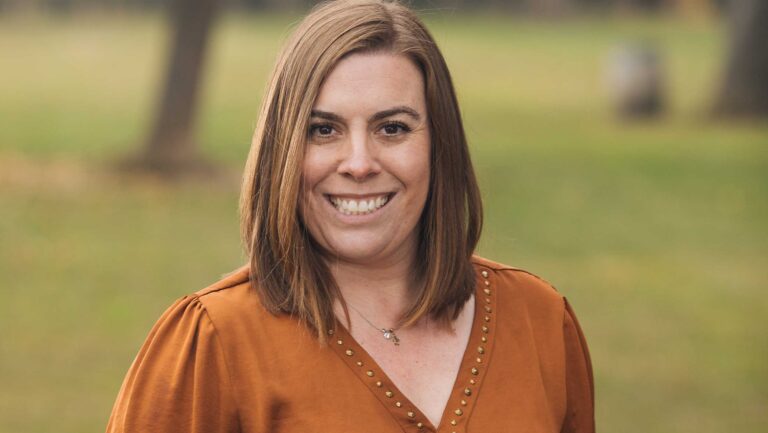 At Charles Krug, director of DTC operations Riana Mondavi (above) launched a new subscription wine service to draw in a broader demographic of consumer. Photo credit: Alexander Rubin.
At Napa Valley’s Charles Krug winery, director of DTC operations Riana Mondavi hopes to appeal to consumers raised on easy ecommerce shopping: “We have what I call ‘Amazon life’ now, where you click a single button and something shows up at your door. We are finding that people have a similar expectation with wine.”
This June, Charles Krug will launch its subscription service with wines as low as $23. “Our customers can tell us what they want, how much, and when instead of getting standard shipments,” says Mondavi. “I wouldn’t be surprised if we see traditional members switching over to the subscription.”
In addition to appealing to younger drinkers raised on tailored subscription services like clothing rentals and meal delivery kits, flexible wine clubs offer a chance for wineries to capitalize on the estimated 70 percent of millennial and Gen Z consumers who use subscription purchasing models, according to data from Minna Industries.
Experience-Hungry Consumers Challenge the Status Quo
“You’ve got to do more than invite people to drink wine in a beautiful setting,” says Shannon Landis, the events manager at Andis Wines in Amador County, where visitation has been down an estimated 10 percent in the past year. “Our business model involved being a tasting room, and now we and our neighbors are rebranding alternately as bistros, tour venues, live music venues, and event spaces.” [Editor’s note: The writer is affiliated with a winery and tasting room in Amador County.)
Despite the logistical and staffing challenges of adaptation, the reinvention of the Andis tasting room has been successful according to Landis: “Participants in our focused tastings spent more time with our staff and left with more wine.”
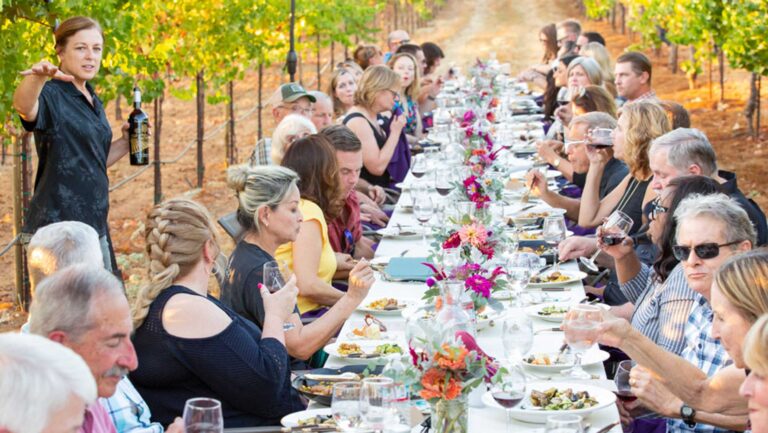 Wineries like Andis Wines in Amador County (pictured) are adapting their business model to offer visitors more than just a tasting room experience. Photo courtesy of Andis Wines.
The results in Amador County are also supported in Napa Valley, according to data from Visit Napa Valley, which shows that the time spent by guests at individual wineries has increased. “Our visitors are looking for more from each experience,” says Gallagher. “They don’t want to sip two Cabernets and leave, they want an Instagrammable experience on the patio or wine cave, or to meet the winemaker.”
The Walls Vineyards in Washington State have taken a novel approach to offering new experiences by looking for gaps in regional offerings and developing programming in response. Because many restaurants in Walla Walla are closed on Wednesdays, the estate is expanding its hours into the evening. “Being a spot where people can order wine by the glass with a delicious dinner allows us to serve our community in addition to serving visitors to Walla Walla,” says Danielle Knott, the DTC manager of The Walls Vineyards.
Inviting New Consumers Into Wine
While the majority of producers rely heavily on DTC sales, younger drinkers appear less loyal to specific drinks brands than previous generations and drink more widely, challenging producers to make a memorable impact and reach out to more communities in specific ways.
The Walls began offering appointments in Spanish in late 2024, in an effort to appeal to a long-sidelined group of consumers. “This is something that we are proud to offer and formally added to our experiences during Come Over October,” says Knott, noting traditional tastings and a translated cellar tour can be given in Spanish. The team has also added Spanish to its reservation platforms and website, with freshly launched offerings already gaining traction.
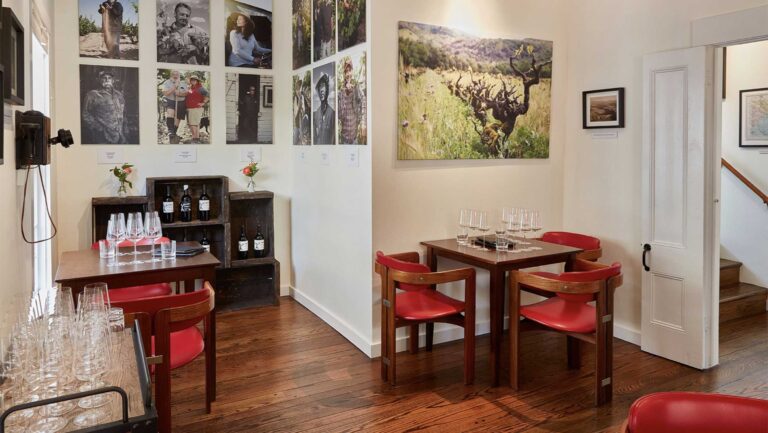 Sonoma’s Bedrock Wine Co. (pictured) values the power of industry referrals to bring in new custom. Photo courtesy of Bedrock Wine.
At Sonoma’s Bedrock Wine Co., tasting room manager Grant Wood has focused his efforts on developing a strong network of industry peers for referrals. “We’ve made it a priority to be as industry-friendly as possible,” he says. “Too many wineries view industry professionals as ‘non-buying’ visitors who take up space. To us, our peers in the industry are some of our biggest supporters and most valued guests. Half of the reservation notes we receive mention that a sommelier or wine shop owner from their hometown told them Bedrock was a must-visit destination. And our local industry friends send guests our way all the time.”
Wood credits Bedrock’s success—a sales increase of seven percent in 2024 despite a 14 percent decline in visitation during the same period—to taking advantage of those moments with genuine hospitality. “Making someone feel good is significantly more important than sticking to any policy,” he says. “Happy guests are a walking marketing campaign.”
Walters agrees, citing restrictive and overly formal tastings as a barrier to entry for casual consumers with disposable income. “We’ve got to stop the stuffiness, right? Wine doesn’t need to be complicated, especially considering most people drink wine under $12,” Walters says. “We try not to make our experiences so spiffy that people feel uncomfortable.”
In Napa, Mondavi believes that flexibility within tasting room offerings is crucial for success: “We’re rolling out more options to meet folks where they’re at. We’re already family and dog-friendly, but now we’re also offering add-ons like barrel tasting or a pre-poured flight so that whether or not you made a reservation, you can have a great experience at Charles Krug with as much or as little wine education as you’d like.”
While the current slowdown in wine country tourism may take time to reverse, many vintners are optimistic about the future. “Everyone loves great hospitality.” says Wood. “Pair that with great wine and real authenticity and you are set up for success in 2025 no matter the trend.”

Dispatch
Sign up for our award-winning newsletter
Don’t miss the latest drinks industry news and insights—delivered to your inbox every week.
Laura Burgess is a writer based in California’s Sierra Foothills. Her work has been featured in Real Simple, Christie’s Luxury Real Estate Magazine, Vinepair, The Kitchn, and more. She writes about wine, spirits, and the intersection of luxury and the great outdoors. Find her @laurauncorked.