
Summary 
Abandoned Grove, a project near Florence, focuses on restoring neglected olive groves to benefit the local community by employing socially disadvantaged workers. The company has rescued over 5,000 trees, producing high-quality extra virgin olive oil while promoting environmental sustainability and social inclusion. The founders, Fil Bucchino, Andrea Pagliai, and Gionni Pruneti, aim to expand their project internationally, connecting with environmentally and socially committed millers and growers.
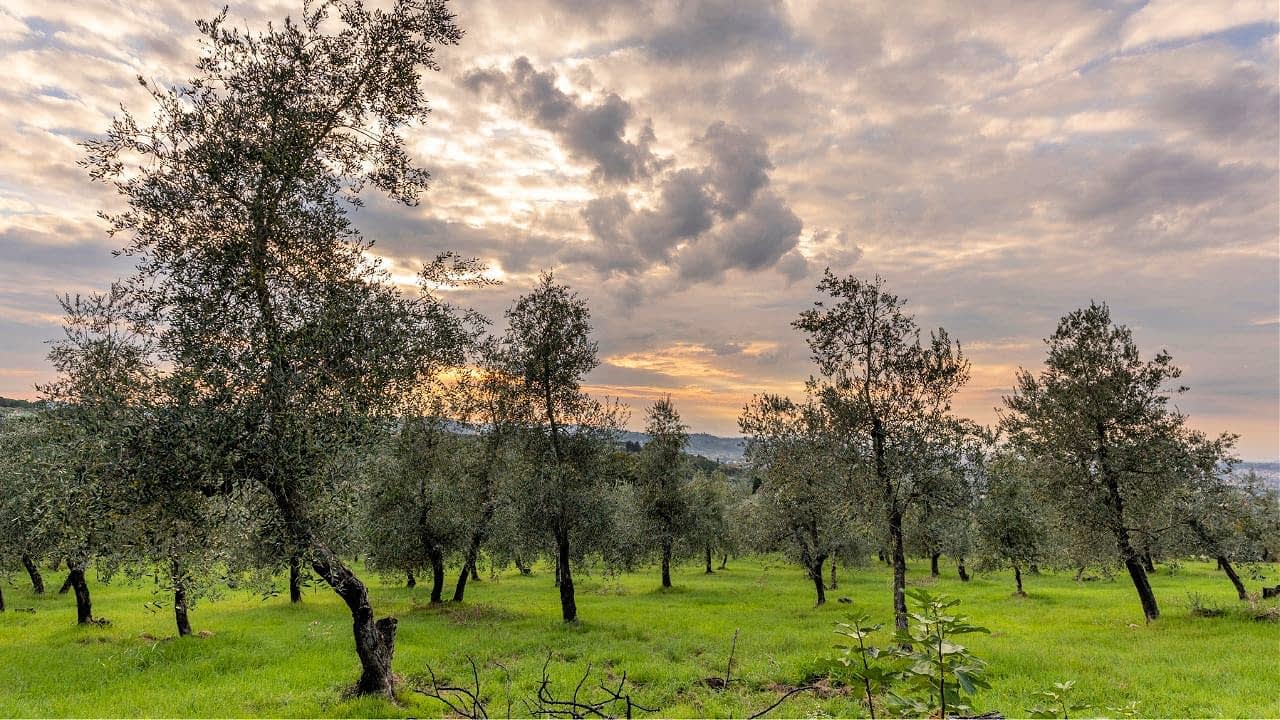
In Tuscany, a project near Florence focuses on restoring neglected olive groves, blending environmental and social commitments to benefit the local community.
Since its inception in 2014, Abandoned Grove has rescued over 5,000 trees and employed nearly 60 workers from socially disadvantaged backgrounds.
The company’s founder, Fil Bucchino, teamed up with Andrea Pagliai, an olive grower with experience in social farming, and master miller Gionni Pruneti.
The recovery of these neglected olive groves is crucial because when agricultural spaces are abandoned, we lose landscape beauty and local culture.- Gionni Pruneti, master miller
Together, they worked to establish a premium experiential brand with a strong ethical foundation rooted in the local area but with international ambitions.
“I was born in Florence and spent my childhood in Italy,” Bucchino told Olive Oil Times. “Then, moving with my parents, who are doctors, I lived in different countries, including Somalia, Venezuela and Canada, where we eventually settled. I also studied bio-medical sciences and co-founded a punk rock band.”
This globetrotting and eclectic attitude led the former bassist and songwriter to discover the world of extra virgin olive oil.
See Also:Restoring Abandoned Olive Trees at Leonardo da Vinci’s Home
“The passion for music prevailed, and I spent almost ten years traveling and touring worldwide,” he said. “Meanwhile, my parents specialized in nutrition and opened a clinic promoting the Mediterranean diet in the 1990s.”
“During the harvest season, they would send me Italian Olio Nuovo while out on the road, and we would organize dinners with my tourmates as soon as the oil arrived,” Bucchino added. “During those nights, I began noticing the power of connectivity of extra virgin olive oil.”
A few days of olive harvesting in the early 2000s were pivotal in helping him recognize the value of high-quality extra virgin olive oil.
“I was in Tuscany on a break from the tour when I tasted an oil different from anything I had tried before, and now I can say that it changed my life,” Bucchino said. “At that time, despite my music career going well, I felt a shift within me as my thoughts were increasingly consumed by the business side of music rather than the art.”
“On the same weekend, while harvesting at my family’s olive grove, I felt things like never before,” he added. “My wife Halina encouraged me to get closer to the feeling, and I started studying the olive oil art. Like with music, I threw myself into the world of quality extra virgin olive oil and never looked back.”
To recreate his experience, Bucchino started producing his own extra virgin olive oil. He partnered with Olivart, a company led by Pagliai, who collaborated with the award-winning Pruneti brothers.
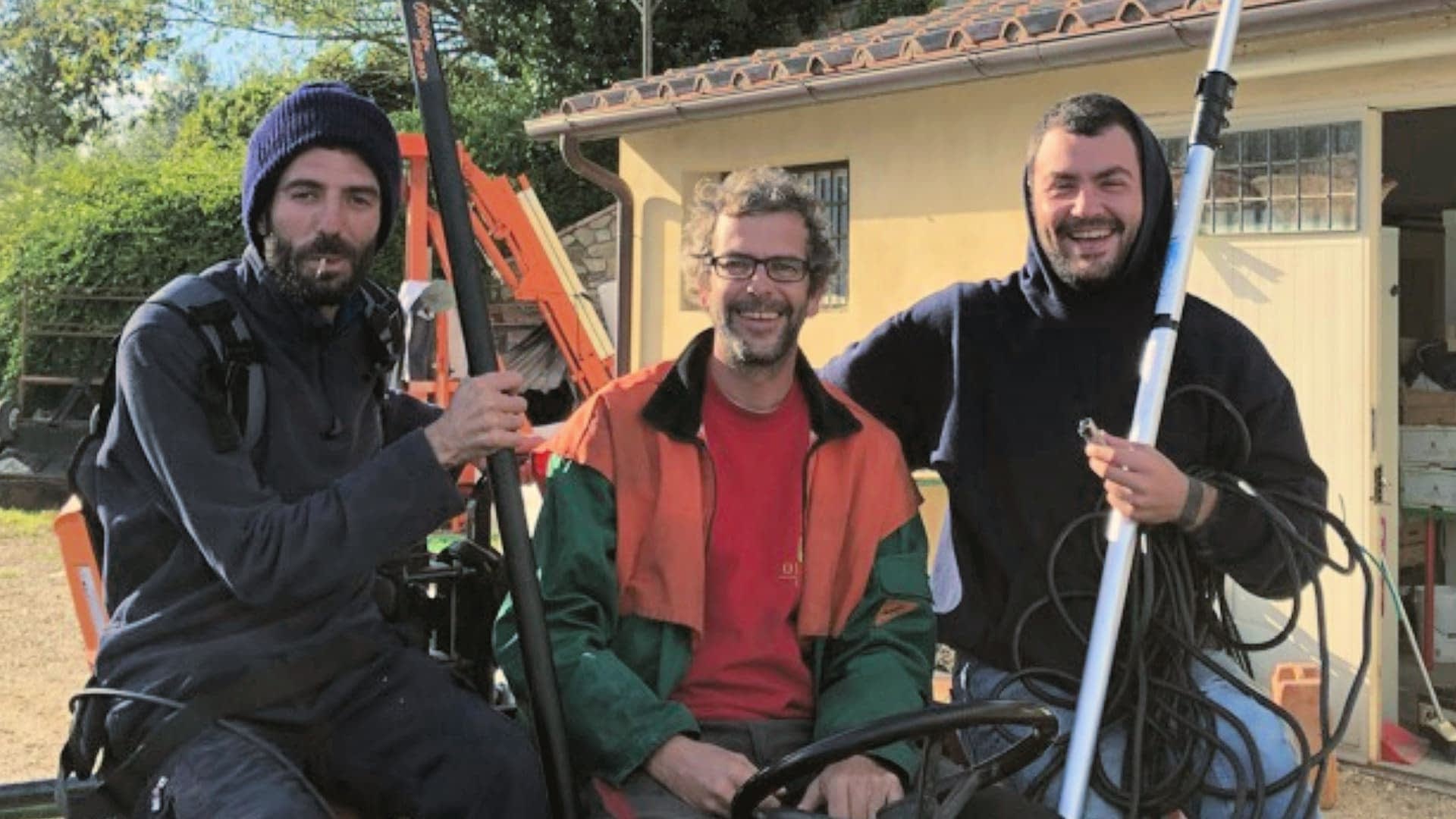 Abandoned Grove workers enjoyed a pause in the Tuscan olive harvest. (Photo: Fil Bucchino)
“At that time, Andrea [Pagliai] was already committed to recovering neglected groves and producing an excellent oil while addressing social issues,” he added. “As for Gionni [Pruneti], he is not only an olive grower but a true artist who can brilliantly interpret each olive season through his milling,”
Sharing the same entrepreneurial vision and values, they teamed up to produce a premium product that would positively impact the region and community.
“I would ask how it was possible to come across all those abandoned groves in the heart of Tuscany,” Bucchino said. “I realized that local growers can’t compete with the low prices of the big industry or marketing-driven brands who sell subpar oil under a Tuscan label, ultimately exploiting the community. I intended the opposite, namely to help the community thrive.”
Over the years, they have recovered more than 5,000 trees of local varieties, including Moraiolo, Frantoio, Leccino, Pendolino, Correggiolo, Olivo Bianco and several unknown ecotypes, from which they produce monovarietals and blends.
Protecting local biodiversity is a fundamental goal at Abandoned Grove, focusing on sustainable land management and quality production processes.
“The point is that even if an olive grove is private, it is a community asset,” Pagliai said. “Environmental, territorial and social spheres are closely connected, and everything related to the land shares the same fate. Hence, it is our duty to care for these neglected lands.”
“When I started working in this sector in 2008, my first aim was not to purchase land but to bring abandoned, unproductive and poorly maintained olive groves in Bagno a Ripoli back to life,” he added. “With my former associate, we started with two plots totaling about ten hectares. As the work progressed, it gave us great satisfaction, and the number of people offering us their lands grew exponentially.”
Pagliai’s social commitment started when a friend handed him two hectares of land where she used to employ someone in a social farming project.
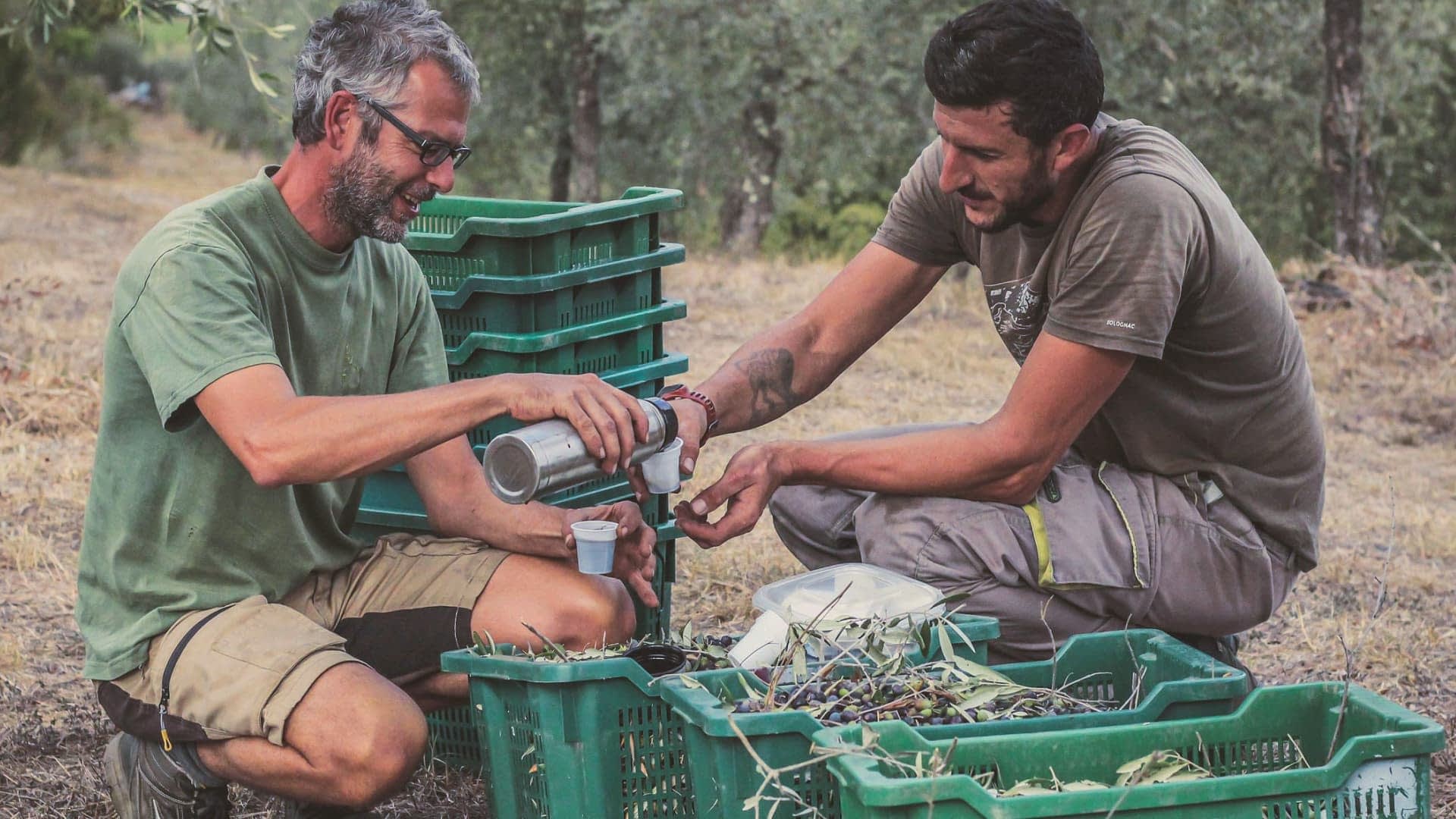 A coffee break during the harvest at Balatro grove. (Photo: Fil Bucchino)
“She told me she would leave me the land only if I continued to work with those people,” he said. “I accepted and started to produce vegetables to diversify production and ensure the workers have year-round employment. I became passionate and implemented the project. Shortly after, Fil [Bucchino] asked me to join forces.”
Since 2014, Abandoned Grove has employed 57 people through social projects. Some of the workers have mental health or substance abuse issues.
The initiative also includes individuals who have been released from prison and need assistance reintegrating into society. Most projects are supervised by Coop21, a social cooperative specializing in training and educational and cultural services.
“Several people have successfully reintegrated, and some have become our employees,” Pagliai said. “Today, six people are working with Abandoned Grove through a Coop21 project.”
“Agriculture is inherently a social issue, as we provide work to local people while safeguarding the land and promoting a circular economy,” he added. “The products are bought by consumers who understand that they are not just supporting a business, but the entire local economy and social inclusion. Abandoned Grove brings all these elements together.”
See Also:Meet the Start-Ups in Central Italy Reviving Abandoned Olive Groves
One of the company’s core values is that the production process, including bottling, labeling, and packaging, is carried out in the community near the orchards.
“I do everything near the groves even if it costs more,” Bucchino said. “This helps the local community and enables an oil that best interprets the essence of the harvest season and the spirit of the community.”
In 2019, he co-produced “Obsessed with Olive Oil,” an award-winning documentary inspired by his experience, which advocates for quality and tells the stories of people whose lives have been positively impacted by extra virgin olive oil.
“I came from punk music, which is about community and challenging the status quo,” he said. “When punk music gained popularity, it wasn’t because punk changed; it was because the world finally caught on. Today, we are united by a mission, and I believe this same principle also applies to high quality.”
“I started this project to never compromise on quality, people or the planet,” Bucchino added. “Of course, it’s not easy. I’m an idealist, but I’m beginning to see that people are gradually recognizing its value, and more are becoming aware of what quality and sustainability truly mean. We only make available the oil we produce. I can’t let go of the vision of creating an oil that can touch someone’s life as profoundly as it did mine.”
Now, Abandoned Grove plans to expand to other communities in different countries and connect with more environmentally and socially committed millers and growers who strive for quality.
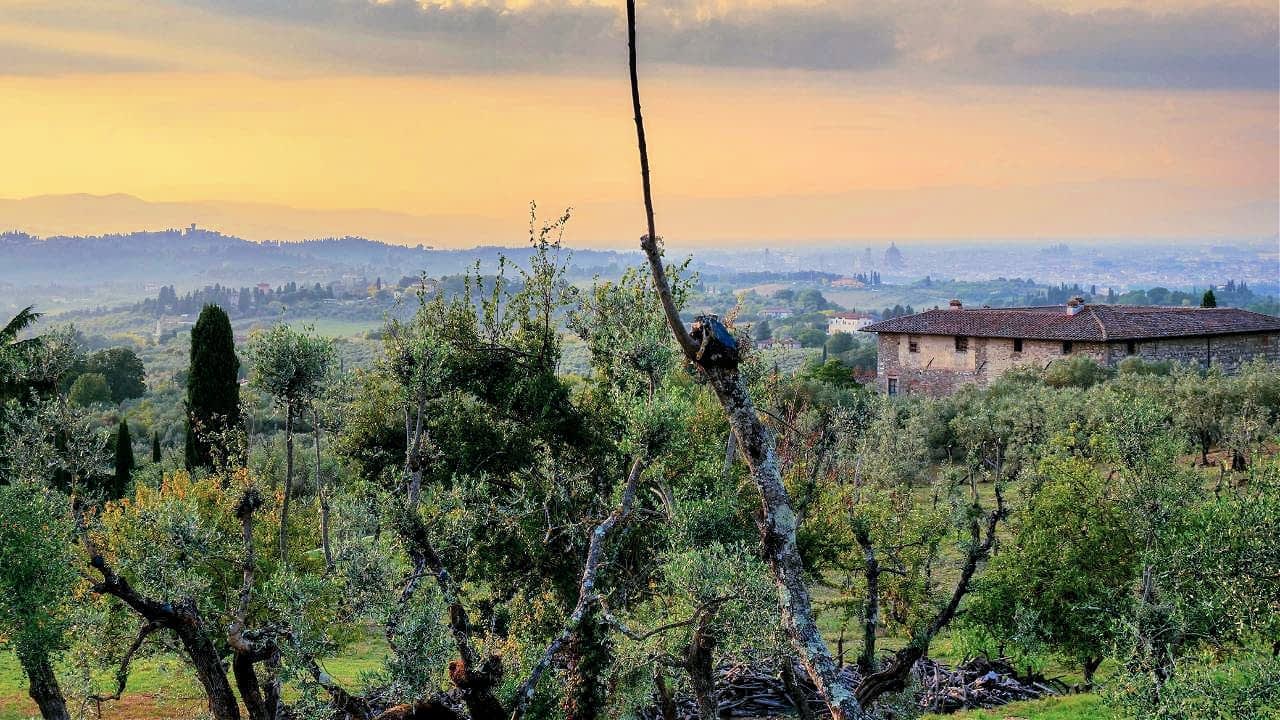 Abandoned Grove has recovered more than 5,000 abandoned olive trees in Tuscany. (Photo: Fil Bucchino)
The fruits of the recovered olive trees are delivered and crushed at Pruneti’s mill in Greve, Chianti. He runs the family company with his brother Paolo, which produces extra virgin olive oil and irises.
“The collaboration with Abandoned Grove came about naturally, as I immediately connected with the vision behind the project. It has been a beautiful journey, and I hope the project continues to grow because it holds great value on multiple fronts,” Pruneti said.
“The recovery of these neglected olive groves is crucial because when agricultural spaces are abandoned, we lose landscape beauty and local culture,” he added. “Each harvest season, we witness how olive oil production becomes a celebration for the entire community.”
The Moraiolo variety is predominant among the rescued olive trees. This hardy tree thrives on the terraced hillsides of Tuscany. The extra virgin olive oil from this variety, common in central Italy, offers notes of artichoke, herbs and almonds, with medium to intense fruitiness.
“We olive growers regard this variety as the ‘old olive tree of the peasant,’ which requires significant care due to its tendency to grow upwards,” Pruneti explained. “Because of its challenging form of cultivation, which demands more labor, it is often the first to be abandoned.”
“At the beginning of each new production, I always ask myself how I can add value from my perspective as a mill operator,” he said. “These oils have their own character, shaped by the hilly terrain where the trees originate and the manual labor required for pruning and harvesting, as they can’t be mechanized.”
“The added value lies in producing distinctly characteristic extra virgin olive oils from these unique varieties,” Pruneti added. “Therefore, we must manage them carefully from the harvest, calculating the optimal maturation times, to the mill, where, among other things, we must set the proper temperatures and malaxation times to obtain oils with a strong, distinct character.”
One of Abandoned Grove’s latest success stories, as described by the founder, is the revival of an olive grove with more than 260 centuries-old Moraiolo trees in Bagno a Ripoli, which had become an impenetrable forest.
“We brought it back to life in three years, and last year, we completed the first harvest,” Bucchino said. “The incredible thing is that we discovered the olive grove had endured not only the historic frosts of 1956 and 1985 but also a wildfire. Now, the trees are vibrant and productive again, showcasing this extraordinary species’ remarkable strength and resilience.”