
Europe Organic Wine Market Size & Trends
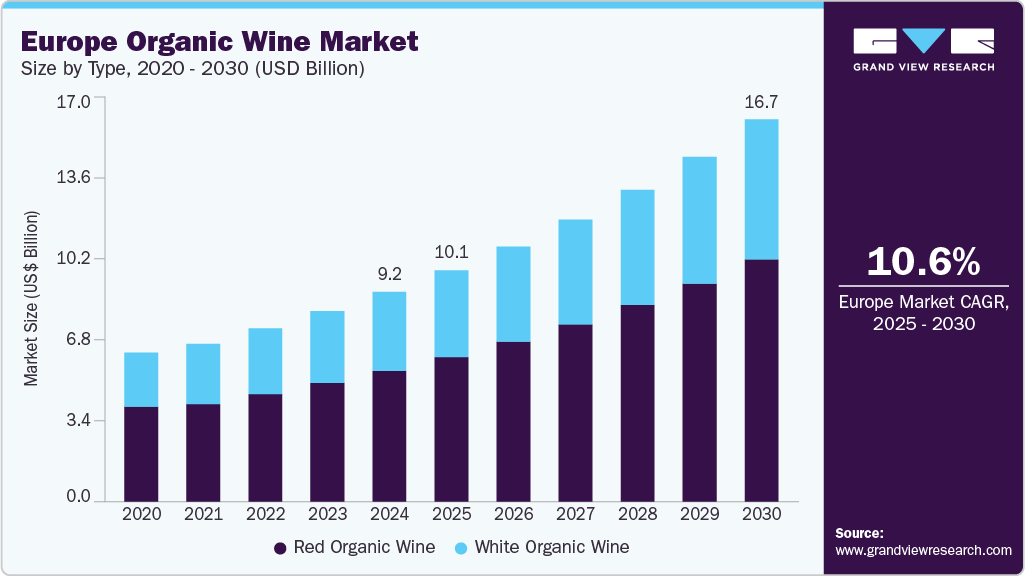
The Europe organic wine market size was estimated at USD 9.20 billion in 2024 and is expected to grow at a CAGR of 10.6% from 2025 to 2030. This growth is attributable to consumer health consciousness and environmental awareness. European consumers increasingly seek products that align with wellness goals, leading to a shift from conventional to organic wines, which are produced without synthetic fertilizers or pesticides and are perceived as healthier. This trend is particularly notable in countries with high levels of environmental activism and established organic food markets, such as Germany and France. For instance, European organic wine consumption has doubled over the past five years, reflecting this growing preference.
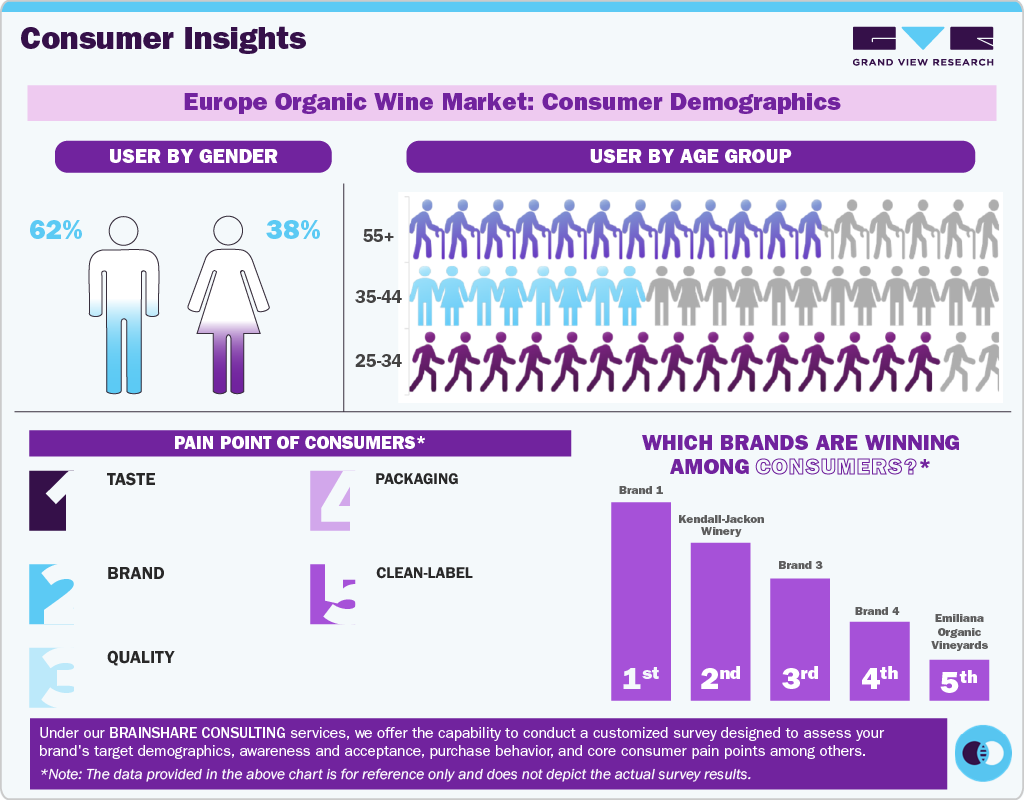
Another key driver is the influence of younger consumers, especially Millennials, who prioritize sustainability and quality in their purchasing decisions. Millennials are motivated by a “less but better” approach and view organic wines as premium products that align with their values, fueling demand even as overall wine consumption declines in some traditional markets. This generational shift is evident in the increasing market share of organic wines in countries like the UK, where retailers are expanding their organic selections to meet this demand. For instance, data from IWSR shows that Millennials in Europe associate organic wines with higher quality and sustainability.
Europe’s dominance in organic wine production also supports market growth, with countries like Spain, Italy, and France accounting for 75% of the world’s certified organic vineyard area. Favorable climates, established wine cultures, and government support for organic agriculture have enabled the rapid conversion of vineyards to organic practices, ensuring a stable and growing supply of organic wines. This supply-side strength allows producers to innovate and compete with traditional wines in terms of taste and quality, as seen with brands launching new organic varietals to capture consumer interest.
Furthermore, the market benefits from expanding opportunities in both mature and emerging regions. While Southern Europe remains a production hub, Northern and Eastern European countries are seeing rising consumption due to openness to imported organic wines and increasing wine awareness. For instance, despite limited domestic production, the Netherlands and Austria are experiencing significant growth in organic wine imports and sales. This broadening of the consumer base, coupled with ongoing innovation and sustainability trends, is expected to sustain Europe organic wine industry expansion through 2030.
Type Insights
Organic red wine accounted for a revenue share of 62.4% of European revenue in 2024, due to the region’s deep-rooted tradition of red wine production and consumption, especially in southern countries such as France, Italy, and Spain, which are global leaders in both conventional and organic red wine. The climate and terroir in these regions favor the cultivation of classic red grape varieties, supporting a wide range of organic red wines with strong local and international appeal. European consumers also associate red wine with greater health benefits, such as higher antioxidant content, which aligns with the growing preference for organic and natural products. For instance, in 2023, red organic wine was the largest segment in Europe, reflecting both production strengths and consumer demand for traditional, full-bodied wines with organic certification. This combination of cultural preference, favorable growing conditions, and perceived health advantages has solidified organic red wine’s leading market share in Europe.
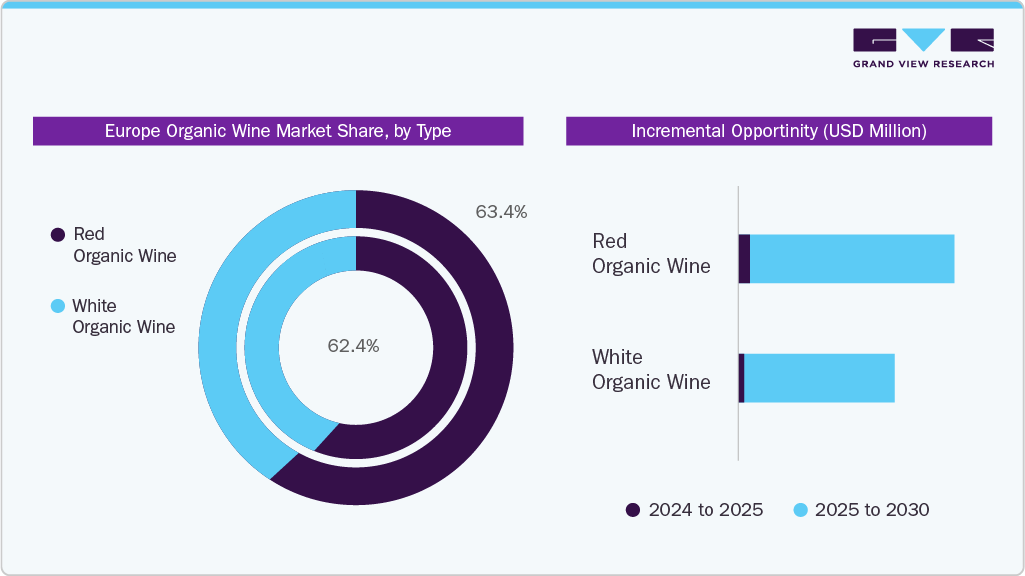
The Europe organic white wine market is expected to grow at a CAGR of 10.1% from 2025 to 2030, driven by several region-specific factors. European consumers are increasingly attracted to organic white wines due to their perceived health benefits, including higher mineral content, fewer additives, and their alignment with sustainability values. The region’s deep-rooted tradition of producing renowned white varietals such as Chardonnay, Sauvignon Blanc, and Riesling, especially in France, Italy, and Germany, supports domestic consumption and strong export demand. Regulatory frameworks and EU certification standards further enhance consumer trust and transparency, encouraging more wineries to adopt organic practices. For instance, Germany’s Riesling Weeks and similar wine festivals have promoted organic white wines, boosting both awareness and sales among eco-conscious and younger consumers who value clean-label products and food pairings.
Packaging Insights
Bottled organic wine accounted for a revenue share of 91.2% of European revenue in 2024. because glass bottles are deeply rooted in European wine tradition and are widely regarded as the optimal packaging for preserving wine quality, flavor, and longevity. European consumers and producers associate glass bottles with premium positioning, authenticity, and environmental responsibility, as glass is highly recyclable and aligns with the sustainability values central to the organic wine movement. The established retail and hospitality infrastructure in Europe is heavily oriented toward bottled wine, making it the most accessible and trusted format for both domestic and export markets. For instance, leading organic wine launches from major producers in France and Italy consistently use glass bottles to reinforce brand heritage and meet consumer expectations for quality and sustainability.
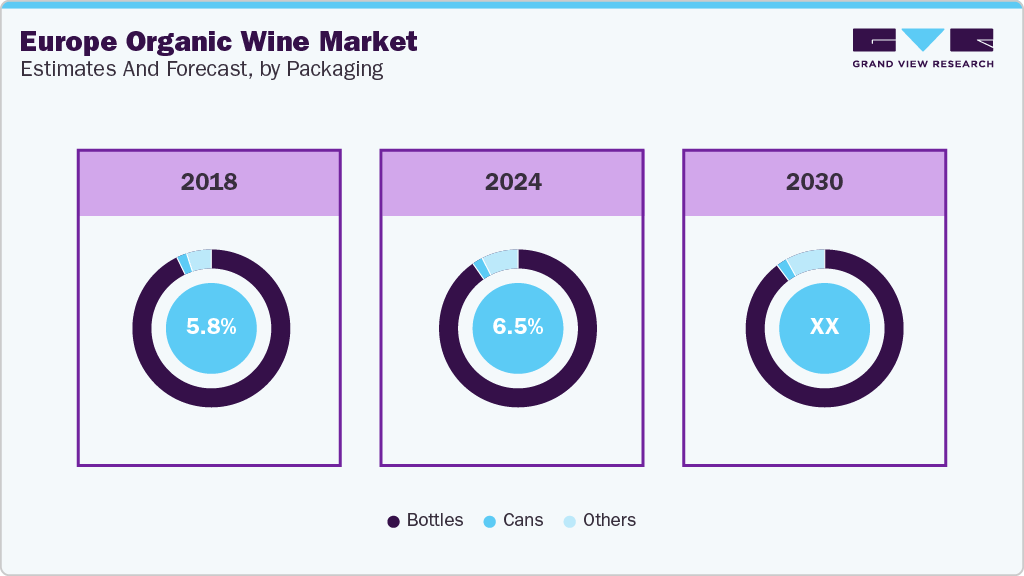
The canned organic wine segment is expected to grow at a CAGR of 14.4% from 2025 to 2030, driven by shifting consumer preferences for convenience, portability, and sustainability. Cans are lightweight, fully recyclable, and have a lower carbon footprint compared to glass bottles, aligning with the values of younger, eco-conscious consumers who are increasingly driving organic wine demand. The practicality of single-serve cans appeals to urban lifestyles, outdoor events, and casual occasions, expanding organic wine’s reach beyond traditional settings. This packaging innovation, combined with growing environmental awareness and the popularity of smaller portion sizes, is fueling rapid growth in the canned organic wine segment across Europe.
Distribution Channel Insights
Organic wine sales through off-trade accounted for a revenue share of 60.9% of the European revenue in 2024. Supermarkets, hypermarkets, retail outlets, and e-commerce platforms offer consumers a broad selection, competitive pricing, and convenience for purchasing organic wines. These channels allow shoppers to explore a wide range of grape varieties, regions, and price points, supporting both everyday and special-occasion buying. The expansion of organic wine assortments in major retail chains, such as Majestic in the UK, increasing its organic offerings in 2023, demonstrates how retailers adapt to rising demand and make organic wines more accessible. In addition, the shift toward online shopping has made it easier for consumers to discover and purchase organic wines from home, further boosting off-trade sales. This accessibility, combined with promotional offers and the ability to compare products, has solidified off-trade as the dominant distribution channel for organic wine in Europe.
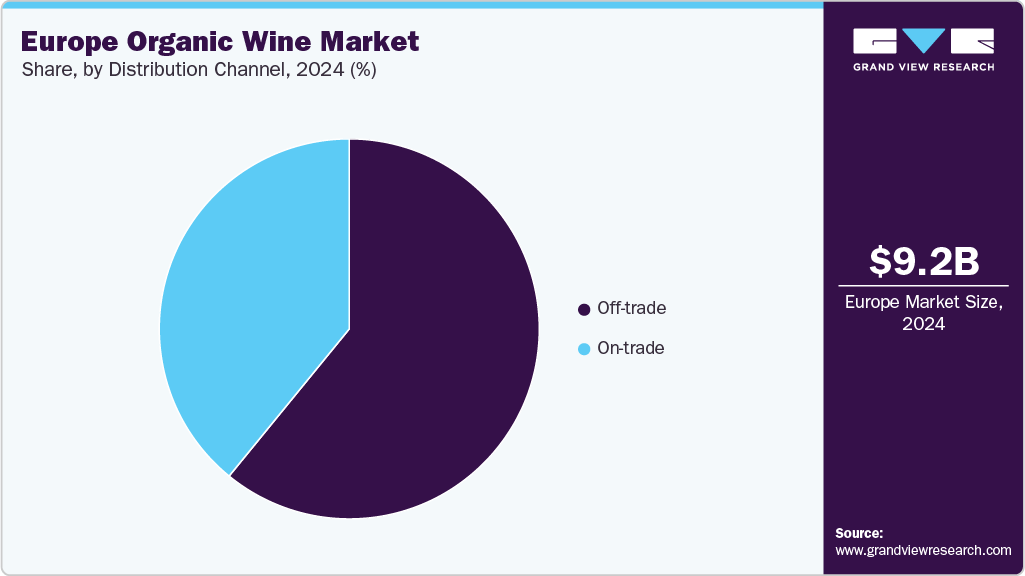
Sales of organic wine through on-trade channels are expected to grow with a CAGR of 9.8% from 2025 to 2030, due to rising consumer demand for premium, health-conscious, and sustainable options in social and dining settings such as restaurants, bars, and hotels. Younger consumers, especially millennials, are driving this trend by seeking out organic wines that align with their values of wellness and environmental responsibility when dining out or celebrating special occasions. The expanding presence of organic wine on menus in high-profile European venues like London’s Antidote Wine Bar and Terroirs demonstrates how hospitality businesses respond to this demand by curating organic selections to attract discerning clientele. In addition, specialist wine dealers and hoteliers expect organic wine offerings to continue increasing, supported by robust European regulations and certification standards that reinforce consumer trust.
Country Insights
Germany Organic Wine Market Trends
The organic wine market in Germany held a share of 32.5% of the European revenue in 2024, driven by a combination of strong government support for organic agriculture, high consumer health awareness, and a well-developed retail infrastructure that promotes organic products. Policies such as subsidies and certification assistance have encouraged German wine producers to adopt organic practices, resulting in a growing supply of domestic organic wines. German consumers are also willing to pay a premium for sustainable and health-oriented products, with supermarkets and specialty shops expanding their organic wine assortments to meet this demand. This synergy of supportive regulation, consumer willingness, and retail availability has positioned Germany as a leader in Europe’s organic wine market.
France Organic Wine Market Trends
The organic wine market in France is projected to grow at a CAGR of 11.4% from 2025 to 2030, driven by a growing consumer awareness of health, environmental sustainability, and ethical production. Consumers increasingly seek wines produced without synthetic pesticides, herbicides, and fertilizers, perceiving them as healthier and more environmentally friendly. This “eco-consciousness” is fueling the demand for organic wines, expanding organic vineyards across France, and a greater variety of organic wine offerings in retail outlets and restaurants. Moreover, winemakers are adopting innovative organic farming practices, such as biodynamic agriculture, further enhancing the quality and distinctiveness of French organic wines. The focus on terroir expression and minimal intervention winemaking techniques also contributes to the appeal of organic wines, attracting consumers who value authenticity and unique flavors.
Key Europe Organic Wine Company Insights
The market is a dynamic landscape shaped by strategic collaborations, evolving consumer preferences, and a growing awareness of sustainable practices. Key companies in the European market maintain their competitive edge by prioritizing sustainable viticulture, investing in organic certification, and adopting innovative production methods that minimize chemical use and promote biodiversity. Strategic collaborations between vineyards, distributors, and retailers are becoming increasingly common, fostering innovation and expanding distribution networks for organic wines.
The market nature is characterized by a shift towards more sustainable and environmentally friendly agriculture, with consumers actively seeking certified organic wines to reflect their values. These preferences further extend to a desire for transparent labeling and information about the wine’s origin and production methods. European consumers are increasingly drawn to the perceived health benefits and superior taste of organic wines, driving demand and fostering a competitive environment within the industry.
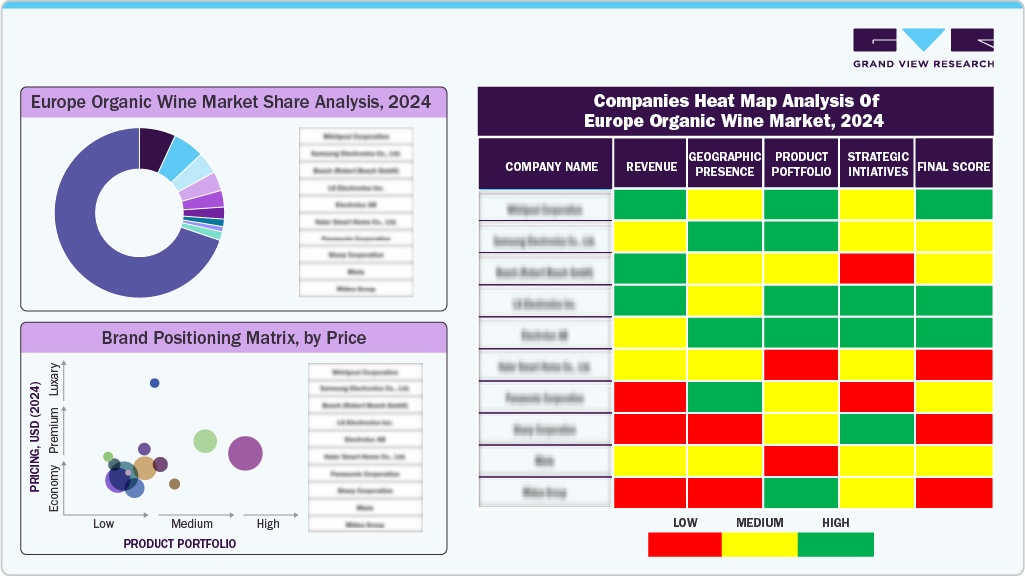
Key Europe Organic Wine Companies:
M. Chapoutier
Miguel Torres S.A
Frescobaldi
Boisset Collection
Gérard Bertrand
Societa Agricola Querciabella SpA
Cave de Tain
Cantinetta Antinori
Les Domaines Paul Mas
Stellar Organics
Recent Developments
In May 2025, Viva Wine Group AB strategically positioned itself for accelerated European market penetration by securing a binding agreement to acquire a controlling 88.59% stake in Delta Wines Holding B.V., a prominent European wine distributor. This acquisition, valued at approximately EUR 57 million, represents a key strategic initiative to significantly expand Viva Wine Group’s existing footprint within the competitive European wine landscape. The anticipated transaction completion in May 2025 will provide Viva Wine Group with enhanced distribution capabilities and access to new markets, fostering organic growth, particularly within the increasingly important organic wine segment.
In July 2022, Baron Philippe de Rothschild’s flagship brand, Mouton Cadet, partnered with Lagardère Travel Retail France to launch organic red and rosé wines. These wines were available at Aelia Duty-Free and BuYParis Duty-Free stores.
Europe Organic Wine Market Report Scope
Report Attribute
Details
Market size value in 2025
USD 10.14 billion
Revenue forecast in 2030
USD 16.76 billion
Growth rate
CAGR of 10.6% from 2025 to 2030
Actual data
2018 – 2024
Forecast period
2025 – 2030
Quantitative units
Revenue in USD million/billion CAGR from 2025 to 2030
Report coverage
Revenue forecast, company ranking, competitive landscape, growth factors, and trends
Segments covered
Type, packaging, and distribution channel
Regional scope
Europe
Country scope
Germany; France; UK; Italy; Spain
Key companies profiled
M. Chapoutier; Miguel Torres S.A; Frescobaldi; Boisset Collection; Gérard Bertrand; Societa Agricola Querciabella SpA; Cave de Tain; Cantinetta Antinori; Les Domaines Paul Mas; Stellar Organics
Customization scope
Free report customization (equivalent up to 8 analysts’ working days) with purchase. Addition or alteration to country, regional & segment scope.
Pricing and purchase options
Avail customized purchase options to meet your exact research needs. Explore purchase options
Europe Organic Wine Market Report Segmentation
This report forecasts revenue growth at the country level and provides an analysis of the latest industry trends in each of the sub-segments from 2018 to 2030. For this study, Grand View Research has segmented the Europe organic wine market report based on type, packaging, distribution channel, and country:
Type Outlook (Revenue, USD Million, 2018 – 2030)
Red Organic Wine
White Organic Wine
Packaging Outlook (Revenue, USD Million, 2018 – 2030)
Distribution Channel Outlook (Revenue, USD Million, 2018 – 2030)
Country Outlook (Revenue, USD Million, 2018 – 2030)
Germany
France
UK
Italy
Spain
Frequently Asked Questions About This Report
b. The Europe organic wine market size was estimated at USD 9.20 billion in 2024 and is expected to reach USD 10.14 billion in 2025.
b. The Europe organic wine market is expected to grow at a compound annual growth rate (CAGR) of 10.6% from 2025 to 2030 to reach USD 16.76 billion by 2030.
b. Germany dominated the organic wine market with a share of 32.5% in 2024, driven by a combination of strong government support for organic agriculture, high consumer health awareness, and a well-developed retail infrastructure that promotes organic products. Policies such as subsidies and certification assistance have encouraged German wine producers to adopt organic practices, resulting in a growing supply of domestic organic wines.
b. Some key players operating in the Europe organic wine market include M. Chapoutier, Kendall-Jackson Winery, Frescobaldi, Boisset Collection, Gérard Bertrand, Societa Agricola Querciabella SpA, Cave de Tain, Cantinetta Antinori, Les Domaines Paul Mas, and Stellar Organics.
b. The market growth is attributable to a combination of consumer health consciousness and environmental awareness. European consumers are increasingly seeking products that align with wellness goals, leading to a shift from conventional to organic wines, which are produced without synthetic fertilizers or pesticides and are perceived as healthier choices. This trend is particularly notable in countries with high levels of environmental activism and established organic food markets, such as Germany and France.