
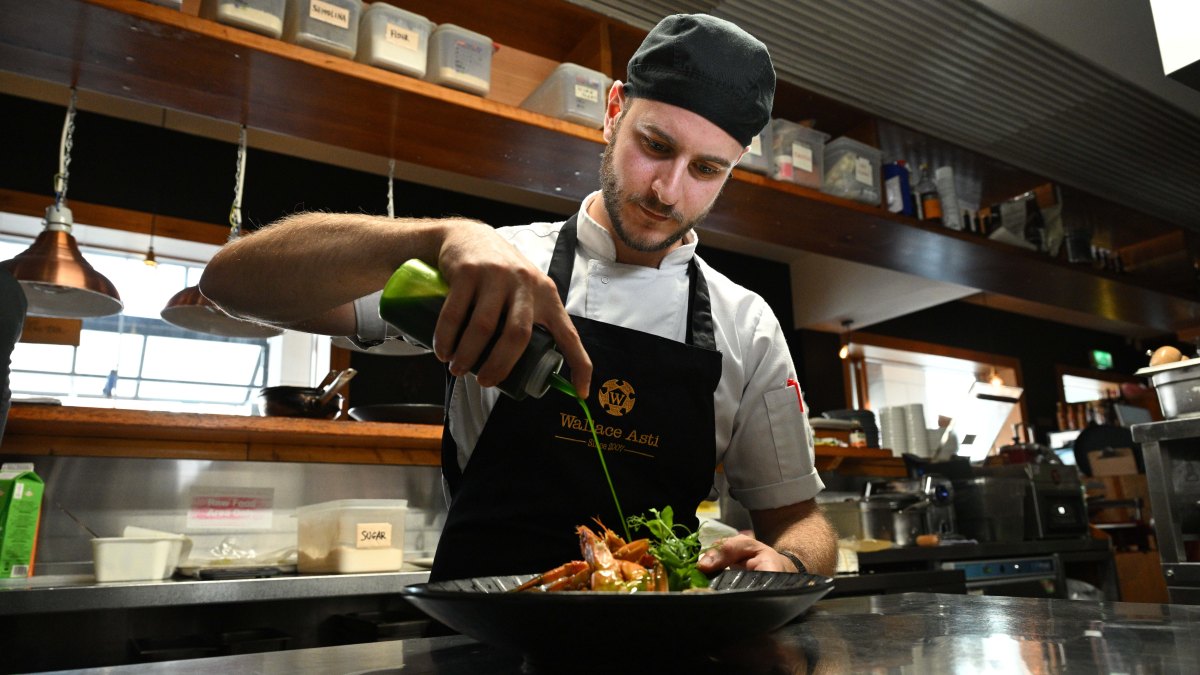
Italian restaurants in Ireland are not necessarily identikit. Though it might often appear, particularly in larger cities like Dublin or Cork, that menus feature the same roll call of pizza, pasta dishes, starters such as bruschetta and desserts like tiramisu, if you look for it you can find Italian regionality in little pockets across Ireland.
Like Ireland, Italy is split into four distinct areas but beyond that the nation is defined by 20 regions. From Piedmont and Lombardy in the north through to Emilia-Romagna, Tuscany and Umbria in the centre and down into Campania, Puglia and Calabria — the ankle, heel and toe of the boot-shaped Mediterranean peninsula — and each bears subtleties in ingredients, processes and dishes that anchor their cuisines and food cultures uniquely within broadly Italian gastronomy.

The restaurant is nestled beside Croke Park where Russell Street meets St Patrick’s Terrace
BRYAN MEADE FOR THE SUNDAY TIMES
Dublin has been a good beacon of Italian regionality if you know where to look, from Roman specialities at Bar Italia on Lower Ormond Quay (plus Roman-style, square-cut pizza al taglio at Mani on Drury Street) to Sicilian by way of Amuri — both by day (deli-café, downstairs) or night (restaurant, upstairs) — on Chatham Street and sister spots Grano and A Fianco in Stoneybatter, where the menu and wine lists are noticeably Neapolitan-Calabrian.
You might forget, though, that Italy also includes the two largest islands in the Mediterranean, Sicily and Sardinia, each with their own distinctive cuisines. It is the latter we stumbled upon when we realised in research recently that Wallace’s Asti in Drumcondra is not only a popular pizzeria but, more promisingly, specialises in Sardinian cuisine like no other restaurant in Ireland.
Set in the shadow of Croke Park, its location, incidentally, is where Russell Street runs alongside St Patrick’s Terrace, which felt particularly fitting so we took that as a prime sign that this is a place meant for us. Open since 2007, Asti is part of the same restaurant group as Wallace’s Taverna and Sfuso wine bar, both in the Italian Quarter overlooking the Liffey.
From the moment you step inside Asti it is unmistakable that pizza is prominent here, the air scented by the gentle, sweet, yeasty note of proving dough and wood and smoke from the pizza oven. Also in the air the subtle and unexpected waft of saffron tells you this is not your standard Italian. A Sunday evening and the L-shaped restaurant, wrapped around the long bar and the semi open-kitchen is near full with, we wager, a 50:50 split of Italian and English overheard between tables.
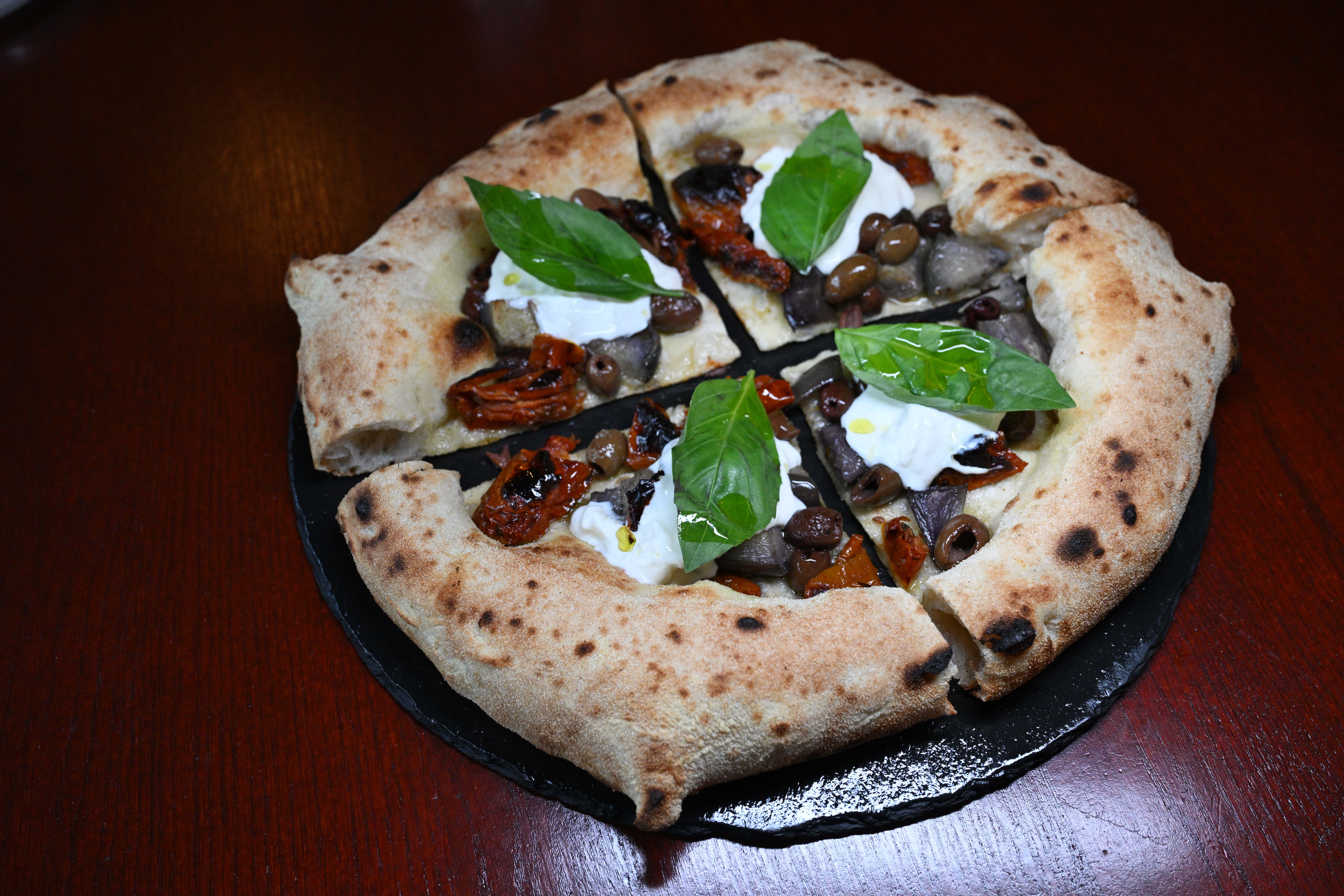
Prazzida is a focaccia-based sharing starter
BRYAN MEADE FOR THE SUNDAY TIMES
We have to admit to having less than zero knowledge of the particularities of Sardinian cuisine beyond culurgiones, the intricately pleated ravioli generously stuffed with a potato, pecorino and mint filling and shaped like an ear of wheat, served on a tomato sugo. We fondly remember devouring a plate as a special in Grano a few years ago.
While the familiarity of culurgiones presents comfort (and from the look of them on the pass and heading to a table nearby we do kick ourselves) our goal here is to understand other Sardinian specialities, which the menu guides the diner towards with a Sardinia-shaped icon beside certain dishes.
We start with prazzida, which is described as a focaccia-based sharing starter but forget the idea of bubbly bread with a gnarly, oily crust. This is more a nine-inch, lighter-than-air pizza, supremely bouncy, soft and leopard-spotted from the wood-fired oven, topped generously in slivers of fried aubergine, little green-brown taggiasche olives and semi-dried tomatoes, which, from look and taste, indicate they slowly dry in the residual heat of the wood-fired oven. It’s rich and ultra savoury, softened by big milky clumps of stunningly fresh stracciatella and finished with big fragrant leaves of basil.
Next, a non-Sardinian starter in the form of fagottino (careful, now), a personal-sized calzone of Dublin Hills goat’s cheese baked into pizza dough with tomato and walnuts but it’s the use of cinnamon, which perfumes the dish in sweet spice, that is the most surprising.

Fregola ai frutti di mare
BRYAN MEADE FOR THE SUNDAY TIMES
For mains we focus on a pair of Sardinian pasta specialities. Fregola might look like large couscous but these small, spherical semolina pasta shapes have a nuttier, firmer texture and are best cooked like risotto. Though fregola can sometimes be stewed beyond oblivion, here it arrives wonderfully al dente with ideal bite, grains swelled in a rich tomato bisque that had definitely seen sherry, saffron and chilli. While the base of the dish is brilliant, the frutti di mare shellfish mixture feels like it has been on land far too long with shrivelled, irony mussels and dried-out clams, not helped by the fact we could see a backlog of dishes linger too long at the pass and both mains didn’t arrive as hot as they ought to have been.
Next, a mouthful to say, malloreddus alla campidanese, is surprisingly dinky ridged gnocchetti (baby gnocchi) tossed in a beautifully sweet yet complex ragu of sweet, fatty sausage, onion and bright, fresh tomato harmonising with an ongoing hum of saffron and braced by a cool aniseed breeze from a garnish of fresh dill fronds. It’s a simple but totally successful plate of pasta that’s something a little different, worth coming for alone, chased perhaps by a stubby of cold Ichnusa beer, brewed on the island.
On the subject, the wine list features more than 30 options of Sardinian wine (white, red, rosé, orange, sweet wines, magnum sizes) from Giuseppe Sedilesu, Aini Vini, Puddu, Pusole, Chessa, Argiolas, Giuseppe Gabbas, Garagisti di Sorgono and the like. We split a carafe of Mattariga Vermentino di Sardegna, all wonderfully stone fruit, lemon and pear with a gentle floral undertone.
We skipped dessert because there didn’t appear to be Sardinian specialities — if we’ve come this far, intrepidly exploring the idiosyncrasies of island cuisine, we’re not stopping now to settle on affogato, cheesecake or ice cream.
While Ireland bears no shortage of Italian restaurants, seeking regionality offers the truest, most authentic taste of Italy and Sardinia, by way of Wallace’s Asti, is a destination well worth exploring.
What we ate
Fagottino €14
Prazzida €17
Malloreddus alla campidanese €20
Fregola ai frutti di mare €26
Chessa Mattariga Vermentino di Sardegna (500ml) €29
Total: €106
If that, then these…
Three more regional Italian restaurants to try around Dublin
Grano, Dublin 7 Roberto Mungo’s Calabrian heritage sits proudly across his menu and southern Italian wine list in Stoneybatter; grano.ie
Il Vicoletto, Dublin 2 Find central-northern Italian dishes from Piedmont, Venice, Alto Adige and Tuscany in Temple Bar; ilvicolettorestaurants.ie
Amuri, Dublin 2 A shining example of Sicilian specialities amid a Mediterranean feast on Chatham Street; amuri.ie
wallacewinebars.ie/asti, @wallace.asti