
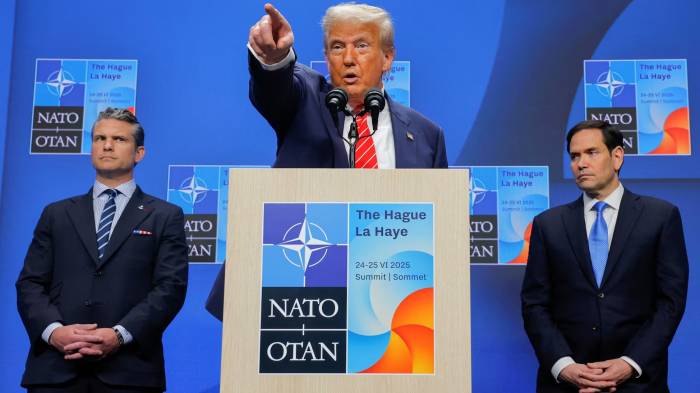
On June 25, 2025, NATO leaders signed a new commitment to increase defense spending to 5% of GDP over the next decade. This decision, made at a summit in The Hague, marks a significant shift from the previous 2% target set in 2014. All alliance members except Spain agreed to this new goal. Spain negotiated a lower commitment, capping its defense spending at just over 2% of GDP. This exception has drawn sharp criticism from the United States, with former President Donald Trump threatening direct trade tariffs against Spain for not aligning with the new defense spending target.
The move comes at a time when the global wine market is already under pressure. According to the International Organisation of Vine and Wine (OIV), world wine production in 2024 fell to its lowest level in more than 60 years due to extreme weather events. Global wine consumption also dropped to its lowest point since 1961, driven by inflation, economic uncertainty, and changing consumer habits in mature markets.
The new NATO defense spending mandate will require European governments to reallocate significant public funds toward military budgets. In most EU countries, social spending on pensions, healthcare, and education makes up the largest share of public expenditure. Redirecting resources to defense will likely mean either cuts to these programs or higher taxes. Both options reduce household disposable income and discretionary spending, which includes wine and other alcoholic beverages. Eurostat data shows that “alcoholic beverages, tobacco and narcotics” already account for nearly 4% of total household spending in the EU. Any further reduction in purchasing power is expected to hit wine consumption directly.
The economic impact is compounded by the fact that much of the increased European defense spending will flow out of Europe. Studies from the Kiel Institute and London School of Economics estimate that about 80% of EU military procurement is sourced from non-European suppliers, mainly U.S. companies. This limits any positive economic stimulus within Europe and could further depress consumer demand.
Trump’s threat to impose punitive tariffs on Spanish goods—specifically targeting wine—adds another layer of risk for the industry. The U.S. is a key export market for Spanish wine, ranking as its fourth-largest by value and seventh by volume in 2024. A repeat of the 25% tariff imposed during the 2019-2021 trade dispute would have immediate effects on prices throughout the supply chain. When tariffs were last imposed, Spanish producers absorbed much of the cost to maintain their market share, but this strategy eroded profit margins and cannot be sustained indefinitely.
If new tariffs are enacted, Spanish wines priced between $15 and $30—a segment where Spain has built a strong reputation—would see retail prices rise by about one-third. This would push many Spanish wines out of their competitive price range in U.S. stores, making them less attractive compared to New World wines from Chile or Argentina or domestic U.S. wines from California and Oregon.
The threat of tariffs also raises the possibility of retaliatory measures from the European Union against American products. For Spanish wineries, this could mean higher costs for essential imports such as American oak barrels used in aging many premium wines, especially those from Rioja. Other critical supplies like winemaking equipment or software could also become more expensive if targeted by EU countermeasures.
The disruption would not be limited to Spain or even Europe. If European wines become more expensive or less available in the U.S., New World producers—Chile, Argentina, Australia, New Zealand—are well positioned to fill the gap. Chilean wines have already gained ground in the $10-$20 segment in recent years and could expand further if European competition weakens due to tariffs.
However, this is not simply a matter of shifting market share from one country to another. The combined effect of reduced consumer spending in Europe and higher prices for European wines in America could shrink overall global demand for wine even further. With production already at historic lows and consumption declining, any recovery in output could lead to oversupply and downward pressure on prices worldwide.
Producers may respond by seeking new markets outside traditional strongholds like the U.S., U.K., and Germany. Markets such as South Korea, Japan, Poland, Canada, Mexico, and Southeast Asia offer growth potential but require long-term investment and adaptation to local tastes and regulations.
Industry experts say that survival in this volatile environment will require a shift away from competing on volume toward building value through branding, premiumization, and direct-to-consumer sales channels such as e-commerce. Digitalization remains low among many European wineries; only about 15% are considered digitally advanced enough to respond quickly to market changes.
Trade associations representing European wine producers are calling for coordinated lobbying efforts in Brussels and Washington to keep wine out of unrelated geopolitical disputes. They point to existing agreements like the 2020 EU-U.S. Wine Trade Principles as a basis for dialogue aimed at preventing escalation.
The current situation highlights how deeply interconnected global trade has become—and how quickly political decisions can disrupt entire industries far removed from their original context. For now, both producers and consumers face an uncertain future as they wait to see whether diplomatic efforts can avert a full-scale trade conflict that would reshape the world wine market for years to come.