
North America Wine Market Summary
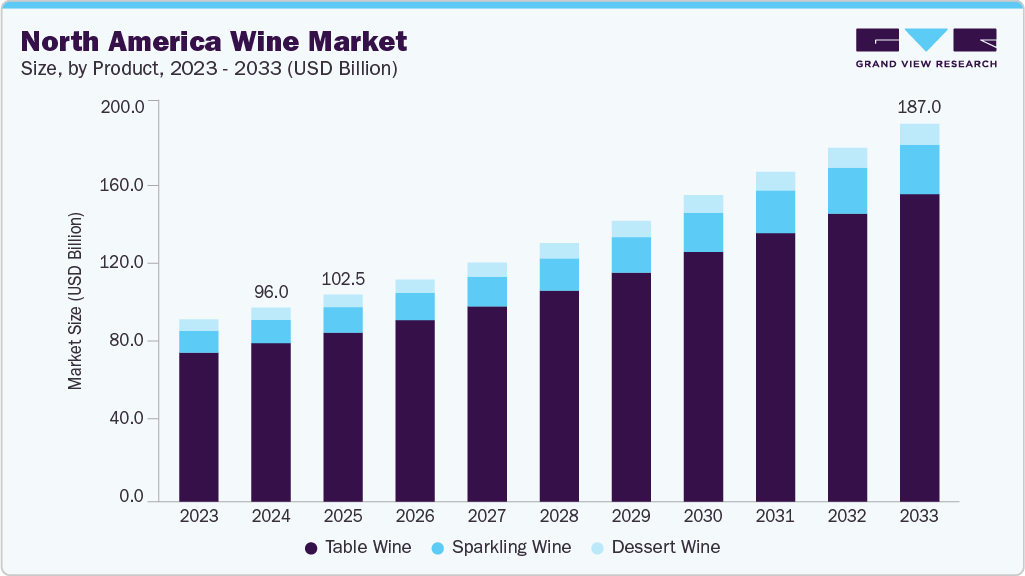
The North America wine market size was estimated at USD 96.05 billion in 2024 and is expected to reach USD 187.03 billion by 2033, growing at a CAGR of 7.8% from 2025 to 2033. The wine market in North America, particularly in the U.S., Mexico, and Canada, is experiencing steady growth, driven by changing consumer preferences, premiumization trends, and evolving lifestyle habits.
Key Market Trends & Insights
By country, the U.S. led the market with the largest revenue share of 78.4% in 2024.
By product, table wine led the market and accounted for a share of 81.7% in 2024.
By distribution channel, the off-trade sales held a share of 76.4% in 2024.
Market Size & Forecast
2024 Market Size: USD 96.05 Billion
2033 Projected Market Size: USD 187.03 Billion
CAGR (2025-2033): 7.8%
U.S.: Largest market share in 2024
Table Wine: Fastest growing
One of the primary factors fueling the rise in wine consumption is the growing interest in premium and craft wines. Consumers, especially millennials and Gen Z, are increasingly seeking higher-quality, boutique wines with unique flavor profiles, sustainable sourcing, and authentic branding. This shift is also evident in the demand for organic, biodynamic, and natural wines, which align with broader health and environmental consciousness. There has been an increase in preference for sparkling wines. American wine preferences reflect a strong inclination toward smoother and fruitier wines, which suggests a widespread appreciation for balanced and approachable flavors. Semi-sweet and sweet wines also enjoy notable popularity, indicating a preference for wines with a touch of sweetness that appeal to a broad audience. Meanwhile, dry and savory wines maintain a steady following, likely catering to those who appreciate more structured and complex profiles. Tannic wines, which have a bold and intense character, appear to have a more niche appeal. These preferences highlight the diverse palates of American consumers and the evolving trends shaping the wine market.
Another key trend is premiumization-consumers are showing growing interest in high-quality, artisanal, organic, and sustainably produced wines. This shift is fueled by a more informed and curious consumer base that seeks unique flavor profiles, provenance, and craftsmanship. The millennial and Gen Z demographics, in particular, are influencing this change by exploring diverse wine options and favoring boutique brands, natural wines, and canned or low-alcohol variants for convenience and wellness reasons.
Gen Z, in particular, is reshaping the wine landscape. This younger generation is curious, experimental, and less bound by traditional wine norms. They prefer unconventional packaging like wine in cans or boxes, enjoy flavored and sparkling varieties, and show high interest in natural or orange wines. According to a Drizly 2024 survey, 36% of Gen Z wine drinkers reported trying different varietals and formats monthly, compared to 22% of millennials. Their openness to experimentation and demand for transparency are encouraging innovation in wine offerings.
The locally produced brands of wine also seem to be influencing consumer attitudes toward wine, with more Canadians now seeking high-quality domestic wine. Ontario’s Niagara region remains the dominant source of Canadian wine. Additionally, the Okanagan Valley in British Columbia is highly regarded for the quality of its wine and the strength of its vineyard tourism offerings. Quebec is emerging as a new hotspot in the wine market as well.
As per the Mexican Wine Council (CMV), the average per capita consumption of wine doubled from 450 milliliters in 2012 to 960 milliliters in 2018. Annually, the value chain produces about 2.4 million boxes of wine, which is enough to meet 30% of domestic demand, as Mexicans consume an average of 9 million boxes of wine. Conventionally, younger or newer Mexican drinkers preferred to drink beer, mezcal, or cocktails rather than a glass of wine. However, with time, this tendency began to change because the wine industry itself was able to adapt to the demands of new palates.
Mexico is increasingly becoming popular in the wine market due to its delicious gastronomy, its tourism, and its wines. Currently, Mexico is a significant producer of wine and continues to grow in production capacity, and is even recognized internationally, especially for the wines of Baja California. These factors are foreseen to drive the demand for wine over the forecast period in North America.
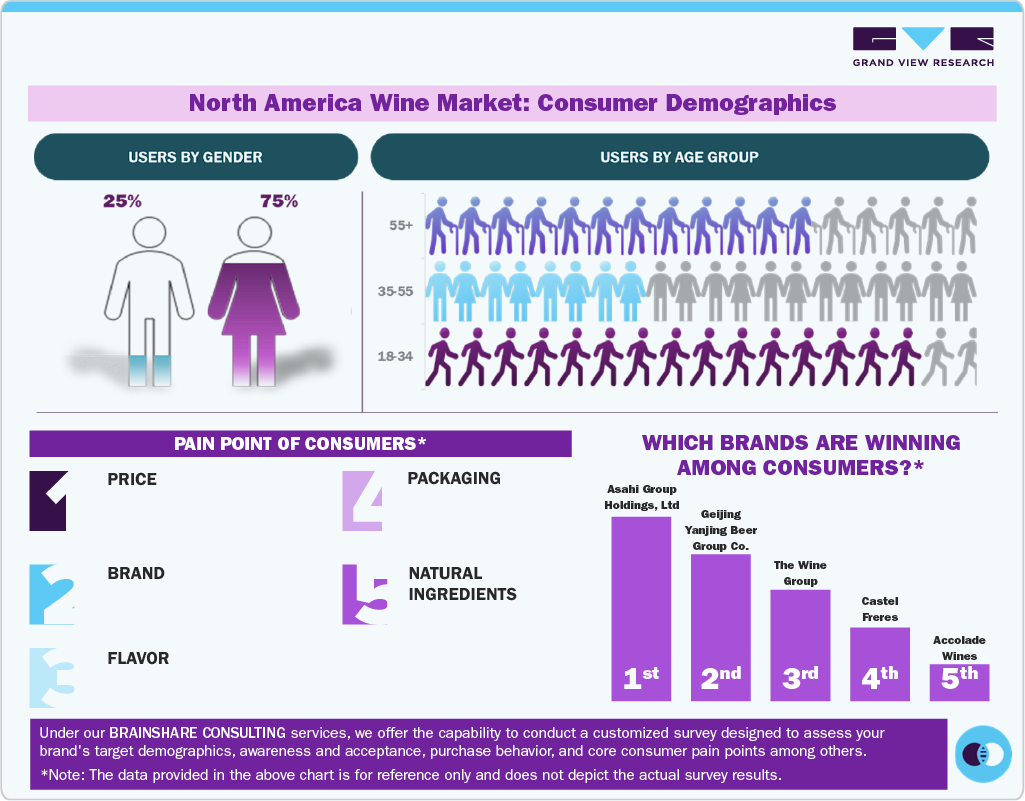
Evolving consumer tastes and preferences play a significant role in shaping the North American wine industry. Consumers are increasingly seeking diverse and unique wine experiences, leading to a growing demand for a variety of wine styles, including organic, biodynamic, and sustainable options. The millennial demographic has a considerable impact on the wine market. This group tends to value authenticity, sustainability, and unique experiences, driving the demand for wines that align with these preferences. Millennial consumers often explore new and niche varietals, contributing to the diversification of the market.
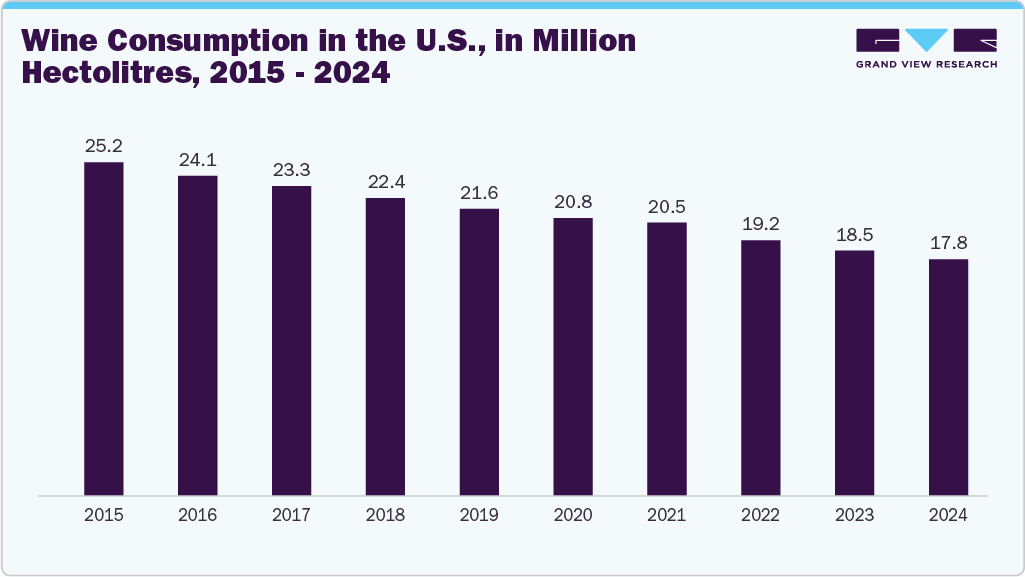
However, the wine industry in the U.S. is facing a decline as consumers are drinking less and spending less on wine. Data shows that younger generations, particularly Millennials and Gen Z, are opting for alternatives like cocktails, spirits, and non-alcoholic beverages. This shift is contributing to slower sales growth and a decrease in wine consumption overall. Consumers are increasingly opting for wines that are organic, low in alcohol, or even alcohol-free. These products are perceived as better aligned with wellness-oriented lifestyles. According to IWSR (2023), sales of low- and no-alcohol wines in North America grew by over 20% year-over-year, showing a strong move toward moderation and mindful drinking.
This trend aligns with the broader decline in alcohol consumption among Americans, especially younger adults. Compared to two decades ago, a smaller share of young Americans report drinking alcohol, influenced by factors such as health consciousness, changing social norms, and the rise of low- and no-alcohol alternatives. This shift presents challenges for the wine industry as it struggles to attract younger consumers in an evolving beverage market.
Another factor is the increased competition from other beverage categories. Beer, ready-to-drink (RTD) cocktails, hard seltzers, and craft spirits have gained popularity due to their convenience, flavor variety, and targeted marketing campaigns. These products are often perceived as more fun, trendy, or suited to casual drinking occasions, especially among younger consumers. As a result, wine is sometimes viewed as less approachable, more formal, or even outdated, particularly among consumers who don’t relate to traditional wine culture.
Economic pressures are also contributing to the decline. With inflation and rising costs of living, many consumers are cutting back on discretionary spending, including wine. Lower-income and price-sensitive consumers may turn to cheaper alcohol options or reduce overall alcohol consumption. In parallel, supply chain challenges and climate change have increased production costs, causing retail wine prices to rise and making premium wines less accessible.
Product Insights
Table wine held the largest share of 81.7% in 2024. Table wine consumption is rising among Americans due to a blend of economic, social, and lifestyle trends. In 2021–2022, total table wine consumption hovered around 830–867 million gallons, with a recent per capita figure of 2.68 gallons in 2023, up from roughly 2.57 gallons in 2010. This growth is powered by consumers “trading up”-buying fewer bottles overall but opting for higher-quality, premium wines-and propelled by a strong distribution network via grocery stores and wine clubs. Younger drinkers are on board too, showing more interest in table wines through moderated consumption, sustainability trends, and excitement over digital wine engagement.
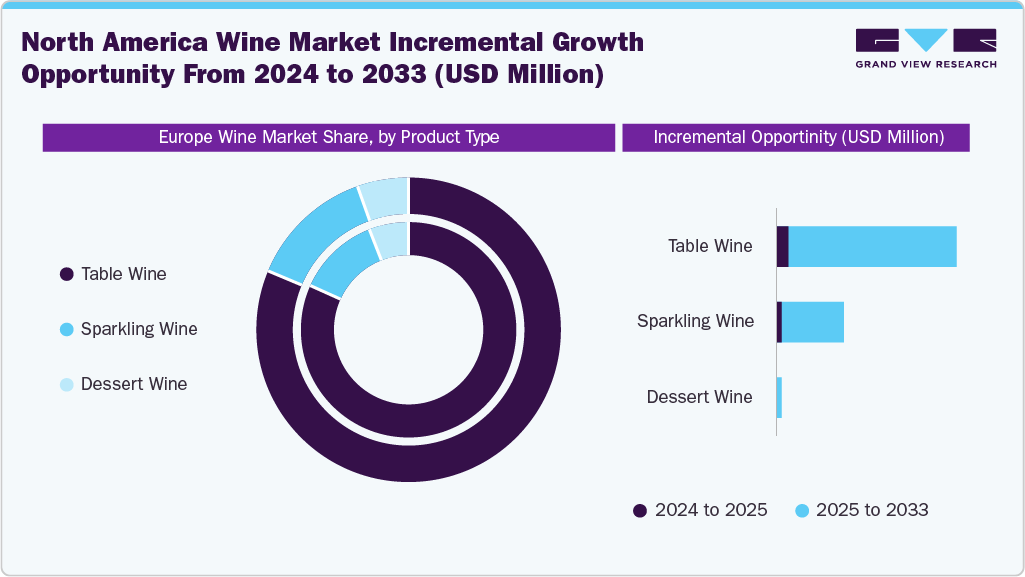
Sparkling wine is the fastest-growing segment, expected to grow at a CAGR of 8.8% from 2025 to 2033. Sparkling wine consumption in the U.S. has surged as perceptions shift-from a drink reserved for celebrations to an everyday luxury for relaxation and socializing. Between 2019 and 2022, the number of Americans drinking sparkling wine monthly rose from 56% to 72%, with a 30% increase in overall drinkers. This trend is fueled by affordable options like Prosecco and Cava, brunch culture embracing mimosas and aperitif cocktails (e.g., Aperol Spritz), and the desire to treat everyday moments as festive. Nearly 38% of sparkling wine drinkers now enjoy it weekly, a marked rise from just 22% in 2019.
Distribution Channel Insights
The sales of wine through off-trade channels held the largest share of around 76.4% in 2024.The growth of wine sales through off‑trade channels in North America is largely fueled by expanded retail access and shifting consumer convenience preferences. As more jurisdictions allow wine to be sold in grocery stores, supermarkets are attracting new shoppers. Cornell researchers found that when beer was introduced in Colorado supermarkets, store visits rose 3.6% and overall grocery spending rose 8%, suggesting similar gains for wine sales. Consumers appreciate the convenience of purchasing wine alongside everyday items, while retailers benefit from increased foot traffic and cross-category purchases. Additionally, innovations in packaging-such as canned or boxed wines-have made wine more appealing and accessible in mainstream retail settings.
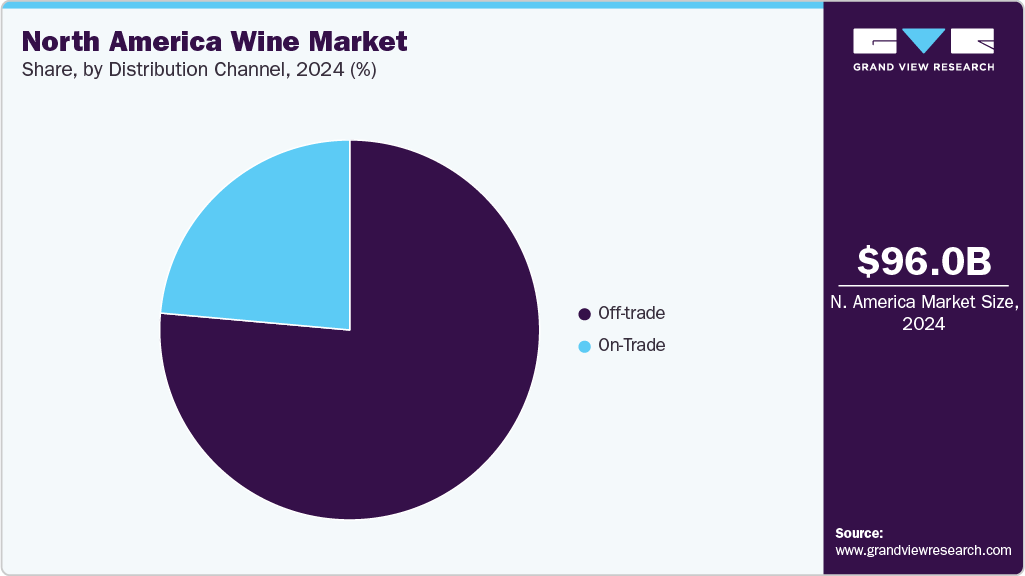
Sales of wine through on-trade channels are expected to grow at a CAGR of 8.3% from 2025 to 2033. The increase in on-trade wine sales among Americans is driven by the post-pandemic revival of bars, restaurants, and wine-focused venues, where consumers-especially millennials and Gen Z-are returning to share social and experiential drinking occasions. Restaurants and bars are also expanding their wine offerings, including flights, half‑bottles, and by-the-glass options, making it easier and more appealing for younger drinkers to explore premium and imported wines in a relaxed, social setting.
Country Insights
U.S. Wine Market Trends
The U.S. wine market accounted for the largest revenue share of 78.4% in 2024. Consumers are increasingly trading up to higher-priced, super-premium, and ultra-premium wines, demonstrating a greater appreciation for quality, craftsmanship, and provenance over mere quantity. This trend is coupled with a growing interest in exploring diverse varietals and lesser-known regions, moving beyond traditional Merlot and Chardonnay to embrace wines from emerging areas and unique grape types, reflecting a more adventurous and educated palate among wine drinkers.
Canada Wine Market Trends
The Canada wine industry is anticipated to experience the fastest CAGR from 2025 to 2033, driven by the nation’s increasing wine literacy and a cultural shift that sees wine as a more accessible and integral part of social life. Immigration also plays a key role, as Canada’s diverse population introduces a wider range of international palates, expanding demand for wines from various global regions beyond traditional European sources. This broadens the market’s offerings and encourages exploration among both new and established wine drinkers.
Mexico Wine Market Trends
The Mexico wine industry is anticipated to experience the fastest CAGR from 2025 to 2033. As economic prosperity grows, more consumers have the financial capacity and inclination to explore premium beverages beyond traditional choices. This demographic shift supports the burgeoning fine dining scene and a greater emphasis on culinary experiences, where wine plays an increasingly integral role in food pairing. Furthermore, changing cultural habits and the influence of international tourism and expatriate communities are strong drivers. Wine is increasingly perceived as a sophisticated and healthier alternative to spirits and beer, particularly among younger urban professionals.
Key North America Wine Company Insights
The competitive landscape of the North America wine market is shaped by the need for continuous investment in quality enhancement, efficient distribution, and brand differentiation to maintain market relevance and adaptability. Market dynamics are increasingly influenced by evolving consumer expectations for premium, convenient, and sustainable wine options. As awareness around wellness, lifestyle trends, and environmental impact grows, consumers are seeking wines that align with health-conscious choices, ethical sourcing, and everyday enjoyment. This shift is creating strong opportunities for wine producers and retailers who can deliver innovative, eco-friendly, and experience-driven offerings tailored to the preferences of modern American wine drinkers.
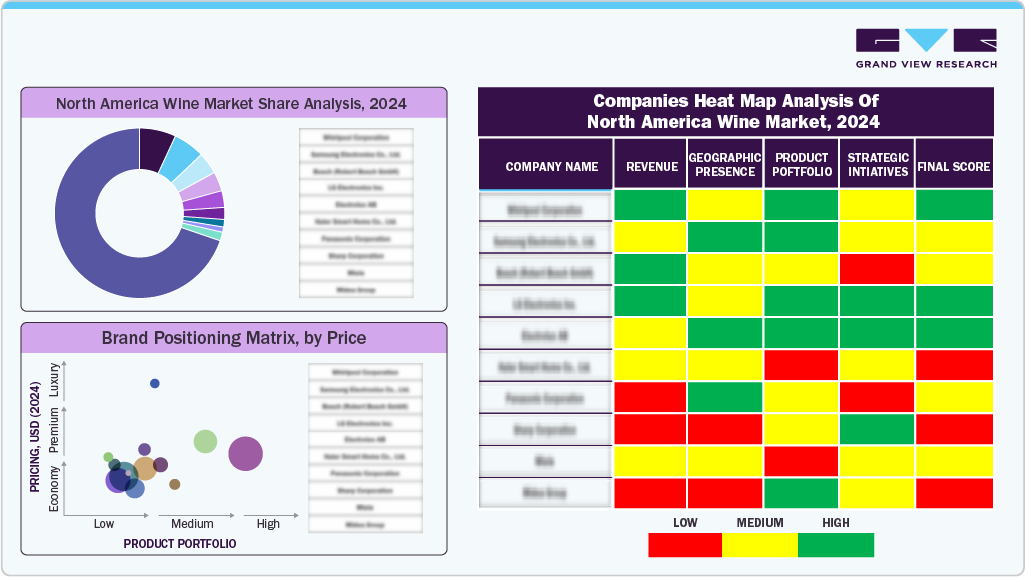
Key North America Wine Companies:
E. & J. Gallo Winery
Constellation Brands, Inc.
The Wine Group
Treasury Wine Estates
Concha Y Toro
Castel Freres
Accolade Wines
Pernod Ricard
Asahi Group Holdings, Ltd
Beijing Yanjing Beer Group Co.
Recent Developments
In March 2025, Rack & Riddle announced the strategic launch of ‘Calsecco,’ a new Prosecco-style sparkling wine category, as a key initiative to stimulate market growth. This product development is specifically designed to attract and engage the 21+ Gen Z and Millennial consumer segments, expanding their presence within the premium California sparkling wine sector. Calsecco is positioned as a “next-generation” offering, blending California’s established winemaking legacy with a distinct, modern appeal. The overarching strategy aims to achieve significant market penetration and consumer acquisition through innovative product diversification and targeted demographic outreach.
In May 2023, Sixty Vines, a restaurant known for its wine-on-tap experience, partnered with Ridge Vineyards to bring the winery’s iconic wines to taps across the U.S. This collaboration marks Ridge Vineyards’ first venture into wine-on-tap service, making their premium wines more accessible and sustainable by reducing bottle waste. The partnership aligns with growing consumer demand for high-quality, eco-friendly wine experiences while enhancing Sixty Vines’ commitment to sustainability and innovation in wine service.
North America Wine Market Report Scope
Report Attribute
Details
Market size value in 2025
USD 102.50 billion
Revenue forecast in 2033
USD 187.03 billion
Growth rate
CAGR of 7.8% from 2025 to 2033
Actuals
2021 – 2024
Forecast period
2025 – 2033
Quantitative units
Revenue in USD million/billion, volume in million liters, and CAGR from 2025 to 2033
Report coverage
Revenue forecast, volume forecast, company ranking, competitive landscape, growth factors, and trends
Segments covered
Product, distribution channel, and country
Country scope
U.S.; Canada; Mexico
Key companies profiled
E. & J. Gallo Winery; Constellation Brands, Inc.; The Wine Group; Treasury Wine Estates; Concha Y Toro; Castel Freres; Accolade Wines; Pernod Ricard; Asahi Group Holdings, Ltd; Beijing Yanjing Beer Group Co.
Customization scope
Free report customization (equivalent up to 8 analysts’ working days) with purchase. Addition or alteration to country, regional & segment scope.
Pricing and purchase options
Avail customized purchase options to meet your exact research needs. Explore purchase options
North America Wine Market Report Segmentation
This report forecasts volume & revenue growth at the regional and country levels and provides an analysis of the latest trends and opportunities in each sub-segment from 2021 to 2033. For this study, Grand View Research has segmented the North America wine market report based on product, distribution channel, and country:
Product Outlook (Volume, Million Liters; Revenue, USD Million, 2021 – 2033)
Table Wine
Sparkling Wine
Dessert Wine
Distribution Channel Outlook (Volume, Million Liters; Revenue, USD Million, 2021 – 2033)
Country Outlook (Volume, Million Liters; Revenue, USD Million, 2021 – 2033)
Frequently Asked Questions About This Report
b. The North America wine market size was estimated at USD 96.05 billion in 2024 and is expected to reach USD 102.50 billion in 2025.
b. The North America wine market is expected to grow at a CAGR of 7.8% from 2025 to 2030.
b. Table wine held the largest share of 81.7% in 2024. Table wine consumption is rising among Americans due to a blend of economic, social, and lifestyle trends. In 2021–2022, total table wine consumption hovered around 830–867 million gallons, with a recent per capita figure of 2.68 gallons in 2023, up from roughly 2.57 gallons in 2010. This growth is powered by consumers “trading up”—buying fewer bottles overall but opting for higher-quality, premium wines—and propelled by a strong distribution network via grocery stores and wine clubs.
b. Some of the key players operating in the North America wine market include E. & J. Gallo Winery, Constellation Brands, Inc., The Wine Group, Treasury Wine Estates, Concha Y Toro, Castel Freres, Accolade Wines, Pernod Ricard, Asahi Group Holdings, Ltd, and Beijing Yanjing Beer Group Co.
b. One of the primary factors fueling the rise in wine consumption is the growing interest in premium and craft wines. Consumers, especially millennials and Gen Z, are increasingly seeking higher-quality, boutique wines with unique flavor profiles, sustainable sourcing, and authentic branding. This shift is also evident in the demand for organic, biodynamic, and natural wines, which align with broader health and environmental consciousness.