
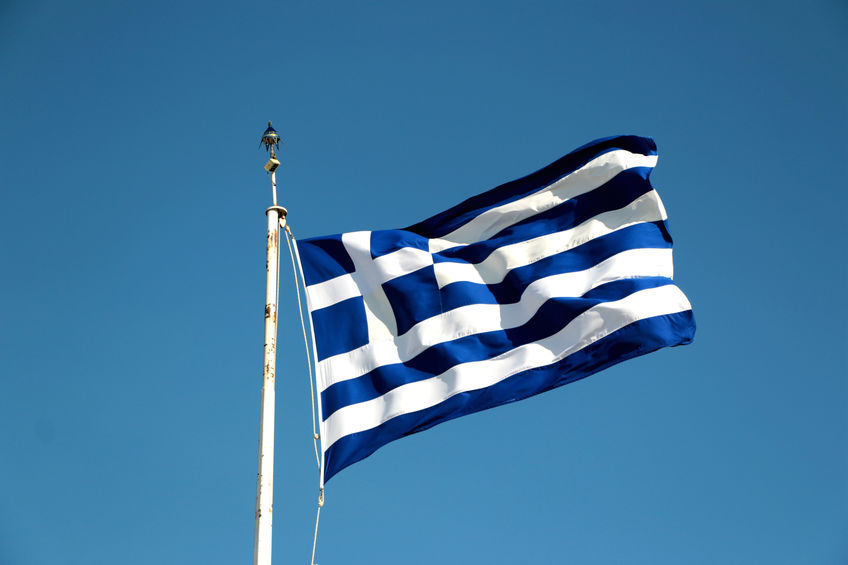
These measures were not easy, but they were necessary. Greece underwent a seismic shift, and it is once again attracting investment and regaining investment-grade status. Its equity markets are beginning to outperform those of its peers. As a recent article on Bloomberg put it, “In the summer of 2015 the country stood on the economic precipice. Now, its finances are the envy of Europe — despite the scars.”
To be clear, SA and Greece differ fundamentally in terms of scale, structure, regional context and political history. Greece is classified as a high-income country, a member of the eurozone, with access to EU recovery funds, and is fully integrated into European markets. SA, by contrast, is a middle-income, structurally dualistic economy facing persistent energy insecurity, high income inequality and rising social pressure. It is also surrounded by worse-off neighbouring countries, whose economies are a fraction of its size.
While it has been acknowledged that Greece’s recovery is still a work in progress, with many key challenges remaining, including a high debt-to-GDP ratio, the story of Greece’s recovery is relevant for SA, not because of any similarity in circumstance but in the types of lessons that can be drawn from the actions Greece took to turn its fortunes around. Greece’s experience is a reminder that in moments of crisis substantial reform is possible (and necessary) if there is the political will, institutional focus and urgency to act.
According to Stats SA, in the first quarter of 2025 SA’s GDP grew a mere 0.1%, signalling that the economy was barely expanding. This muted growth was led by agriculture, with the mining, manufacturing and energy sectors remaining weak, once again highlighting the structural constraints inherent in attracting much-needed investment.
The constraints of SA’s economic reform agenda are well understood and include:
Fiscal pressure due to high public debt, which now stands at about 77% of GDP. The National Treasury faces the tricky balancing act of stabilising debt while unlocking infrastructure and social investment.Capacity and governance failures mean government departments, municipalities and SOEs continue to struggle with implementation due to skills deficits, political appointments and administrative inefficiency. Despite plans such as Operation Vulindlela, progress is often delayed by institutional inertia and fragmented accountability.Trade policy uncertainty, particularly in the context of US tariffs on key export sectors (citrus and steel), disrupts access to markets.Infrastructure and logistical bottlenecks in the form of weak freight and port capacity hinder international trade.While energy insecurity has dominated the headlines and persists in the lived experiences of SA, water insecurity has emerged as an equally severe threat to SA’s growth and stability.Continued requirements for the government to step in and bail out failing SOEs at significant cost to taxpayers have meant that there is less money available to be directed towards infrastructure spending and job creation.
Underpinning all the factors outlined above is SA’s most persistent challenge: entrenched structural unemployment. According to Stats SA, the official unemployment rate increased to 32.9% in the first quarter of the year, with youth unemployment at almost 44%, one of the highest rates globally. The hardest-hit sectors remain agriculture, mining and manufacturing, which are sensitive to the infrastructure failures cited above and regulatory uncertainty.
Five lessons can be learnt from the Greek experience that are relevant to the SA context:
Strong political leadership is the catalyst. Technical reforms succeeded with political resolve. Greece’s progress was possible because leaders, often under intense pressure, accepted constraints, communicated clearly, took ownership of the path to economic growth and had clear time frames. For SA political leadership is sorely lacking, given the divisions in the government of national unity (GNU). Certainty of policy direction and a commitment to move in the same direction are urgently needed among the respective members of the GNU. Institutional reforms drive economic reforms. Greece’s public administration reforms (in its case with tax and digital services) reduced evasion, improved service delivery and boosted investor confidence. In SA these lessons should be applied to municipalities and SOEs. Infrastructure gaps must be tackled. The EU Recovery & Resilience Facility funds were directed towards infrastructure, which contributed significantly to Greece’s recovery. At the end of June 2025 the World Bank approved a $1.5bn development policy operation for SA to support reforms in the energy and logistics sectors, improve public procurement and bolster climate resilience. These funds need to be deployed quickly and transparently towards these initiatives. A path to recovery requires relentless reform. A 2025 IMF working paper has stressed that Greece’s recovery was not due to one policy shift but to sustained reforms over a decade, implying that reform is cumulative and not episodic. In SA, fundamental changes, whether in Eskom, Transnet or municipalities, require sequenced and consistent implementation with resolve, over many years. Without credibility there can be no economic recovery. Greece restored investor confidence by making difficult fiscal adjustments early and visibly. It consistently ran primary surpluses and communicated a stable path for debt sustainability. Lastly, it allowed for international oversight over its reforms. According to the National Treasury’s May 2025 budget overview, a primary surplus of 0.8% of GDP is projected for SA for the 2025/26 fiscal year and beyond, demonstrating a commitment to debt stabilisation. However, with debt service costs accounting for about 20% of revenue and mounting pressure related to infrastructure and social grants, fiscal credibility cannot rely solely on restraint. There must be reforms, for example, in relation to the performance of municipalities and SOEs. As with Greece, SA needs to re-examine the politicisation of key management and board positions in SOEs. In addition, where necessary, privatisation and the increased efficiency that comes with it must be seriously considered.
Greece’s recovery did not stem from a single silver bullet, nor has it been a linear process, and it is the first to acknowledge that challenges remain. Instead, its recovery has been a series of politically challenging yet technically sound reforms that were consistently implemented under both EU oversight and in-country leadership.
We are not advocating a wholesale replication of the Greek turnaround. Still, it presents a compelling case study of how a country can embark on a serious path to recovery and growth, thereby building economic credibility. It demonstrates what is possible when a government aligns on priorities, earns public trust, acts with urgency and implements a cohesive programme of economic reform to deliver economic growth.
• Ngwenya is vice-president: economics and Govender consultant economist at law firm Nortons.
Dining and Cooking