
Mocchegiani Carpano explained that where Testaccio stands today, ancient Romans built the Emporium, a port that brought in goods from all over the Mediterranean. Established around 193 BCE, the Emporium was Rome’s largest inland port and was where goods such as olive oil, wine and fish arrived and were sold, subsidised or given for free to everyday Romans. During the 1st Century CE, under emperors like Claudius and Trajan, the area grew into a thriving commercial hub to feed the city’s growing population.
In ancient Rome, sauces, oils and many food items were transported in amphorae – a type of terracotta jar. These jars were stacked on ships and sealed to preserve their contents during long trips. Once emptied, amphorae were recycled into the walls of the port complex beneath today’s Testaccio Market or shattered and discarded. These shattered, discarded vessels eventually formed a 35m-tall hill of broken pottery, known as Monte Testaccio or “Monte dei Cocci” (literally: “Mountain of Shards”), which stands at the heart of today’s Testaccio neighborhood. In fact, the name “Testaccio” comes from the Latin word testae, which means “potsherd”.
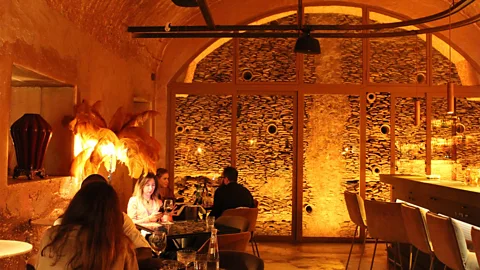
After the fall of ancient Rome in 476 CE, the Testaccio area was largely abandoned and used as farmland. At the base of Monte Testaccio, Romans carved caves into the hill’s structure. Known as grottini (small cellars), these spaces were used to store wine and other goods. The porous fragments of amphorae that make up the hill helped maintain naturally cool and stable temperatures, ideal for preserving the stored items, and Testaccio became Rome’s de facto cupboard. Today, these caves house numerous restaurants – some of which feature ancient amphorae embedded in their walls, making dining an immersive historical experience.
Testaccio’s unique culinary heritage is perhaps best captured at the well-known restaurant Checchino dal 1887, which was originally established to serve the neighbourhood’s growing working-class community. During the late 19th Century, the industrial development of Rome and the opening of a nearby slaughterhouse, known as the Mattatoio, drew an influx of workers to Testaccio. Using leftover ingredients provided by the slaughterhouse workers, Romans began transforming humble ingredients like offal (so-called “fifth quarter”) into the flavourful dishes of the cucina povera – Rome’s “cuisine of the poor”.
 Lidija Pisker

Dining and Cooking