

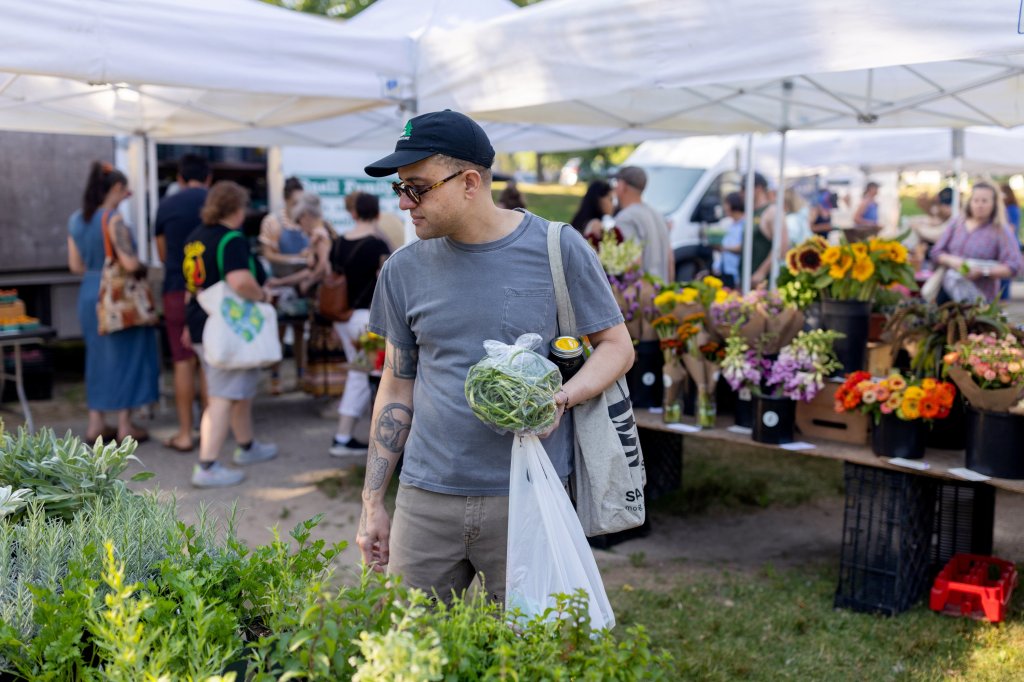
Neil Zabriskie, chef-owner of Regards, at the Portland Farmers’ Market in late July. (Brianna Soukup/Staff Photographer)
At the Portland Farmers’ Market early on a recent Saturday morning, Chef Neil Zabriskie of Regards runs his finger over a small, two-toned zephyr squash on display at the Dandelion Spring Farm stall. “The outer skin isn’t developed completely, so it’s not going to have a fibrousness to it, and it’ll eat really soft,” he says of the little zephyr, which looks like a pale zucchini and a yellow squash spliced together. “That mouthfeel is what we’re looking for.”
This morning, Zabriskie’s market mission is to find ingredients that will lend a more summery sensibility to a short rib dish that’s been on his menu. “When I go to the market, I don’t bring a list. I tend to see what’s happening here first, then I’ll build off of that,” he explained.
A casual observer could probably guess that Zabriskie is a chef. The tattoos on his right arm of morels, mackerel and the iconic oyster design from Fortune Teller Tattoo are one clue. His StarChefs tote bag — Zabriskie earned a Coastal New England Rising Star Award in 2023 from hospitality industry publication StarChefs — is another.
His exuberance over the produce at the market could be another giveaway. Chefs at the farmers’ market are like kids in a candy store, and Zabriskie is clearly delighted by the treats he’s finding from stall to stall. He’s sniffing cherry tomatoes, shishito peppers and white sage, holding up bunches of beets to check their size.
“It’s fun to see other people light up and get excited about vegetables, particularly people who are going to use them in unique ways,” said Dandelion Spring Farm owner Beth Schiller. “Neil cooks local and seasonal food; he is true to the form. And his creativity and use of the fun, different things I like to grow makes me really happy.”
“This time of year at the market, it’s so exciting, because every week it changes,” Zabriskie said. “You can’t beat the vegetables we have at the market right now. They’re just insane. It blows me away. I’ve cooked all over this country, and Maine’s produce and farmers — the work they’re doing to bring this to the public every week — it just gets better all the time.”
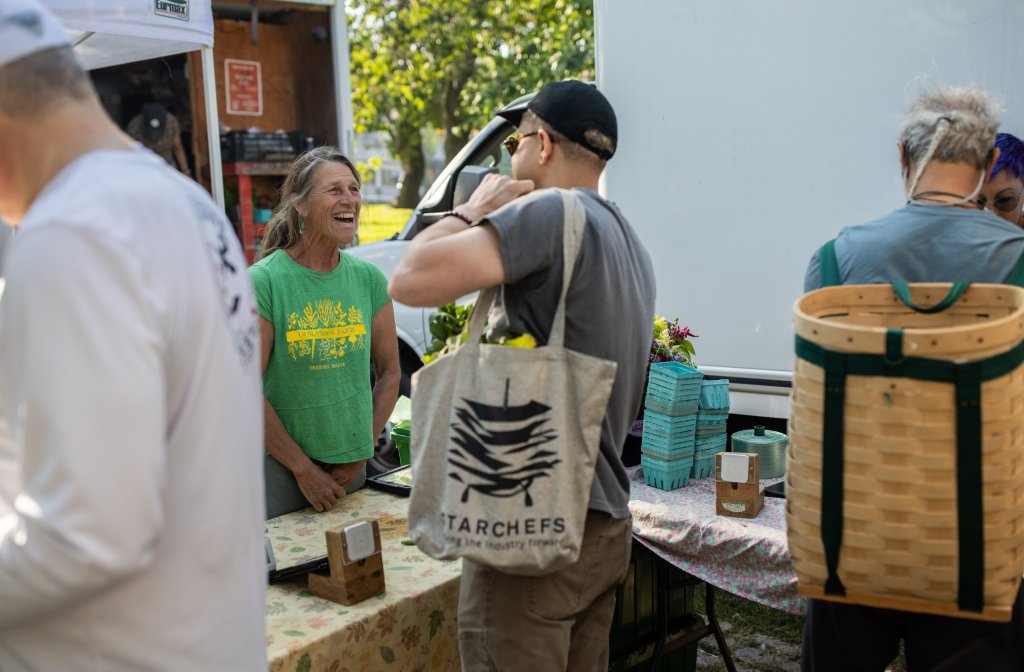
Zabriskie chats with Jan Goranson of Goranson Farm as he pays for his produce at the Portland Farmers’ Market. (Brianna Soukup/Staff Photographer)
BROWSING WITHOUT A LIST
Many Maine chefs try to work with as much local produce as possible, and their restaurants get regular deliveries of vegetables and fruits from area farms. But at the height of the tourist season, it can be hard for them to break away from the kitchen for a trip to the market. And market visits aren’t practical for higher-volume restaurants that need items in greater quantity than the amounts available at the farmers’ stalls.
But for chefs of smaller, seasonally driven restaurants, a farmers’ market trip is worth the time and effort, particularly since farmers often bring ingredients to the market — new harvests or smaller-yield crops — that aren’t on the wholesale lists they distribute to restaurants.
“It’s extra work on my plate,” said Jeremy Broucek, executive chef and co-owner of the 30-seat Bread & Friends in Portland. “But there’s a balance there, because it’s really important to see the produce and the offerings that are coming up, especially with the rapid seasonality we have in Maine.
“It’s also about seeing the quality (of the produce), and that in-person interaction with the farmer is important as well,” added Broucek, who asks the farmers how the weather is affecting crops, and how long certain produce might be available, to help him better plan his menus.
Like Zabriskie, Sur Lie Executive Chef Sam Helmke prefers to go to the farmers’ market without a list. “I usually don’t start with a dish that I want to do. I find what’s best-looking,” he said. “When you can go to the farmers’ market with no need, then you can truly appreciate it. You can just start with the best quality product.”
The market can be a learning experience even for seasoned chefs. David Turin, chef-owner of David’s Restaurant in Portland and David’s 388 in South Portland, said he discovered sweet Italian Tropea onions at the market some years back when it was held in Monument Square just steps from his restaurant. “Next thing you know, I’ve got, like, three dishes that have the Tropea onion, and I’d never even seen it before.”
Broucek recalled a dish he made earlier this year at Bread & Friends featuring lightly grilled broccoli rabe, green garlic, shaved radish, fresh oregano and lemon balm, all of which he picked up from Dandelion Spring Farm during a farmers’ market trip this spring. “When you can talk to the guests and say, ‘These are all coming from the same farm, and this dish is inspired by what that farmer is doing and what’s in season right now,’ I think it becomes even more special for the guest,” he said.
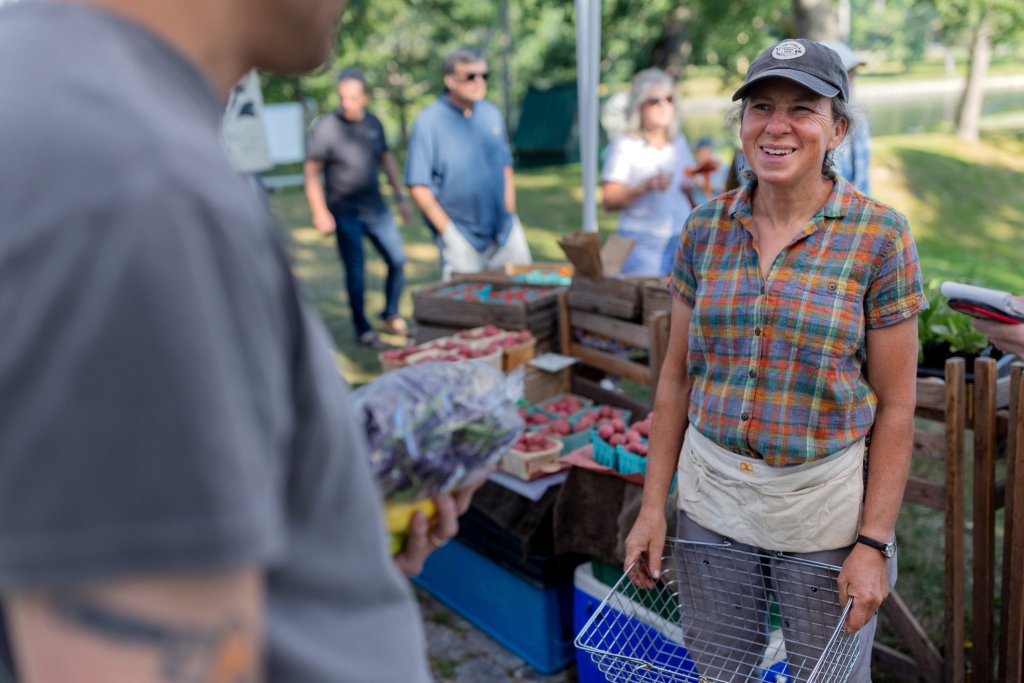
Beth Schiller, owner of Dandelion Spring farm, chats with Zabriskie at the Portland Farmers’ Market. (Brianna Soukup/Staff Photographer) Brianna Soukup
“The more that chefs embrace local seasonal foods and offer it to our community, and the more they can be explicit about how they’re doing that, the more it’s going to encourage everyone who eats their food to also seek out local ingredients,” Schiller said.
Jake Stevens, chef-owner of Leeward in Portland, leaves room in his menu planning for a little spontaneity at the market.
“I like to allow a certain amount of that because I feel if you’re in a rut creatively, it helps spark those juices,” Stevens said. A few years back, he was thrilled to find Romano beans at the market from Snell Family Farm in Buxton, along with the farm’s first poblanos of the season. He used both items to develop what would become one of Leeward’s summer staples, grilled Romano beans atop green poblano romesco sauce.
“It’s very much in the old adage that if things grow together, they go together,” he said. “These were in the ground at the same place at the same time, they’re ready at the same time, and they both looked amazing. It’s almost kismet that they should be on a plate together.”
Stevens felt a similar creative spark when he ran into the first sour cherries of the season at the market earlier this year.
“When you’re there and you see something that’s the first harvest of the year — whether it’s the first flat of sour cherries and you haven’t seen them in 11 months, or the first harvest of green garlic in spring — it’s super exciting,” he said. “It can inspire you to do something fresh and new, and use these ingredients in ways you haven’t before. I thought the sour cherries would be great for sorbetto. I’m like, ‘I’ve got to get these because Michelle (Hicken), my pastry chef, is going to go crazy for them.’
“So I’ll go in and — probably sometimes to the annoyance of other people at the market — I’ll buy all of them up,” Stevens continued. “I can’t say how many times I’ve had people be like, ‘Are you going to take all of them?’ And I’m like, ‘You can have a pint, sure. Then I’ll take the rest after you.’”
“You can usually tell the people who are chefs — they’ve got big wagons they’re pulling with them because they’re buying in much more bulk than the average customer,” said Portland Farmers’ Market president Caitlin Jordan Harriman. “Look for the wagons that are pulling boxes of vegetables, not kids.”
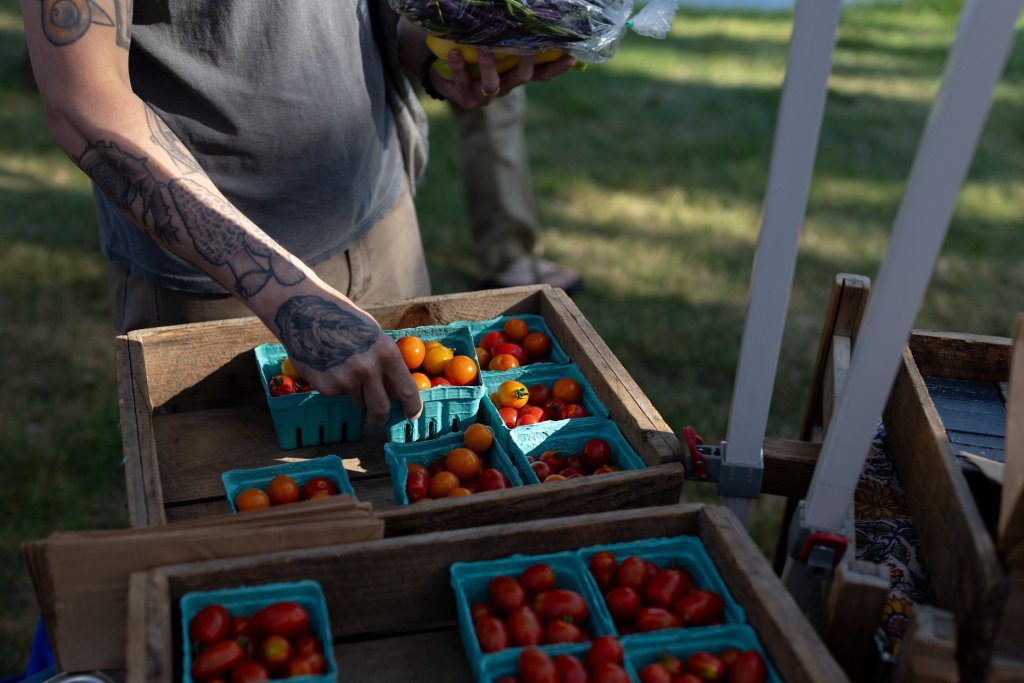
Zabriskie peruses tomatoes at the market. (Brianna Soukup/Staff Photographer)
‘LET THE INGREDIENT SHINE’
Zabriskie makes it a priority to visit the Portland Farmers’ Market in Deering Oaks park weekly, and sometimes on Wednesdays, too. As a chef, he came up in his native Southern California and later in New York City working at restaurants where farmers’ market trips were part of the game plan. Now he often brings his younger cooks to the market.
“I’m working with them to develop that confidence in coming to the farmers’ market,” said Zabriskie, who co-owns Regards with his wife, Kimberly Lund Zabriskie. “I bring them here to talk about the produce and why I’m doing what I’m doing, so that I can pass it along to the next person. At that age, I was given that, so I try to give it back to them as well.”
At the Dandelion Spring Farm stand, a bag of pristine purple pole beans catches Zabriskie’s eye. “This time of year, we’re going to look for things that we can just use raw,” he says. “What happens to these pole beans if you blanch them or ferment them, they actually just turn green and you lose all that beautiful purple color, so utilizing them raw is really nice.”
At the Snell Family Farm stand, Zabriskie finds vivid green coils of garlic scapes, and he’s impressed by how tender they are. “These particular ones, they’re supple,” he says. “They’re going to be easy to eat.”
Top-quality summer produce doesn’t require much manipulation, another bonus for chefs. “This produce, these ingredients are so good, and if you’re thoughtful and just refine a little bit, the flavors are going to speak for themselves,” Helmke said. “We don’t even need to dress it up that much. We can just nourish people with what was grown only 20 miles away.”
“We season (the local produce) well, treat it with respect, add some acid, salt and fat, and let the ingredient shine on its own,” Stevens said. “Just like the restaurant scene here, our farmers’ market scene punches way above its weight. Our farmers in general don’t get enough credit for the food scene in Portland. It wouldn’t be half of what it is without the great local produce.”
Helmke said for the success and sustainability of Maine’s food system in general, it’s crucial for chefs to develop strong working relationships with local farmers. “We should be trying to use as much local product as we can to not only aid the local economy but also our local ecosystem,” he said. “With the amount of emphasis this state puts on land conservation and caring for our natural ecosystem, I think that helping that ecosystem and our farmers should be a priority of the culinary industry.”
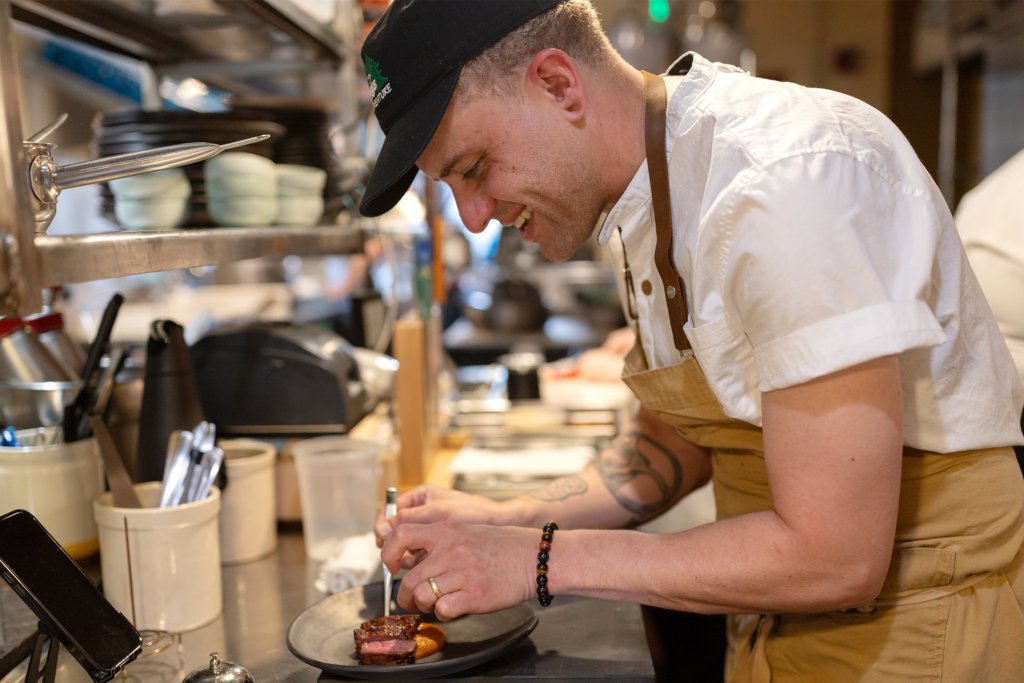
Zabriskie plates his costillas dish in the kitchen at Regards. (Brianna Soukup/Staff Photographer)
MAKING A ‘MARKET MOLE’
Zabriskie leaves the Saturday market after about an hour with a haul that includes four pints of sour cherries from Uncle’s Farm Stand, a pound of purple pole beans, a pound of garlic scapes, a pound and a half of zephyr squash, and some spring onions. By 4 p.m., an hour before dinner service, Zabriskie and his kitchen team have prepped all the components for the new short rib dish.
He combined the plump sour cherries and spring onions with some husk cherries and cooked the mixture down to a paste. Then he blended the sour cherry paste with dried chilies, toasted nuts and sesame seeds to make a velvety, nuanced mole sauce thickened with house-ground masa his kitchen makes from corn he sources from Liberation Farms in Wales.
“This is a really easy mole,” he said of the dark orange sauce that took about two hours to pull together. “We make a negro mole that takes about three days to make, cooking off all the peppers and nuts and hydrating the fruit and turning it into a deep, dense mole. But this is a young market mole, which is perfect for the season.”
Zabriskie thinks of the refined dishes he puts out at Regards as “modern Mexican cuisine” using Maine ingredients, and the food is informed by his experiences growing up in Southern California and traveling through Mexico and South America. “It’s super cool to be able to find ingredients up here that we can use to make a mole comparable to what you’d find in Mexico,” he says. “It’s special to find ingredients that have a voice and be able to activate them to sing in that way.”
Instead of braising the short ribs, Zabriskie went with flanken-cut (Korean-style) short ribs from Misty Brook Farms in Albion, cut across the grain and bone, so that his team can grill them — a cooking method that shouts summer. He prepares a sample plate for a test run, spreading mole in the center of the dish and topping it with rosy slices of grilled short rib, which he’d marinated in mezcal, miso and mirin. He then carefully arranges the thinly sliced raw purple beans and zephyr squash along with garlic scapes — which he’s given a quick soak in a 2% brine to season — over the beef, as well as some cilantro flowers. During service, he’ll add lightly grilled zephyr squash to the dish.
Zabriskie puts the Costillas (Spanish for ribs) dish on the menu for $44, and it’s one of the night’s top sellers. “People were blown away,” Zabriskie said later. “We’ve been rolling through different variations of short rib (dishes) to accomplish a summery goal, but I think we finally hit the mark this week with that sour cherry coming into the market. Grilling it simply and serving it with raw, peak season vegetables has been a beautiful iteration of a continuing dish.”
Of course he’s pleased that his customers appreciated his new dish, but Zabriskie says he’s even more gratified by the long-standing connections he has with local farmers that enable him to bring his visions to life.
“Part of the payoff for me is that I have these relationships with farmers that I have worked on for years and will continue to work on. Because working with local farmers is the only way they can exist, and it’s the only way a small restaurant like us can exist. The food system is a circle, and you have to maintain that circle.”
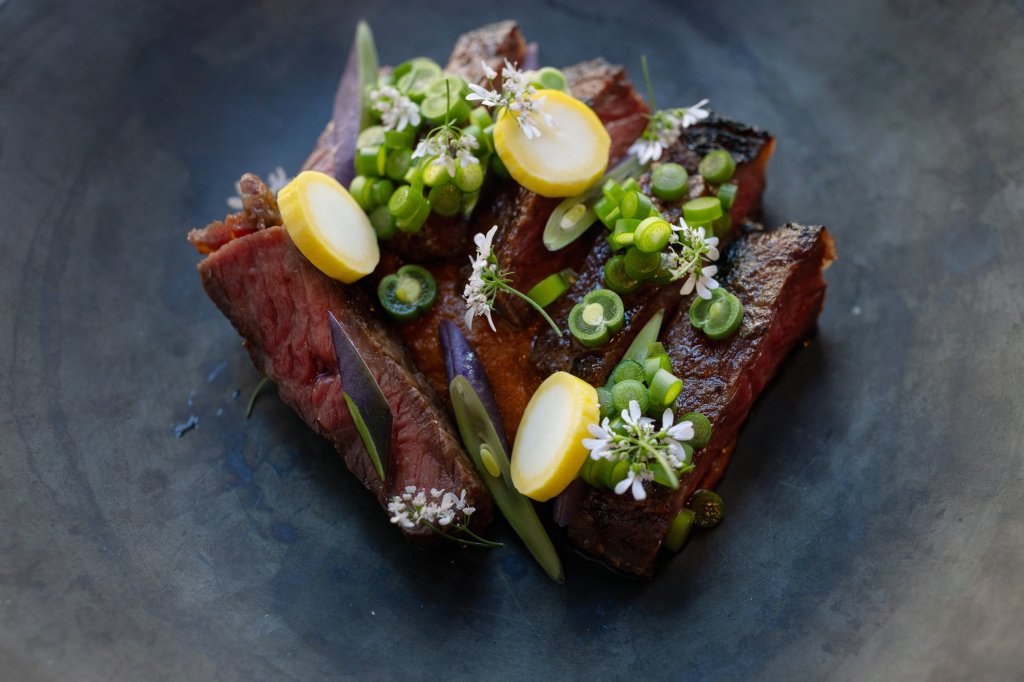
Costillas at Regards: flanken-cut short ribs with a sour cherry-spring onion mole, thin-sliced pole beans, lightly pickled garlic scapes and zephyr squash. Zabriskie made the dish from produce he’d bought earlier in the morning at the Portland Farmers’ Market. (Brianna Soukup/Staff Photographer)
Copy the Story Link
Dining and Cooking