
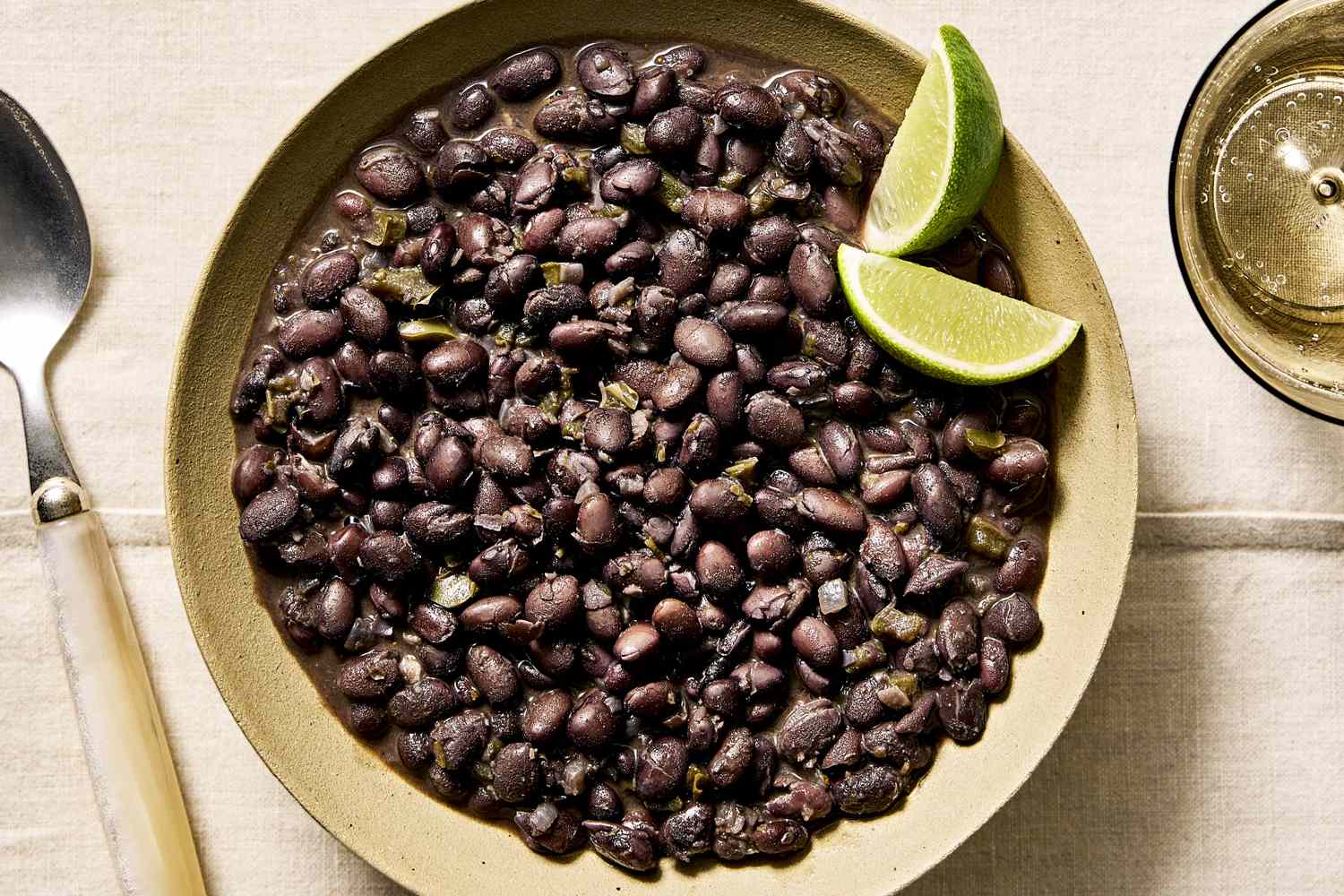
Editor’s note: Romulo Yanes, who shared this recipe for his mother’s Cuban-style black beans (and the story behind the dish) with Food & Wine, was an award-winning photographer best known for his food photography for Gourmet magazine, where he worked for 26 years. He passed away in 2021 at the age of 62.
“I would love to have your mom’s cooking at my birthday,” my partner, Rob, said to me last fall. He always loved certain dishes that she made, especially her beans and rice. My mother had passed away earlier that year, in June. This would be the first time cooking her recipes without her. I grew up in Cuba with my mom’s cooking. Later, when we lived in the U.S., we would cook together whenever she visited from Florida. But neither of us wrote anything down. Nevertheless, I took the challenge on.
There was a freshness in my mom’s cooking. It was homely and not overly fussy. Her black beans are a perfect example. They begin by simply cooking dried black beans with onion, green pepper, and bay leaf in a pressure cooker, which makes quick work of dried beans, infusing them with flavor while turning them very tender and soft. She would then make sofrito: garlic, onions, and green pepper gently cooked for a long time in olive oil. She would add the sofrito to the beans, which enriched the cooking liquid and gave them a mellow flavor that didn’t hit you over the head and really went well with everything else she served them with — the toasted rice, the sweet fried plantains, the boiled yuca, and the tender shredded beef of the ropa vieja. She served an achingly sweet caramel flan for dessert. And for me, all of these things together made the perfect meal. And so I did cook my mother’s recipes for 30 people on Rob’s birthday.
I’ve made a career out of being a professional food photographer, and when I was making her recipes, there was a moment when I thought, Let me add the yellow and red peppers instead of the green, for color. But you know what? That’s not the food that I remember. I started embracing the brown colors and tones and the earthy richness of each element. I wanted the beans to look and taste as they did when I grew up eating them. And so they did, and the meal was a huge success and a perfect tribute to her. I hope you enjoy this dish as much as I still do. A pressure cooker speeds everything up, but is not essential. — Romulo Yanes
Are black beans native to Cuba?
Black beans have been cultivated for more than 7,000 years and are native to Central and South America. They account for about half of the beans consumed in Cuba, making them the most popular bean on the island.
What does sofrito consist of?
“Sofrito” means “lightly fried” in Spanish and refers to the aromatic foundation essential to dishes throughout the Mediterranean, Latin America, Spain, Italy, and Portugal. The exact blend varies from country to country, but nearly all versions include onion. This Cuban sofrito adds garlic and green pepper to the mix and is cooked slowly in olive oil.
Note from the Food & Wine Test Kitchen
To make beans in a programmable pressure multicooker, cover the cooker with lid, and lock in place. Turn the steam release handle to SEALING position. Select MANUAL/PRESSURE COOK setting. Select HIGH pressure for six minutes. (It will take about 15 minutes for the cooker to come up to pressure before cooking begins.)
Carefully turn the steam release handle to VENTING position, and let steam fully escape (float valve will drop). (This will take two to four minutes.) Remove lid from cooker. Proceed with step 3 as directed. In step 5, cook beans, uncovered, on SAUTÉ setting at HIGH temperature until tender, about 20 minutes. Proceed with step 5 as directed.
Make ahead
Beans can be stored in an airtight container in the refrigerator for up to four days. Reheat over low, stirring often.
Dining and Cooking