
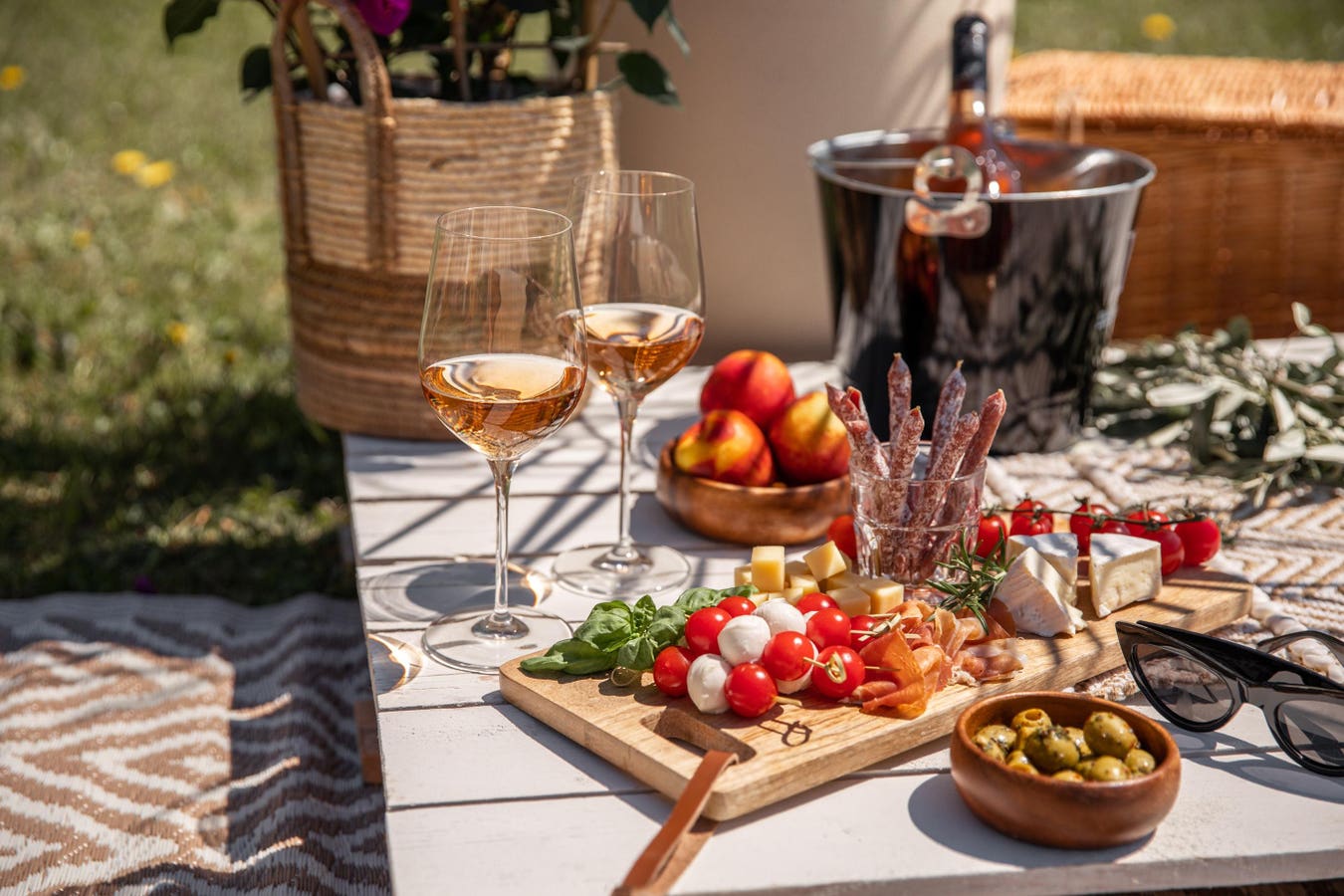
Glasses of Italian rose wine with antipasti picnic food snacks
getty
From the sun-drenched hills of Puglia to the alpine slopes of Alto Adige, Italy’s rosato wines are rewriting the rules of pink. No longer the underdog of the wine world, Italian rosé bursts with regional character—ranging from crisp and citrusy to deep, savory, and structured. Driven by local grapes, centuries-old traditions, and fresh innovation, these wines are earning global acclaim. Here’s a taste of what makes Italy’s rosé scene so exciting right now.
Italian Rosé Wines: Background & Regional Overview
Puglia
Rosé wines from Puglia exhibit a bright pink hue, are medium-bodied, and feature flavors of wild berries, herbs, and a hint of salinity. The main styles include Salento Rosato and rosatos made from Negroamaro and Bombino Nero. The region’s soils consist of limestone, clay, and iron-rich loams. Notable DOCs are Salice Salentino Rosato DOC and Castel del Monte Bombino Nero DOCG.
Abruzzo
Abruzzo produces some of the most intensely colored rosé wines in the world. The Cerasuolo Rosato is a dark red wine made from Montepulciano, with notes of cherry, rose petal, and spice, along with a distinctive tannic backbone. The main styles are Cerasuolo d’Abruzzo. The soils are carbonate-rich, mainly consisting of calcareous clay and marly limestone. The notable DOC is Cerasuolo d’Abruzzo DOC.
Tuscany
Tuscan rosé wines are dry and fresh, with notes of strawberry, citrus peel, and dry herbs. The primary style is Sangiovese-based rosato. The soils are mainly Galestro, a type of very friable clay-schist composed of clay-limestone and sandy loam. The notable DOCs include Bolgheri Rosato DOC and Toscana IGT.
Veneto
Venetian rosé wines are pale pink and elegant, with notes of pomegranate, red currant, and floral hints. The main style is Bardolino Chiaretto DOC. Soils are primarily glacial moraines of limestone, sand, and gravel. The notable DOC is Bardolino Chiaretto DOC.
Alto Adige/Südtirol
Rosé wines from Alto Adige are crisp and refreshing, featuring floral and fruity aromas complemented by a minerally edge. The primary style features rosé made from Lagrein or Pinot Noir. The soils are composed of alluvial gravels and decomposed volcanic porphyritic rocks. The notable DOC is Alto Adige DOC.
A glass of rosé wine overlooking salt pans and windmill at sunset, Marsala, Sicily, Italy.
getty
Sicily
Historically, Sicily has not been a major producer of rosé wines; however, this has changed in recent years as demand has increased. These wines are herbal and fruity, showcasing Mediterranean herbs and citrus, especially blood orange, with vibrant acidity. The primary rosato expressions are wines made from Nero d’Avola and Nerello Mascalese. The soils are a mix of decomposed volcanic material, especially on Etna’s slopes, along with sand and clay. The notable DOCs are Etna Rosato DOC and Sicilia DOC.
As of 2024, Italy had 528 recognized appellations, but only a few are designated for rosé wines. The one rosé-specific DOCG, Italy’s highest quality designation, is Puglia’s Castel del Monte Bombino Nero. The three primary rosé-oriented DOCs are Bardolino Chiaretto (Veneto), Cerasuolo d’Abruzzo (Abruzzo), and Etna (Sicily).
Below are brief descriptions and tasting notes on a representative mix of Italian rosé wines. All bottles are 750 ml.
Sybar, Masseria Li Veli, Rosato, Puglia IGT, Italy 2024, 12.5% ABV
Masseria Li Veli is a renowned winery in Puglia, specializing in native grape varieties cultivated sustainably in the Salento region. “Sybar” is a crisp, contemporary rosato crafted from Negroamaro.
The wine offers aromas of wild strawberry, rose petal, blood orange, and Mediterranean herbs. It’s floral and fruity on the palate, featuring red berries, pomegranate, and a salty edge from maritime influences. The finish is long and crisp, with lingering notes of citrus peel and a refreshing herbal undertone.
Garofoli, Komaros, Marche Rosato IGT, Italy 2024, 12% ABV
Garofoli is one of the oldest family-run wineries in the Marche region along Italy’s Adriatic coast. “Komaros” is made from 100% Montepulciano, a grape known for its depth and richness, even in rosé form.
The wine offers aromas of ripe cherries, raspberries, rose petals, and a hint of spice. It’s medium-bodied and smooth on the palate, with soft tannins and lively acidity, revealing flavors of red plum, cranberry, and clove. The finish is long, fruity, and floral, with lingering savory notes and a subtle mineral undertone.
Masseria Li Veli, Torrerosé Rosato, Salento IGT, Italy 2024, 12.5% ABV
This rosato is crafted from Primitivo grapes grown in the hot, sun-drenched vineyards of Salento. “Torrerosé” references the coastal watchtowers of Puglia and the wine’s vibrant pink hue. It provides a fruit-forward, fuller-bodied style of rosato with a distinctive tannic backbone.
The wine features black cherry, watermelon, dried herbs, and hibiscus. It is smooth and rounded on the palate, with medium acidity that highlights ripe berries, red currants, and pink peppercorn. The finish is long and smooth, with lingering fruity and spicy notes.
La Valentina, Cerasuolo d’Abruzzo DOC, Italy 2024, 13% ABV
La Valentina is a leading producer in Abruzzo, renowned for wines that showcase the region’s distinctive mountainous terroir. Cerasuolo d’Abruzzo is an unusual rosé made from Montepulciano, known for its deep cherry hue and full-bodied style.
The wine features notes of sour cherry, rose hips, orange zest, and subtle earthy undertones. The palate is rich and textured, with a prominent tannic backbone and firm acidity, revealing flavors of ripe cherry, cranberry, and savory herbs. The finish is long and elegant, with a pleasing bitter-cherry note and a firm acidity.
Panorama of Limone sul Garda, a small town on Lake Garda, Italy.
getty
Scaia Rosato IGT, Veneto, 2024, 12.5% ABV
Scaia is a modern brand from the Tenuta Sant’Antonio estate in the Veneto region. Their rosato is typically made from Rondinella, a grape traditionally used in Valpolicella, which lends the wine a floral and fruity profile with a pale, Provençal appearance.
The wine is floral and fruity, showcasing peony, wild strawberry, orange blossom, and peach skin. It’s light and delicate on the palate, with flavors of red berries, citrus zest, and floral notes. The finish is long and crisp, with subtle minerality and a hint of almond.
Guerrieri Rizzardi, Chiaretto di Bardolino Classico DOC Veneto, 2024, 12% ABV.
Guerrieri Rizzardi is one of Bardolino’s most historic estates, producing Chiaretto from Corvina and Rondinella grapes since the early 20th century. Their vineyards are located near Lake Garda, on glacial moraine soils that enhance freshness and aromatic clarity. This rosato is vinified in stainless steel with brief skin contact to maintain delicacy.
The wine offers aromas of alpine strawberry, white cherry, grapefruit zest, and wildflowers. It’s bright and crisp on the palate, highlighting citrus, red currant, and a subtle saline minerality. The finish is long and refreshing, with a hint of herbs and lingering blood orange flavors.
Planeta “Rosé, Terre Siciliane IGT, 2024, 12.5% ABV
Planeta is one of Sicily’s most respected and innovative wineries. Their rosé features a blend of Nero d’Avola and Syrah grown in coastal vineyards around Menfi. The sandy-clay and limestone soils near the Mediterranean add both aromatic intensity and elegance. The wine is produced through gentle pressing and cold fermentation.
The wine offers aromas of pomegranate, rosé petals, blood orange, and fresh herbs. It’s medium-bodied and smooth on the palate with flavors of watermelon, red plum, and a hint of sea salt. The finish is long, dry, and savory with a lingering citrus note and mineral edge.
Elena Walch “20/26” Rosé Alto Adige DOC 2024, 13.5% ABV.
Elena Walch is a trailblazer in quality-focused winemaking in Alto Adige. Her “20/26” rosé—named after the perfect serving temperature—is made from high-altitude vineyards in Caldaro and Tramin. The blend of Lagrein and Pinot Noir highlights the structure of the former and the finesse of the latter.
The wine offers aromas of ripe mountain berries, cranberry, rosehip, and violet, with a touch of spice. It’s bright on the palate with ripe, firm tannins and crisp acidity, revealing flavors of red currant, rhubarb, and stony minerality. The finish is long and refined, with lingering notes of red berries and dried alpine herbs.
Italian rosé wines are incredibly varied, from light and floral to rich, savory, and age-worthy. They are made in nearly every Italian region, with unique features shaped by climate, grape variety, and soil. Whether it’s the cherry-hued Cerasuolo from Abruzzo or the sea-breeze-kissed Chiaretto from Lake Garda, Italian rosato offers top-quality, regional character, and great value.
More From Forbes:ForbesTemecula In Bloom: A Rosé Renaissance In Southern California Wine CountryBy Joseph V MicallefForbesSip Into Summer With Italy’s Classic Pinot Grigio WinesBy Joseph V MicallefForbesOregon Pinot Noir Rosé—Why Saignée Method Wines Stand OutBy Joseph V Micallef
Dining and Cooking