
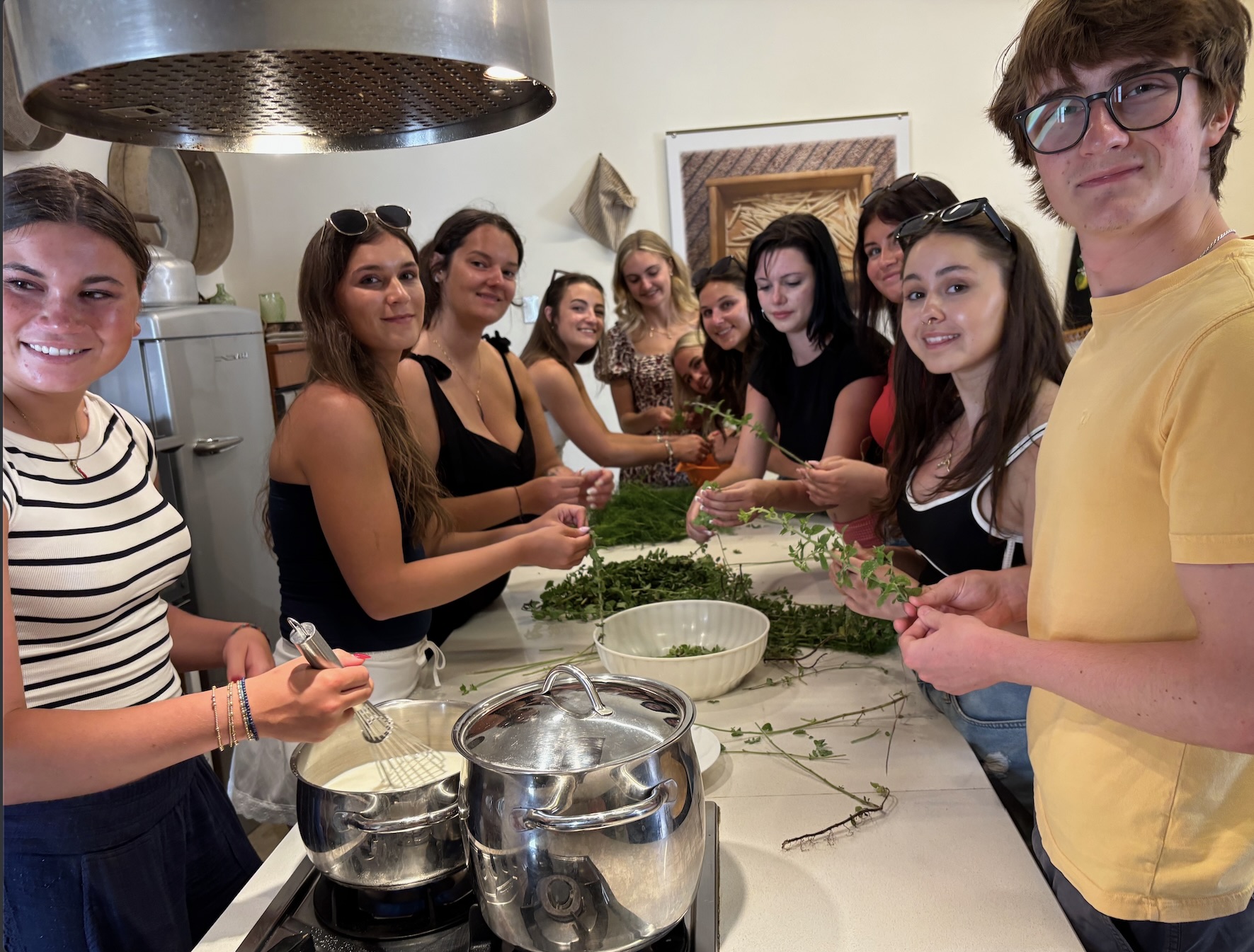
Sugar and almonds are also the key ingredients in biancomangiare, a traditional dessert made with almond milk (or cow’s milk) and thickened with cornstarch. It can be flavored with cinnamon and lemon peel and topped with chopped pistachios. This is what Mary Adams is making in the photo above, taken in the kitchen of the ethnographic museum “Tempo Museo Dei Sensi” in Canicattini Bagni in the Ibleian mountains outside the city of Syracuse. The citrus fruits introduced by the Arabs also found their way into vegetable dishes like the typical Sicilian salad of fennel and orange, in which the Arabic culinary tradition of blending sweet and savory flavors lives on.
During their time in Sicily, students also serve the community—the photo shows the fruit salad they prepared for Caritas, a church-run soup kitchen. We know as the dish as fruit salad; in Italian it’s called “macedonia,” a name derived from the French and inspired by the diverse population of the Macedonian Empire.
The Spanish empire, ruling Sicily for 500 years, greatly influenced the island’s desserts and pastries. Sugar from the Arab conquest added to the cacao from the Spanish conquest of the “New World,” resulted in the creation of a distinctively Sicilian style of chocolate. Americans today might recognize this chocolate as similar to a Mexican or stone-ground, cold-processed sweet—a granular chocolate with visible sugar crystals.
Dining and Cooking