
Summary 
Bosnia and Herzegovina’s olive oil industry is flourishing, with the opening of the country’s first olive oil tasting room, Paxa House, in Potoci near Mostar, aiming to educate visitors about olive oil and sustainable agriculture while allowing them to sample and purchase local products. Efforts to integrate the country’s olive oil industry into the international context have included seeking European Union recognition for Zlatne Kapi, with Herzegovinian producers winning multiple awards at the 2025 NYIOOC World Olive Oil Competition.
Bosnia and Herzegovina’s olive oil industry is experiencing a renaissance, with local producers achieving international recognition and expanding cultivation efforts.
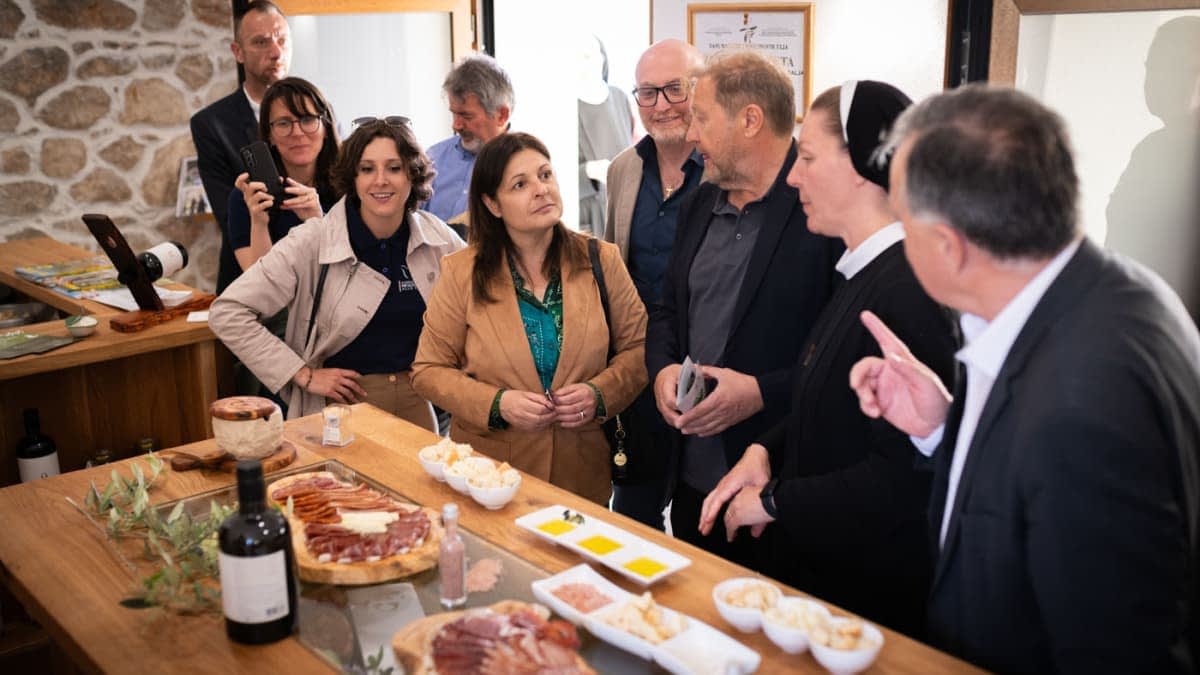
Now, the country’s first olive oil tasting room, Paxa House, has opened in Potoci near the Herzegovinian capital of Mostar.
Located in the convent of the School Sisters of St. Francis, Mladen Todorovic from the sustainable agriculture advocacy group Green & Healthy BiH expects the spot to gain traction due to its location on the main tourist route from the national capital, Sarajevo, to Mostar.
See Also:The best extra virgin olive oil from Herzegovina
The architects of Paxa House stated that the goal of the tasting room is to educate visitors about olive oil and sustainable agriculture, allowing them to sample and purchase extra-virgin olive oil and other products from local producers.
Paxa House, which translates to “House of Peace,” is the latest of 12 stops on an olive oil route through Herzegovina, which is responsible for virtually all of the country’s olive oil production.
“This success provides a genuine impetus for greater collaboration among our olive growers in their pursuit of exceptional extra virgin olive oils,” said Marko Ivanković, director of the Federal Agro-Mediterranean Institute (FAZ).
Interest in olive cultivation has been increasing in recent years, driven by local growers and officials seeking to develop agritourism in conjunction with olive cultivation.
Emphasizing quality has been one of the strategies employed by local authorities in their pursuit of European Union recognition for Zlatne Kapi, in the form of a Protected Designation of Origin certification.
After receiving approval from local officials in September 2024, the group behind the PDO submitted its application to the European Union on May 15th.
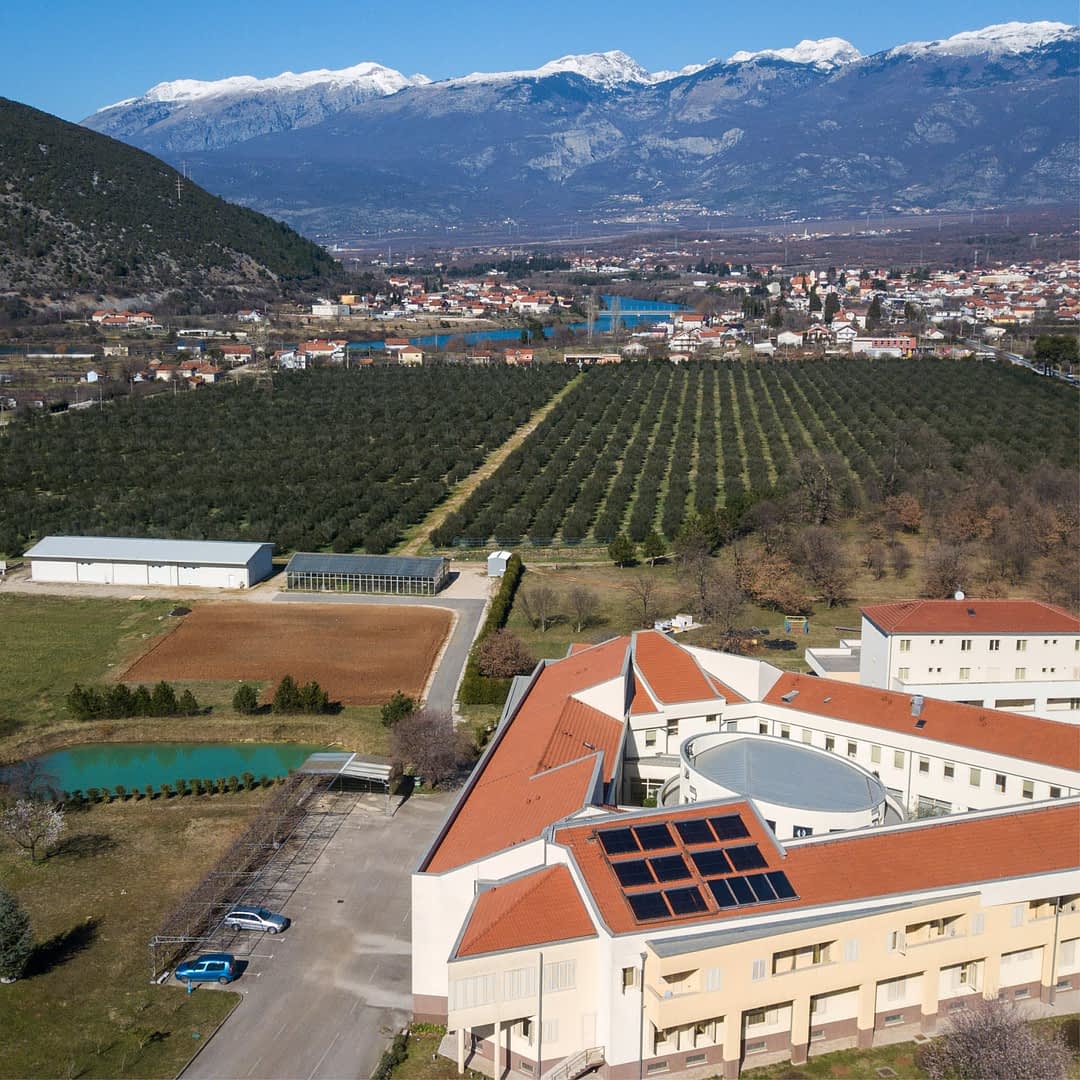 The convent of the School Sisters of St. Francis sits on the scenic road between Mostar and Sarajevo. (Photo: Paxa House)
Currently, only one other product from Bosnia and Herzegovina has a geographical indication, in the form of a Protected Geographical Indication, for Livanjski sir, a type of cheese made from a mixture of sheep and cow’s milk.
Integrating the country’s fledgling olive oil industry into the international context has been another key aspect of this effort, with the country’s ambassador to Spain announcing Bosnia and Herzegovina’s intention to join the International Olive Council at the beginning of the year.
These efforts follow the inauguration of the Center for Olive Growing in Mostar in March 2024, which was partially funded by the local chamber of commerce.
“What we have tried through this project is to keep our autochthonous varieties of olives in Herzegovina, but also to introduce some new ones, all to determine which ones are most suitable for our area, and ultimately getting the best quality oil,” said Mia Glamuzina, legal and economic director of the chamber.
Bojan Spasojević, who is the head of the center, said Spanish, Greek and Italian olive varieties have been planted, with Koroneiki demonstrating some of the best results to date.
According to FAZ, there is evidence of olive cultivation dating back more than 1,000 years in Herzegovina, but the crop was lost over time, dwindling to 18 hectares by 2010. Since then, farmers have planted more than 500 hectares of groves and FAZ opened a new laboratory to conduct physico-chemical tests.
Along with rising production, which reached a record high of 280,000 liters in the 2022/23 crop year, Herzegovinian producers have also enhanced the quality of their production, winning a record 11 awards at the 2025 NYIOOC World Olive Oil Competition.
“[These awards are] a great incentive for future olive cultivation, and it will be a great responsibility to maintain this quality,” said Miljan Porfirije-Grgic of Manastir Tvrdoš, which earned a Gold Award.
Dining and Cooking