
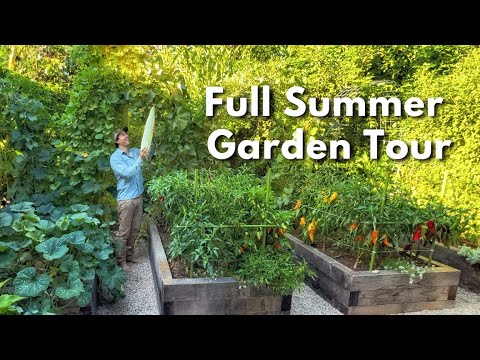
Explore my entire backyard garden with me on this 2025 tou. I’ll walk you through my backyard orchard and blueberry garden, raised garden beds full of tomatoes, peppers, cucumbers, melons, squash and more, take you through my tropical/subtropical food forest and show you all of my little nooks like my stock tank hot tub, fire pit seating area, stock tank pool, plant nurser, bocce ball court and more! I’ll also touch on my Irrigation system and watering schedule, organic vegetable fertilizer, pest and disease management, companion planting, trellising, pruning, and more.
Please consider SUBSCRIBING!
GARDEN PRODUCTS I USE: https://www.amazon.com/shop/urbanfarmstead
FOLLOW ME ON:
Instagram:https://www.instagram.com/urbanfarmstead/?hl=en
Facebook: https://www.facebook.com/theurbanfarmstead/
TikTok: https://www.tiktok.com/@urbanfarmstead?source=h5_
All right, y’all. Here we are. Full summer garden tour 2025. A year ago, I was here in the garden doing a photo shoot with Better Homes and Gardens magazine. They came out and shot all the sections of the garden. And right now, one year later, that issue was out. 11 pages in Better Homes and Gardens. But right now, I get to take you through the garden in Midsummer, just as it was then. show you all the sections, my orchard, my raised garden beds with all my summer veggies, my subtropical food forest, kind of everything in between. I’ll talk a lot about the different varieties I’m growing, some of the pruning that I’m doing, some of the pests or disease that I have, my fertilizers, my irrigation system, a lot of the things that y’all ask me about often. I’ll cover those in a little bit of detail in this video and really just take you through in one full solid shot of the entire garden. So, let’s check it out. Starting up here on my back deck, I’ve got a little I’ve got my barbecue and then little bit of a nursery over there. We’ve got the fire pit area, the mofree grass, the orchard with the botchi ball court. Over here, here’s something I haven’t really shown before. This is actually a seedling fig tree that popped up in a crack next to my porch. Ended up being a male fig. So, makes little fruits, but they’re not edible. So, what I did is I pruned it like a grape cordon to some two bud spurs. And then, because it was not an edible variety, this year I grafted on a bunch of different varieties of figs to it. So, each of these little spurs with a sign on them are little grafts that I’ve done. This one right here is already starting to put on fruit. This is a yellow long neck fig. So I just did little wedge graft there. And yeah, getting a lot of different varieties of figs on a fig tree that otherwise did not produce edible fruit. Got the avocados right here. A couple of the few that I have here in my backyard. Some fruit on them this year. Then getting into the orchard slashbotchi ball court. This is a project that I did last year. Stabilized decomposed granite holding up really well one year later with a redwood 4×6 as the rails there. Couple of volunteer sunflowers. I’ve got fuyu pcmen on this side. Fuyujiro and giant fuyu on this side. All my trees are planted on just a 6ft spacing and I keep them all to about 8 feet tall. So, summer pruning, winter pruning. A lot of videos on my channel showing the pruning of all the fruit trees back here. And they all produce at different times. So, this right here is a spice z nectar plum. I just harvested the last of those a few weeks ago. This one right here is a double delight nectarine. And I just harvested the last of those. Might be a couple still on there, but I basically harvested the best of the last couple of days ago. And now I’m just starting to harvest the Ohenry peaches. This is a beautiful mid to late season variety that makes these enormous, delicious freestone peaches. So, oh Henry Peach is what I’ll be harvesting for a little while. Then once that one’s done, I’m going to start to harvest this Asian pear. This is a shinseki Asian pear. It’s the first year. It’s got a real nice crop on it. After that, I’ll be harvesting this juju bee. It’s a Lee Juju bee, but this year I grafted on four new varieties to it. So, it will still have a lot of lee, but now it’s going to have a lot more on it. You can see one of the graph unions right there. And the cool thing about juju bee, they grow on first year wood and they start producing really early. So, even the graphs that I have on here are all starting to produce fruit. So, we’ll get to taste that very, very soon. Same with the fig trees here. So, I’ve got a panache fig, tiger stripe fig, one of my favorite varieties. these beautiful yellow and green striped figs on the inside, bright red, tastes like raspberry jam. And on this tree also, I’ve grafted on about eight different varieties of figs. So, cool thing about figs is there are thousands of varieties around the world. You can see one of the graft unions right there. Thousands of varieties of figs. So, no shortage on what you can grow. A lot of different flavors. If you’ve only ever had the mission fig and you don’t like it, look for a new one. Here’s another fig tree right here. This is a blackjack fig. I think this is the first one of the season right here. Beautiful red fig. It does taste a lot like a mission fig, but to me it has more berry flavors. And again, on this one, I just grafted on about eight new varieties to it. You can see this one right here kind of has some cool color to the stems, some red color to them. So, lots of new varieties there. Basically, I’m running out of space in my garden, so the only way to add new varieties now is to graft new ones onto it. Here’s my pink lady apple. Beautiful tree, loaded with fruit. This is a variety of apple that here in California is self-pollinating, so it doesn’t need a pollinator like a lot of the varieties do, but I did graft on one branch of Fuji to it just for fun. That one hasn’t flowered yet, though. Then we get into the vegetable garden. Yeah, lots and lots of tomatoes. So, this year I’m using the Florida weave system, which is a trellis system that I’ve used a lot in the past. Definitely one of my favorites. It’s just simple and effective. Couple of posts here on the ends, string along, and just kind of holds them upright. A lot of people ask me about pruning my tomatoes. I don’t do a ton of sucker pruning, especially with this system, because you don’t really need to. But I will do a little bit of sucker pruning early on just so they don’t get too crazy. And then I try to trim up a lot of the bottom. But I don’t want to expose too much of the fruit to sun because of sunscald right here because the other vegetation that I have on the west side. It does have some afternoon shade. So I don’t have to worry too much about sunscald on these. We’ve got favoritita. We’ve got some bumblebee tomatoes. So this one here is a purple bumblebee. Sunrise bumblebee. Midnight Roma in here. A cool purple variety of Roma tomatoes. Those things just absolutely loaded. On this side, I’ve got the larger tomatoes. Some people asked about companion planting. I do a little bit, but I’ve got basil right here in between. They’re always a nice companion plant for the tomatoes. It’s beneficial, but it also obviously pairs well for the flavor. Look at all those tomatoes in there. Here’s one thing I do if So, this is the south side. So, this gets a ton of sun. I try not to overp prune these leaves because they do need to shade the fruit so it doesn’t get sunscaldled. But if I do overp prune or if there’s not a leaf in the right spot, I’ll take a leaf from one of the squash plants and I’ll put it over the fruit so it doesn’t get any suncald. You can see right here, this tomato right here being here on the south side would have awful sunscult in it if I didn’t put that on there. There’s one right here that I forgot to put a leaf on or it blew off or something. I’ll show you exactly what I mean. So, yeah, that that’s not great. I can still eat it cuz it’s in my garden. If that was for market, there’s no way you could eat a tomato like that. But yeah, I trellis these tomatoes the same way. So, these ones right here are called Harvest Moon. Beautiful orange tomato. Then we’ve got Carbon right here. Carbon is a nice pink purple tomato. Very prolific. Some Cherokee purple down here. And some new girl. This side of the tomato garden gets a little bit less sun and new girl is very resilient and tolerant of situations like that. So that’s why I kind of tucked it over here. Kept the harvest moon out on this side. And then my favorite tomato I put in the prime spot. That’s this one right here. This one is stripe German. Lots and lots of fruit on this plant right here. Beautiful massive delicious tomatoes. Stripe German. These things grow up to three lbs. And then right behind them, these are the Italian red pear. So nice large pear-shaped tomato. Really good for fresh eating, but also really nice canning tomato. We’re getting to the toatillos right here. The queen of Malinco. If you’ve seen any of my summer garden videos, you know about queen of Malinco. Very unique toatio. It’s yellow. Has this different shape. They kind of get cracked like this. At least for me in my climate, but they have a really cool like tropical fruit flavor to them. Queen of Malinco. This bed right here is all papino dulce papino melons. You can see some of them right there. These aren’t quite ripe yet. They’ll be yellow with purple stripes when they’re fully ripe and they taste like a sweet honeydew melon, but they grow like an annual here. This bed’s been full of them for a couple years now. Let’s look at the irrigation system. Here’s an empty bed right here. irrigation started to go off, but I had to turn it off because I want to harvest some tomatoes. And I like to let the soil dry out. So, I water this vegetable garden once every three to four days in summer. And this is the system that I use. So, essentially to each bed, I’ve got a riser with a shut off goes to this line right here. And then off of this line, I’ve got this emitter line. Every six inches it has a 0.5 gallon per hour emitter. And I space these every six inches along the bed. So the idea is that you’re saturating all of the soil doing a deep infrequent irrigation. So I run this for about 90 minutes up to 120 minutes depending on the weather. Once every 3 to 4 days through summer. Irrigate all the soil. That way it doesn’t matter what you’re planting in this bed because you’re always kind of filling them as much as you can. You want all the roots to get water. So that’s the system there. In the back I’ve got big hedge and then I’ve got some trelluses here. Got a lot of different stuff. This one is mouse melons Mexican sour girkin. Makes these tiny little limey tasting cucumbers. Great little snack in cucumbers. They’re like the cherry tomato of cucumbers. This bed right here is full of a bunch of different eggplant. So, I like the slender Japanese eggplant for the most part, but I also like to make some baba ganoush with these bigger ones. So, a few different varieties of eggplant in here. And this is a newer style of trellis system that I’m using this year that I’ll show you with the peppers. squash bed right here. Bunch of winter squash. So, lot of little uh butternut squash as well as delicotta squash growing in this bed, my two favorites. Then we’ll get into the peppers. I’ll show you first this trellis system that I’m using for the peppers this year. I just kind of came up with this system. Essentially what it is is I’ve got a single post right here on this end and on this end and then string to do sort of a Florida weave initially. Then this upper post just has a straight line going back that the peppers can rest on. That’s working pretty well to support them and they are some happy peppers. These are Carmen peppers right here. I stopped growing bell peppers a few years ago because I just wasn’t happy with how productive they were and the size of them. Started going growing Carmen peppers and Esamo, which I’ll show you in a minute. And they are extremely prolific and very delicious. There’s the Esamo back there. So on this side, Esamo peppers. Similar to the carbon carmen, but these are yellow instead of red. Also massive, delicious peppers. Couple of really nice ones. And then in the center here, Jimmy Nardell. These are becoming a lot more popular among chefs. So you’re probably starting to see Jimmy Nardell a lot more than you were in the past. Excellent Italian frying pepper. This bed has the spicy peppers except these ones are kind of a false spicy pepper on this side. These are habanata peppers. So, they look and taste like habanero. Of course, these aren’t ripe yet. They’ll be bright orange like a habanero once they’re ripe. Just look how prolific these things are. These things are so loaded down with fruit. The cool thing about them is that you get all the flavor of the habanero without the heat. So you can add them to habanero hot sauce. Kind of mild it down a little bit. In the center here, got a bunch of shashidto peppers also doing real well. And then on this end, my favorite spicy pepper. These are the Fresno chilis. Basically have the heat of a jalapeno. This variety is called Flaming Flare Fresno chili. So they got the heat of a jalapeno, but they get red like this and they get super sweet. So they’re my favorite for making chili powder or I’ll put them on the smoker. I’ll make uh chipotle peppers with them. I always make a big hot sauce every year, a big Sriracha sauce. Behind the peppers here, I’ve got the arch trelluses with a few different things growing over them. First, we’ll start here with something that’s not doing great. Again, we got more tomatoes right here on this end, but this you’ll recognize is powder mildew. I’ve not had issues with powder mildew very much before, especially in the summertime. But my toatillos this year, at least on this end of the garden, have been completely overcome with it. So, what will I do? I’m just going to remove them. I’m going to harvest all these toatillos and remove them. I think there are certain ways that people treat powder mildew, but for me, they’re just going to be done. Fortunately, the cucumbers here haven’t gotten much of it yet. I noticed a little bit today, so I pruned off any of the leaves here that had powder mildew on them. Helps with the air flow. This is a pickling cucumber. I’ve been harvesting about a dozen a week on this and making tons and tons of pickles. The variety is called Gershwin. So, these little tags are for my annual plant sale. I do a big plant sale once every spring. Sell all the varieties that I grow here in my backyard. And right here we’ve got some melons. These are snow leopard melons. So it’s like a honeydew melon with a really cool print on it. I wanted to grow small melons on this trellis so that they can support themselves as they’re growing up. You see up here I’ve got some little watermelons. Hopefully these things will be able to hang on there until they’re ripe. This one just fell off the other day and it was low enough that it didn’t burst on the ground. But this thing at this size was hanging. And I’ll tell you what, this thing is heavy. So, got some watermelons growing on here. And then Armenian cucumbers. This one’s way larger than you would want to grow an Armenian cucumber, but I still like freezing them at this size and adding them to smoothies. Striped Armenian right here. This is the perfect size, I think, to harvest these things. Not a true cucumber. Technically, it’s a melon, but looks and tastes like a cucumber. And they really thrive in the heat. And they grow super fast. I mean, these grew to the top of this trellis faster than anything else in the garden here. This right here is called a mojito cucumber. So, they’re these small kind of seedless cucumbers, thin skin, really prolific, really delicious mojito cucumber. Look at that. All over that plant. One of the questions a lot of people ask about the garden is what fertilizer I use. Um, EBS Stone is the brand. Sure is kind of what I plant everything with. And then they have fertilizers for fruit trees and citrus and vegetable gardens. But fertilizer, as we know, it’s like one small part of the equation, but that’s what I use. Check out the food forest. Check this out. These are all passion fruit growing along this rope right here. These things will turn purple soon. So delicious. They’re all coming from this one plant along the backside of my garage right here. So, it’s a detached garage on the back of my house. I put up this trellis. If you’ve been following on Instagram, you saw that I pruned this thing completely back this year, so it was completely bare, but it’s filled back in. And there it is. Here’s kind of a new section of my garden right here. little nursery where I’m growing up some fig trees and a bunch of the banana pups from the banana trees. Namwa banana. You can see right there. We’ve got a big rack of bananas coming on right now. So, that’s exciting. Got another one on the back side of this. We get into the dark food forest right here. Too many plants to list in this. I do have a full video on the food forest here. This one’s moringa. Got some avocados. I’ve also done some grafting recently on the avocados. So, this one has three varieties on it now. More passion fruits growing over the top. There’s another rack of bananas happening right there. Let’s see if we can get that into view. Another rack of bananas. It’s going to be a good banana year. This big tree right here is called ice cream bean. It’s a great nitrogen fixing plant. So, it’s a legume with big bean pods and surrounding the beans. Inside the pod, there’s a white fluffy fruit that tastes a little bit like vanilla ice cream. And I got to harvest a few of those from this last year. Couple of white sapote right here. I’ve done a bit of grafting on these as well. So, I’ve grafted on three new varieties of white sapote to these trees, but they’ve got real nice crops on them. They’re like a tropical custard fruit. One of my all-time favorite fruits, and it’s a subtropical that actually is adapted to do really well in our Mediterranean climate. Same with this Bakaco papaya. This babbako papaya thrives here. It’s a naturally occurring hybrid from high altitude in Ecuador. Makes all female flowers that are self-fruitful and seedless. Tastes nothing like any orange papaya you’ve ever had. Tastes a lot more like a kind of like a bland pineapple. So, not the most delicious fruit. But if you do something with it, like make a sauce or I like to make salad dressings with them or shrubs, it can be pretty delicious. But the nice thing is that they’re cold tolerant down to like the mid20s. These things thrive here. Black sapote, chocolate sapote. This thing’s flowered the last couple years. Still has some flowers on it right now. They’re related to pimmen, but it has not set fruit for me quite yet. the stock tank pool. Some people asked about this. It’s where I cool off on the hot days when it’s over 100° here in Sacramento. I have a full video on how I built this stock tank pool if you are interested in that. Lii right here. My favorite guavas to grow here are actually these lemon guavas. Lemon guavas are prolific and delicious. They survive really well through our winters and our summers here. The nice thing is that because the fruit’s so small, actually has time to ripen during our growing season. So, they’re extremely delicious. I grow other tropical guava varieties like this uh ruby supreme guava that are incredibly delicious, but the problem is it’s a larger fruit and they tend to not really ripen until fall. So, you don’t get the full flavor because it’s already cooled off and starting to rain a lot by then. More passion vines going over the top. Passion vines are an awesome fruit. They grow super fast, make an evergreen vine full of fruit. And this fruit will just fall on the ground and it’s not going to it’s not like a peach that falls on the ground and just goes bad. I’ll just come out here in the winter time when they’re usually ripe like the citrus and they’ll just be littering the ground here. Purple fruit, really delicious. So, passion vines are a great one. Mango trees right here. I don’t have any fruit right now on any of these mangoes because I keep removing the fruit. I’m trying to make these trees strong and healthy. And we’ve been fortunate the last few winters to have pretty mild weather. So, they’ve survived just fine, thriving. I’ll give them a couple more years, then maybe start to let them hold some fruit, and we’ll see what happens. Speaking of first fruit, jabota, this tree gave me one fruit this year, which is actually pretty good considering it’s six years old and they usually don’t fruit until they’re about 10. So, that was an exciting one. One of the new fruits I’ve got here, well, new plants. It hasn’t fruited yet. This one is called peanut butter fruit. We’ll see if it’ll fruit here. I’ve had it for about a year, so it survived through winter. It’s doing all right here through summer and we’ll see if it eventually fruits, but lot more going on here. This one is a tropical juju bee. These are really good. I think it’s related to the other juju bee, but the fruit tastes completely different. I think it tastes kind of like a coconut water or like a young coconut fruit. Really mild, refreshing flavor. And these trees grow super fast. One of the things I’ve been doing in here a lot is pruning. Super heavy pruning through this area because I still want to keep everything within reach. A lot of these trees grow super fast and I need enough light to get through to the rest of the garden. So, lot of pruning here in the food forest. Starf fruit here. Grooming chama. Got some turmeric growing in here. Mexican sunflower. This is one of the chop and drop plants that I grow. So, I started this from a cutting. These things grow incredibly fast. Cut them down, chop them up for mulch, and they have nitrogen, phosphorus, and potassium just like animal manurses do. So, I feed that back to the soil. Then, we get into the little seating area, fire pit area here. Got the massive staggh horn fern hanging on the fence. The naval orange tree. One of the only things here in the garden when I moved in along with the two big chameleia trees right here. So that’s a little fire pit area back of the food forest. Another chop and drop plant. This is vetive grass. So, I chop this thing a few times a year. Mulch it down into the garden. Really nice mulch. Really good way to feed the food forest. Standing out here on the mofree sod, which is kind of a lowmaintenance lawn. I only water this twice a week, so it doesn’t look great in midsummer, but it’s low maintenance and my dog Berdo loves to run around on it. Here’s my little hot tub area. Fern goalie. This is growing in nicely. This is essentially just a an inflatable hot tub I bought at Costco. Put it inside this livestock tank and it’s beautiful. My next project will be right here. I’m going to do a little paver patio. I just with the help of a uh plumber friend of mine installed an outdoor shower right here. So ran this copper pipe up the back of this tree limb. So you turn it on, it’s essentially like the shower is coming out from the branch of this tree. Copper knobs and all that good stuff. See if it works. Oh, it works. Here on the side of the house, I’ve got another little nursery. Bunch of fig trees. But I want to show you something kind of exciting for me. A lot of these plants are for upcoming plant sales. Right here, for the first time ever, I’ve got a mango. So, I’ve had this plant for about three years now. It’s in a pot. It’s not in the ground, so it’s not as exciting as if it was in the ground, but did flower, set fruit. Seems like it’s going to ripen. So, it’s a Malikica mango, lemongrass. Like I said, bunch of stuff for upcoming plant sales. And that’s kind of it for the garden. So, I know I probably didn’t answer all the questions y’all had about the garden, but was able to show you the space. Hope you enjoyed it. If you do have more questions about my garden or your garden, ask them in the comments below. If you like this video, hit that like button. And if you want to see more garden videos, consider subscribing. Happy gardening. Oh, [Music]
32 Comments
Hey man, awesome video as always. Your garden and food forest are truly inspiring. My question is rodents, what do you do for control. I live in the Santa Cruz mountains and we've got everything from rats to gophers even ground squirrels. Thanks for sharing, keep up the good work
Thanks Kyle. Love and take inspiration from your garden. But, I am from South East Queensland and staghorns and Elkhorns are native.ferns here…they love the macadamia trees here.. and you have an Elkhorn fern…… just saying……..staghorns have a different frond
Between your career as a firefighter and having a wife(kids maybe, not sure) how do you find the time? I am blown away every time I see your set up. This has been my favorite gardening channel for years now.
Can you get me an advice for how to plant bananas, please ? I'm from central Europe from slavakia
Another great vid… Thanks Kyle😎🌴
How do you keep the squirells away from your harvest?
Please do a video about your outdoor shower! Would love to add one but not quite sure about drainage, etc
I aspire to have a garden similar to yours
Hey Kyle, that’s one of the best looking tropical and non tropical backyard food forests I’ve ever seen! Are you still growing tropical papaya in your backyard? I’m also in the Sacramento area zone 9b and is wondering if growing tropical papaya here is possible.
Love it bro, this is one of the best garden tours ever seen. 🤝
Your garden is beautiful! Plant whisperer. Love it!! Is your plant sale just for locals or do you mail?
The food forest is wonderful, Kyle!🎉
Fantastic content. Can you give a few tips on grafting? I have a couple of prunus varietals, White Plum, Almond and Nectarine tree. Also a 4 season lemon tree and a Loquat that grows very very well here in Buenos Aires, Argentina. I'm adding a Kumquat tree soon.
I live in Fresno and have an ice cream bean tree about 6 years old, but has never fruited. Any idea how long they take to start, and if you need a second one?
Thanks for the detailed data point on the drip schedule. That will save me some water/money. I notice your plant growth and fruiting are a level above what I am getting, even if I account for my picking at first blush to beat the rats. Can you share exactly how much of that organic fertilizer you are putting down? I bumped up this year but maybe I could go even higher.
How many aces do you have?
Hopefully someday I get my aces to plants all my tropical fruit trees.
Please post the dates of your plants sell.
"Hello 👋 The fruits grown in your country look so amazing! I’m from the countryside, where life is connected with fruit trees and vegetable gardens, so I really enjoy seeing pictures like these 🌱🍊🍇."
Man your garden Is a paradise and you definitely are an amazing human being.
Love from Balochistan
How can you tell if a fig is male or female… and do figs need a male and female to produce fruit? I am growing a fig that I planted this year and would like to know.😁
Where do you get your plants from? These aren’t your typical Lowe’s/Home Depot plants.
What area is your garden in?
very nice garden
Wow. Your food Forrest is off the charts. My food Forrest is coming along but I’m in Zone 9a Portland Oregon. It’s a way different environment. I really need an irrigation system. I don’t have a lot of money. Is there a cost effective way to do this. I only need for summer. We get plenty of rain in the fall, winter and Spring. Thanks again for your tour. Your property is quite impressive.
How do you prevent rats?
One day, my backyard will look just like this one here. I already have numerous furits trees. What I lack is the raised bed ls for vegetables and that clean finishing look of the ground
Aspiring to be at your level loving just how fruitful it’s all turning out. When can we expect the video of how you set up the food forest? I recall you promised a video but still haven’t seen it did I miss it?
Absolutely stunning, as always, thank you for sharing this year's garden tour 😍 It's cool to see how creative you get with utilizing existing plants for more space like all the grafting.
Very well managed space with verity of vegetables and fruits realy show your passion for gardening
We grew Carmen and Escamillo sweet peppers you recommended, WOW, we got tons!
Papaya, guava, sapote, avocados and papaya. You have made the most of your space in an aesthetically productive garden. When will you hold your plant sale?
Thanks Kyle